Introduction
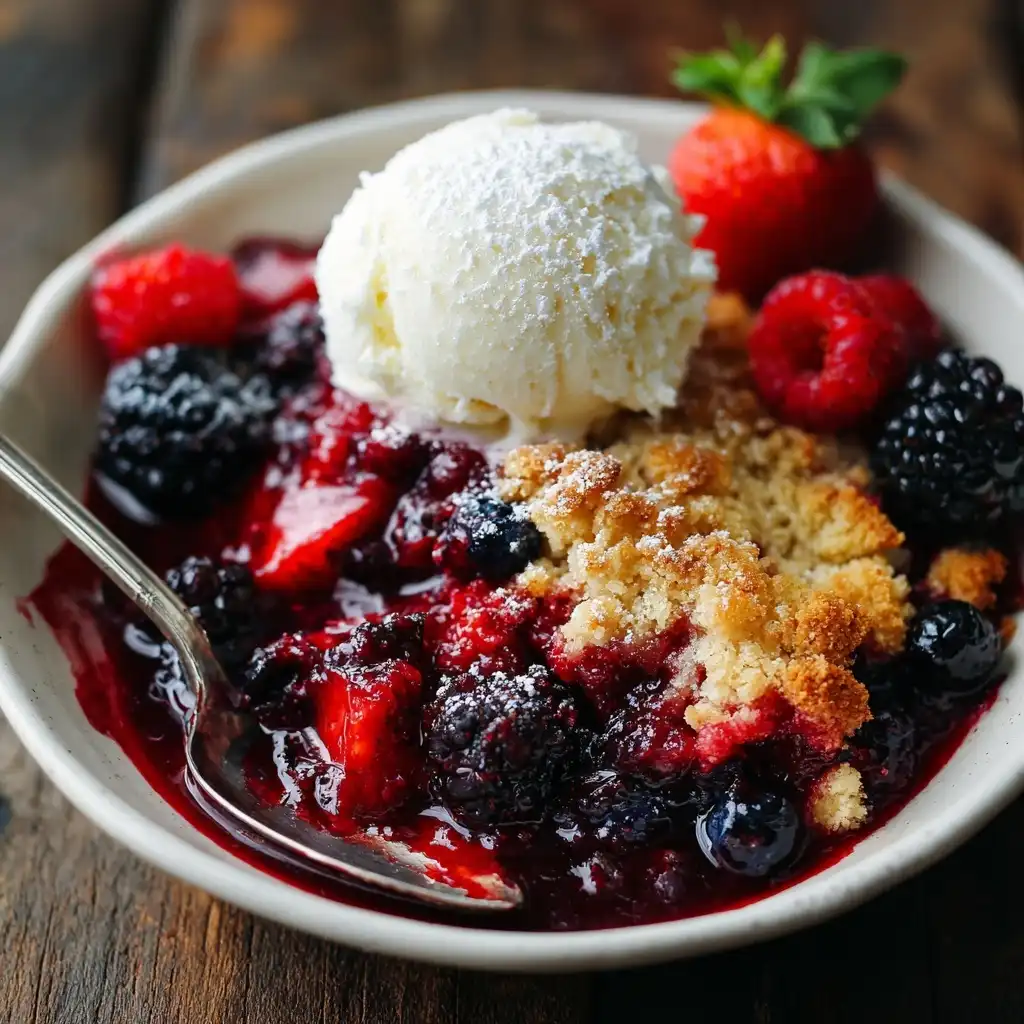
Triple Berry Cobbler is a beloved American dessert that embodies the essence of home baking—warm, comforting, deeply fruity, and crowned with a tender, golden-brown biscuit or cake-like topping. This luscious treat celebrates the vibrant synergy of three distinct berries—typically strawberries, blueberries, and raspberries—each contributing its own unique flavor profile, texture, and natural pectin to create a rich, bubbling, jewel-toned filling. Whether served fresh from the oven with a scoop of vanilla bean ice cream melting into its steamy craters or enjoyed slightly cooled with a drizzle of crème fraîche, Triple Berry Cobbler evokes nostalgia, seasonal abundance, and effortless elegance. It’s more than just dessert—it’s a celebration of summer’s peak harvest, a canvas for creativity, and a forgiving, crowd-pleasing classic that welcomes both novice bakers and seasoned pastry chefs alike.
The History
Cobbler’s roots stretch back centuries, evolving across continents and cultures before settling into its iconic American form. Its earliest ancestors likely emerged in medieval England, where “coble” referred to something lumpy or rounded—describing rustic, uneven pastry crusts laid over stewed fruit. By the 17th century, British colonists brought these fruit-and-crust traditions to North America, where scarce resources and frontier ingenuity reshaped them: instead of labor-intensive pie dough, settlers used simple biscuit or dumpling-style toppings made from pantry staples like flour, buttermilk, lard, and baking powder—hence the term “cobbler,” referencing the cobblestone-like appearance of the dropped or spooned batter. The berry cobbler specifically gained prominence in the late 19th and early 20th centuries, as railroads expanded access to regional fruits and home canning preserved summer’s bounty year-round. The “triple berry” variation is a relatively modern refinement—popularized in mid-century American cookbooks and home economics curricula—as a way to maximize flavor complexity, balance tartness and sweetness, and showcase local, seasonal variety. Today, it stands as a hallmark of Southern hospitality, Midwestern farmhouse kitchens, and Pacific Northwest orchard culture alike—adapted endlessly but always honoring its humble, resourceful origins.
Ingredients Breakdown
Understanding each ingredient’s role transforms good cobbler into extraordinary cobbler. Below is a meticulous, function-driven analysis:
- Fresh Berries (Strawberries, Blueberries, Raspberries): The soul of the dish. Strawberries provide juicy sweetness and structural body; blueberries lend earthy depth, natural thickening power (thanks to high pectin), and bursts of jammy intensity; raspberries contribute bright acidity, floral perfume, and delicate texture. Their combined pH, sugar content, and water activity create ideal conditions for balanced reduction and caramelization during baking.
- Granulated Sugar: Not just for sweetness—acts as a preservative, draws out fruit juices for syrup formation, lowers water activity to prevent sogginess in the topping, and aids in Maillard browning of the crust.
- Light Brown Sugar (optional but recommended): Adds molasses-derived complexity, moisture retention, and subtle caramel notes that deepen the overall flavor architecture—especially important when using less-ripe or frozen berries.
- Cornstarch or Tapioca Starch: Critical thickener. Cornstarch offers clarity and neutral flavor; tapioca yields a glossier, more resilient gel that holds up beautifully during prolonged baking and reheating. Arrowroot may be substituted but is less heat-stable.
- Lemon Juice & Zest: Brightens flavor, balances sweetness, enhances berry aroma volatiles, and prevents enzymatic browning (especially in cut strawberries). Zest contributes essential citrus oils that lift the entire profile.
- Unsalted Butter (for filling): A small amount enriches mouthfeel, adds luxurious sheen to the bubbling syrup, and helps emulsify the fruit juices for a velvety consistency.
- All-Purpose Flour: Provides structure to the biscuit topping. Lower-protein flours (like pastry flour) yield tenderness; higher-protein flours (bread flour) risk toughness—AP is the Goldilocks choice.
- Baking Powder & Baking Soda: Double-acting leaveners ensure maximum rise and airy crumb. Baking soda also neutralizes acidity from lemon and berries, optimizing browning and tenderness.
- Salt: Enhances all other flavors, reduces perceived bitterness, and strengthens gluten just enough for cohesive yet tender biscuits.
- Heavy Cream or Buttermilk: Heavy cream yields a richer, more decadent topping with superior browning; buttermilk adds tang, tenderness, and activates baking soda for extra lift. Full-fat dairy is non-negotiable for optimal texture.
- Vanilla Extract (pure, not imitation): Adds warmth and aromatic depth—complements berries without overpowering. Mexican or Tahitian vanilla offers intriguing floral nuances.
- Coarse Turbinado Sugar (for topping): Adds textural contrast, sparkle, and nuanced caramelized crunch—melts partially during baking to form a delicate, glassy crust.
Step-by-Step Recipe
- Preheat & Prep: Position oven rack in lower-middle position. Preheat oven to 375°F (190°C). Generously butter a 9×13-inch ceramic or metal baking dish (or two 8-inch square dishes for even baking). Line a rimmed baking sheet with parchment—this catches inevitable bubbling overflow.
- Prepare the Berry Filling: Hull and quarter 1 lb (450g) ripe strawberries. Gently rinse 1 cup (140g) fresh blueberries and 1 cup (120g) fresh raspberries—pat *very* dry with paper towels to prevent excess water dilution. In a large non-reactive bowl (glass or stainless steel), combine berries, ¾ cup (150g) granulated sugar, ¼ cup (50g) light brown sugar, 3 tbsp (24g) cornstarch (or 2½ tbsp tapioca starch), 1½ tsp finely grated lemon zest, 1 tbsp fresh lemon juice, and 2 tbsp (28g) cold unsalted butter cut into small cubes. Gently fold with a silicone spatula—just until evenly coated. Avoid crushing raspberries. Let macerate 20–30 minutes at room temperature; juices will pool and thicken slightly.
- Make the Biscuit Topping: In a food processor fitted with a steel blade, pulse 2 cups (250g) all-purpose flour, ¼ cup (50g) granulated sugar, 2 tsp baking powder, ½ tsp baking soda, and 1 tsp fine sea salt until combined. Scatter ½ cup (113g) very cold unsalted butter (cut into ½-inch cubes) over flour; pulse 8–10 times until mixture resembles coarse meal with some pea-sized butter pieces remaining. Transfer to a large bowl. Whisk together ¾ cup (180ml) heavy cream (or full-fat buttermilk), 1 tsp pure vanilla extract, and 1 large egg yolk. Pour over flour mixture; stir with a fork just until a shaggy, slightly sticky dough forms—do *not* overmix. Dough should hold together when pinched but not be smooth or elastic.
- Assemble with Precision: Pour macerated berries and all accumulated juices into prepared baking dish, spreading evenly. Using two spoons or a ¼-cup cookie scoop, portion biscuit dough into 8–10 generous mounds (about ¼ cup each) over the fruit. Space evenly—do not flatten or spread; mounds should retain their domed shape. Gently press any loose crumbs onto mounds. Sprinkle entire surface evenly with 2 tbsp turbinado sugar.
- Bake with Strategic Timing: Place dish on prepared baking sheet. Bake for 45–55 minutes, rotating halfway through, until topping is deep golden brown, crisp at edges, and springs back lightly when touched. Fruit filling should bubble vigorously around the edges and emit a rich, jammy fragrance. Internal temperature of filling should read 205–210°F (96–99°C) on an instant-read thermometer—this ensures proper thickening. If topping browns too quickly, tent loosely with foil for last 15 minutes.
- Cool & Set: Remove from oven and place on a wire rack. Resist cutting! Let cobbler rest *at least* 45 minutes—ideally 1–1.5 hours. This critical step allows starches to fully gel, filling to thicken into luxurious syrup, and topping to firm without collapsing. Cutting too soon yields soupy filling and crumbly topping.
- Serve Warm: Scoop generous portions into bowls. Serve immediately with accompaniments (see Variations). Leftovers keep covered in refrigerator for up to 4 days—reheat gently in oven or air fryer to revive crispness.
Tips
- Berry Quality is Non-Negotiable: Use peak-season, locally grown berries whenever possible. Underripe berries lack sweetness and aroma; overripe ones disintegrate. If using frozen berries, do *not* thaw—add directly from freezer (increase cornstarch by 1 tsp) and add 2 extra minutes to bake time. Never use canned berries—they’re too watery and sweetened.
- Maceration Matters: Don’t skip the 20–30 minute rest. This draws out juices, dissolves sugars, and begins the thickening process—resulting in a cohesive, glossy syrup rather than a separated, watery mess.
- Cold Butter = Flaky Topping: Keep butter and cream refrigerated until the moment of mixing. Warm butter melts prematurely, creating greasy, dense biscuits instead of tender, layered ones.
- Mix Topping Minimally: Overworking the dough develops gluten, leading to tough, chewy biscuits. Stir only until no dry flour remains—lumps and shagginess are desirable.
- Resist the Spoon: When portioning dough, use spoons—not hands—to avoid warming the butter. Cold dough mounds hold their shape and rise better.
- Rotate & Monitor: Ovens vary wildly. Rotate the dish at the 25-minute mark for even browning. Check doneness starting at 45 minutes—baking time depends on berry juiciness and dish material (ceramic retains heat longer than metal).
- Patience Pays Off: That 45+ minute rest isn’t optional. Rushing leads to runny filling, collapsed topping, and compromised texture. Use this time to brew tea, set the table, or prepare ice cream.
- Prevent Overflow: Always bake on a parchment-lined sheet. Triple berry filling bubbles with dramatic vigor—anticipate it.
- Test Thickening: Insert an instant-read thermometer into the center of the fruit layer (avoiding berries). 205–210°F confirms starch gelatinization is complete. Below 200°F means under-thickened; above 215°F risks scorching.
- Revive Leftovers: Refrigerated cobbler loses crispness. Reheat uncovered at 350°F for 15–20 minutes—or use an air fryer at 320°F for 6–8 minutes—for a miraculously renewed golden crust.
Variations and Customizations
The Triple Berry Cobbler framework is gloriously adaptable—here’s how to personalize it with intention and impact:
- Fruit Swaps & Additions: Replace one berry with blackberries for deeper tannic structure; add ½ cup chopped rhubarb (toss with 1 extra tbsp sugar and 1 tsp cornstarch) for springtime brightness; incorporate ¼ cup diced apple or pear for subtle earthiness and textural contrast. For a “quadruple berry,” add ½ cup hulled and halved marionberries or loganberries.
- Gluten-Free Adaptation: Substitute 1:1 gluten-free all-purpose flour blend (with xanthan gum) for topping flour. Increase cornstarch in filling by ½ tsp to compensate for GF flour’s weaker binding. Add 1 tsp psyllium husk powder to topping for elasticity.
- Vegan Version: Use coconut oil or vegan butter (cold) in topping; replace egg yolk with 1 tbsp ground flaxseed + 2.5 tbsp water (let sit 5 min); substitute full-fat coconut milk or oat milk for cream. For filling, use arrowroot instead of cornstarch and ensure sugars are vegan-certified.
- Spiced & Herbal Infusions: Add ¼ tsp freshly grated nutmeg or ground cardamom to topping flour. Steep 1 tsp dried lavender or 2 tbsp fresh lemon balm leaves in warm cream for 10 minutes before straining and using. A 2-inch strip of orange zest added to macerating berries adds sophisticated citrus lift.
- Alcohol Enhancements: Stir 1 tbsp Chambord (raspberry liqueur), Framboise, or Grand Marnier into the berry mixture after maceration. For adults-only, brush warm baked topping with 1 tsp bourbon-vanilla glaze (1 tbsp bourbon + 1 tsp maple syrup + pinch salt).
- Topping Twists: Add ⅓ cup toasted sliced almonds or chopped pecans to topping dough. Mix in 2 tbsp shredded sharp cheddar cheese for savory-sweet depth (a Southern tradition). For a cake-like topping, replace ¼ cup flour with ¼ cup almond flour and add 1 extra egg yolk.
- Individual Servings: Bake in six 6-oz ramekins (reduce time to 30–35 minutes). Perfect for dinner parties—top each with a single fresh raspberry and mint sprig.
- No-Bake “Chill Cobbler”: For summer heatwaves: Prepare filling as directed, chill 2 hours. Make topping with chilled ingredients, portion onto filling, and freeze 1 hour. Serve semi-frozen—topping stays cool and creamy while filling remains lush.
- Breakfast Cobbler: Reduce sugar in filling by ¼ cup; add ½ tsp cinnamon and 2 tbsp rolled oats to topping dough. Serve warm with Greek yogurt instead of ice cream.
- Deconstructed Presentation: Layer chilled berry compote, crumbled baked topping, whipped cream, and fresh berries in tall glasses for elegant parfaits—ideal for bridal showers or garden parties.
Health Considerations and Nutritional Value
While inherently indulgent, Triple Berry Cobbler offers meaningful nutritional benefits when approached mindfully—and understanding its composition empowers informed enjoyment:
- Antioxidant Powerhouse: Berries rank among the highest foods for ORAC (Oxygen Radical Absorbance Capacity) scores. Strawberries deliver vitamin C and ellagic acid; blueberries boast anthocyanins linked to cognitive support; raspberries provide fiber and quercetin—collectively combating oxidative stress and inflammation.
- Fiber Content: One serving (⅛ of 9×13 dish) provides ~4–5g dietary fiber—nearly 20% of daily needs—supporting gut health, satiety, and blood sugar regulation. Raspberries alone contain 8g fiber per cup.
- Natural Sugars vs. Added Sugars: Berries contribute ~12–15g natural sugar per cup; the recipe’s added sugar (≈12g per serving) brings total to ~25–28g—well within WHO’s recommended <25g/day limit for added sugars. Reducing sugar by 25% (to ½ cup total) maintains excellent flavor due to berries’ inherent sweetness.
- Healthy Fats: Using unsalted butter in moderation provides fat-soluble vitamins (A, D, E, K) and conjugated linoleic acid (CLA). Substituting half the butter with avocado oil in the filling adds monounsaturated fats.
- Glycemic Impact: The fiber and acidity from berries and lemon significantly lower the dish’s glycemic load versus fruit pies or crisps. Pairing with protein-rich accompaniments (Greek yogurt, cottage cheese) further stabilizes blood sugar.
- Gluten & Allergen Notes: Naturally free of nuts, soy, and eggs (if omitting yolk), making it adaptable for many restrictions. Always verify flour and sugar sources for certified gluten-free or vegan needs.
- Mindful Modifications: Boost nutrition by adding 2 tbsp ground flax or chia seeds to topping dough (adds omega-3s and fiber). Use honey or maple syrup instead of refined sugar (reduce liquid elsewhere by 1 tsp). Top with unsweetened coconut flakes or pumpkin seeds for crunch and minerals.
- Portion Awareness: A standard serving is 1 cup (≈240g). Using a 9×13 dish yields 12 modest servings—not 8—making it easier to enjoy regularly without excess calories (~280–320 kcal per serving, depending on butter/cream amounts).
- Not Just “Dessert”: Leftover filling makes exceptional topping for oatmeal, yogurt, or pancakes. Baked topping crumbles add texture to salads or grain bowls.
Ingredients
For the Triple Berry Filling:
- 1 pound (450g) fresh strawberries, hulled and quartered
- 1 cup (140g) fresh blueberries
- 1 cup (120g) fresh raspberries
- ¾ cup (150g) granulated sugar
- ¼ cup (50g) light brown sugar, packed
- 3 tablespoons (24g) cornstarch (or 2½ tablespoons tapioca starch)
- 1½ teaspoons finely grated lemon zest
- 1 tablespoon fresh lemon juice
- 2 tablespoons (28g) cold unsalted butter, cut into small cubes
For the Biscuit Topping:
- 2 cups (250g) all-purpose flour
- ¼ cup (50g) granulated sugar
- 2 teaspoons baking powder
- ½ teaspoon baking soda
- 1 teaspoon fine sea salt
- ½ cup (113g) cold unsalted butter, cut into ½-inch cubes
- ¾ cup (180ml) cold heavy cream (or full-fat buttermilk)
- 1 teaspoon pure vanilla extract
- 1 large egg yolk
For Finishing:
- 2 tablespoons turbinado sugar (e.g., Sugar in the Raw)
Directions
- Preheat oven to 375°F (190°C). Position rack in lower-middle position. Generously butter a 9×13-inch baking dish. Place on a parchment-lined rimmed baking sheet.
- In a large bowl, combine strawberries, blueberries, raspberries, granulated sugar, brown sugar, cornstarch, lemon zest, lemon juice, and cold butter cubes. Gently fold with a silicone spatula until evenly coated. Let macerate at room temperature for 20–30 minutes.
- In a food processor, pulse flour, ¼ cup sugar, baking powder, baking soda, and salt until combined. Add cold butter cubes; pulse 8–10 times until mixture resembles coarse meal with visible pea-sized butter pieces. Transfer to a large bowl.
- In a small bowl, whisk together cold heavy cream, vanilla extract, and egg yolk. Pour over flour mixture. Stir with a fork just until a shaggy, slightly sticky dough forms—do not overmix. Dough should hold together when pinched.
- Pour berry mixture and all accumulated juices into prepared baking dish, spreading evenly. Using two spoons or a ¼-cup scoop, portion dough into 8–10 mounds over fruit. Do not flatten. Sprinkle evenly with turbinado sugar.
- Bake for 45–55 minutes, rotating dish halfway through, until topping is deep golden brown and filling bubbles vigorously around edges. Internal filling temperature should read 205–210°F (96–99°C).
- Remove from oven and cool on a wire rack for at least 45 minutes—ideally 1–1.5 hours—before serving.
- Serve warm, scooped into bowls, with preferred accompaniments.
FAQ
- Can I make this cobbler ahead of time?
- Absolutely. Assemble the berry filling up to 24 hours ahead—store covered in refrigerator. Prepare topping dough up to 12 hours ahead; wrap tightly and refrigerate. Assemble and bake just before serving for optimal texture. Fully baked cobbler keeps refrigerated for 4 days or frozen for 3 months (thaw overnight in fridge, reheat covered at 325°F until warmed through, then uncover to crisp).
- Why did my filling turn out runny?
- Most common causes: insufficient maceration time, underbaking (filling didn’t reach 205°F), using overly juicy berries without adjusting thickener, or stirring filling after baking. Next time, extend bake time by 5–10 minutes, verify thermometer reading, and let cool completely before serving.
- Can I use frozen berries exclusively?
- Yes—but do not thaw. Add frozen berries directly to bowl with sugars and starches. Increase cornstarch by 1 teaspoon and bake 5–8 minutes longer. Expect slightly softer texture than fresh, but flavor remains vibrant.
- My topping came out tough/dense. What went wrong?
- Overmixing the dough, using warm butter or cream, or substituting low-fat dairy are primary culprits. Ensure all dairy is ice-cold, butter is firm and cubed, and mix *only* until shaggy. Also, avoid pressing dough mounds flat before baking—they need air pockets to rise.
- What’s the best way to store leftovers?
- Cool completely, cover tightly with plastic wrap or aluminum foil, and refrigerate. To maintain texture, reheat uncovered in a 350°F oven for 15–20 minutes—or use an air fryer at 320°F for 6–8 minutes—until topping is crisp and filling is bubbling.
- Can I double this recipe?
- Yes—use two 9×13-inch dishes. Bake time remains identical, but rotate dishes front-to-back halfway through. Do not bake in a single oversized pan—the filling will be too deep and the topping won’t cook evenly.
- Is there a lower-sugar version that still sets properly?
- Reduce total sugar to ½ cup (100g) and increase cornstarch to 3½ tbsp. Add 1 tsp lemon juice for brightness. Berries’ natural pectin and the extended bake time will still yield a cohesive filling—just slightly less glossy.
- What can I serve with Triple Berry Cobbler besides ice cream?
- Classic pairings include crème fraîche, whipped cream, or Greek yogurt. For contrast: sharp cheddar cheese (a Southern staple), lemon curd, toasted coconut, or a drizzle of local honey. Vegan options: coconut whipped cream or cashew-based “ice cream.”
- Can I make this gluten-free?
- Yes—substitute a trusted 1:1 gluten-free flour blend (with xanthan gum) for the all-purpose flour. Increase cornstarch in filling by ½ tsp and add 1 tsp psyllium husk powder to the topping flour mixture for improved binding and rise.
- How do I know when it’s done baking?
- Visual cues: deep golden-brown, crisp-edged topping that springs back when lightly touched; vigorous bubbling *around the entire perimeter* of the dish (not just corners); rich, jammy aroma. Thermometer confirmation: 205–210°F in the center of the fruit layer.
Summary
Triple Berry Cobbler is a masterclass in seasonal simplicity—where sun-ripened strawberries, blueberries, and raspberries meld into a glossy, complex filling beneath a tender, golden-brown biscuit topping that’s equal parts rustic charm and refined technique.
With its rich history, nutritional virtues, endless customizability, and foolproof method, this dessert transcends trends to become a timeless centerpiece for gatherings, a therapeutic baking ritual, and a heartfelt tribute to nature’s most vibrant harvest.