Introduction
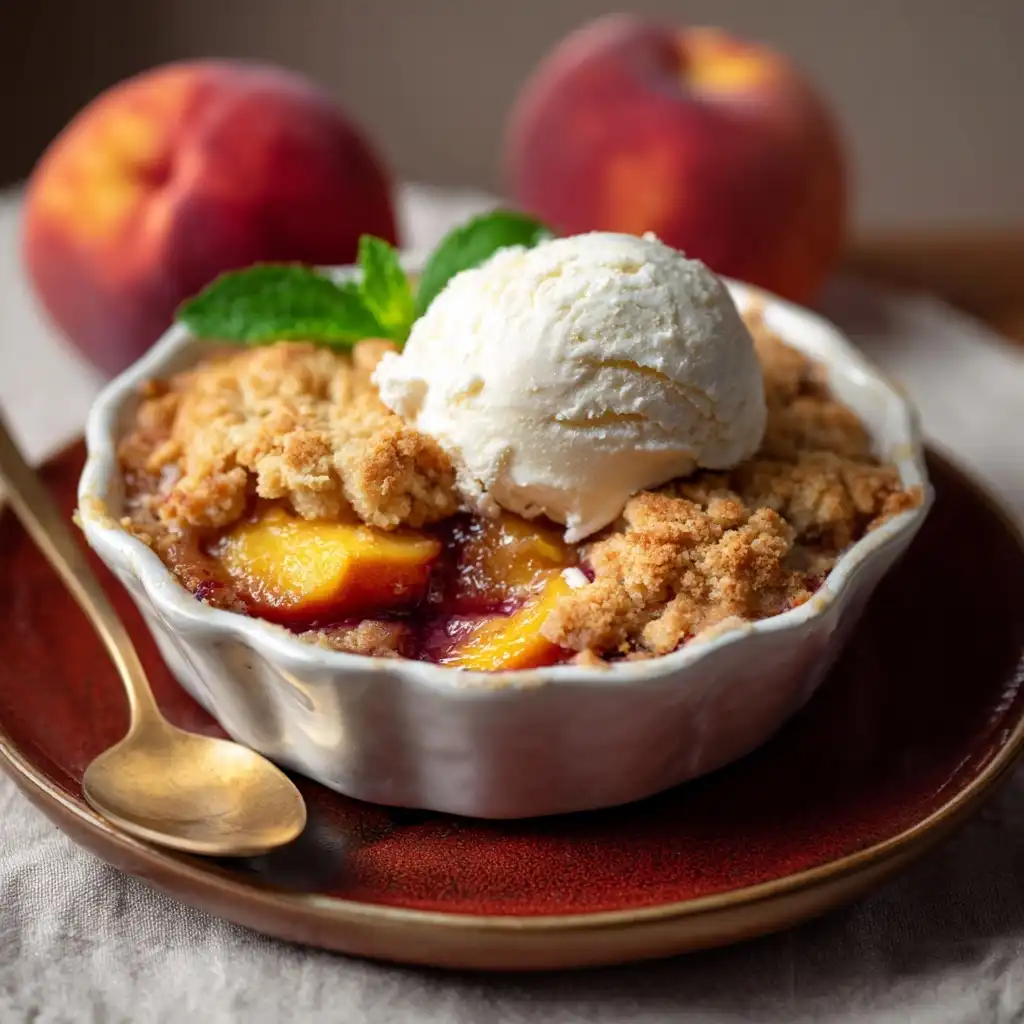
Southern Nectarine Cobbler is more than just a dessert—it’s a warm, sun-drenched embrace of Southern hospitality, orchard-fresh fruit, and generations-old baking wisdom. With its tender, golden-brown biscuit-like topping crowning a bubbling, fragrant filling of ripe nectarines, this cobbler evokes lazy summer afternoons on wraparound porches, the scent of vanilla and brown sugar drifting through screen doors, and the comforting ritual of sharing something deeply nourishing with loved ones. Unlike crisp or crumble variations, the cobbler’s hallmark lies in its soft, slightly cakey, pull-apart topping—neither pie crust nor streusel, but something uniquely soul-satisfying: rustic, forgiving, and unpretentiously delicious. Whether served à la mode with bourbon-vanilla ice cream, drizzled with sweet cream, or enjoyed plain with a dusting of powdered sugar, Southern Nectarine Cobbler stands as a quintessential celebration of seasonal abundance and culinary grace.
The History
The roots of the Southern cobbler stretch back to the early American colonies, where resourceful settlers adapted English puddings and fruit tarts using limited pantry staples—flour, lard or butter, sugar (often molasses or sorghum syrup in earlier decades), and whatever fruit grew abundantly nearby. The word “cobbler” likely derives from the visual resemblance of the uneven, “cobbled” topping to a cobblestone street—a charming nod to its humble, hand-formed origins. In the antebellum South, cobbler evolved alongside regional agriculture: peaches reigned supreme, but in the Piedmont, Coastal Plain, and upland orchards of Georgia, South Carolina, and Tennessee, nectarines—closely related to peaches but smoother-skinned and often more intensely aromatic—were prized for their delicate sweetness and low acidity. By the late 19th century, community cookbooks like The Southern Cook Book (1904) and church-led publications such as Ladies’ Auxiliary of First Baptist Church, Augusta, GA (1928) featured dozens of cobbler recipes, often specifying “nectarines when in season”—a subtle yet vital instruction underscoring the dish’s deep connection to terroir and timing. During the Great Depression and WWII, cobbler persisted as a thrifty luxury: fruit preserved in syrup or canned at home could be transformed into dessert with minimal flour and no eggs required in many versions. Today, Southern Nectarine Cobbler honors that legacy—not as museum piece, but as living tradition—continually reinvented by Black grandmothers in Lowcountry kitchens, Appalachian bakers using heritage varieties like ‘Fantasia’ and ‘Red Gold’, and modern chefs highlighting organic, tree-ripened fruit from small-scale farms across the Southeast.
Ingredients Breakdown
Every ingredient in Southern Nectarine Cobbler serves both functional and flavorful purpose—nothing is incidental. Below is a meticulous breakdown of each component, including why it’s included, optimal substitutions, and regional or historical context:
- Nectarines (6–7 medium, ~2¼ lbs whole): Use fully ripe, fragrant, slightly yielding fruit. Look for deep golden-blush skin with no green undertones; avoid refrigerated fruit, which dulls flavor and texture. Southern-grown varieties—such as ‘Zee Lady’, ‘Snow Queen’, or ‘Arctic Star’—offer exceptional sweetness and floral notes. Canned nectarines (in juice, not syrup) may be used in winter, but drain thoroughly and reduce added sugar by ¼ cup. Never use underripe nectarines—they lack pectin and natural sugars needed for proper thickening and caramelization.
- Granulated Sugar (¾ cup + 2 tbsp): The base sweetener balances nectarine’s subtle tartness and fuels caramelization. Traditional Southern versions often include 1–2 tbsp light brown sugar for molasses depth, but granulated ensures clarity of fruit flavor. For authenticity, some cooks substitute pure cane turbinado (Sugar in the Raw) for gentle mineral nuance.
- Light Brown Sugar (¼ cup, packed): Adds moisture, rich caramel notes, and subtle acidity—critical for balancing the bright fruit. Its molasses content also enhances browning in the topping.
- All-Purpose Flour (2 tbsp): Acts as the primary thickener for the fruit layer. Southern pantries traditionally used soft-wheat flours (like White Lily), which produce a more delicate, tender filling—substitute 1 tbsp cornstarch + 1 tbsp all-purpose if using hard-wheat flour for best results.
- Fresh Lemon Juice (1½ tbsp): Not merely for brightness—lemon juice stabilizes color (preventing browning), sharpens fruit flavor, and activates pectin for ideal gel-like consistency without gumminess. Bottled juice lacks volatile citrus oils and should be avoided.
- Pure Vanilla Extract (1 tsp): Preferably Madagascar Bourbon vanilla—adds warmth and complexity. Mexican or Tahitian vanillas offer floral or anise-like accents that complement nectarines beautifully.
- Ground Cinnamon (½ tsp) & Freshly Grated Nutmeg (¼ tsp): Classic Southern spice duo—cinnamon adds woody-sweet warmth; nutmeg contributes creamy, slightly peppery depth. Always grate whole nutmeg; pre-ground loses potency within weeks.
- Salted Butter (6 tbsp, cold & cubed): Cold fat is essential for flaky, tender biscuit topping. Unsalted butter is common, but Southern cooks often use lightly salted brands (e.g., Land O’Lakes Salted) for balanced seasoning—reduce added salt accordingly. Lard or leaf lard may be substituted for 3 tbsp butter + 3 tbsp lard for ultra-flaky, old-fashioned richness.
- Buttermilk (¾ cup, well-shaken): The secret to lift and tenderness. Its acidity reacts with baking soda, while its cultured tang cuts sweetness and enhances crumb structure. Homemade buttermilk (1 tbsp white vinegar + ¾ cup whole milk, rested 5 min) works—but true cultured buttermilk yields superior flavor and moisture retention.
- Baking Soda (½ tsp): Activated by buttermilk’s acid, it provides gentle leavening and neutralizes excess acidity—critical for preventing a dense, gummy topping.
- Baking Powder (1½ tsp, aluminum-free): Provides additional lift and ensures reliable rise, especially important at higher elevations or in humid Southern kitchens where humidity can dampen leavening power.
- Fine Sea Salt (¾ tsp): Enhances all other flavors and tempers sweetness. Kosher salt may be used, but reduce to 1 tsp due to coarser grain.
- Heavy Cream or Whole Milk (2 tbsp, for brushing): Creates a luminous, bakery-style golden sheen and encourages even browning. A splash of bourbon (½ tsp) may be added to the cream for a nuanced, grown-up finish.
- Coarse Turbinado Sugar (2 tbsp, for sprinkling): Adds delightful crunch and sparkling visual appeal—non-negotiable for authentic presentation and textural contrast.
Step-by-Step Recipe
- Prep the Fruit Filling (25 minutes, includes resting time): Preheat oven to 375°F (190°C). Lightly grease a 9×13-inch ceramic or glass baking dish (avoid metal for even heat distribution). Wash nectarines gently under cool water. To peel (optional but recommended for refined texture), score an “X” on the blossom end of each fruit, blanch in boiling water for 30 seconds, then transfer immediately to ice water. Slip off skins. Pit and slice nectarines ½-inch thick—aim for uniformity to ensure even cooking. In a large bowl, combine sliced nectarines, ¾ cup granulated sugar, ¼ cup brown sugar, 2 tbsp flour, lemon juice, vanilla, cinnamon, nutmeg, and ½ tsp salt. Gently fold with a silicone spatula until evenly coated. Let macerate 15–20 minutes at room temperature—this draws out juices and begins natural thickening. Stir once halfway through. Transfer mixture (including all accumulated syrup) into prepared baking dish. Smooth surface with spatula. Set aside while preparing topping.
- Make the Biscuit Topping (12 minutes): In a chilled medium bowl, whisk together 1¾ cups all-purpose flour, remaining 2 tbsp granulated sugar, baking powder, baking soda, and remaining ¼ tsp salt. Add cold, cubed butter. Using a pastry cutter, two forks, or fingertips, work butter into flour until mixture resembles coarse crumbs with some pea-sized pieces remaining—do not overmix or let butter soften. Gradually pour in buttermilk while stirring with a fork just until dough begins to clump. Switch to hands and gently gather into a shaggy mass—dough should hold together when squeezed but not be sticky. If too dry, add 1 tsp buttermilk; if too wet, dust with ½ tsp flour. Do not knead—just press into a cohesive disk.
- Assemble & Bake (45–55 minutes): Turn dough onto a lightly floured surface. Pat or gently roll to ¾-inch thickness. Using a 2½-inch round biscuit cutter (or knife), cut into 12–14 rounds. Arrange rounds snugly but not overlapping over fruit filling, leaving small gaps for steam to escape. Brush tops generously with heavy cream or whole milk. Sprinkle evenly with turbinado sugar. Place dish on center oven rack. Bake 45 minutes—then rotate dish front-to-back for even browning. Continue baking 5–10 minutes more, until topping is deeply golden, puffed, and firm to gentle touch, and fruit filling bubbles vigorously at edges with thick, glossy syrup (not watery). Internal temperature of filling should read 205–210°F on an instant-read thermometer. Total bake time varies by oven accuracy, fruit juiciness, and dish material—start checking at 45 minutes.
- Cool & Serve (Minimum 30 minutes): Remove from oven and place on wire rack. Resist cutting! Let rest undisturbed for full 30 minutes—this allows filling to set properly and prevents runny, collapsed servings. For best texture, serve warm (not hot) —ideally between 120–140°F. Scoop with a wide spoon, ensuring each portion includes both tender topping and lush fruit. Store leftovers covered at room temperature up to 2 days, or refrigerated up to 5 days—reheat individual portions in toaster oven or air fryer at 325°F for 8–10 minutes to revive crispness.
Tips
- Ripeness is Non-Negotiable: Underripe nectarines yield bland, starchy filling; overripe ones turn mushy and overly sweet. Press gently near stem end—if it yields slightly and smells sweetly floral, it’s perfect.
- Chill Your Tools: Chill mixing bowls, pastry cutter, and even flour for 15 minutes before making topping—cold fat = flakier, more tender biscuits.
- No Overmixing, Ever: Once buttermilk hits flour-butter mixture, stir *just* until shaggy. Overworking develops gluten → tough, dense topping. It’s okay if dough looks rough—it will smooth during baking.
- Use a Ceramic or Stoneware Dish: Glass conducts heat quickly (risk of burnt edges); metal heats unevenly. Ceramic retains steady, gentle heat—ideal for slow-thickening fruit and gradual topping rise.
- Rotate Mid-Bake: Most home ovens have hot spots. Rotating ensures even browning and prevents one side from doming or scorching.
- Check Doneness by Sight & Sound: Don’t rely solely on timer. Filling should bubble *vigorously* around entire perimeter—not just corners—and emit a low, steady “bubbling-hiss.” Topping should be uniformly golden with no pale centers.
- Resting Is Baking’s Final Step: Cutting too soon releases steam and thins syrup. That 30-minute wait transforms loose juices into glossy, clingy nectar—trust the process.
- Scale With Confidence: This recipe doubles beautifully in a 9×13-inch dish (use same bake time) or halves flawlessly in an 8×8-inch for smaller households—adjust topping thickness accordingly.
- Freeze for Later: Assemble unbaked cobbler (fruit in dish, topped with raw biscuit rounds), cover tightly with double-layer foil, freeze up to 3 months. Bake frozen—add 15–20 minutes to bake time and tent loosely with foil first 30 minutes to prevent over-browning.
- Revive Leftovers Like a Pro: Day-old cobbler shines reheated in a skillet over medium-low heat with 1 tsp butter—cover and warm 5–7 minutes until heated through and topping regains tenderness. Top with fresh mint or basil for brightness.
Variations and Customizations
Southern Nectarine Cobbler is gloriously adaptable—its framework welcomes creativity while honoring tradition. Here are beloved regional and modern riffs, each tested for structural integrity and flavor harmony:
- Peach-Nectarine Fusion Cobbler: Replace 2 nectarines with ripe freestone peaches for layered complexity—peaches lend body and earthiness; nectarines contribute perfume and snap. Reduce lemon juice to 1 tbsp to balance increased acidity.
- Blackberry-Nectarine Jubilee: Fold in 1 cup fresh blackberries (tossed with 1 tsp cornstarch) during maceration. Berries add tannic depth and jewel-toned contrast—ideal for late-summer harvests.
- Spiced Brown Butter Topping: Brown 6 tbsp butter in a saucepan until nutty and amber, cool 10 minutes, then use in place of cold butter. Adds profound depth and toasty richness—pair with cardamom (¼ tsp) in topping.
- Oat-Infused Southern Cobbler: Replace ¼ cup flour in topping with old-fashioned rolled oats (not quick oats). Toast oats 5 minutes in dry skillet first for enhanced nuttiness. Yields chewier, heartier crumb—popular in Appalachian mountain kitchens.
- Buttermilk Cornmeal Topping: Substitute ⅓ cup fine yellow cornmeal for same amount of flour in topping. Adds subtle grit, sweetness, and beautiful golden hue—evokes classic cornbread-cobbler hybrids from the Carolinas.
- Boozy Bourbon-Plum Swirl: Stir 2 tbsp bourbon + 1 tsp plum jam into fruit filling before baking. Adds smoky-sweet dimension and luxurious mouthfeel—best with late-season ‘Santa Rosa’ plums.
- Vegan Southern Cobbler: Use cold coconut oil (refined for neutrality) instead of butter; replace buttermilk with ¾ cup unsweetened almond milk + 1 tbsp apple cider vinegar; use flax egg (1 tbsp ground flax + 3 tbsp water, rested 5 min) if binding needed. Increase baking powder to 2 tsp for lift.
- Gluten-Free Heritage Cobbler: Substitute 1:1 gluten-free all-purpose blend (with xanthan gum) *plus* 1 tsp psyllium husk powder for elasticity. Add 1 tbsp tapioca starch to fruit filling for extra hold. Bake on lowest oven rack to prevent GF topping from drying.
- Mini Mason Jar Cobblers: Portion fruit into 6 (12-oz) wide-mouth mason jars. Top with 2-inch biscuit rounds. Bake at 375°F for 32–38 minutes until set. Perfect for picnics, gifts, or portion control—top with whipped coconut cream.
- Herbal Garden Cobbler: Infuse buttermilk with 2 tbsp fresh thyme or lavender blossoms (steep 10 min, strain). Add 1 tsp finely minced rosemary to topping dough. Unexpected yet harmonious—especially with white nectarines.
Health Considerations and Nutritional Value
A single generous serving (1/12th of recipe, approx. 1 cup) contains approximately:
- Calories: 320–350 kcal
- Total Fat: 11–13 g (7–8 g saturated, primarily from butter)
- Carbohydrates: 56–60 g (42–45 g sugars, naturally occurring + added)
- Dietary Fiber: 3.5–4 g (from nectarines’ skin and flesh—peeling reduces fiber by ~1.5 g)
- Protein: 4–5 g
- Vitamin C: ~18 mg (30% DV)—supports immunity and collagen synthesis
- Potassium: ~320 mg (9% DV)—vital for fluid balance and blood pressure regulation
- Vitamin A (as beta-carotene): ~420 IU (8% DV)—supports vision and skin health
- Phytonutrients: Nectarines contain chlorogenic acid (antioxidant), quercetin (anti-inflammatory), and anthocyanins (in red-blushed skin)—all linked to reduced oxidative stress.
Considerations for Health-Conscious Enjoyment:
- Sugar Reduction: Reduce total sugar by ¼ cup without compromising texture—nectarines’ natural sweetness carries much of the load. Use ripest possible fruit and enhance with spices (cinnamon, nutmeg) and citrus zest.
- Whole Grain Option: Substitute up to ½ cup white whole wheat flour in topping for added fiber and B vitamins—retain 1 cup all-purpose for structure.
- Healthy Fat Swap: Replace 3 tbsp butter with cold avocado oil-based shortening for lower saturated fat—maintains flakiness while reducing cholesterol impact.
- Dairy-Free Adaptation: Use full-fat coconut milk (canned, shaken) for buttermilk substitute—adds lauric acid and medium-chain triglycerides, beneficial for metabolism.
- Glycemic Note: While higher in natural sugars, nectarines have a moderate glycemic index (~43). Pairing with protein (e.g., Greek yogurt topping) or healthy fat (almond butter drizzle) slows glucose absorption.
- Allergen Alert: Contains wheat, dairy, and potential egg (if using flax egg in vegan version). Naturally nut-free—ideal for school or community events with allergy protocols.
- Portion Mindfulness: Serve in ¾-cup portions with ½ scoop (2 oz) low-sugar vanilla ice cream or dollop of strained Greek yogurt—enhances satiety and reduces overall sugar load by 30%.
Importantly, Southern Nectarine Cobbler fits beautifully within a balanced, joyful eating pattern—not as “health food,” but as culturally resonant, nutrient-dense comfort that honors whole foods, seasonal rhythms, and the profound wellness found in shared meals and intergenerational care.
Ingredients
- 6–7 medium ripe nectarines (about 2¼ lbs whole), preferably Southern-grown varieties like ‘Zee Lady’ or ‘Snow Queen’
- ¾ cup granulated sugar, plus 2 tablespoons
- ¼ cup light brown sugar, firmly packed
- 2 tablespoons all-purpose flour (or 1 tbsp cornstarch + 1 tbsp all-purpose for hard-wheat flours)
- 1½ tablespoons fresh lemon juice (from ~1 medium lemon)
- 1 teaspoon pure vanilla extract (Madagascar Bourbon preferred)
- ½ teaspoon ground cinnamon
- ¼ teaspoon freshly grated nutmeg
- ¾ teaspoon fine sea salt, divided
- 6 tablespoons cold unsalted or lightly salted butter, cubed
- 1¾ cups all-purpose flour (White Lily–style recommended)
- 1½ teaspoons aluminum-free baking powder
- ½ teaspoon baking soda
- ¾ cup well-shaken cultured buttermilk (or 1 tbsp white vinegar + ¾ cup whole milk, rested 5 min)
- 2 tablespoons heavy cream or whole milk (for brushing)
- 2 tablespoons coarse turbinado sugar (e.g., Sugar in the Raw), for sprinkling
Directions
- Preheat oven to 375°F (190°C). Lightly grease a 9×13-inch ceramic or glass baking dish.
- Prepare nectarines: wash gently, blanch to remove skins (optional), pit, and slice ½-inch thick. Place in large bowl.
- In bowl with nectarines, add ¾ cup granulated sugar, brown sugar, 2 tbsp flour, lemon juice, vanilla, cinnamon, nutmeg, and ½ tsp salt. Gently fold until evenly coated. Let macerate 15–20 minutes at room temperature.
- While fruit rests, make topping: In chilled bowl, whisk 1¾ cups flour, 2 tbsp granulated sugar, baking powder, baking soda, and remaining ¼ tsp salt. Cut in cold butter until mixture resembles coarse crumbs with pea-sized pieces.
- Gradually stir in buttermilk with fork until shaggy dough forms. Gently gather into disk—do not knead. Pat to ¾-inch thickness on floured surface.
- Cut into 12–14 rounds with 2½-inch biscuit cutter. Arrange snugly over fruit in baking dish, leaving small steam vents.
- Brush tops with cream/milk. Sprinkle evenly with turbinado sugar.
- Bake on center oven rack 45 minutes. Rotate dish. Continue baking 5–10 minutes more until topping is deeply golden, puffed, and firm, and filling bubbles vigorously at edges.
- Remove from oven; cool on wire rack for full 30 minutes before serving.
- Serve warm, ideally with bourbon-vanilla ice cream, sweet cream, or spiced whipped cream.
FAQ
- Can I use frozen nectarines?
- Yes—but thaw completely, drain *very* well in a colander (press gently), and pat dry with paper towels. Frozen fruit releases significantly more liquid; increase flour in filling to 3 tbsp and reduce added sugar by 2 tbsp to compensate.
- Why does my topping sink into the fruit?
- This usually occurs from one of three causes: (1) Fruit wasn’t macerated long enough—juices didn’t thicken before baking; (2) Topping dough was overmixed or too wet, causing it to slump; or (3) Dish was placed in oven before fully preheated. Always preheat oven fully and allow fruit to rest 15+ minutes.
- Can I make this ahead of time?
- Absolutely. Assemble unbaked cobbler up to 24 hours ahead; cover tightly and refrigerate. Add 5–7 minutes to bake time. For longer storage, freeze assembled (unbaked) cobbler up to 3 months—bake from frozen, adding 15–20 minutes and tenting with foil first half.
- What’s the best way to store leftovers?
- Cover tightly and keep at room temperature up to 2 days (ideal for texture), or refrigerate up to 5 days. Reheat individual portions in toaster oven (325°F, 8–10 min) or skillet (medium-low, covered, 5–7 min with ½ tsp butter).
- Is peeling nectarines necessary?
- Not strictly—but highly recommended for refined texture and even cooking. Unpeeled nectarines can become tough or chewy during baking. The blanch-and-slip method takes under 2 minutes and preserves fruit integrity.
- Can I use a different fruit entirely?
- Yes—with adjustments: Peaches (same quantity, reduce lemon to 1 tbsp); apricots (4 cups, increase sugar to 1 cup total, add ¼ tsp almond extract); plums (3 cups red + 1 cup yellow, add 1 tsp ginger). Avoid high-water fruits like watermelon or strawberries—they break down excessively.
- My cobbler turned out too sweet—how do I fix it next time?
- Reduce total sugar by ¼ cup and add 1 extra tbsp lemon juice + ¼ tsp flaky sea salt to filling. Also, serve with unsweetened whipped cream or tangy crème fraîche to balance perception of sweetness.
- Can I make a gluten-free version that still tastes Southern?
- Yes—use King Arthur Measure-for-Measure GF blend (contains xanthan) + 1 tsp psyllium husk powder in topping. Add 1 tbsp tapioca starch to fruit filling. Bake on lowest rack and extend time by 5 minutes. Texture will be slightly denser but richly flavorful.
- Why did my topping not brown evenly?
- Common culprits: Oven not calibrated (verify with oven thermometer), dish placed too high in oven, or cream wash applied too thinly. Next time, brush generously and rotate dish at 30 minutes. For deeper color, broil 1–2 minutes at end—watch closely!
- Is there a traditional Southern accompaniment I shouldn’t skip?
- Yes—sweet cream (lightly whipped heavy cream, unflavored and unsweetened) is the most historically authentic pairing. It cools the warmth, enriches mouthfeel, and lets the nectarine flavor shine