Introduction
Chicken breasts are the undisputed king of weeknight dinners, offering a canvas of mild flavor that eagerly absorbs spices, marinades, and sauces. However, for many home cooks, the chicken breast is also a source of frustration. Too often, this lean cut of meat emerges from the oven dry, rubbery, and devoid of excitement. The quest for a juicy, flavorful baked chicken breast is a common culinary challenge, but it is one that can be easily mastered with the right techniques and a little bit of creativity. Whether you are a busy parent looking for a quick meal solution, a fitness enthusiast tracking macros, or a foodie seeking new flavor combinations, understanding how to properly bake chicken breasts is an essential skill.
This comprehensive guide is designed to transform your relationship with poultry. We are not just providing one recipe; we are unlocking a vault of possibilities. By mastering a single, foolproof base method, you can branch out into fifteen distinct, fun, and easy variations that will keep your dinner table interesting all month long. From zesty lemon herb infusions to rich creamy garlic finishes, these methods ensure that your chicken remains moist on the inside while developing a delicious texture on the outside. Say goodbye to bland poultry and hello to a repertoire of dishes that feel gourmet but require minimal effort.
The History
The journey of the chicken breast from the farmyard to the modern dinner plate is a fascinating tale of agricultural evolution and changing dietary trends. Chickens were originally domesticated thousands of years ago in Southeast Asia, primarily for cockfighting and ceremonial purposes rather than consumption. It was not until much later that humans began to prioritize meat production. In ancient Rome and Greece, chicken was considered a delicacy, often reserved for the wealthy or special occasions, but the specific preference for the breast meat is a relatively modern phenomenon.
Throughout the mid-20th century, whole roasted chickens were the standard. However, as the health consciousness movement gained momentum in the 1970s and 1980s, consumers began seeking leaner protein sources. The chicken breast, being the lowest fat part of the bird, skyrocketed in popularity. Simultaneously, advancements in poultry farming allowed for the mass production of larger-breasted birds, making boneless, skinless chicken breasts affordable and accessible to the average household. This shift changed cooking methods; while whole birds were traditionally roasted slowly, the lean breast required quicker, high-heat methods like baking or grilling to prevent drying out. Today, baked chicken breasts are a global staple, adapted into countless cuisines from American comfort food to Asian-inspired fusion dishes.
Ingredients Breakdown
To achieve perfection, one must understand the role of each component in the baking process. The quality of your ingredients directly correlates to the quality of your final dish.
- Chicken Breasts: Look for organic or air-chilled chicken breasts whenever possible. Air-chilled chickens retain less water during processing, meaning they sear better and have a more concentrated chicken flavor. Uniform size is key; if one breast is significantly larger than the other, it will cook unevenly.
- Olive Oil or Butter: Fat is essential for heat transfer and flavor. Olive oil provides a fruity note and helps spices adhere, while butter adds richness and promotes browning. A combination of both often yields the best results.
- Salt: More than just a seasoning, salt changes the protein structure of the meat. Salting in advance (dry brining) allows the salt to penetrate deep into the muscle fibers, helping the meat retain moisture during the high heat of baking.
- Acid (Lemon Juice or Vinegar): Acid helps to tenderize the surface of the chicken and cuts through the richness of the fat. It also brightens the overall flavor profile, preventing the dish from tasting too heavy.
- Aromatics (Garlic, Onions, Herbs): These provide the volatile compounds that create the scent and taste associated with delicious food. Fresh herbs offer a vibrant finish, while dried herbs withstand higher heat better during the initial baking phase.
Step-by-Step Recipe
This master method serves as the foundation for all fifteen variations listed later in this guide. By following these steps precisely, you ensure a safe internal temperature and maximum juiciness.
Step 1: Preparation and Preheating
Begin by preheating your oven to 400°F (200°C). This temperature is the sweet spot for baked chicken breasts; it is hot enough to encourage browning and seal in juices but not so hot that the exterior burns before the interior cooks. While the oven heats, remove your chicken breasts from the refrigerator. Allowing them to sit at room temperature for about 15 minutes ensures more even cooking.
Step 2: Pounding and Uniformity
Place the chicken breasts between two sheets of plastic wrap or inside a resealable bag. Using a meat mallet or the bottom of a heavy pan, gently pound the thicker end of the breast until the entire piece is of uniform thickness, ideally about ¾ of an inch. This is the single most important step for preventing dry chicken. If the thin tail cooks at the same rate as the thick head, the entire breast finishes simultaneously.
Step 3: Seasoning and Oiling
Pat the chicken completely dry with paper towels. Moisture on the surface creates steam, which prevents browning. Drizzle both sides with olive oil and rub it in thoroughly. Generously season both sides with salt, pepper, and your base choice of dried herbs. Press the seasoning into the meat so it doesn’t fall off during baking.
Step 4: The Baking Process
Place the seasoned chicken breasts on a baking sheet lined with parchment paper or foil for easy cleanup. Ensure they are not touching each other to allow hot air to circulate. Bake in the preheated oven. The cooking time will vary based on thickness, but generally, it takes between 18 to 22 minutes.
Step 5: Temperature Check and Resting
Use a meat thermometer to check for doneness. You are looking for an internal temperature of 165°F (74°C). However, for the juiciest results, remove the chicken from the oven when it hits 160°F (71°C); the residual heat will carry it over to 165°F while resting. Let the chicken rest on the pan or a cutting board for at least 5 to 10 minutes before slicing. This allows the juices, which have been driven to the center by the heat, to redistribute throughout the meat.
Tips
Mastering the art of baking chicken involves more than just following a recipe; it requires understanding the nuances of heat and moisture. Here are expert tips to elevate your results every time.
- Invest in a Meat Thermometer: Guessing doneness is the primary cause of dry chicken. A digital instant-read thermometer is an inexpensive tool that guarantees perfection.
- Don’t Skip the Rest: Cutting into chicken immediately after removing it from the oven causes the juices to spill out onto the cutting board. Resting is non-negotiable for moist meat.
- Use a Rack: Placing a wire rack on your baking sheet allows heat to circulate underneath the chicken, preventing the bottom from steaming in its own juices.
- Brine for Extra Moisture: If you have time, soak the chicken in a solution of saltwater and sugar for 30 minutes before cooking. This hydrates the cells and seasons the meat from the inside out.
- Watch the Oven Hotspots: Most ovens have hot spots. Rotate your baking sheet halfway through the cooking time to ensure even browning.
- Finish with Broil: If you want a crispy top, switch the oven to broil for the last 2 minutes of cooking, but watch it closely to prevent burning.
Variations and Customizations
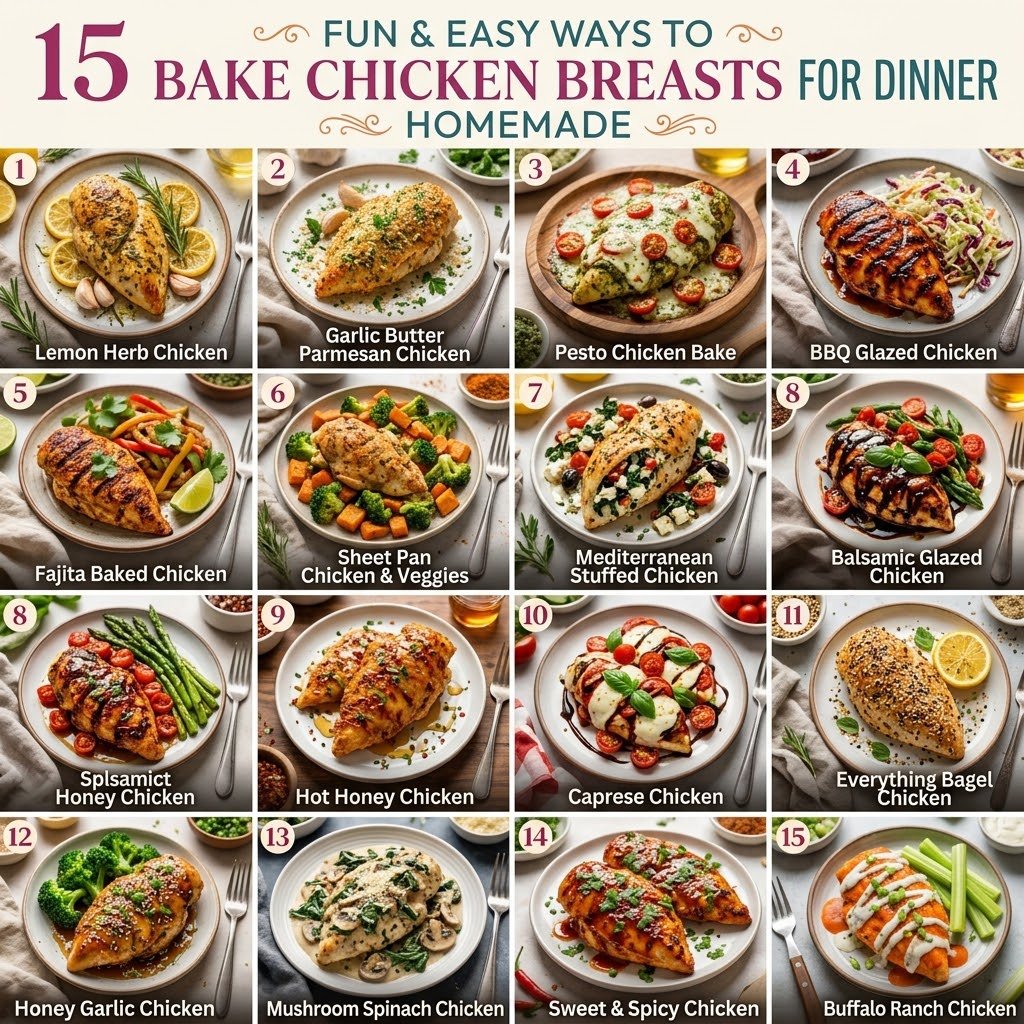
Here are 15 fun and easy ways to transform the base recipe into distinct meals. Each variation uses the master method above but alters the seasoning profile or finishing sauce.
1. Lemon Garlic Herb
Classic and timeless, this variation relies on the brightness of citrus. Mix minced garlic, dried oregano, thyme, and fresh lemon juice with your olive oil before rubbing it onto the chicken. Place lemon slices on top of the breasts while baking to infuse additional aroma.
2. Honey Mustard Glaze
For a sweet and tangy profile, whisk together Dijon mustard, honey, and a splash of apple cider vinegar. Brush this mixture over the chicken during the last 5 minutes of baking to allow the sugars to caramelize without burning.
3. Parmesan Crusted
Create a savory crust by mixing grated Parmesan cheese with almond flour and Italian seasoning. Press this mixture onto the oiled chicken breasts before baking. The cheese melts into a golden, crispy layer that adds texture and umami.
4. Spicy Cajun Kick
Coat the chicken generously with a homemade or store-bought Cajun seasoning blend. The paprika and cayenne in the blend create a reddish crust and a warming heat that pairs perfectly with rice or coleslaw.
5. Pesto Mozzarella
Bake the chicken plain with salt and pepper. In the last 5 minutes of cooking, top each breast with a tablespoon of basil pesto and a slice of fresh mozzarella. Broil briefly until the cheese is bubbly and slightly browned.
6. Balsamic Glaze
Reduce balsamic vinegar with a little brown sugar on the stovetop until syrupy. Drizzle this dark, tangy glaze over the baked chicken just before serving. It adds a sophisticated depth of flavor reminiscent of Italian cuisine.
7. Creamy Mushroom Sauce
While the chicken bakes, sauté sliced mushrooms and garlic in butter. Add heavy cream and simmer until thickened. Pour this rich sauce over the sliced chicken breasts upon serving for a comfort-food experience.
8. Taco Seasoned
Rub the chicken with a blend of cumin, chili powder, onion powder, and paprika. Once baked, slice the chicken into strips and serve in tortillas with lettuce, cheese, and salsa for easy chicken tacos.
9. Teriyaki Ginger
Marinate the chicken in soy sauce, grated fresh ginger, garlic, and brown sugar for at least 30 minutes before baking. The result is a sticky, savory-sweet coating that pairs beautifully with steamed broccoli and rice.
10. Buffalo Style
After baking, toss the hot chicken breasts in a mixture of melted butter and hot sauce. The heat of the chicken helps the sauce adhere. Serve with blue cheese dressing and celery sticks on the side.
11. Mediterranean Olive and Tomato
Top the chicken with chopped Kalamata olives, diced tomatoes, and feta cheese before baking. The juices from the tomatoes keep the chicken moist, and the feta adds a salty kick.
12. Coconut Curry
Brush the chicken with a mixture of coconut milk and red curry paste before baking. This creates a fragrant, exotic crust. Serve with cilantro and lime wedges to enhance the Thai-inspired flavors.
13. Apple Cider and Sage
Perfect for autumn, this method involves placing apple slices around the chicken on the baking sheet. Season heavily with dried sage and thyme. The chicken absorbs the sweet vapor of the cooking apples.
14. BBQ Smoked
Rub the chicken with smoked paprika and brown sugar. Bake until nearly done, then brush with your favorite BBQ sauce and return to the oven for 5 minutes. This mimics the flavor of slow-smoked meat in a fraction of the time.
15. Caprese Style
Similar to the pesto variation but fresher. Top the baked chicken with fresh tomato slices, fresh basil leaves, and a drizzle of balsamic reduction. The heat of the chicken wilts the basil slightly, releasing its oils.
Health Considerations and Nutritional Value
Chicken breast is widely regarded as one of the healthiest protein sources available. A standard 4-ounce serving of baked, skinless chicken breast contains approximately 140 calories, 26 grams of protein, and only 3 grams of fat. This high protein-to-calorie ratio makes it an ideal choice for weight management and muscle building. Furthermore, chicken is rich in essential nutrients such as Vitamin B6, which supports metabolism, and Selenium, which plays a critical role in thyroid function and antioxidant defense.
However, the health value can fluctuate based on the variation chosen. Methods involving heavy creams, sugary glazes, or excessive cheese will increase the calorie and fat content. For those monitoring sodium intake, it is important to be mindful of pre-made seasoning blends, which often contain high levels of salt. Opting for fresh herbs and spices allows you to control the sodium levels completely. Additionally, while chicken is naturally gluten-free, cross-contamination or certain sauces (like soy sauce) may introduce gluten, so those with celiac disease should verify their ingredients.
Ingredients
- 4 boneless, skinless chicken breasts (approx. 6 oz each)
- 2 tablespoons olive oil
- 1 teaspoon salt (or to taste)
- 1/2 teaspoon black pepper
- 1 teaspoon garlic powder
- 1 teaspoon onion powder
- 1 teaspoon dried paprika
- Optional: Fresh herbs or lemon wedges for garnish
Directions
- Preheat oven to 400°F (200°C) and line a baking sheet with parchment paper.
- Pound chicken breasts to an even thickness of about ¾ inch.
- Pat chicken dry with paper towels to remove excess moisture.
- In a small bowl, mix olive oil, salt, pepper, garlic powder, onion powder, and paprika.
- Rub the oil and spice mixture evenly over both sides of the chicken breasts.
- Place chicken on the prepared baking sheet, ensuring pieces do not touch.
- Bake for 18-22 minutes until internal temperature reaches 165°F (74°C).
- Remove from oven and let rest for 5-10 minutes before slicing and serving.
FAQ
Can I bake frozen chicken breasts?
Yes, but you must increase the cooking time by approximately 50%. It is generally better to thaw them first for even cooking and better texture.
Why is my baked chicken always dry?
This is usually due to overcooking or uneven thickness. Using a meat thermometer and pounding the chicken to a uniform size are the best preventative measures.
How long do leftovers last?
Stored in an airtight container in the refrigerator, baked chicken breasts will remain safe to eat for 3 to 4 days.
Can I freeze baked chicken?
Absolutely. Let the chicken cool completely, then wrap tightly in foil or place in a freezer bag. It will keep well for up to 3 months.
What side dishes go well with baked chicken?
Roasted vegetables, quinoa, rice pilaf, mashed potatoes, or a fresh green salad are all excellent companions that complement the mild flavor of the chicken.
Summary (in two lines)
Master the art of juicy baked chicken breasts with a simple base method and fifteen exciting flavor variations for endless dinner possibilities.
Enjoy high-protein, low-fat meals that are quick to prepare, healthy, and customizable to suit any taste preference or dietary need.