Savory Thai Peanut Chicken Buddha Bowl: A Flavorful Delight!
Introduction
Welcome to the ultimate culinary journey where Eastern flavors meet modern wellness trends in a harmonious explosion of taste and texture. The Savory Thai Peanut Chicken Buddha Bowl is not merely a meal; it is an experience that engages all your senses, from the aromatic scent of toasted peanuts and fresh ginger to the vibrant visual appeal of colorful vegetables arranged over a bed of fluffy grains. In today’s fast-paced world, finding a dish that balances convenience with gourmet quality is often a challenge, but this Buddha bowl rises to the occasion perfectly. It offers a comforting warmth combined with zesty freshness, making it suitable for a quick weeknight dinner or an impressive dish to serve at a casual weekend gathering.
This dish represents the pinnacle of balanced eating, incorporating lean proteins, healthy fats, complex carbohydrates, and a rainbow of micronutrient-rich vegetables. The star of the show is undoubtedly the creamy, savory, and slightly spicy Thai peanut sauce that ties every component together. Whether you are a seasoned home cook looking to expand your repertoire or a beginner eager to try something new, this recipe provides a forgiving yet rewarding process. The interplay of sweet, salty, sour, and spicy elements creates a depth of flavor that rivals many restaurant offerings, all while allowing you to control the quality of ingredients and the nutritional profile of your meal. Prepare to transform your kitchen into a hub of aromatic bliss as we delve into the creation of this flavorful delight.
The History
To truly appreciate the Savory Thai Peanut Chicken Buddha Bowl, one must understand the rich tapestry of history woven into its components. The concept of the “Buddha Bowl” itself is rooted in the tradition of monks begging for food, where they would receive a variety of offerings placed into a single bowl. In modern culinary terms, this evolved during the health food movement of the early 2000s, particularly in Western countries, as a way to describe a meal-sized bowl filled with whole grains, leafy greens, and vegetables, often topped with a protein and a flavorful sauce. The name suggests a belly so full and happy that it resembles the belly of a Buddha, symbolizing contentment and satiety.
The Thai peanut sauce, known locally in variations similar to Sate sauce, has deep roots in Southeast Asian cuisine, influenced heavily by Indonesian and Malaysian culinary traditions where peanut sauces are staples for satay skewers. As Thai cuisine gained global popularity in the late 20th century, the peanut sauce was adapted to suit local palates around the world, often becoming sweeter and creamier than its traditional counterparts. The fusion of this iconic sauce with the modern Buddha bowl concept represents a beautiful example of culinary globalization, where traditional flavors are repurposed into contemporary health-conscious formats. This dish stands as a testament to how food evolves, crossing borders and adapting to new lifestyles while retaining its soulful, flavor-packed essence.
Ingredients Breakdown
Understanding the role of each ingredient is crucial to mastering this dish, as every component contributes to the overall symmetry of flavor and texture. Below is a detailed exploration of what goes into this masterpiece.
The Protein: Chicken Thighs vs. Breasts
For this recipe, chicken thighs are often preferred over breasts due to their higher fat content, which keeps the meat juicy and tender during high-heat cooking. However, chicken breasts offer a leaner alternative. The chicken serves as the savory anchor of the bowl, absorbing the marinade and providing a substantial source of protein that keeps you full for hours. The Maillard reaction achieved during searing adds a depth of umami flavor that complements the sweetness of the peanut sauce.
The Base: Jasmine Rice or Quinoa
The foundation of any Buddha bowl is the grain. Jasmine rice is the traditional choice, offering a fragrant, slightly sticky texture that pairs beautifully with Thai flavors. Its subtle floral notes do not compete with the robust peanut sauce. Alternatively, quinoa provides a nuttier flavor and a complete protein profile, making it an excellent choice for those seeking a gluten-free or higher-protein grain option. The grain acts as a sponge, soaking up the excess sauce and ensuring every bite is flavorful.
The Sauce: Peanut Butter and Aromatics
The soul of this dish lies in the sauce. Creamy natural peanut butter provides the rich body and nutty backbone. It is balanced by soy sauce for saltiness and umami, lime juice for acidity and brightness, and honey or maple syrup for a touch of sweetness to counteract the heat. Fresh ginger and garlic are non-negotiable aromatics; they provide a pungent, spicy kick that cuts through the richness of the peanuts. Sriracha or chili garlic sauce adds the necessary heat level, which can be adjusted to personal preference.
The Crunch: Vegetables and Toppings
A Buddha bowl is defined by its variety of textures. Crunchy vegetables like red bell peppers, snap peas, and shredded carrots provide freshness and a satisfying snap. Cucumbers offer a cooling contrast to the spicy sauce. Toppings such as crushed roasted peanuts, sesame seeds, and sliced green onions add the final layer of texture and visual appeal. Fresh cilantro is often used as a garnish to introduce a herbaceous note that lifts the entire dish.
Step-by-Step Recipe
Creating this bowl is a process of layering flavors and textures. Follow this narrative guide to ensure every element is cooked to perfection.
Step 1: Preparation and Marination
Begin by preparing your chicken. Cut the chicken thighs into bite-sized cubes to ensure even cooking and easier eating within the bowl. In a medium mixing bowl, combine a portion of the soy sauce, minced garlic, grated ginger, and a splash of lime juice. Toss the chicken pieces in this mixture and let them marinate for at least 15 minutes. This step is crucial as it allows the salt and aromatics to penetrate the meat, seasoning it from the inside out rather than just sitting on the surface.
Step 2: Cooking the Grains
While the chicken marinates, rinse your jasmine rice thoroughly under cold water until the water runs clear. This removes excess starch and prevents the rice from becoming too gummy. Cook the rice according to package instructions, usually involving a 1:1.5 ratio of rice to water. Once cooked, let it sit covered for five minutes before fluffing with a fork. This resting period allows the steam to redistribute, ensuring each grain is separate and tender.
Step 3: Crafting the Peanut Sauce
In a small bowl or jar, combine the creamy peanut butter, remaining soy sauce, lime juice, honey, sriracha, and a little warm water to thin it out. Whisk vigorously until the sauce is smooth and emulsified. The warmth of the water helps melt the peanut butter slightly, making it easier to blend. Taste the sauce and adjust the seasoning; if it is too thick, add more water. If it lacks zing, add more lime. If it needs heat, add more sriracha. The consistency should be pourable but still creamy enough to coat the back of a spoon.
Step 4: Searing the Chicken
Heat a large skillet or wok over medium-high heat and add a neutral oil with a high smoke point, such as avocado or canola oil. Once the oil is shimmering, add the marinated chicken in a single layer. Avoid overcrowding the pan, as this will steam the chicken instead of searing it. Cook for about 5-7 minutes, turning occasionally, until the chicken is golden brown and cooked through. The goal is to achieve a slight caramelization on the edges.
Step 5: Vegetable Prep and Assembly
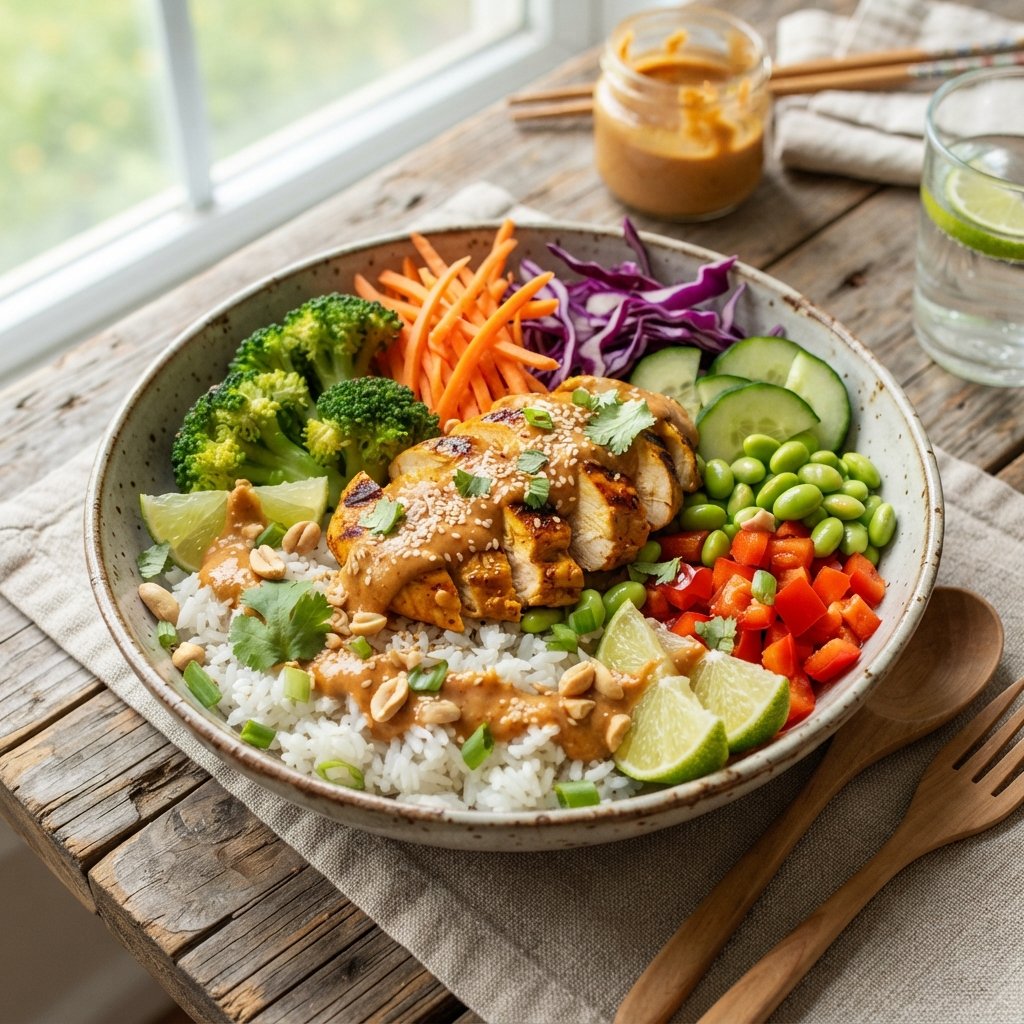
While the chicken finishes cooking, prepare your vegetables. Slice the bell peppers into thin strips, shred the carrots, and slice the cucumbers into rounds or half-moons. If you prefer cooked vegetables, you can quickly stir-fry them in the same pan after removing the chicken, but raw vegetables provide a refreshing crunch that contrasts well with the warm chicken. To assemble, place a bed of fluffy rice in the bottom of a deep bowl. Arrange the chicken and vegetables in distinct sections around the bowl, allowing the colors to shine. Drizzle the peanut sauce generously over the top and finish with crushed peanuts and fresh cilantro.
Tips
- Sauce Consistency: Peanut sauce tends to thicken as it cools. If you are meal prepping this for later in the week, keep the sauce in a separate container and warm it slightly with a teaspoon of water before drizzling it over the bowl.
- Knife Skills: Uniformity in cutting your vegetables ensures that every bite has a balanced ratio of ingredients. Take your time to julienne the carrots and peppers evenly for a professional look.
- Toast Your Peanuts: For an intensified nutty flavor, lightly toast your crushed peanuts in a dry pan for a minute before sprinkling them on top. This releases their essential oils and adds a deeper aroma.
- Acidity Balance: If the dish feels too heavy or rich, a final squeeze of fresh lime juice right before serving can cut through the fat and brighten the overall flavor profile.
- Reheating: When reheating leftovers, add a splash of water to the bowl before microwaving. This creates steam that prevents the rice and chicken from drying out.
- Gluten-Free Option: Ensure you use tamari or certified gluten-free soy sauce to make this dish safe for those with gluten intolerances.
- Spice Control: If you are sensitive to heat, remove the seeds from the chili peppers or reduce the amount of sriracha. You can always add heat, but you cannot take it away.
Variations and Customizations
One of the greatest strengths of the Buddha bowl is its versatility. You can easily customize this recipe to fit dietary restrictions or personal taste preferences without compromising on flavor.
Protein Swaps
For a vegetarian or vegan version, substitute the chicken with extra-firm tofu or tempeh. Press the tofu to remove excess moisture, cube it, and pan-fry until crispy before adding the sauce. Shrimp is another excellent alternative that cooks quickly and pairs beautifully with peanut flavors. For a plant-based protein boost, edamame beans can be added alongside the vegetables.
Grain Alternatives
While jasmine rice is traditional, you can opt for brown rice for a higher fiber content and chewier texture. Cauliflower rice is a fantastic low-carb option for those following a keto or paleo diet. Soba noodles made from buckwheat also work well, turning the bowl into a noodle salad hybrid.
Sauce Variations
If you have a peanut allergy, almond butter or sunflower seed butter can be used as a direct substitute in the sauce. For a lighter version, you can thin the sauce with coconut water instead of regular water to add a subtle tropical sweetness. Adding a teaspoon of miso paste to the sauce can deepen the umami flavor significantly.
Vegetable Rotations
Seasonal vegetables should dictate your choices. In the summer, add corn kernels and cherry tomatoes. In the winter, roasted sweet potatoes or butternut squash can add warmth and sweetness. Leafy greens like kale or spinach can be massaged with a little oil and placed under the rice for a nutrient boost.
Health Considerations and Nutritional Value
This Savory Thai Peanut Chicken Buddha Bowl is designed to be as nutritious as it is delicious. From a macronutrient perspective, it offers a balanced ratio of carbohydrates from the rice, protein from the chicken and peanuts, and healthy fats from the peanut butter and oil. The fiber content is significant due to the variety of vegetables, which aids in digestion and promotes satiety.
Peanuts are rich in monounsaturated fats, which are heart-healthy, and contain vitamin E, magnesium, and niacin. Chicken provides essential amino acids required for muscle repair and growth. The vegetables contribute a wide array of antioxidants, vitamins A and C, and potassium. However, those monitoring sodium intake should be mindful of the soy sauce content; using low-sodium soy sauce can mitigate this. Additionally, while peanut butter is healthy, it is calorie-dense, so portion control of the sauce is recommended for those watching their caloric intake. Overall, this dish supports energy levels and provides sustained fuel without the heavy slump associated with processed fast foods.
Ingredients
- For the Chicken:
- 1 lb boneless, skinless chicken thighs, cut into bite-sized pieces
- 1 tablespoon soy sauce (or tamari)
- 1 clove garlic, minced
- 1 teaspoon fresh ginger, grated
- 1 tablespoon cooking oil (avocado or canola)
- For the Peanut Sauce:
- 1/2 cup creamy natural peanut butter
- 3 tablespoons soy sauce
- 2 tablespoons lime juice (freshly squeezed)
- 1 tablespoon honey or maple syrup
- 1 teaspoon sriracha or chili garlic sauce
- 3-4 tablespoons warm water (to adjust consistency)
- 1 clove garlic, minced
- 1 teaspoon fresh ginger, grated
<
- For the Bowl:
- 2 cups cooked jasmine rice
- 1 red bell pepper, thinly sliced
- 1 cup snap peas, trimmed
- 1 large carrot, shredded
- 1/2 cucumber, sliced
- 2 green onions, sliced
- 1/4 cup crushed roasted peanuts
- Fresh cilantro, for garnish
- Lime wedges, for serving
Directions
- Marinate the Chicken: In a bowl, toss chicken pieces with 1 tablespoon soy sauce, 1 clove minced garlic, and 1 teaspoon grated ginger. Let sit for 15 minutes.
- Cook the Rice: Rinse rice until water runs clear. Cook according to package directions. Fluff with a fork and set aside.
- Make the Sauce: Whisk together peanut butter, 3 tablespoons soy sauce, lime juice, honey, sriracha, 1 clove garlic, 1 teaspoon ginger, and warm water until smooth.
- Cook the Chicken: Heat oil in a skillet over medium-high heat. Add chicken in a single layer. Cook for 5-7 minutes until golden and cooked through.
- Prepare Veggies: Slice bell peppers, snap peas, carrots, and cucumber. Arrange raw or lightly sautéed.
- Assemble: Divide rice among bowls. Top with chicken and vegetables. Drizzle with peanut sauce.
- Garnish: Sprinkle with crushed peanuts, green onions, and cilantro. Serve with lime wedges.
FAQ
Can I make this dish ahead of time for meal prep?
Yes, this bowl is excellent for meal prep. Store the rice, chicken, and vegetables in airtight containers. Keep the sauce separate to prevent the vegetables from becoming soggy. It will stay fresh in the refrigerator for up to 4 days.
Is this recipe suitable for freezing?
The chicken and rice can be frozen for up to 3 months. However, the fresh vegetables and the peanut sauce do not freeze well as the texture of the veggies will become mushy and the sauce may separate upon thawing. It is best to freeze only the cooked components.
How can I make this dish spicier?
To increase the heat level, add more sriracha to the sauce, incorporate red pepper flakes, or garnish with fresh sliced Thai chilies. You can also infuse the cooking oil with dried chili peppers before searing the chicken.
What is the best substitute for peanut butter?
Almond butter is the closest substitute in terms of texture and flavor. For a nut-free option, sunflower seed butter works surprisingly well, though it may alter the color of the sauce slightly.
Can I use store-bought peanut sauce?
Yes, you can use store-bought sauce to save time. However, homemade sauce allows you to control the sugar and sodium levels. If using store-bought, you may need to thin it with lime juice or water to achieve the desired consistency.
How do I prevent the rice from sticking to the bowl?
Ensure you rinse the rice thoroughly before cooking to remove excess starch. Additionally, letting the rice rest for five minutes after cooking and fluffing it with a fork helps separate the grains.
Is this dish gluten-free?
It can be easily made gluten-free by substituting regular soy sauce with tamari or coconut aminos and ensuring your peanut butter and sriracha are certified gluten-free.
Summary (in two lines)
This Savory Thai Peanut Chicken Buddha Bowl combines tender marinated chicken and fresh vegetables with a creamy, zesty peanut sauce over fluffy rice.
It is a customizable, nutrient-dense meal perfect for meal prep that balances rich flavors with healthy ingredients for a satisfying dining experience.