Introduction
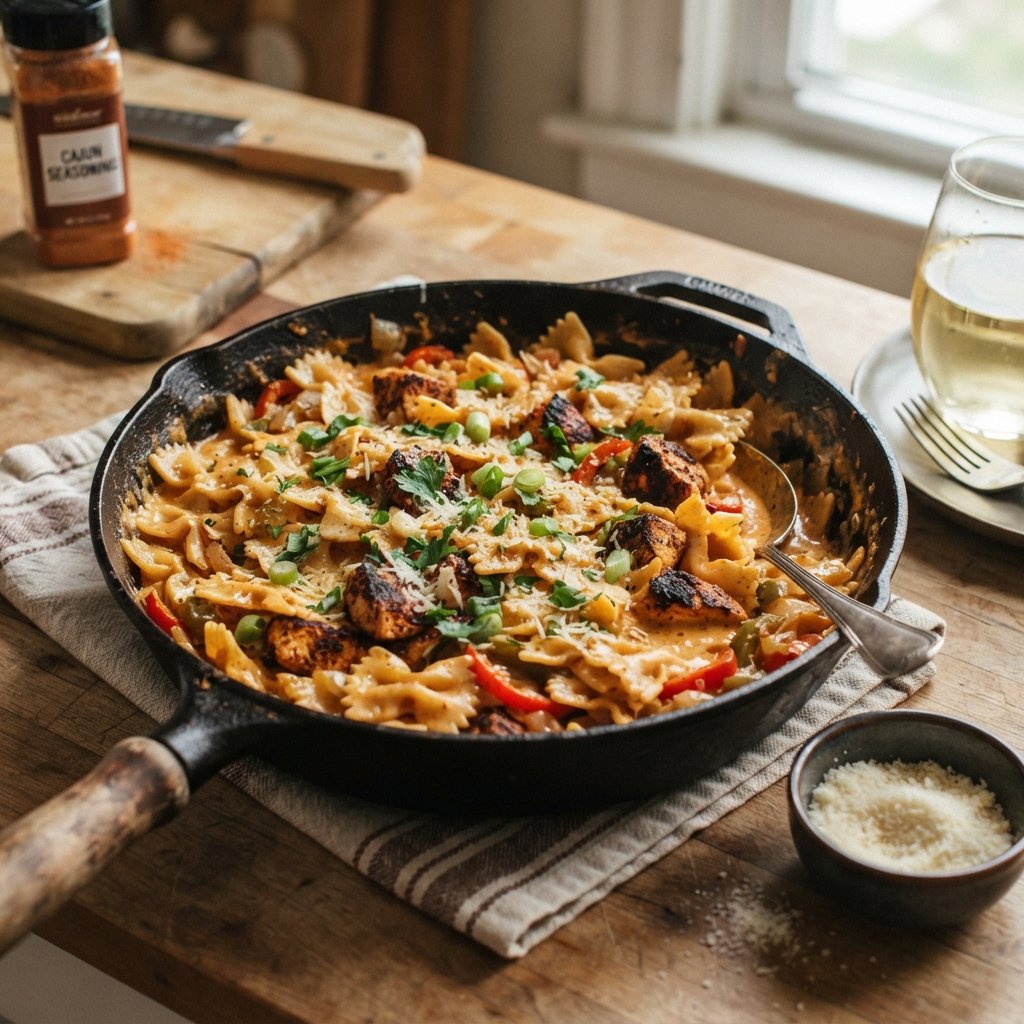
Welcome to the ultimate comfort food experience that combines the bold, zesty flavors of Louisiana with the satisfying heartiness of Italian pasta. The Creamy Cajun Chicken Bowtie Pasta Skillet is more than just a dinner recipe; it is a symphony of textures and tastes designed to bring warmth to your table with minimal cleanup. Imagine tender pieces of chicken coated in a robust spice blend, nestled among perfectly cooked bowtie pasta, all enveloped in a rich, velvety cream sauce that clings to every nook and cranny. This one-pan wonder is perfect for busy weeknights when you crave something gourmet but lack the time for elaborate preparation. Whether you are feeding a hungry family or meal prepping for the week ahead, this dish delivers robust flavor profiles that dance between spicy, savory, and creamy, ensuring every bite is a memorable event.
The History
To truly appreciate this dish, one must understand the cultural fusion that makes it possible. Cajun cuisine originates from the Acadian people, French colonists who were expelled from Canada in the 18th century and eventually settled in the bayous of Louisiana. Their cooking style is renowned for its rustic nature, reliance on local ingredients, and the famous “holy trinity” of onions, bell peppers, and celery. Over time, as American cuisine evolved, there was a significant cross-pollination between Southern comfort food and Italian immigrant traditions. Pasta, originally a staple of Italian households, found its way into Southern skillets, merging with the bold spice profiles of the Bayou.
The concept of the “skillet meal” gained popularity in the mid-20th century as a practical solution for families seeking efficiency without sacrificing flavor. The addition of cream to Cajun spices is a modern adaptation, softening the intense heat of traditional Cajun seasoning to make it palatable for a wider audience while retaining that signature kick. The bowtie pasta, or farfalle, was chosen for this specific iteration because its unique shape holds sauce exceptionally well, ensuring that the creamy Cajun infusion is delivered consistently in every mouthful. This dish represents a beautiful culinary marriage of French Acadian resilience, Southern ingenuity, and Italian structural perfection.
Ingredients Breakdown
Understanding the role of each component in this recipe is crucial for mastering the flavor profile. Below is a detailed analysis of why each ingredient is selected and how it contributes to the final dish.
Chicken Breasts or Thighs
The protein foundation of this skillet. Chicken breasts offer a leaner option that absorbs marinades well, while chicken thighs provide a richer, more forgiving texture that remains juicy even if slightly overcooked. The choice depends on your preference for leanness versus richness.
Cajun Seasoning
This is the soul of the dish. A authentic blend includes paprika, garlic powder, onion powder, dried thyme, oregano, cayenne pepper, and black pepper. Store-bought versions vary in salt content, so homemade blends allow for precise control over sodium and heat levels.
Bowtie Pasta (Farfalle)
The structure of farfalle is ideal for skillet meals. The pinched center and ruffled edges trap the creamy sauce, preventing the dish from becoming soupy. It also holds its shape well during the simmering process without becoming mushy.
Heavy Cream
To achieve the luxurious texture associated with this recipe, heavy cream is essential. It provides the fat content necessary to emulsify the spices and creates a coating that clings to the pasta. Half-and-half can be used for a lighter version, but the sauce will be thinner.
Chicken Broth
Used to deglaze the pan and cook the pasta, the broth adds a layer of savory depth that water cannot provide. It lifts the fond (browned bits) from the bottom of the skillet, incorporating concentrated flavor into the sauce.
Aromatics (Garlic and Onions)
Freshly minced garlic and diced onions form the aromatic base. They are sautéed until translucent to release their sugars and essential oils, creating a fragrant foundation that supports the heavier spices.
Parmesan Cheese
Added at the end, freshly grated Parmesan acts as a thickener and a flavor enhancer. Its salty, umami-rich profile balances the heat of the Cajun seasoning and adds a nutty finish to the cream sauce.
Step-by-Step Recipe
Creating this dish is a journey through heat management and timing. Follow this narrative guide to understand the flow of cooking before diving into the specific measurements.
Phase 1: Preparation and Seasoning
Begin by preparing your workspace. Ensure all vegetables are chopped and measured before you turn on the heat, as skillet cooking moves quickly. Pat your chicken pieces completely dry with paper towels; moisture is the enemy of a good sear. Generously coat the chicken on all sides with the Cajun seasoning, pressing the spices into the meat to ensure adherence during cooking.
Phase 2: The Sear
Heat your large skillet over medium-high heat with a combination of oil and butter. The oil prevents burning while the butter adds flavor. Once the fat is shimmering, add the chicken in a single layer. Do not overcrowd the pan, as this will steam the meat instead of searing it. Cook until a deep golden-brown crust forms, then flip and repeat. Remove the chicken before it is fully cooked through, as it will finish later in the sauce.
Phase 3: Building the Base
In the same skillet, utilizing the rendered chicken fat and fond, add your onions and bell peppers. Sauté until they soften and begin to caramelize. Add the garlic last to prevent it from burning, stirring constantly for about thirty seconds until fragrant. This layering of aromatics is critical for depth.
Phase 4: Simmering and Combining
Pour in the chicken broth to deglaze the pan, scraping the bottom with a wooden spoon to release all the flavorful bits. Add the uncooked pasta and heavy cream. Bring the liquid to a gentle boil, then reduce to a simmer. Cover the skillet and allow the pasta to cook directly in the sauce. This method allows the starch from the pasta to thicken the sauce naturally.
Phase 5: The Finish
Once the pasta is al dente and the sauce has thickened, return the chicken to the skillet. Stir in the Parmesan cheese and fresh parsley. Taste for seasoning and adjust salt or pepper as needed. Serve immediately while the cheese is melted and the sauce is velvety.
Tips
To elevate this recipe from good to exceptional, consider these professional cooking tips and troubleshooting advice.
- Reserve Pasta Water: Even though the pasta cooks in the skillet, keeping a cup of starchy water nearby is wise. If the sauce becomes too thick during simmering, a splash of this water can loosen it without diluting the flavor.
- Control the Heat: Cajun seasoning can burn easily due to the sugar content in some spice blends. Keep the heat at a steady medium during the simmering phase to prevent the cream from separating or the spices from turning bitter.
- Freshly Grated Cheese: Avoid pre-packaged shredded cheese if possible. These often contain anti-caking agents that prevent them from melting smoothly, leading to a grainy sauce. Grate your own Parmesan for a silky texture.
- Rest the Chicken: When you sear the chicken initially, let it rest on a plate for a few minutes before cutting or returning it to the pan. This allows the juices to redistribute, ensuring moist bites.
- Pan Selection: Use a deep skillet or a sauté pan with high sides. You will be adding liquid and pasta, and a shallow pan may lead to boil-overs.
- Spice Adjustment: If you are sensitive to heat, reduce the cayenne pepper in your seasoning blend. You can always add heat later with red pepper flakes, but you cannot remove it once added.
Variations and Customizations
This recipe is highly adaptable to suit various dietary needs and flavor preferences. Here are several ways to customize your Creamy Cajun Chicken Bowtie Pasta Skillet.
Protein Swaps
While chicken is traditional, this sauce pairs beautifully with shrimp. Add peeled and deveined shrimp in the last five minutes of cooking, as they cook much faster than chicken. Andouille sausage is another excellent option, offering a smoky depth that complements the Cajun spices. For a vegetarian version, use chickpeas or firm tofu cubes, ensuring they are pressed and seared well.
Vegetable Additions
Increase the nutritional density by adding spinach or kale during the last few minutes of simmering; they will wilt perfectly into the sauce. Diced zucchini, mushrooms, or cherry tomatoes can also be sautéed with the onions for added texture and sweetness.
Dietary Modifications
For a gluten-free version, simply substitute the bowtie pasta with a high-quality brown rice or corn-based gluten-free pasta. Be mindful that gluten-free pasta may require different cooking times and more liquid. For a dairy-free option, replace the heavy cream with full-fat coconut milk and use a nutritional yeast-based Parmesan alternative.
Flavor Twists
Add a splash of white wine when deglazing the pan for a brighter acidity. You can also stir in a teaspoon of tomato paste with the aromatics to add a subtle richness and color to the sauce. For extra smokiness, add a pinch of smoked paprika to the seasoning blend.
Health Considerations and Nutritional Value
While this dish is indulgent, understanding its nutritional profile helps in balancing it within a healthy diet. The primary source of calories comes from the heavy cream and pasta, providing energy-dense carbohydrates and fats. The chicken offers a substantial amount of lean protein, essential for muscle repair and satiety.
Caloric Density: A standard serving is relatively high in calories due to the cream and cheese. To reduce this, consider using half-and-half or a milk-cornstarch slurry instead of heavy cream.
Sodium Content: Cajun seasoning and Parmesan cheese are high in sodium. Individuals monitoring blood pressure should use low-sodium broth and make a homemade salt-free Cajun blend.
Micronutrients: The garlic, onions, and peppers provide vitamins C and A, along with antioxidants. Adding green vegetables like spinach boosts iron and fiber content, helping to regulate digestion and blood sugar spikes associated with refined pasta.
Portion Control: Because the dish is rich, smaller portions paired with a side salad can create a balanced meal without excessive caloric intake.
Ingredients
- 1.5 lbs boneless, skinless chicken breasts, cut into bite-sized pieces
- 2 tablespoons Cajun seasoning (adjust to taste)
- 12 oz bowtie pasta (farfalle), uncooked
- 2 tablespoons olive oil
- 2 tablespoons unsalted butter
- 1 medium yellow onion, diced
- 1 red bell pepper, diced
- 4 cloves garlic, minced
- 2 cups chicken broth (low sodium preferred)
- 1 cup heavy cream
- 1/2 cup freshly grated Parmesan cheese
- 2 cups fresh spinach (optional)
- Salt and black pepper to taste
- Fresh parsley, chopped (for garnish)
Directions
- Season the chicken pieces generously on all sides with the Cajun seasoning, salt, and black pepper. Set aside.
- Heat the olive oil and butter in a large, deep skillet over medium-high heat.
- Add the chicken to the skillet in a single layer. Cook for 5-6 minutes, turning occasionally, until browned and cooked through. Remove chicken from the skillet and set aside on a plate.
- In the same skillet, add the diced onion and bell pepper. Sauté for 3-4 minutes until softened.
- Add the minced garlic and cook for another 30 seconds until fragrant, being careful not to burn it.
- Pour in the chicken broth and scrape the bottom of the pan to release any browned bits (fond).
- Add the uncooked bowtie pasta and heavy cream to the skillet. Stir to combine.
- Bring the mixture to a boil, then reduce the heat to low. Cover and simmer for 10-12 minutes, stirring occasionally, until the pasta is tender and the sauce has thickened.
- If using spinach, stir it in during the last 2 minutes of cooking until wilted.
- Return the cooked chicken to the skillet. Stir in the Parmesan cheese until melted and smooth.
- Taste and adjust seasoning with more salt, pepper, or Cajun spice if needed.
- Serve hot, garnished with fresh chopped parsley.
FAQ
Can I make this dish ahead of time?
Yes, but pasta tends to absorb liquid as it sits. Store leftovers in an airtight container in the refrigerator for up to 3 days. When reheating, add a splash of broth or milk to restore the creamy consistency.
Is this dish very spicy?
It has a moderate kick due to the Cajun seasoning. If you prefer mild flavors, use half the amount of seasoning or choose a “mild” blend. Conversely, add cayenne pepper for extra heat.
Can I freeze this recipe?
Freezing is not recommended for cream-based pasta dishes. The dairy can separate and become grainy upon thawing. It is best enjoyed fresh or stored in the refrigerator.
What wine pairs well with this meal?
A crisp white wine like Sauvignon Blanc or a light red like Pinot Noir complements the creamy and spicy elements without overpowering the dish.
Why is my sauce too thin?
If the sauce hasn’t thickened after the pasta is cooked, remove the lid and simmer on low for a few more minutes to allow reduction. You can also mix a teaspoon of cornstarch with cold water and stir it in.
Summary (in two lines)
This Creamy Cajun Chicken Bowtie Pasta Skillet offers a perfect blend of spicy Southern flavors and rich Italian comfort in a single pan.
Enjoy tender chicken and al dente pasta enveloped in a velvety sauce, ready to serve in under 30 minutes for an effortless gourmet meal.