Introduction
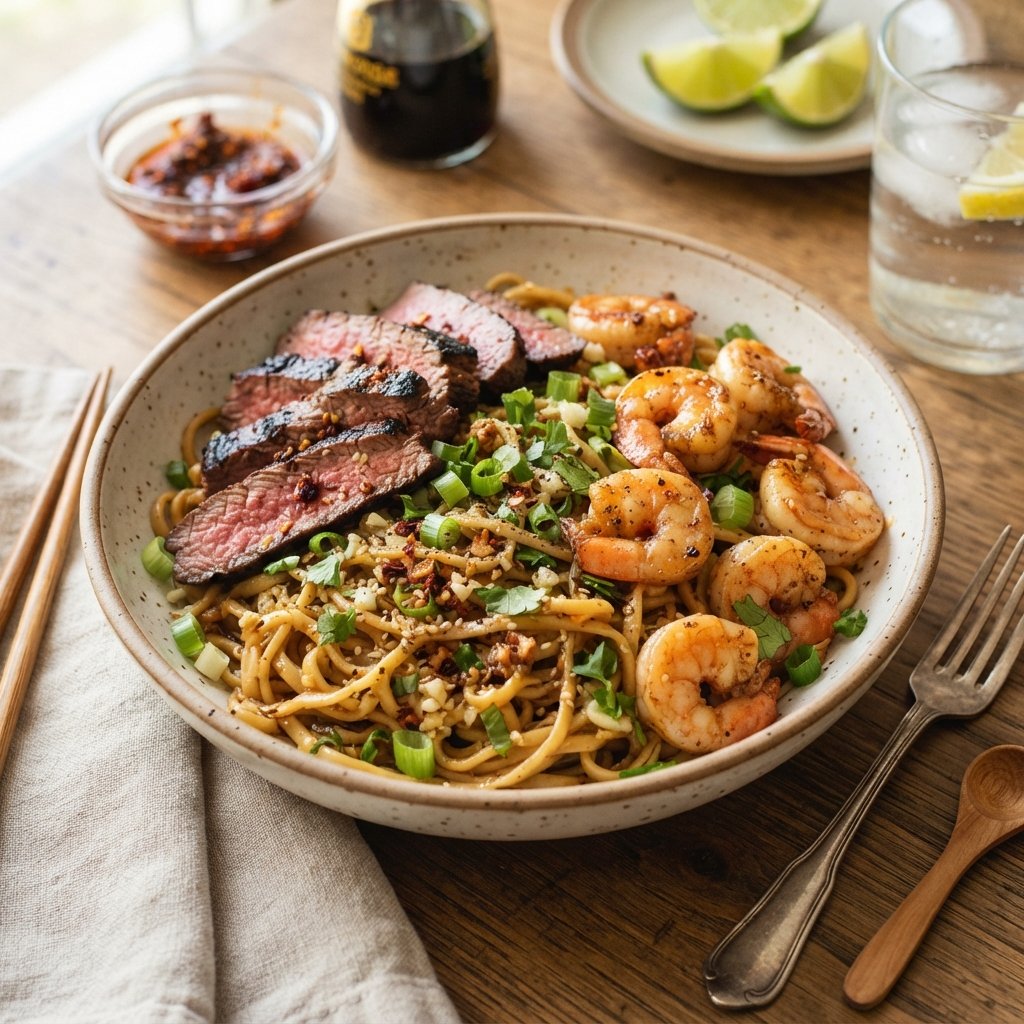
Imagine a dish that marries the briny, ocean-fresh depth of premium seafood with the rich, earthy satisfaction of perfectly seared steak, all bound together by a silky, aromatic garlic butter sauce that clings to every strand of pasta. Welcome to the world of Savory Surf & Turf Garlic Noodles, a culinary masterpiece that transcends the boundaries of traditional comfort food. This isn’t just dinner; it is an experience of texture and flavor that balances the luxurious mouthfeel of butter with the savory punch of umami-rich ingredients.
In a culinary landscape often divided between land and sea, this dish acts as the ultimate diplomat. It takes the classic American “Surf & Turf” concept—usually reserved for high-end steakhouses—and reimagines it through the lens of Asian-inspired garlic noodle culture. The result is a bowl of golden, glistening noodles that offer a symphony of tastes: the sweetness of caramelized garlic, the saltiness of soy sauce, the richness of browned butter, and the distinct, high-quality proteins of shrimp and beef. Whether you are hosting a dinner party or treating yourself to a well-deserved indulgence, this recipe promises to deliver restaurant-quality results right in your own kitchen.
The History
To truly appreciate this dish, one must understand the two distinct culinary lineages that converge in this bowl. The concept of Surf & Turf dates back to the mid-20th century in the United States, popularized by steakhouses looking to offer the “best of both worlds” on a single plate. It was a symbol of abundance and luxury, pairing the most expensive cuts of beef with the finest lobsters or shrimp available.
On the other side of the spectrum lies the history of Garlic Noodles. While garlic and noodles have existed separately for centuries across various cultures, the specific style of “Garlic Noodles” known today—tossed in a fragrant, buttery, soy-based sauce—is widely attributed to Vietnamese-American cuisine, particularly in San Francisco. Chef Thanh Pham of the restaurant Thanh Long is often credited with popularizing this style in the 1970s, creating a sauce that was neither fully Western nor fully Eastern, but a delicious hybrid.
Combining these two histories creates a modern fusion delight. It takes the celebratory nature of Surf & Turf and infuses it with the addictive, savory comfort of Vietnamese-style garlic noodles. It represents the evolution of home cooking, where global influences blend to create something entirely new and deeply satisfying.
Ingredients Breakdown
The magic of this dish lies not just in the combination of proteins, but in the quality and preparation of the foundational ingredients. Here is a deep dive into what makes each component essential:
- The Noodles: While you can use spaghetti or linguine, fresh egg noodles or udon provide a superior chewiness that holds up against the heavy sauce. The starch content is crucial for emulsifying the butter and oil.
- The Garlic: This is the star. You need a significant amount—usually a whole head or more. The garlic should be minced finely to release its oils quickly but not so fine that it burns instantly. Some chefs prefer smashing the cloves to extract maximum flavor before removing them, while others leave the minced bits for texture.
- The Fats (Butter and Oil): We use a combination of unsalted butter and a neutral oil (like canola or vegetable oil). The oil raises the smoke point to prevent burning, while the butter provides that creamy, luxurious finish. Using European-style butter with a higher fat content will yield a richer sauce.
- The Umami Bombs: Soy sauce provides the salt and depth, while Oyster sauce adds a viscous sweetness and marine depth that ties the seafood and beef together. A dash of fish sauce (even in a beef dish) adds a background note of complexity that is hard to pinpoint but impossible to miss.
- The Surf (Seafood): Large shrimp or scallops are ideal. They cook quickly and offer a sweet contrast to the savory beef. Avoid small shrimp as they can get lost in the noodles.
- The Turf (Beef): Thinly sliced beef is best for quick cooking. Flank steak, skirt steak, or even high-quality ribeye cut into bite-sized strips work wonderfully. The key is high heat to get a sear without overcooking the interior.
Step-by-Step Recipe Narrative
Cooking this dish is a dance of timing and heat management. You aren’t just boiling pasta; you are building layers of flavor.
Phase 1: The Prep. Before you turn on the stove, ensure all your proteins are patted dry. Moisture is the enemy of a good sear. Slice your beef against the grain to ensure tenderness. Mince your garlic and have your sauces measured and ready in a small bowl; once the cooking starts, it moves fast.
Phase 2: The Sear. In a large wok or skillet, get your oil screaming hot. Sear the beef strips quickly, just until browned but not cooked through, then remove them. Do the same with the shrimp. They should be pink and opaque but not rubbery. Setting them aside prevents them from overcooking while you build the sauce.
Phase 3: The Aroma. In the same pan (don’t clean it! Those brown bits are flavor gold), add your butter and oil. Once melted and foaming, add the garlic. Cook this gently. You want the garlic to turn a light golden brown and smell incredibly fragrant, not burn. This infuses the fat with garlic essence.
Phase 4: The Marriage. Toss in your cooked noodles. If you have reserved some starchy pasta water, add a splash now. Pour in your sauce mixture (soy, oyster, sugar, fish sauce). Toss vigorously. The heat of the noodles will thicken the sauce, coating every strand in a glossy sheen.
Phase 5: The Reunion. Return the beef and shrimp to the pan. Toss gently to warm them through and distribute them evenly. Finish with fresh green onions and a crack of black pepper.
Tips for Perfection
- Don’t Overcook the Noodles: Drain your noodles when they are still slightly firm (al dente). They will continue to cook in the hot pan with the sauce. Mushy noodles will ruin the texture of this dish.
- The “Golden Garlic” Rule: Watch your garlic like a hawk. It goes from golden and delicious to burnt and bitter in about 15 seconds. If it starts to smoke too much, pull the pan off the heat immediately.
- Reserve Pasta Water: Always save a cup of the cloudy water you boiled your noodles in. The starch in this water helps emulsify the butter and oil, creating a creamy sauce rather than a greasy pool of fat at the bottom of the bowl.
- High Heat is Key: When searing the beef and shrimp, you want high heat to get a Maillard reaction (browning). If your pan is crowded, cook the meat in batches. Crowding creates steam, which boils the meat instead of searing it.
- Finish with Acid: If the dish feels too heavy or rich, a tiny squeeze of lime juice or a dash of rice vinegar right at the end can cut through the fat and brighten the flavors.
Variations and Customizations
This recipe is a canvas for your personal taste preferences. Here are several ways to customize your Surf & Turf Garlic Noodles:
- Spicy Kick: Add dried red chili flakes, fresh sliced Thai bird’s eye chilies, or a drizzle of chili crisp oil during the garlic sautéing phase for a heat that builds with every bite.
- Vegetarian Surf & Turf: Swap the beef for king oyster mushrooms (sliced to look like scallops) and the shrimp for firm tofu or tempeh. Use mushroom soy sauce to maintain the umami depth.
- Creamy Version: For a Western twist, stir in a splash of heavy cream or a tablespoon of cream cheese at the end for a Carbonara-esque texture.
- Herb Infusion: While green onions are traditional, try adding fresh cilantro, Thai basil, or even chopped parsley at the very end for a fresh, herbal aroma.
- Low-Carb Option: Substitute wheat noodles with zucchini noodles (zoodles) or shirataki noodles. Be careful not to overcook these, as they release water quickly.
Health Considerations and Nutritional Value
While this dish is undeniably indulgent, it can be part of a balanced diet when consumed in moderation. The primary nutritional benefits come from the high-quality protein sources. Beef provides essential iron, zinc, and B12, crucial for energy and blood health. Shrimp offers a lean protein source rich in selenium and iodine, with relatively low calories.
However, diners should be mindful of the sodium content. Soy sauce, oyster sauce, and fish sauce are all salt-heavy. To make this healthier, look for low-sodium versions of these condiments. Additionally, the dish is calorie-dense due to the butter and oil. To reduce calories, you can reduce the butter by 25% and increase the volume of vegetables (like broccoli or bok choy) added to the dish to increase fiber and satiety without adding significant calories.
Ingredients
- 1 lb (450g) fresh egg noodles, linguine, or spaghetti
- 8 oz flank steak or ribeye, thinly sliced against the grain
- 8 oz large shrimp, peeled and deveined
- 6 cloves garlic, minced finely
- 4 tbsp unsalted butter
- 2 tbsp vegetable or canola oil
- 3 tbsp soy sauce (low sodium preferred)
- 2 tbsp oyster sauce
- 1 tsp fish sauce
- 1 tbsp brown sugar or white sugar
- 1/4 cup reserved pasta water
- 3 green onions, sliced diagonally
- Freshly cracked black pepper to taste
- Optional: Sesame seeds for garnish
Directions
- Prep the Proteins: Pat the beef strips and shrimp completely dry with paper towels. Season lightly with black pepper (do not add salt yet, as the sauces are salty).
- Boil the Noodles: Bring a large pot of salted water to a boil. Cook the noodles according to package instructions until al dente. Before draining, reserve 1/4 cup of the starchy pasta water. Drain noodles and set aside.
- Sear the Beef: Heat 1 tablespoon of oil in a large wok or deep skillet over high heat. Add the beef in a single layer (work in batches if necessary). Sear for 1-2 minutes until browned but still rare inside. Remove beef and set aside on a plate.
- Sear the Shrimp: In the same pan, add a splash more oil if needed. Add the shrimp. Cook for 1-2 minutes per side until pink and opaque. Remove shrimp and set aside with the beef.
- Make the Garlic Base: Lower the heat to medium. Add the butter and remaining oil to the pan. Once the butter melts and begins to foam, add the minced garlic. Sauté for 2-3 minutes, stirring constantly, until the garlic is fragrant and turns a light golden color. Do not burn.
- Create the Sauce: Add the soy sauce, oyster sauce, fish sauce, and sugar to the garlic butter mixture. Stir well to dissolve the sugar and combine. Let it bubble for 30 seconds.
- Combine: Add the cooked noodles and the reserved pasta water to the pan. Toss vigorously using tongs to coat the noodles in the sauce. The starch water will help the sauce cling to the noodles.
- Final Assembly: Return the beef and shrimp to the pan. Toss gently to warm the meat through and distribute it evenly among the noodles.
- Serve: Remove from heat immediately. Garnish generously with sliced green onions, black pepper, and sesame seeds. Serve hot.
FAQ
Can I make this dish ahead of time?
Garlic noodles are best served immediately. The noodles tend to absorb the sauce and become dry or clumpy as they sit. If you must prep ahead, cook the proteins and make the sauce base, but boil and toss the noodles fresh just before serving.
What can I substitute for oyster sauce?
If you have a shellfish allergy or don’t have oyster sauce, you can use Hoisin sauce mixed with a little soy sauce, or a vegetarian mushroom stir-fry sauce. Note that the flavor profile will be slightly sweeter and less marine.
Why are my noodles greasy?
This usually happens if the heat is too low when tossing the noodles, preventing emulsification, or if too much oil was used. Ensure you use the starchy pasta water to help bind the fat to the noodles.
Can I use frozen shrimp?
Yes, frozen shrimp work well. Just ensure they are fully thawed and, most importantly, patted very dry before cooking to ensure a good sear.
Summary
Savory Surf & Turf Garlic Noodles combine seared beef and shrimp with fragrant garlic butter noodles for a luxurious fusion meal. This dish balances rich umami flavors with tender proteins, offering a restaurant-quality dining experience at home.