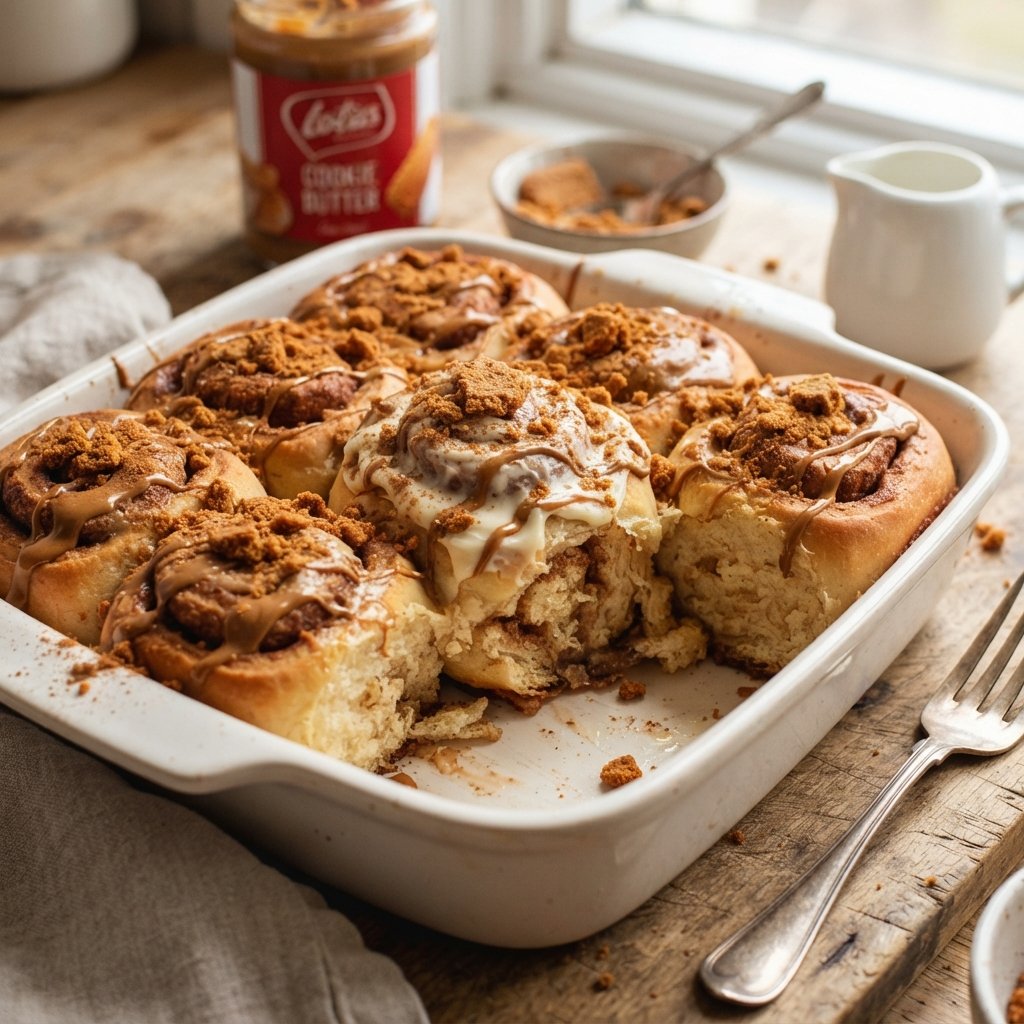
Ultimate Biscoff Cookie Butter Cinnamon Rolls
Introduction
There are few culinary experiences that rival the comforting warmth of a freshly baked cinnamon roll straight out of the oven, especially when that classic recipe is elevated with the sophisticated, caramelized notes of Biscoff cookie butter. This fusion dessert represents the pinnacle of modern baking trends, marrying the nostalgic spice of traditional Scandinavian cinnamon buns with the crunchy, speculoos-inspired richness of Lotus Biscoff spread. When you bite into one of these rolls, you are greeted by a cloud-like dough that yields gently to the teeth, followed by an intense explosion of cinnamon sugar and the distinct, spiced flavor of cookie butter that has taken the world by storm. The glaze, often made from melted Biscoff spread or a cream cheese infusion, adds a final layer of decadence that ensures every bite is memorable. Whether you are preparing these for a special holiday breakfast, a weekend brunch gathering, or simply treating yourself to a well-deserved indulgence, these Biscoff Cookie Butter Cinnamon Rolls promise to deliver an unmatched sensory experience that balances sweetness, spice, and texture in perfect harmony.
The aroma that fills your kitchen during the baking process is nothing short of transformative, turning a普通 home into a professional bakery environment within minutes. The scent of yeasted dough rising combined with the pungent warmth of cinnamon and the buttery caramel notes of the cookie spread creates an atmosphere of hospitality and love. Beyond the smell and taste, the visual appeal of these rolls is staggering; the golden-brown exterior contrasts beautifully with the creamy white or light brown glaze drizzled on top, making them Instagram-ready straight out of the pan. This recipe is designed to be comprehensive, guiding both novice bakers and experienced pastry chefs through every nuance of the process to ensure consistent, bakery-quality results every single time you attempt this masterpiece in your own kitchen.
The History
To truly appreciate the Biscoff Cookie Butter Cinnamon Roll, one must understand the rich historical tapestry from which its components are drawn. The cinnamon roll itself traces its roots back to Sweden and Finland in the 1920s, where it became known as kanelbulle. During this era, sugar and spices were becoming more accessible to the general public, and baking became a cherished national pastime in Scandinavia. The tradition grew so significant that Sweden eventually designated October 4th as National Cinnamon Bun Day, celebrating the cultural importance of this sweet yeast bread. Over the decades, the recipe migrated across the Atlantic, evolving in America to include heavier glazes and richer doughs, becoming a staple of mall food courts and weekend breakfasts alike.
On the other side of this delicious equation lies the history of Biscoff cookies, originally created by the Lotus Bakeries in Belgium in 1932. These speculoos cookies were traditionally served alongside coffee in European cafes, known for their crisp texture and unique blend of cinnamon, nutmeg, cloves, and ginger. For decades, they remained a companion to beverages until the innovation of cookie butter emerged in 2011. By grinding the cookies into a smooth, spreadable paste similar to peanut butter, Lotus Bakeries created a new category of confectionery that allowed the flavor of the cookie to be used as an ingredient rather than just a side item. The convergence of these two histories—the centuries-old tradition of spiced yeast buns and the modern innovation of cookie butter—creates a contemporary classic that honors the past while embracing the future of dessert trends.
Ingredients Breakdown
Understanding the function of each ingredient is crucial for mastering this recipe, as baking is a science that relies on precise chemical reactions. All-Purpose Flour serves as the structural backbone of the dough, providing the necessary gluten network to trap gas produced by the yeast, resulting in a fluffy texture. Active Dry Yeast is the leavening agent that brings the dough to life; it consumes sugars and releases carbon dioxide, causing the rolls to rise and become airy. Whole Milk is preferred over water because the fats and proteins in milk enrich the dough, tenderizing the crumb and adding a subtle creamy flavor that complements the spices. Unsalted Butter is used in both the dough and the filling; in the dough, it adds richness, while in the filling, it acts as a glue to hold the sugar and cookie butter together.
Biscoff Cookie Butter is the star ingredient, providing the signature caramelized spice flavor that distinguishes this recipe from standard cinnamon rolls. It is important to use the smooth version for the filling to ensure even distribution, though crunchy can be used for texture in the glaze. Brown Sugar contains molasses, which adds moisture and a deeper, more complex sweetness than white sugar, pairing exceptionally well with cinnamon. Cinnamon should be high-quality Ceylon or Saigon cinnamon for the most aromatic punch. Eggs contribute to the structure and richness of the dough, helping to emulsify the fats and liquids for a uniform consistency. Finally, the Glaze ingredients, often involving powdered sugar and more cookie butter, ensure that the final product remains moist and adds a final layer of sweetness that balances the spice.
Step-by-Step Recipe
The journey to creating these rolls begins with activating the yeast. You will warm the milk to a precise temperature, usually around 110 degrees Fahrenheit, to wake up the yeast without killing it. Once mixed with a pinch of sugar, the yeast should foam within ten minutes, indicating it is active and ready to leaven the dough. Next, you combine the wet ingredients, including melted butter and eggs, with the yeast mixture before gradually incorporating the flour. Kneading is a critical step here; whether done by hand or with a stand mixer, the dough must be worked until it passes the “windowpane test,” where a small piece can be stretched thin enough to see light through it without tearing, indicating proper gluten development.
After kneading, the dough requires its first rise in a warm, draft-free environment until it has doubled in size, which typically takes about an hour to ninety minutes depending on ambient temperature. Once risen, the dough is punched down to release excess gas and rolled out into a large rectangle on a lightly floured surface. The filling stage involves spreading a generous layer of softened butter, followed by a thick coating of Biscoff cookie butter, and finally sprinkling the cinnamon sugar mixture evenly across the surface. Rolling the dough tightly from the long edge ensures that the layers remain distinct and do not unravel during baking. The log is then sliced into individual rolls and placed into a baking pan for the second rise, which is essential for achieving the desired lightness.
Baking requires careful monitoring of temperature and time. Usually, 350 degrees Fahrenheit is the sweet spot, allowing the interiors to cook through without burning the sugary exterior. Once baked to a golden brown, the rolls should cool slightly before glazing. Applying the glaze while the rolls are still warm allows it to melt slightly into the crevices, ensuring every bite is coated in flavor. This step-by-step process demands patience, but the reward is a batch of rolls that possess a professional texture and flavor profile that rivals any high-end bakery.
Tips
To ensure the success of your Biscoff Cookie Butter Cinnamon Rolls, consider these expert tips that address common pitfalls. First, always measure your flour correctly by spooning it into the cup and leveling it off, rather than scooping directly from the bag, which can compact the flour and lead to dense, dry rolls. Second, temperature control is vital; if your kitchen is cold, the rising process will take longer, so consider placing the dough in an oven with the light turned on to create a warm microclimate. Third, when rolling the dough, do not stretch it too thin, or the filling may leak out during baking; aim for an even thickness throughout the rectangle. Fourth, use a piece of unflavored dental floss instead of a knife to slice the rolls, as this prevents squashing the dough and keeps the layers intact.
Storage is another critical aspect of maintaining quality. These rolls are best enjoyed fresh, but if you have leftovers, store them in an airtight container at room temperature for up to two days or in the refrigerator for up to five days. To reheat, microwave individual rolls for fifteen seconds or warm them in the oven at 300 degrees Fahrenheit for ten minutes to restore the softness. You can also prepare the rolls the night before; assemble them in the pan, cover tightly with plastic wrap, and refrigerate overnight. In the morning, let them sit at room temperature for thirty minutes before baking as usual. This make-ahead option is perfect for holiday mornings when you want fresh rolls without the early morning workload.
Variations and Customizations
The beauty of this recipe lies in its versatility, allowing bakers to customize the rolls to suit dietary needs or flavor preferences. For a vegan version, substitute the dairy milk with almond or oat milk, use a flax egg instead of chicken eggs, and ensure you use a plant-based butter alternative and vegan-friendly cookie butter. For those requiring a gluten-free option, use a high-quality 1-to-1 gluten-free flour blend that includes xanthan gum to mimic the elasticity of gluten, though the texture may be slightly denser. You can also experiment with the filling by adding chopped pecans or walnuts for a crunchy contrast to the soft dough, or incorporating a layer of cream cheese into the filling for a tangy sweetness that cuts through the sugar.
Flavor variations can also extend to the glaze. While a standard Biscoff glaze is classic, you could mix cream cheese with powdered sugar and a splash of vanilla for a tangier topping, or drizzle melted dark chocolate over the top for a mocha-inspired twist. For a seasonal touch, add a pinch of nutmeg and cardamom to the cinnamon sugar mixture during the autumn months, or incorporate orange zest into the dough for a bright, citrusy note during the winter holidays. These customizations allow you to make the recipe your own while maintaining the core identity of the Biscoff cinnamon roll experience.
Health Considerations and Nutritional Value
While these Biscoff Cookie Butter Cinnamon Rolls are undeniably a treat meant for indulgence, it is helpful to understand their nutritional profile to consume them mindfully. Each roll is relatively high in calories due to the combination of refined flour, sugar, butter, and cookie butter, making them a dense source of energy. The primary macronutrients are carbohydrates from the flour and sugars, with a significant amount of saturated fat coming from the butter and cookie spread. However, they do offer some minor nutritional benefits; the eggs provide protein, and the spices like cinnamon have been linked to anti-inflammatory properties and blood sugar regulation in some studies.
For those monitoring their intake, portion control is key. Enjoying one roll as part of a balanced breakfast rather than multiple rolls can help manage calorie consumption. There are no significant vitamins or minerals in high quantities, so these should be viewed as a dessert or special occasion breakfast rather than a staple food. Individuals with allergies should be particularly cautious, as the recipe contains wheat, dairy, eggs, and potentially nuts depending on cross-contamination in the cookie butter manufacturing process. Always check labels if you have severe allergies, and consider the substitutions mentioned in the variations section to accommodate specific dietary restrictions without sacrificing too much flavor.
Ingredients
- For the Dough:
- 1 cup warm whole milk (110°F)
- 2 ¼ teaspoons active dry yeast (1 packet)
- ½ cup granulated sugar
- ¼ cup unsalted butter, melted
- 2 large eggs, room temperature
- 1 teaspoon salt
- 4 to 4 ½ cups all-purpose flour
- For the Filling:
- ½ cup unsalted butter, softened
- 1 cup Biscoff cookie butter (smooth)
- 1 cup brown sugar, packed
- 2 tablespoons ground cinnamon
- For the Glaze:
- 1 cup powdered sugar
- 2 tablespoons Biscoff cookie butter, melted
- 1 to 2 tablespoons milk or cream
- ½ teaspoon vanilla extract
Directions
- Activate the Yeast: In a large bowl or stand mixer, combine warm milk, yeast, and a pinch of sugar. Let it sit for 5-10 minutes until foamy.
- Make the Dough: Add the melted butter, remaining sugar, eggs, and salt to the yeast mixture. Gradually add flour, one cup at a time, mixing until a soft dough forms.
- Knead: Knead the dough on a floured surface or with a dough hook for 5-7 minutes until smooth and elastic.
- First Rise: Place dough in a greased bowl, cover with a damp cloth, and let rise in a warm place for 1-1.5 hours until doubled in size.
- Prepare Filling: In a small bowl, mix the softened butter, cookie butter, brown sugar, and cinnamon until well combined.
- Assemble: Punch down dough and roll into a 15×20 inch rectangle. Spread the filling evenly over the dough, leaving a small border at the top edge.
- Roll and Cut: Roll the dough tightly from the long edge. Slice into 12 equal rolls using dental floss or a sharp knife.
- Second Rise: Place rolls in a greased 9×13 inch baking pan. Cover and let rise for 30-45 minutes until puffy.
- Bake: Preheat oven to 350°F. Bake for 25-30 minutes until golden brown and cooked through.
- Glaze and Serve: Whisk together glaze ingredients. Drizzle over warm rolls and serve immediately.
FAQ
Can I use crunchy Biscoff cookie butter?
Yes, you can use crunchy cookie butter for the filling if you prefer added texture, but smooth is recommended for easier spreading and uniform layers.
Why didn’t my rolls rise?
This is usually due to inactive yeast caused by milk that was too hot, or a kitchen environment that was too cold for the dough to proof properly.
Can I freeze these rolls?
Yes, you can freeze the baked rolls without glaze for up to 3 months. Thaw at room temperature and add fresh glaze before serving.
How do I know when the dough is done kneading?
Perform the windowpane test by stretching a small piece of dough; if it stretches thin without tearing, the gluten is sufficiently developed.
Summary
These Biscoff Cookie Butter Cinnamon Rolls combine fluffy yeasted dough with a spiced cookie butter filling for a decadent treat.
Perfect for special occasions, they offer a unique twist on the classic cinnamon roll with minimal effort and maximum flavor.