Introduction
In the modern culinary landscape, the quest for a lunch that is both satisfying and nourishing often leads us to the concept of the grain bowl. Among the myriad of options available, the Roasted Veggie Hummus Bowl stands out as a beacon of flavor, texture, and nutritional density. This dish is not merely a combination of ingredients; it is a harmonious blend of warm, caramelized vegetables, creamy protein-rich hummus, and a base of wholesome grains or greens that fuels the body for the afternoon ahead. Whether you are a busy professional looking for a meal prep solution, a health enthusiast monitoring macronutrients, or a foodie seeking comfort without the heaviness, this bowl offers a versatile canvas for culinary creativity.
The appeal of the Roasted Veggie Hummus Bowl lies in its balance. The high heat of the oven transforms humble vegetables into sweet, tender morsels with crispy edges, contrasting beautifully against the cool, smooth richness of homemade or high-quality store-bought hummus. It is a meal that respects the integrity of whole foods while delivering a complex flavor profile that rivals any restaurant offering. As we delve into this comprehensive guide, you will discover not only how to construct this perfect lunch but also the history behind its components, the science of its nutrition, and the endless ways to make it your own.
The History
To understand the Roasted Veggie Hummus Bowl, one must first appreciate the lineage of its star ingredient: hummus. Hummus bi tahini, simply known as hummus, has roots that stretch deep into the history of the Middle East, particularly within the Levant region encompassing modern-day Palestine, Israel, Lebanon, Syria, and Jordan. While the exact origin is debated among food historians, records suggest that chickpeas have been cultivated in the region for thousands of years. The earliest known recipes for a dish resembling hummus appear in cookbooks from Cairo dating back to the 13th century. Traditionally, it was a staple of the poor due to the affordability of chickpeas, but over centuries, it evolved into a celebrated dish served at celebrations and gatherings.
The concept of the “bowl” itself is a more modern innovation, emerging from the global “Buddha Bowl” trend that gained traction in the early 2010s. This movement emphasized plant-based eating, mindfulness, and the aesthetic arrangement of food. The fusion of ancient Mediterranean hummus with the contemporary grain bowl structure represents a beautiful collision of tradition and modern health consciousness. It signifies a shift away from processed lunches toward whole-food assemblies that prioritize texture and nutrient density. Today, this bowl is a testament to the globalization of cuisine, where Middle Eastern staples meet Western meal-prep culture to create a lunch option that is timeless yet thoroughly current.
Ingredients Breakdown
Understanding the role of each component in your bowl is crucial for mastering the flavor profile and nutritional balance. Here is a detailed look at why we choose specific ingredients:
Chickpeas (Garbanzo Beans)
Chickpeas are the backbone of both the hummus and often the bowl itself if roasted separately. They are a powerhouse of plant-based protein and fiber. In the hummus, they provide the creamy body when blended, while roasted chickpeas added to the bowl offer a crunchy texture contrast. They have a low glycemic index, meaning they release energy slowly, preventing mid-afternoon sugar crashes.
Tahini
Tahini is a paste made from ground sesame seeds. It is essential for authentic hummus, providing a nutty, slightly bitter depth that balances the acidity of lemon juice. Rich in healthy fats and calcium, tahini acts as an emulsifier, helping to bind the oil and chickpea water into a smooth, luxurious consistency that coats the vegetables perfectly.
Root Vegetables (Carrots, Sweet Potatoes, Beets)
Root vegetables are chosen for their ability to withstand high roasting temperatures without turning mushy. As they roast, their natural sugars caramelize, providing a sweetness that counters the savory notes of the hummus. Sweet potatoes add vitamin A, while beets offer earthy tones and nitrates that support blood flow.
Cruciferous Vegetables (Broccoli, Cauliflower)
These vegetables add bulk and a distinct sulfurous bite that becomes mild and sweet when roasted. They are rich in antioxidants and phytonutrients. Their florets create nooks and crannies that hold onto the hummus and dressings, ensuring every bite is flavorful.
Whole Grains (Quinoa, Farro, or Brown Rice)
The base of the bowl provides sustained energy. Quinoa is a complete protein containing all nine essential amino acids, making it an excellent choice for vegetarians. Farro offers a chewy texture and nutty flavor, while brown rice provides a familiar, comforting neutrality that allows the vegetables to shine.
Acid and Freshness (Lemon, Parsley, Pickled Onions)
Fat and starch need acid to cut through the richness. Fresh lemon juice brightens the hummus, while fresh herbs like parsley or cilantro added at the end provide a burst of chlorophyll and aroma. Pickled red onions introduce a vinegary tang that cleanses the palate between bites.
Step-by-Step Recipe
Creating the perfect Roasted Veggie Hummus Bowl requires attention to timing and temperature. Follow this detailed workflow to ensure every component is cooked to perfection.
Phase 1: Preparation and Marination
Begin by preheating your oven to 400°F (200°C). While the oven heats, wash and chop your vegetables into uniform sizes. Uniformity is key; if your carrot chunks are vastly larger than your broccoli florets, the carrots will remain hard while the broccoli burns. Toss the vegetables in a large bowl with olive oil, salt, black pepper, cumin, and paprika. Allow them to sit for ten minutes; this helps the spices adhere to the natural moisture on the veggie surfaces.
Phase 2: The Roasting Process
Spread the vegetables in a single layer on a parchment-lined baking sheet. Crowding the pan will steam the vegetables instead of roasting them, leading to soggy results. Place the tray in the center rack of the oven. Roast for 25 to 35 minutes, flipping the vegetables halfway through. You are looking for “leopard spotting” on the vegetables—dark brown charred marks that indicate caramelization. If you are adding chickpeas to roast separately, toss them with oil and spices and add them to the tray for the last 15 minutes to ensure they become crispy.
Phase 3: Grain Cooking
While the vegetables roast, cook your chosen grain. Use a ratio of 1 part grain to 2 parts water or vegetable broth for added flavor. Bring to a boil, reduce to a simmer, cover, and cook until tender. Once done, fluff with a fork and let it rest off the heat. This resting period allows the grains to absorb excess moisture, preventing the bowl from becoming watery.
Phase 4: Assembly
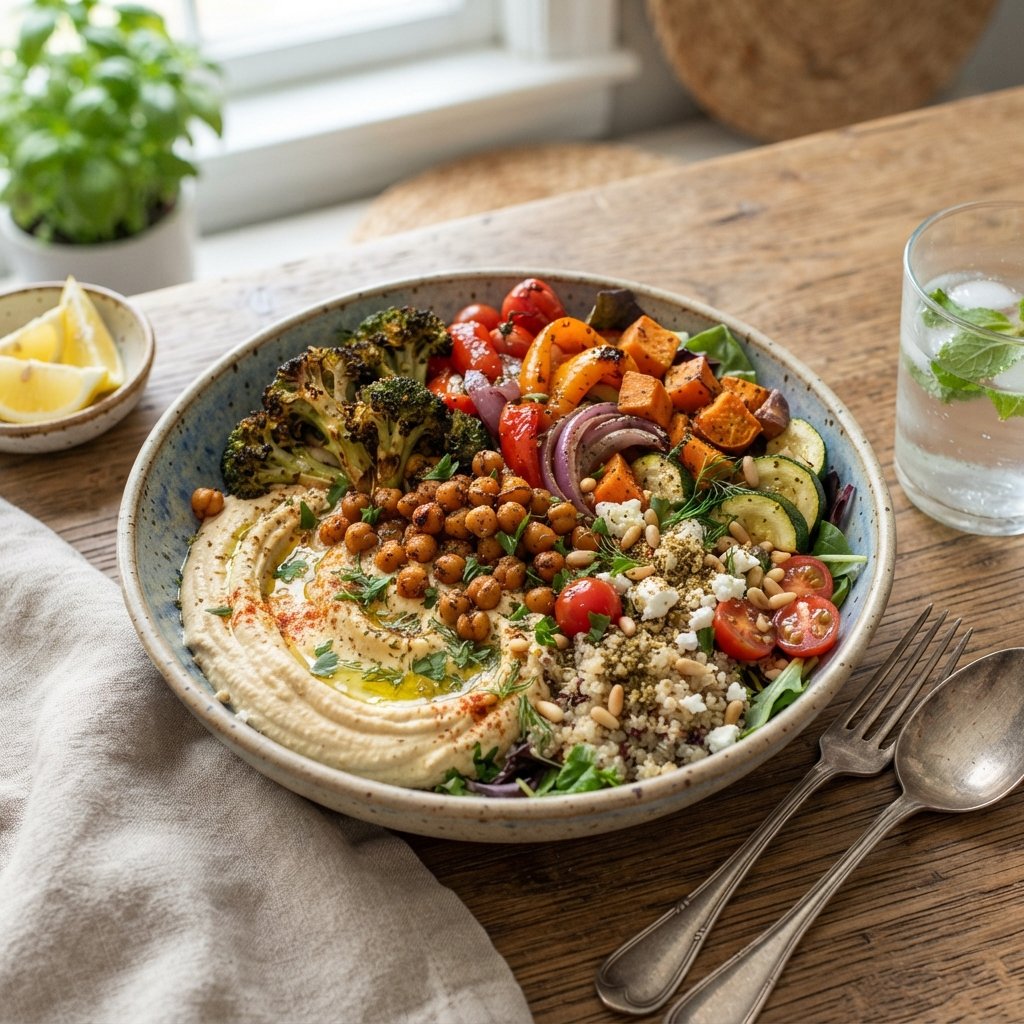
To assemble, start with a base of warm grains or fresh greens. Spoon a generous layer of hummus over the base; do not skimp, as this is the primary sauce. Arrange the roasted vegetables artfully on top. Drizzle with a little extra virgin olive oil and a squeeze of fresh lemon. Garnish with fresh herbs, seeds, or pickled onions just before serving to maintain their texture.
Tips
- Prevent Soggy Hummus: If meal prepping, store the hummus in a separate small container and add it to the bowl only when you are ready to eat. This prevents the grains from absorbing the moisture and becoming mushy.
- Crispy Chickpea Hack: For extra crunchy roasted chickpeas, pat them completely dry with a paper towel before tossing them in oil. Moisture is the enemy of crispiness.
- Boosting Flavor: Bloom your spices. Instead than just sprinkling cumin on the veggies, heat the spices in the olive oil for 30 seconds before tossing the vegetables. This releases the essential oils in the spices.
- Creamy Hummus Secret: If making homemade hummus, reserve the liquid from the canned chickpeas (aquafaba) or use ice-cold water when blending. This shocks the emulsion and creates a lighter, fluffier texture.
- Reheating: When reheating leftovers, add a splash of water to the bowl before microwaving. This creates steam that revives the vegetables without drying them out.
Variations and Customizations
The beauty of this bowl is its adaptability to dietary needs and seasonal availability. Here are several ways to customize your Roasted Veggie Hummus Bowl:
Protein Boost
For those requiring higher protein intake, add grilled chicken breast, seared salmon, or marinated tofu cubes. Hard-boiled eggs are also a fantastic addition that adds creaminess and extra protein without altering the flavor profile significantly.
Seasonal Swaps
In the autumn, swap zucchini for butternut squash and Brussels sprouts. In the summer, utilize fresh cherry tomatoes, eggplant, and bell peppers. Roasting seasonal produce ensures the best flavor and often the lowest cost.
Spice Levels
Adjust the heat by adding harissa paste to the hummus or sprinkling cayenne pepper on the vegetables before roasting. For a smoky heat, use chipotle powder instead of standard paprika.
Low-Carb Option
To make this bowl keto-friendly or lower in carbohydrates, omit the grains entirely. Replace the base with massaged kale, spinach, or cauliflower rice. Increase the portion of healthy fats by adding avocado slices or a handful of walnuts.
Gluten-Free Assurance
While naturally gluten-free, ensure your oats (if used) or grains like farro are certified gluten-free if you have celiac disease. Quinoa and rice are naturally safe alternatives.
Health Considerations and Nutritional Value
The Roasted Veggie Hummus Bowl is a nutrient-dense meal that supports overall wellness. From a macronutrient perspective, it offers a balanced triad of carbohydrates, fats, and proteins. The complex carbohydrates from the grains and vegetables provide sustained energy, while the healthy monounsaturated fats from the olive oil and tahini support heart health and nutrient absorption. Many vitamins, such as A, D, E, and K, are fat-soluble, meaning the presence of tahini and oil ensures your body actually absorbs the nutrients from the vegetables.
Fiber is another standout component. A single bowl can provide over 50% of your daily recommended fiber intake, primarily from the chickpeas and vegetables. This aids in digestion, promotes gut health, and contributes to a feeling of fullness, which can assist in weight management efforts. Furthermore, the plant-based nature of the dish means it is naturally cholesterol-free and low in saturated fats. The antioxidants found in the colorful vegetables help combat oxidative stress in the body, reducing inflammation. However, those monitoring sodium intake should be mindful of the salt content in store-bought hummus and consider making their own to control seasoning levels.
Ingredients
- For the Bowl Base: 1 cup cooked quinoa, brown rice, or farro.
- For the Roasted Vegetables: 1 large sweet potato, cubed; 1 head of broccoli, cut into florets; 1 red bell pepper, sliced; 1 cup cherry tomatoes.
- For the Seasoning: 3 tablespoons olive oil; 1 teaspoon cumin; 1 teaspoon smoked paprika; 1/2 teaspoon garlic powder; salt and black pepper to taste.
- For the Hummus: 1 cup prepared hummus (plain or lemon flavored).
- For the Garnish: 2 tablespoons pumpkin seeds; 1/4 cup fresh parsley, chopped; 1 lemon, cut into wedges; 2 tablespoons pickled red onions.
Directions
- Preheat your oven to 400°F (200°C) and line a large baking sheet with parchment paper.
- In a large mixing bowl, combine the cubed sweet potato, broccoli florets, bell pepper, and cherry tomatoes.
- Drizzle the vegetables with olive oil and sprinkle with cumin, smoked paprika, garlic powder, salt, and black pepper. Toss thoroughly to coat.
- Spread the vegetables in a single layer on the baking sheet. Roast for 25-35 minutes, flipping halfway through, until tender and charred at the edges.
- While the vegetables roast, prepare your grain base according to package instructions if not already cooked.
- To assemble, divide the cooked grains between two bowls.
- Spread a generous layer of hummus over the grains.
- Top with the roasted vegetables.
- Garnish with pumpkin seeds, fresh parsley, and pickled red onions.
- Serve immediately with a lemon wedge on the side for squeezing.
FAQ
Can I make this bowl ahead of time for meal prep?
Yes, this bowl is excellent for meal prep. Store the components separately in airtight containers. Keep the hummus and fresh garnishes apart from the warm grains and veggies until you are ready to eat to maintain texture.
Is store-bought hummus healthy enough?
Most store-bought hummus is healthy, but check the label for preservatives and high sodium content. Look for brands that list chickpeas, tahini, oil, and lemon as the primary ingredients without added stabilizers.
How long do leftovers last in the refrigerator?
The roasted vegetables and grains will stay fresh for up to 4 days in the refrigerator. The hummus should be consumed within 5 days if opened. Do not freeze the assembled bowl as the vegetables will become mushy upon thawing.
Can I use canned chickpeas for roasting?
Absolutely. Just ensure you rinse and dry them thoroughly before roasting. Drying them is the critical step to achieving a crunchy texture rather than a chewy one.
What is the best way to reheat this without a microwave?
You can reheat the grains and vegetables in a skillet over medium heat with a splash of water. This method restores the warmth without making the food rubbery, which sometimes happens in microwaves.
Is this recipe suitable for vegans?
Yes, as written, this recipe is entirely vegan. All ingredients are plant-based, making it suitable for those following a vegan or vegetarian lifestyle.
How can I make the hummus creamier?
If you are making homemade hummus, blend the ingredients for at least 2 minutes. Adding ice water gradually while the blender is running helps emulsify the fats and creates a cloud-like texture.
Summary
The Roasted Veggie Hummus Bowl is a nutrient-dense, customizable lunch that balances complex carbohydrates, healthy fats, and plant-based protein for sustained energy.
By mastering the roasting technique and ingredient ratios, you can create a satisfying meal that supports both your health goals and your culinary enjoyment.