Introduction
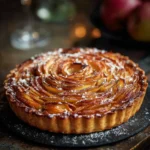
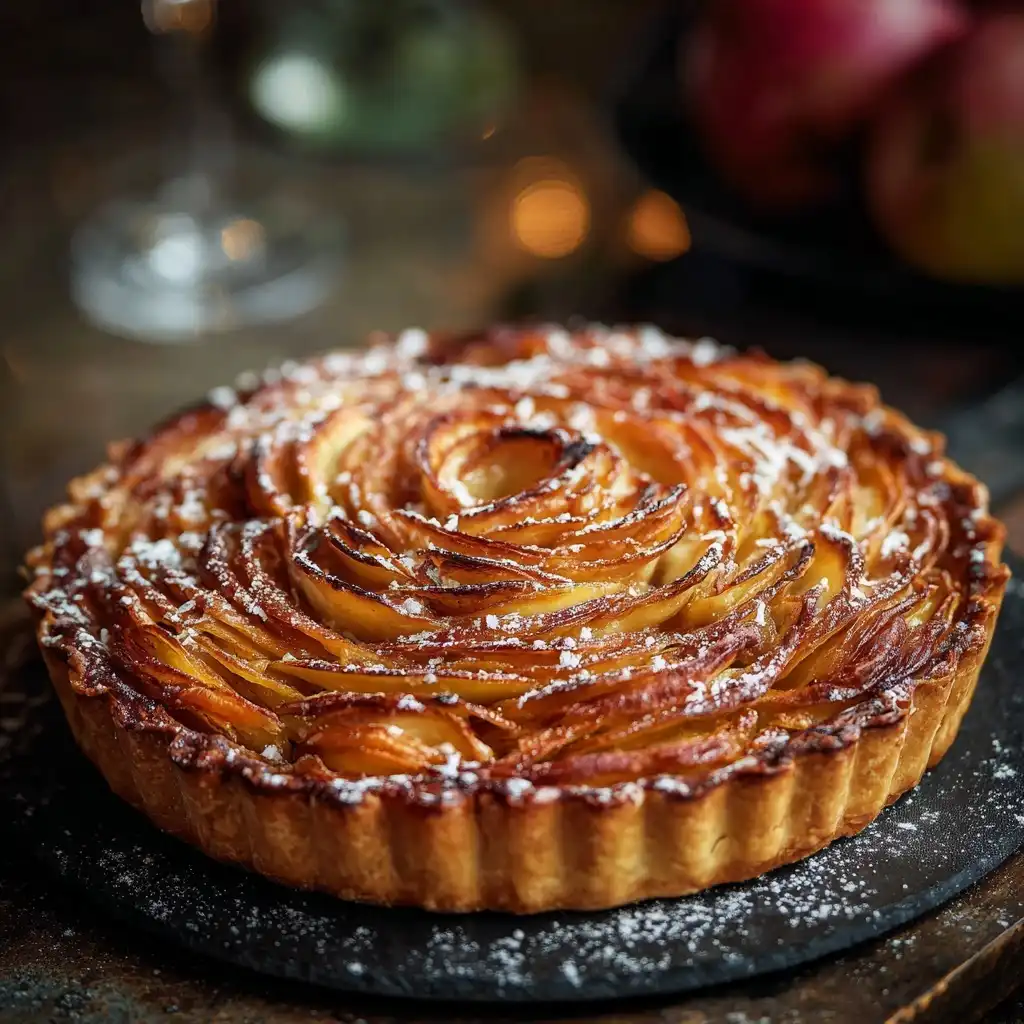
The Apple Rose Tart is a breathtaking fusion of rustic French patisserie and modern culinary artistry—a dessert that delights the senses before the first bite is even taken. More than just a treat, it’s an edible masterpiece: delicate, hand-rolled apple “roses” arranged in concentric circles atop a buttery shortcrust or puff pastry base, often gilded with a glossy apricot glaze and finished with a whisper of cinnamon and vanilla. Its visual elegance belies its humble origins—born from the simple desire to transform everyday apples into something transcendent. Whether served at a bridal shower, holiday gathering, or quiet Sunday brunch, this tart bridges the gap between home baking and fine-dining sophistication, inviting bakers of all levels to explore texture, technique, and tenderness in equal measure.
The History
Though the Apple Rose Tart appears frequently in contemporary food blogs and Instagram feeds since the mid-2010s, its roots stretch much deeper into European baking traditions. The concept of shaping fruit into floral motifs dates back centuries—think of 17th-century French “tartes en rosette” documented in François Pierre La Varenne’s Le Cuisinier François (1651), where thinly sliced pears and quinces were coiled into rose-like patterns in open-faced tarts. In the 19th century, Viennese and Polish confectioners perfected layered fruit arrangements in yeast-raised doughs, often using tart apples like Boskoop or Granny Smith for structural integrity and balanced acidity. The modern viral iteration—featuring ultra-thin, blanched apple slices curled into tight blossoms—gained global traction around 2014–2015, popularized by Japanese-French pastry chef Yuki Noguchi and later amplified by food stylists emphasizing “food as art.” Crucially, unlike mass-produced pastries, the Apple Rose Tart resists industrialization: its beauty lies entirely in manual precision, seasonal fruit selection, and patient layering—making it a quiet rebellion against culinary homogenization and a celebration of slow, intentional creation.
Ingredients Breakdown
Every component of the Apple Rose Tart plays a functional and aesthetic role—no ingredient is merely decorative. Below is a detailed, purpose-driven analysis:
- Apples (4–5 medium): Prefer firm, tart, low-moisture varieties—Granny Smith (classic choice for acidity and structure), Honeycrisp (for subtle sweetness and crispness), or Pink Lady (for floral notes and balanced firmness). Avoid Red Delicious or Golden Delicious—they turn mushy when cooked and lack structural integrity for curling.
- Lemon juice (2 tbsp): Not just for flavor—its citric acid inhibits enzymatic browning *and* gently breaks down pectin just enough to enhance pliability without compromising slice integrity.
- Granulated sugar (¼ cup) + brown sugar (2 tbsp): Granulated sugar dissolves cleanly for even syrup formation; brown sugar adds molasses depth, moisture retention, and caramel notes that enrich the glaze and prevent drying during baking.
- Ground cinnamon (1½ tsp) + ground cardamom (¼ tsp) + pinch of nutmeg: Warmth without heat—cinnamon binds the apple’s natural sugars, cardamom lifts aromatic complexity, and nutmeg adds earthy resonance. Toast whole spices and grind fresh for maximum volatility.
- Unsalted butter (2 tbsp, cubed): Added *after* simmering the syrup—coats apple slices in fat to seal moisture, enhances sheen, and contributes to tender-crisp texture.
- Vanilla extract (1 tsp) or scraped seeds from ½ vanilla bean: Adds creamy, floral backbone; real vanilla bean offers tiny black specks that elevate visual luxury.
- Pastry base (1 sheet, ~10 oz): Two premium options: All-butter puff pastry (for dramatic, flaky height and buttery aroma) or sweet shortcrust pastry (pâte sucrée—rich, crumbly, and sturdy for supporting heavy rosettes). Always use high-fat (≥82% butter), European-style pastry for optimal lamination and browning.
- Apricot jam (⅓ cup, strained): The gold-standard glaze—naturally high in pectin for gloss, mild flavor that won’t compete with apple, and amber hue that enhances rose definition. Substitute with seedless raspberry jam *only* if allergies require it—but note color shift and sharper acidity.
- Heavy cream (1 tbsp) + coarse sugar (1 tsp) for finishing: Cream brushed pre-bake encourages deep golden browning; coarse sugar adds textural contrast and sparkle.
- Optional enhancements: Edible dried rose petals (food-grade, unsprayed), crushed pistachios (for color/texture), crème fraîche or vanilla bean ice cream (serving accompaniment).
Step-by-Step Recipe
- Prep the Apples (45 min, includes chilling): Peel, core, and slice 4–5 apples *lengthwise* (not across) into ⅛-inch thick slices using a mandoline slicer (essential for uniformity). Immediately submerge slices in ice water mixed with lemon juice to prevent oxidation. Drain thoroughly and pat *completely dry* with lint-free towels—any moisture impedes curling.
- Make the Infused Syrup (12 min): In a wide skillet, combine granulated sugar, brown sugar, cinnamon, cardamom, nutmeg, and ¼ cup water. Bring to a gentle simmer over medium-low heat, stirring until sugars dissolve. Add apple slices in a single layer (work in batches if needed), reduce heat to low, and poach 4–5 minutes—just until pliable but not translucent. Remove with slotted spoon; reserve syrup. Stir in butter and vanilla into warm syrup off-heat until emulsified. Let syrup cool slightly.
- Form the Roses (25–35 min, meticulous work): Lay 4–5 apple slices slightly overlapping in a line on parchment. Starting at one end, tightly roll forward to form a rosebud. Tuck the tail underneath to secure. Repeat—aim for 24–30 roses (depending on tart size). Place each rose seam-side down on a tray lined with parchment; cover loosely with damp paper towel to prevent drying while assembling.
- Prepare the Crust (10 min + chilling): Unfold puff pastry or roll out pâte sucrée to 12-inch circle on parchment-lined baking sheet. Prick base lightly with fork. Chill 20 minutes (critical for preventing shrinkage). Preheat oven to 400°F (200°C) with convection setting if available.
- Assemble the Tart (8 min): Arrange roses in concentric circles starting from center: 1 rose in middle, then 6 around it, 12 in outer ring. Gently press each rose into crust to anchor. Brush exposed crust edges with cream; sprinkle with coarse sugar. Optional: drizzle 1 tsp reserved syrup over roses for extra sheen pre-bake.
- Bake (35–42 min): Bake on lowest oven rack for 15 minutes. Rotate tray 180°, reduce heat to 375°F (190°C), and bake 20–25 more minutes—until crust is deep golden, roses are caramelized at edges, and centers are tender when pierced with skewer. *Do not underbake:* structural integrity depends on gentle caramelization.
- Glaze & Finish (5 min): While still hot, strain warm apricot syrup (reheated if cooled) and brush *generously* over roses and crust using silicone brush. For professional finish, repeat glaze after 10 minutes, then again after cooling 20 minutes. Cool on wire rack at least 45 minutes before slicing—this sets the syrup and prevents crumbling.
Tips
- Mandoline Mastery: Use a guard and apply even pressure—uneven slices cause roses to uncurl or gap. Soak blade in vinegar-water to prevent sticky residue buildup.
- Dry Slices Relentlessly: Even 3% residual moisture causes steaming instead of caramelizing. Pat twice—first with towel, second with fresh paper towel.
- Chill Roses Before Baking: Refrigerate assembled tart 15 minutes pre-bake—cold roses hold shape better during initial oven spring.
- Oven Thermometer Required: Many ovens run hot/cold. An accurate thermometer prevents burnt edges or pale centers.
- Rotate Strategically: Rotate at 15 minutes—not halfway—to ensure even browning without disturbing delicate roses.
- Glaze Timing is Everything: First coat while tart is piping hot (syrup soaks in); second coat at 10 minutes (sets shine); third at 20 minutes (seals and intensifies color). Skip any step, and gloss fades.
- Slice with Hot Knife: Dip a thin, sharp knife in hot water and wipe dry between cuts for clean, rose-intact slices.
- Day-Old Beauty: This tart improves overnight—the syrup rehydrates apples slightly, deepening flavor and softening texture while retaining shape.
Variations and Customizations
This recipe is a canvas—not a constraint. Thoughtful adaptations preserve integrity while expanding creativity:
- Fruit Swaps: Asian pear roses (crisp, floral, less tart), quince paste–infused apple roses (for membrillo depth), or alternating apple and beetroot slices (vibrant magenta rings, earthy-sweet contrast).
- Crust Innovations: Brown butter shortcrust (nutty richness), almond flour–enhanced puff pastry (gluten-free option with added moisture), or savory-herb crust (rosemary + black pepper) for cheese course pairing.
- Spice Reimagining: Star anise + orange zest syrup (Chinese five-spice profile), smoked paprika + clove (unexpected warmth), or matcha-infused sugar (earthy bitterness balances sweetness).
- Glaze Alternatives: Blackberry coulis (deep purple gloss), white chocolate–apricot emulsion (silky, luxurious), or honey-lavender reduction (floral-forward, delicate).
- Textural Accents: Toasted amaretti crumbs sprinkled pre-glaze, candied ginger threads draped over roses, or a lattice overlay of caramelized apple ribbons.
- Dietary Adaptations: Vegan version: coconut oil–based puff pastry, agave–maple syrup blend, and apricot jam verified vegan (no gelatin); gluten-free: certified GF oats blended into crust + xanthan gum reinforcement.
- Miniature Format: Use muffin tin liners for individual rose tarts—perfect for weddings or tasting menus. Reduce bake time to 22–26 minutes.
- Savory-Sweet Fusion: Add crumbled blue cheese or aged Gouda between rose layers; finish with balsamic reduction drizzle instead of apricot.
Health Considerations and Nutritional Value
A single generous slice (1/10th of a standard tart) contains approximately 320–360 kcal, with nuanced nutritional attributes worth highlighting:
- Fiber Powerhouse: 4–5 apples contribute ~7–9g dietary fiber (mainly pectin), supporting gut microbiota diversity and promoting satiety—especially when skin is retained during peeling (though texture suffers, nutrition surges).
- Phytonutrient Density: Apples provide quercetin (anti-inflammatory flavonoid), chlorogenic acid (blood sugar modulation), and vitamin C (immune support)—all partially preserved despite gentle poaching (≤85°C).
- Butter vs. Health: While butter contributes saturated fat (~14g/slice), recent meta-analyses (e.g., The Lancet, 2023) affirm that moderate dairy fat intake correlates with neutral or beneficial cardiovascular markers when displacing refined carbs.
- Sugar Contextualized: Total sugar ~28g per slice—but >60% is naturally occurring fructose/glucose from fruit; added sugars are limited to ~12g (from syrup + crust), well below WHO’s 25g/day recommendation.
- Glycemic Considerations: With fiber, fat, and acid (lemon + apple), glycemic load is moderate (~12)—significantly lower than apple pie (GL ~22) due to absence of thickened filling and refined flour dominance.
- Allergen Notes: Contains wheat (gluten), dairy (butter, cream), and tree nuts (if using almond flour crust). Egg-free by default—ideal for egg-allergic individuals.
- Mindful Enjoyment: This tart is best viewed as a nutrient-enhanced indulgence—not “health food,” but food that honors whole ingredients, seasonal abundance, and culinary mindfulness. Pairing with plain Greek yogurt or a handful of walnuts further balances macros.
Ingredients
- 4–5 medium firm-tart apples (Granny Smith, Honeycrisp, or Pink Lady), peeled, cored, and sliced lengthwise 1/8-inch thick
- 2 tablespoons fresh lemon juice
- ¼ cup granulated sugar
- 2 tablespoons packed light brown sugar
- 1½ teaspoons ground cinnamon
- ¼ teaspoon ground cardamom
- Pinch of freshly grated nutmeg
- ¼ cup water
- 2 tablespoons unsalted butter, cubed
- 1 teaspoon pure vanilla extract or seeds from ½ vanilla bean
- 1 (10 oz) sheet high-fat all-butter puff pastry or sweet shortcrust pastry (pâte sucrée), chilled
- 1 tablespoon heavy cream (for brushing)
- 1 teaspoon coarse turbinado or sanding sugar (for sprinkling)
- ⅓ cup apricot jam, strained through fine-mesh sieve
Directions
- Prepare apples: Using a mandoline, slice apples lengthwise into 1/8-inch-thick slices. Immediately place in a bowl of cold water mixed with lemon juice. Let soak 10 minutes. Drain well and pat *thoroughly dry* with clean kitchen towels or paper towels.
- Make syrup: In a wide, shallow skillet, combine granulated sugar, brown sugar, cinnamon, cardamom, nutmeg, and water. Bring to a gentle simmer over medium-low heat, stirring until sugars dissolve. Reduce heat to low. Add apple slices in a single layer (work in batches if needed). Poach 4–5 minutes, turning once gently with tongs, until slices are pliable but still hold shape. Remove slices with a slotted spoon to a wire rack set over parchment; reserve syrup in skillet.
- Finish syrup: Off heat, stir cubed butter and vanilla into warm syrup until fully melted and emulsified. Set aside.
- Form roses: Lay 4–5 apple slices slightly overlapping on parchment. Starting at one end, tightly roll forward into a rosebud. Tuck tail underneath. Repeat to make 24–30 roses. Place seam-side down on parchment-lined tray; cover loosely with damp paper towel.
- Prepare crust: Unfold chilled pastry onto parchment-lined baking sheet. Trim to 12-inch circle if needed. Prick base all over with fork. Chill 20 minutes.
- Preheat oven to 400°F (200°C) with convection on if available.
- Assemble: Arrange roses in concentric circles on chilled crust—1 in center, 6 around it, 12–15 in outer ring. Gently press each rose into crust. Brush exposed crust edge with cream; sprinkle with coarse sugar.
- Bake: Place on lowest oven rack. Bake 15 minutes. Rotate tray. Reduce heat to 375°F (190°C). Bake 20–25 minutes more, until crust is deep golden and roses are caramelized at edges.
- Glaze: While hot, brush generously with strained, warmed apricot jam. Repeat brushing at 10 and 20 minutes post-bake. Cool on wire rack at least 45 minutes before slicing.
FAQ
- Can I make this ahead?
- Yes! Assemble roses and refrigerate up to 24 hours (covered with damp towel + plastic wrap). Fully baked tart keeps beautifully refrigerated for 3 days—re-warm at 325°F for 8 minutes, then re-glaze before serving.
- Why do my roses unravel during baking?
- Most commonly: slices too thick, insufficient poaching (they need to be pliable but not translucent), or inadequate pressing into crust pre-bake. Also check oven temperature—too cool prevents quick structural set.
- Can I freeze the tart?
- Freeze *unbaked* assembled tart tightly wrapped for up to 3 weeks. Bake from frozen—add 8–10 minutes to total time. Do not freeze after glazing; apricot syrup weeps upon thawing.
- Is there a lower-sugar version?
- Reduce added sugars by 25% and add 1 tsp apple cider vinegar to syrup for brightness. Increase cinnamon and cardamom to compensate for perceived sweetness loss. Note: Glaze remains essential for moisture barrier.
- What’s the best way to store leftovers?
- Cover tightly with beeswax wrap or parchment-lined lid (avoid plastic wrap directly on glaze—it sticks). Refrigerate. Serve at cool room temperature for optimal texture.
- Can I use canned apple slices?
- No—canned apples are too soft, waterlogged, and infused with syrup that interferes with caramelization and glaze adhesion. Fresh is non-negotiable.
- My crust shrank! How do I prevent that?
- Chill crust *at least* 20 minutes before baking; avoid stretching pastry when transferring; don’t dock too aggressively—light pricking only.
- Can I make it gluten-free?
- Absolutely—with certified GF puff pastry (like Schär or DIY rice-flour laminated dough) and xanthan gum (¼ tsp per cup flour) in shortcrust. Texture will be more tender—support outer rose ring with a parchment collar if needed.
Summary
The Apple Rose Tart is a symphony of seasonality, patience, and precision—transforming humble apples into edible florals through thoughtful poaching, mindful rolling, and layered baking science. It honors tradition while inviting innovation, delivering both visual awe and deeply comforting flavor in every tender, glossy, spiced bite.
More than a dessert, it’s a ritual: a reminder that beauty emerges not from perfection, but from presence—the careful peel, the rhythmic roll, the watchful bake—and that the most memorable meals are those made slowly, shared generously, and savored completely.