Introduction
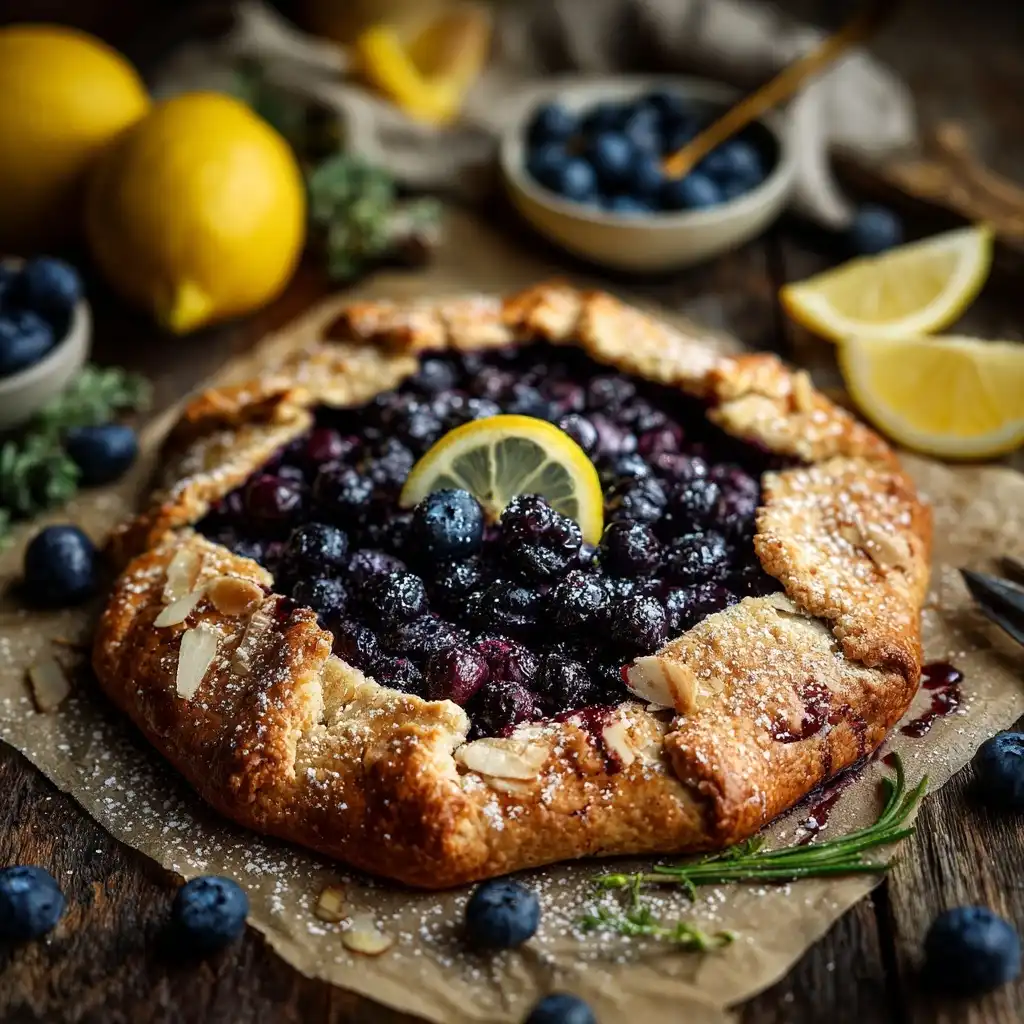
The Blueberry Lemon Galette is a rustic, free-form French-inspired tart that embodies effortless elegance and seasonal charm. Unlike traditional pies encased in a double crust and baked in a pie dish, the galette features a single, buttery, flaky pastry round draped over a vibrant, tangy-sweet filling—then folded up at the edges to create a naturally golden, ruffled border. Its beauty lies in its simplicity: no special pans, no precise crimping, and no pressure to achieve perfection—imperfections are not just accepted, they’re celebrated as part of its artisanal soul. This dessert strikes a sublime balance between the deep, jammy sweetness of ripe blueberries and the bright, zesty lift of fresh lemon—enhanced by aromatic lemon zest, a whisper of vanilla, and a subtle floral note from high-quality vanilla bean or extract. Whether served warm with a scoop of vanilla bean ice cream, drizzled with honey-thyme syrup, or enjoyed au naturel at room temperature with a dusting of powdered sugar and a sprig of mint, the Blueberry Lemon Galette is equally at home on a sun-dappled brunch table, a summer garden party spread, or a cozy weeknight dessert rotation. It’s approachable for bakers of all levels, yet sophisticated enough to impress even the most discerning palates—and it transforms humble, accessible ingredients into something truly memorable.
The History
The galette traces its roots to rural France—particularly the Brittany and Normandy regions—where resourceful home cooks developed this rustic pastry as a practical, no-waste alternative to formal tarts and pies. The word “galette” itself derives from the Old French *galet*, meaning “pebble” or “flat stone,” likely referencing the flat, round shape and the early practice of baking on hot stones or griddles. Originally made with buckwheat flour (*galette de sarrasin*) for savory crepe-like dishes, the sweet version evolved alongside the availability of refined wheat flour, butter, and seasonal fruits. By the 18th and 19th centuries, fruit galettes became staples of farmhouse kitchens—especially during summer months when berries, apples, and plums overflowed from local markets and hedgerows. The lemon-blueberry pairing, however, is a more modern American innovation: blueberries—native to North America and long cherished by Indigenous peoples and early colonists—gained widespread culinary prominence in the 20th century, while lemon’s global cultivation and citrus boom (particularly post-refrigeration and improved transport) allowed for year-round acidity and brightness. Chefs and food writers of the late 20th and early 21st centuries—including Alice Waters, Dorie Greenspan, and David Lebovitz—helped popularize the galette in the U.S. as a symbol of mindful, ingredient-driven baking. Today, the Blueberry Lemon Galette stands at the intersection of tradition and reinvention: honoring its French heritage while embracing North American terroir, seasonal abundance, and contemporary flavor sensibilities.
Ingredients Breakdown
Every element of the Blueberry Lemon Galette plays a distinct, intentional role—no ingredient is arbitrary. Below is a detailed functional analysis:
- All-Purpose Flour (2½ cups / 315g): Provides structure and gluten development. A moderate-protein flour (10–11.7% protein) yields tenderness without toughness. For enhanced flavor and texture, many bakers substitute up to ¼ cup with finely milled whole wheat pastry flour or toasted oat flour.
- Unsalted Butter (1 cup / 227g, cold & cubed): The cornerstone of flakiness. High-fat European-style butter (82–84% fat) delivers superior richness and laminated layers. Cold temperature is non-negotiable—butter must remain solid until it hits the oven’s heat, creating steam pockets that lift the dough.
- Granulated Sugar (¼ cup / 50g in crust + ⅓ cup / 67g in filling): In the crust, sugar adds tenderness and promotes browning; in the filling, it balances tartness and aids in syrup formation. Organic cane sugar contributes nuanced caramel notes.
- Salt (1 tsp fine sea salt): Enhances all flavors, controls yeast activity (if using cultured buttermilk), and strengthens gluten slightly for better handling.
- Ice Water (6–8 tbsp / 90–120ml): Hydrates flour proteins and starches without activating excessive gluten. Must be *ice-cold*—often chilled with a few ice cubes—to keep butter from softening during mixing.
- Fresh Blueberries (6 cups / ~900g, washed & thoroughly dried): Use peak-season, locally grown berries for maximum sweetness, firmness, and anthocyanin-rich color. Wild blueberries (smaller, more intense, higher in antioxidants) add complexity—but require slightly less thickener due to lower water content.
- Fresh Lemon Juice (3 tbsp / 45ml, strained): Adds essential acidity to cut through sweetness and prevent cloying richness. Bottled juice lacks volatile aromatic compounds and often contains preservatives that dull flavor.
- Lemon Zest (from 2 large lemons, microplaned): Contains aromatic citrus oils (limonene, citral) that perfume the entire galette—responsible for much of its bright, uplifting character. Never skip; always zest before juicing.
- Ground Cardamom (¼ tsp, freshly ground): An optional but transformative accent—its warm, floral, slightly eucalyptus-like nuance complements both blueberry and lemon without overpowering.
- Cornstarch (3 tbsp / 24g) or Tapioca Starch (2 tbsp / 16g): Thickens berry juices without cloudiness (tapioca yields a glossier, more elastic gel; cornstarch offers neutral clarity). Arrowroot may be substituted but loses efficacy if boiled too vigorously.
- Vanilla Extract (1 tsp pure Madagascar bourbon) or Seeds from ½ Vanilla Bean: Adds depth, warmth, and creamy undertones that bridge fruit and pastry. Alcohol-based extract should be added *after* mixing water to avoid inhibiting gluten formation.
- Heavy Cream or Egg Wash (1 large egg yolk + 1 tbsp cream, whisked): For luminous browning and sheen. Optional turbinado sugar sprinkle adds textural crunch and caramelized sparkle.
Step-by-Step Recipe
- Prepare the Dough (30 min + 2 hr chill): In a large bowl, whisk together flour, sugar, and salt. Add cold, cubed butter; use a pastry cutter, fork, or fingertips to work butter into flour until mixture resembles coarse crumbs with pea-sized butter pieces visible. Drizzle in 6 tbsp ice water, gently folding with a silicone spatula. Add remaining water ½ tbsp at a time only until dough begins to clump. Gather into a shaggy disc, flatten to 1-inch thickness, wrap tightly in parchment-lined plastic wrap, and refrigerate for *at least 2 hours* (preferably overnight) to relax gluten and rechill butter.
- Preheat & Prep (20 min before baking): Position oven rack in lower third. Preheat oven to 400°F (200°C). Line a large rimmed baking sheet with parchment paper—do *not* grease.
- Make the Filling (10 min): In a large bowl, combine blueberries, lemon juice, zest, granulated sugar, cornstarch, cardamom, and vanilla. Gently fold with a silicone spatula until evenly coated. Let macerate 15 minutes at room temperature—juices will begin to pool and thicken slightly.
- Roll Out the Dough (5 min): On a lightly floured surface, roll chilled dough into a 13–14 inch circle (~⅛ inch thick), rotating and lifting frequently to prevent sticking. Transfer carefully to prepared baking sheet. Trim any ragged edges for clean folding.
- Assemble the Galette (3 min): Spoon filling into center of dough, leaving a 2–2½ inch border bare. Gently lift and fold edges over filling, pleating as you go. Crimp seams lightly where folds meet. Brush exposed crust with egg wash; sprinkle generously with turbinado sugar.
- Bake (45–55 min): Bake 20 minutes. Rotate pan front-to-back. Reduce heat to 375°F (190°C). Continue baking 25–35 minutes—until crust is deeply golden brown, filling is bubbling vigorously at edges, and juices are thickened (a skewer inserted near center should meet gentle resistance, not runny liquid). If edges brown too quickly, tent loosely with foil.
- Cool & Set (1.5–2 hours): Remove from oven and cool *completely* on baking sheet placed on a wire rack—this critical step allows filling to fully set. Cutting too soon causes leakage and loss of structural integrity. For best texture, serve within 4 hours of baking—or re-warm gently at 325°F for 12–15 minutes.
Tips
- Dry Your Berries Relentlessly: Even a teaspoon of excess moisture can turn your galette soggy. After washing, spread berries on triple-layered paper towels, pat *gently* top and bottom, then air-dry 10 minutes uncovered. For ultra-dry results, toss with 1 tsp cornstarch *before* adding other filling ingredients.
- Chill Between Every Step: Chill dough after mixing, again after rolling (10 min in freezer), and chill assembled galette 15 minutes before baking. Cold = flaky, not greasy.
- Use a Bench Scraper: Essential for lifting and transferring delicate dough without stretching or tearing. Also perfect for scraping filling remnants and cleaning surfaces.
- Thickener Timing Matters: Mix cornstarch/tapioca with dry sugar *first*, then add to berries—this prevents clumping and ensures even dispersion.
- Rotate Mid-Bake: Ovens have hot spots. Rotating guarantees even browning and prevents one side from over-baking while the other remains pale.
- Listen to the Filling: When bubbling becomes loud, steady, and syrupy—not watery or thin—you know it’s set. A visual cue: the center should jiggle *just slightly*, like firm gelatin.
- Freeze for Later: Unbaked galettes freeze beautifully for up to 3 months. Assemble completely, freeze solid on tray, then wrap in double layers of plastic + foil. Bake from frozen—add 12–15 minutes to total time and cover crust edges with foil first 25 minutes.
- Revive Leftovers: Day-old galette can be refreshed: slice, place on parchment-lined sheet, bake at 350°F for 10–12 minutes. Serve with crème fraîche whipped with lemon zest and a pinch of flaky sea salt.
Variations and Customizations
This recipe is a canvas—endlessly adaptable to seasons, pantries, dietary needs, and creative whims:
- Fruit Swaps: Blackberry-Lime (swap lemon for key lime, add ¼ tsp grated lime zest); Strawberry-Rhubarb (use 4 cups strawberries + 2 cups diced rhubarb, increase sugar to ¾ cup); Peach-Ginger (add 1 tbsp minced candied ginger and reduce lemon to 1 tbsp).
- Herbal Infusions: Stir 1 tsp finely chopped fresh thyme or lavender buds into filling; infuse cream or milk with lemon verbena for soaking crust scraps.
- Crust Reinventions: Brown Butter Crust (brown ½ cup butter, cool completely before incorporating); Almond Crust (replace ½ cup flour with almond flour + 1 tbsp almond extract); Gluten-Free (use 1:1 GF blend with xanthan gum + 1 tbsp psyllium husk for elasticity).
- Vegan Version: Substitute cold coconut oil or vegan butter (Miyoko’s or Naturli’) for dairy butter; use ice-cold unsweetened almond milk + 1 tsp apple cider vinegar instead of water; brush with maple syrup + plant milk wash; thicken with arrowroot.
- Decadent Upgrades: Fold in ½ cup white chocolate chips or crumbled goat cheese before baking; top finished galette with lemon curd swirls and candied blueberries; serve with basil-infused honey drizzle.
- Savory-Sweet Twist: Add 2 tbsp finely grated aged Gouda or sharp cheddar to dough; finish with flaky Maldon salt and black pepper alongside turbinado sugar.
- Mini Galettes: Divide dough into 6 portions; roll each into 5-inch rounds. Fill with ⅓ cup berry mixture. Bake 22–28 minutes. Perfect for portion control or elegant dessert platters.
- No-Bake Option: Prepare a graham cracker-oat crust, fill with lemon-blueberry chia jam (simmer berries + lemon + chia seeds 10 min), chill 4+ hours. Garnish with lemon mascarpone.
Health Considerations and Nutritional Value
A single generous slice (1/8 of galette, approx. 220g) provides roughly:
- Calories: 385 kcal
- Total Fat: 19g (12g saturated, primarily from butter—though recent research shows dietary cholesterol has minimal impact on serum cholesterol for most people)
- Carbohydrates: 51g (28g naturally occurring sugars from blueberries + added sugar; 4g fiber)
- Protein: 4g
- Vitamins & Minerals: Excellent source of Vitamin C (65% DV), manganese (45% DV), and Vitamin K (30% DV); good source of potassium (12% DV) and antioxidant-rich anthocyanins.
Blueberries are among the most antioxidant-dense fruits—rich in anthocyanins linked to reduced oxidative stress, improved cognitive function, and cardiovascular support. Their low glycemic index (53) means slower blood sugar elevation versus refined sweets. Lemon contributes bioactive flavonoids (hesperidin, eriocitrin) with anti-inflammatory and vasoprotective properties—and enhances non-heme iron absorption from whole grains if served alongside a grain-based side. While the butter crust contributes saturated fat, using grass-fed butter adds conjugated linoleic acid (CLA) and vitamin K2, both associated with metabolic and bone health. To enhance nutritional profile: increase blueberry ratio (up to 7 cups), reduce added sugar by 1–2 tbsp (relying on ripe berries’ natural sweetness), add 2 tbsp ground flaxseed to crust for omega-3s and fiber, or serve with Greek yogurt (probiotics + protein) instead of ice cream. Note: Individuals with fructose malabsorption may experience discomfort from high-fructose fruits; substituting half the blueberries with lower-FODMAP raspberries or blackberries may improve tolerance.
Ingredients
- For the Crust:
- 2½ cups (315g) all-purpose flour, plus extra for dusting
- ¼ cup (50g) granulated sugar
- 1 teaspoon fine sea salt
- 1 cup (227g) unsalted butter, cold and cut into ½-inch cubes
- 6–8 tablespoons (90–120ml) ice water
- For the Filling:
- 6 cups (about 900g) fresh blueberries, washed, picked over, and *thoroughly patted dry*
- ⅓ cup (67g) granulated sugar (adjust ±1 tbsp based on berry sweetness)
- 3 tablespoons (45ml) fresh lemon juice (from ~2 large lemons)
- 2 tablespoons (6g) finely grated lemon zest (use a microplane)
- 3 tablespoons (24g) cornstarch (or 2 tbsp tapioca starch)
- ¼ teaspoon ground cardamom (optional but recommended)
- 1 teaspoon pure vanilla extract or seeds from ½ vanilla bean
- Pinch of fine sea salt
- For Finishing:
- 1 large egg yolk + 1 tablespoon heavy cream (or whole milk), whisked
- 2 tablespoons turbinado sugar (or coarse raw sugar)
- Flaky sea salt (such as Maldon), for finishing
Directions
- Make the Dough: In a large bowl, whisk together flour, ¼ cup sugar, and salt. Add cold butter cubes. Using a pastry cutter or two forks, cut butter into flour until mixture resembles coarse meal with numerous pea-sized butter pieces. Drizzle in 6 tablespoons ice water. Gently stir with a silicone spatula until dough begins to clump. If too dry, add remaining water ½ tablespoon at a time. When dough holds together when pinched, gather into a ball, flatten into a 1-inch thick disc, wrap tightly in plastic wrap, and refrigerate for at least 2 hours—or preferably overnight.
- Preheat Oven & Prep Pan: At least 20 minutes before baking, position oven rack in lower third. Preheat oven to 400°F (200°C). Line a large rimmed baking sheet (18×13 inches) with parchment paper. Do not grease.
- Prepare Filling: In a large bowl, combine blueberries, ⅓ cup sugar, lemon juice, lemon zest, cornstarch, cardamom, vanilla, and pinch of salt. Gently fold with a silicone spatula until berries are evenly coated. Let sit at room temperature for 15 minutes to draw out juices and activate thickener.
- Roll Dough: Lightly flour a clean surface. Remove chilled dough from fridge. Roll into a 13–14 inch circle, about ⅛ inch thick, rotating and lifting dough frequently to prevent sticking. Carefully lift and transfer dough to prepared baking sheet. Trim any excessively ragged outer edge for neat folding.
- Assemble: Spoon filling into center of dough, leaving a 2–2½ inch border of bare dough around perimeter. Gently lift edges of dough and fold them over filling, pleating every 2–3 inches as you go around. Press seams lightly where folds overlap. Brush exposed crust with egg wash. Sprinkle generously with turbinado sugar. Optional: sprinkle a tiny pinch of flaky sea salt over sugar.
- Bake: Place galette in preheated oven. Bake for 20 minutes. Rotate pan front-to-back. Reduce oven temperature to 375°F (190°C). Continue baking 25–35 minutes—until crust is deep golden brown, filling is bubbling thickly and steadily around edges, and center appears set (minimal jiggle). If crust browns too quickly, tent loosely with aluminum foil.
- Cool Completely: Remove from oven and let cool *undisturbed* on baking sheet placed on a wire rack for at least 1 hour 30 minutes—and ideally 2 hours—to allow filling to fully set. Cutting too soon will cause leakage and compromise structure. Serve at room temperature or slightly warmed. Store leftovers covered at room temperature up to 2 days, or refrigerated up to 4 days (re-warm before serving).
FAQ
- Can I make the dough ahead?
- Absolutely. Dough keeps well refrigerated for up to 3 days or frozen for 3 months. Thaw frozen dough overnight in the fridge before rolling.
- Why did my galette leak?
- Most commonly: insufficient thickener, under-baking (filling wasn’t bubbling vigorously), or excess moisture from undried berries. Ensure berries are bone-dry, use full amount of cornstarch, and bake until thick, glossy bubbles break continuously at edges.
- Can I use frozen blueberries?
- Yes—but do *not* thaw first. Toss frozen berries directly with sugar and thickener, then proceed. Expect 5–8 extra minutes baking time. Frozen berries release more liquid, so consider adding ½ tsp extra cornstarch.
- My crust shrank or tore while folding—what went wrong?
- Overworked dough (too much gluten development), dough too warm (butter softened), or stretching while transferring. Always chill dough before rolling and again after shaping. Lift—not pull—when moving dough.
- Is there a way to make this gluten-free?
- Yes. Use a trusted 1:1 gluten-free flour blend containing xanthan gum (like King Arthur or Bob’s Red Mill). Add 1 tbsp psyllium husk powder to mimic gluten’s binding power. Chill dough longer (3+ hours) for easier handling.
- Can I omit the lemon?
- You can—but you’ll lose essential brightness and balance. Try reducing lemon juice to 1 tbsp and adding 1 tsp apple cider vinegar for acidity, or substitute orange or grapefruit zest/juice for variation.
- What’s the best way to store leftovers?
- Cover loosely with parchment or a clean kitchen towel (not plastic wrap—it traps steam and softens crust). Room temperature is ideal for up to 48 hours. Refrigeration extends life but dulls crust crispness—always re-warm before serving.
- Can I use a different thickener?
- Yes. Tapioca starch creates a glossier, more elastic gel and holds up better to freezing. Arrowroot works but breaks down if boiled too hard. Instant clearjel is professional-grade and freeze-stable. Avoid flour—it clouds the filling and requires longer cooking.
- How do I prevent a soggy bottom crust?
- Key tactics: (1) Use parchment-lined baking sheet (no greasing), (2) Preheat sheet for 5 minutes before placing galette, (3) Ensure berries are impeccably dry, (4) Don’t skimp on thickener, (5) Bake on lowest oven rack for direct radiant heat.
Summary
The Blueberry Lemon Galette is a masterclass in rustic elegance—where vibrant, antioxidant-rich blueberries meet zingy lemon zest and juice in a tender, flaky, buttery crust that bakes up golden and shatteringly crisp at the edges.
Effortless to prepare, endlessly customizable, and deeply satisfying in its balance of sweet, tart, and aromatic notes, it’s not just a dessert—it’s a celebration of seasonality, simplicity, and the quiet joy of imperfectly perfect homemade baking.