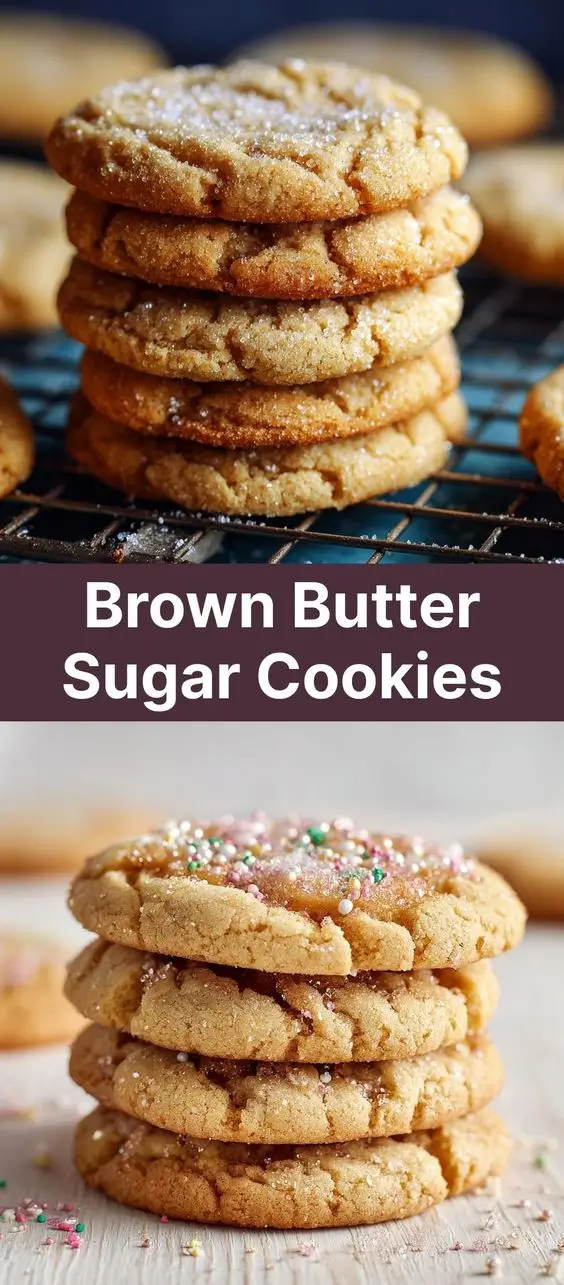
Brown Butter Sugar Cookies: A Rich, Nutty Twist on a Classic Favorite
The History of Brown Butter Sugar Cookies
Sugar cookies have long held a cherished place in American baking traditions, dating back to the 1700s with Dutch and German settlers who brought their “sandbakelse” and “springerle” recipes. These early sugar-laden treats evolved into the soft, buttery delights we know today. While traditional sugar cookies rely on creamed butter for structure and flavor, the modern innovation of browning the butter adds a remarkable depth that transforms the familiar into something extraordinary.
The technique of browning butter—known as beurre noisette in French cuisine—originated in European kitchens where chefs sought to enhance sauces and pastries with nutty, caramelized notes. It wasn’t until the late 20th century that this method began appearing in American dessert recipes. Culinary pioneers and food bloggers started experimenting with brown butter in cookie dough, discovering that it elevated the humble sugar cookie into a gourmet experience. Today, brown butter sugar cookies are celebrated not only during holiday seasons but throughout the year by bakers who appreciate nuanced flavor and artisanal touches.
Ingredients Breakdown: Why Each Component Matters
Every ingredient in brown butter sugar cookies plays a crucial role in achieving the perfect balance of texture, taste, and aroma. Let’s dive deep into what goes into these luxurious treats:
- Unsalted Butter (1 cup / 2 sticks): The star of the show. Browning the butter unlocks rich, nutty flavors through the Maillard reaction—the same chemical process responsible for searing meats and toasting bread. Using unsalted butter gives you full control over sodium levels and ensures freshness.
- Granulated Sugar (3/4 cup): Provides sweetness, helps with browning during baking, and contributes to a slightly crisp exterior while maintaining a soft interior.
- Brown Sugar (1/4 cup, packed): Adds moisture and chewiness due to its molasses content. It also enhances the caramel-like notes already present in browned butter.
- Large Egg (1): Acts as a binder, improves texture, and adds richness. Room temperature eggs integrate more smoothly into the batter.
- Pure Vanilla Extract (2 teaspoons): Complements the nuttiness of brown butter with warm, aromatic sweetness. Always opt for pure extract over imitation for superior flavor.
- All-Purpose Flour (2 1/4 cups): The structural backbone of the cookie. Measured correctly (spooned and leveled), it prevents dryness or excessive spread.
- Baking Soda (1/2 teaspoon): A leavening agent that helps the cookies rise slightly and develop a tender crumb.
- Salt (1/2 teaspoon): Enhances all other flavors and balances sweetness. Omitting salt dulls the complexity of browned butter.
Optional add-ins like flaky sea salt on top, vanilla bean paste instead of extract, or even a hint of cinnamon can further elevate your cookies depending on your preference.
Step-by-Step Recipe: How to Make Perfect Brown Butter Sugar Cookies
Making brown butter sugar cookies is a labor of love—but one that yields stunning results. Follow these detailed steps for bakery-quality cookies every time.
Step 1: Brown the Butter
- Place 1 cup (2 sticks) of unsalted butter in a light-colored saucepan (not nonstick, so you can monitor color changes).
- Melt over medium heat, swirling occasionally. As it melts, it will foam up—this is normal.
- Continue cooking until the foam subsides and the butter turns golden brown with visible dark milk solids at the bottom. You’ll smell a rich, nutty aroma—like toasted almonds or hazelnuts.
- Immediately pour into a heatproof bowl to stop the cooking process. Be careful: hot browned butter splatters easily.
- Let cool for about 15 minutes, then refrigerate for 30–60 minutes until solidified but still soft (similar to room-temperature butter). Do not skip cooling—warm butter will melt the sugars and ruin texture.
Step 2: Cream the Sugars and Butter
- In a large mixing bowl, beat the cooled brown butter with granulated sugar and brown sugar using an electric mixer on medium speed for 2–3 minutes until light and fluffy. This step incorporates air, contributing to a tender crumb.
Step 3: Add Wet Ingredients
- Add the egg and vanilla extract. Mix on medium until fully combined, scraping down the sides as needed. The mixture may look slightly curdled if the butter was too cold—just keep mixing; it will come together.
Step 4: Incorporate Dry Ingredients
- In a separate bowl, whisk together flour, baking soda, and salt.
- Gradually add the dry ingredients to the wet mixture on low speed, mixing just until the dough comes together. Overmixing develops gluten and leads to tough cookies.
- Once mixed, use your hands to gently knead the dough in the bowl to ensure no pockets of flour remain.
Step 5: Chill the Dough
- Form the dough into a disc, wrap in plastic wrap, and chill for at least 1 hour (up to 48 hours). Chilling firms the fat, preventing overspreading and intensifying flavor.
Step 6: Preheat and Prepare
- Preheat oven to 350°F (175°C). Line baking sheets with parchment paper or silicone mats.
Step 7: Shape and Bake
- Roll tablespoon-sized portions of dough into balls. Place them at least 2 inches apart on baking sheets.
- For extra elegance, lightly flatten each ball with the palm of your hand or the bottom of a glass dusted with sugar.
- Bake for 10–12 minutes, rotating pans halfway through. Cookies are done when edges are set and centers appear slightly underbaked—they’ll firm up as they cool.
- Remove from oven and let rest on the baking sheet for 5 minutes before transferring to a wire rack to cool completely.
Tips for Baking the Best Brown Butter Sugar Cookies
- Brown Butter Like a Pro: Use a light-colored pan so you can see color changes clearly. Watch closely during the final minute—it can go from golden to burnt quickly.
- Don’t Rush Cooling: Patience is key. If brown butter is added too warm, it will melt the sugar and create greasy, flat cookies.
- Chill the Dough: Skipping this step increases spread. Cold dough holds shape better and produces thicker, chewier centers.
- Use a Cookie Scoop: For uniform size and even baking, use a #40 scoop (~1.5 tablespoons).
- Rotate Pans: Ovens have hot spots. Rotating pans halfway ensures even browning.
- Slightly Underbake: Remove cookies when centers look soft—they continue cooking on the tray. Overbaking causes dryness.
- Store Properly: Keep in an airtight container at room temperature for up to 5 days. Freeze baked cookies or dough balls for longer storage.
Variations and Customizations
While classic brown butter sugar cookies are delicious on their own, feel free to get creative! Here are some popular variations:
- Lemon Zest Addition: Add 1 tablespoon of fresh lemon zest to brighten the rich flavor profile. Pairs beautifully with powdered sugar glaze.
- Vanilla Bean Swirl: Scrape seeds from half a vanilla bean into the batter for intense floral notes.
- Spiced Version: Add 1/2 teaspoon ground cinnamon, a pinch of nutmeg, and cardamom for a warm, cozy twist—perfect for fall and winter holidays.
- Chocolate-Dipped: Once cooled, dip half of each cookie in melted dark, milk, or white chocolate. Sprinkle with sea salt or crushed nuts.
- Frosted Sugar Cookies: Spread with vanilla buttercream or royal icing and decorate with sprinkles for birthdays or holidays.
- Nutty Crunch: Fold in 1/2 cup finely chopped toasted pecans or walnuts for added texture and complementary flavor.
- Gluten-Free Option: Substitute all-purpose flour with a high-quality 1:1 gluten-free blend (e.g., Bob’s Red Mill). Ensure xanthan gum is included.
- Dairy-Free Alternative: Replace butter with vegan butter (like Miyoko’s or Earth Balance), though note that browning vegan butter may yield milder nuttiness.
Health Considerations and Nutritional Value
Brown butter sugar cookies are undeniably indulgent, best enjoyed in moderation. Here’s a general nutritional breakdown per cookie (based on 24 cookies per batch):
| Nutrient | Amount Per Cookie |
|---|---|
| Calories | ~140 kcal |
| Total Fat | 8g (mostly from butter) |
| Saturated Fat | 5g |
| Cholesterol | 25mg |
| Sodium | 85mg |
| Total Carbohydrates | 16g |
| Sugars | 10g |
| Protein | 1.5g |
Health Notes:
- These cookies contain refined sugars and saturated fats, which should be limited in heart-healthy diets.
- The browning process does not significantly alter the fat composition but enhances flavor without adding extra ingredients.
- For healthier alternatives, consider reducing sugar by 25%, using coconut sugar (though it affects browning), or incorporating whole wheat pastry flour for added fiber.
- Egg and dairy make these unsuitable for those with allergies—always label accordingly when serving.
- Enjoy as an occasional treat rather than a daily snack to maintain balanced nutrition.
Ingredients
- 1 cup (2 sticks / 226g) unsalted butter
- 3/4 cup (150g) granulated sugar
- 1/4 cup (55g) packed light or dark brown sugar
- 1 large egg, room temperature
- 2 teaspoons pure vanilla extract
- 2 1/4 cups (280g) all-purpose flour
- 1/2 teaspoon baking soda
- 1/2 teaspoon fine sea salt
- (Optional) Flaky sea salt for topping
Directions
- Brown the butter: Melt butter in a saucepan over medium heat. Cook until golden brown with a nutty aroma. Pour into a bowl and cool slightly, then chill until solid but soft (about 30–60 minutes).
- Cream butter and sugars: In a large bowl, beat browned butter, granulated sugar, and brown sugar until light and fluffy (2–3 minutes).
- Add wet ingredients: Mix in egg and vanilla until smooth.
- Combine dry ingredients: Whisk flour, baking soda, and salt in a separate bowl.
- Mix in dry ingredients: Gradually add to wet mixture on low speed until just combined. Do not overmix.
- Chill dough: Form into a disc, wrap in plastic, and refrigerate for at least 1 hour.
- Preheat oven: Set to 350°F (175°C). Line baking sheets with parchment paper.
- Shape cookies: Roll dough into tablespoon-sized balls and place 2 inches apart on sheets. Flatten slightly if desired.
- Bake: 10–12 minutes, until edges are set and centers are soft. Rotate pans halfway.
- Cool: Let sit on baking sheet for 5 minutes, then transfer to wire racks to cool completely.
- Serve or store: Enjoy plain or decorated. Store in an airtight container for up to 5 days.
FAQ
Q: Can I make the dough ahead of time?
A: Yes! Chilled dough keeps well for up to 48 hours in the fridge. You can also freeze dough balls for up to 3 months—bake straight from frozen, adding 1–2 minutes to bake time.
Q: Why did my cookies spread too much?
A: Likely causes include warm dough, melted brown butter added too soon, or insufficient flour. Always chill the dough and measure flour accurately (spoon and level, don’t scoop).
Q: Can I double the recipe?
A: Absolutely. Just make sure your mixer can handle the volume. Divide dough into two discs for chilling.
Q: Is browning butter necessary?
A: While you can make sugar cookies without browning the butter, you’ll miss out on the signature nutty depth. It’s the defining feature of this recipe!
Q: Can I use salted butter?
A: It’s best to use unsalted butter to control salt levels. If using salted, reduce added salt to 1/8 teaspoon or omit entirely.
Q: How do I fix overly dry or crumbly dough?
A: This usually means too much flour. Try adding 1 teaspoon of milk or water and kneading gently until cohesive.
Q: Can I freeze baked cookies?
A: Yes. Cool completely, then freeze in a single layer before transferring to a freezer bag. Thaw at room temperature—texture remains excellent for up to 3 months.
Summary
Brown butter sugar cookies combine the nostalgic charm of classic sugar cookies with the sophisticated depth of caramelized, nutty brown butter for an unforgettable treat. Perfect for holidays, gifts, or everyday indulgence, they’re a must-try for any home baker seeking rich flavor and tender texture.