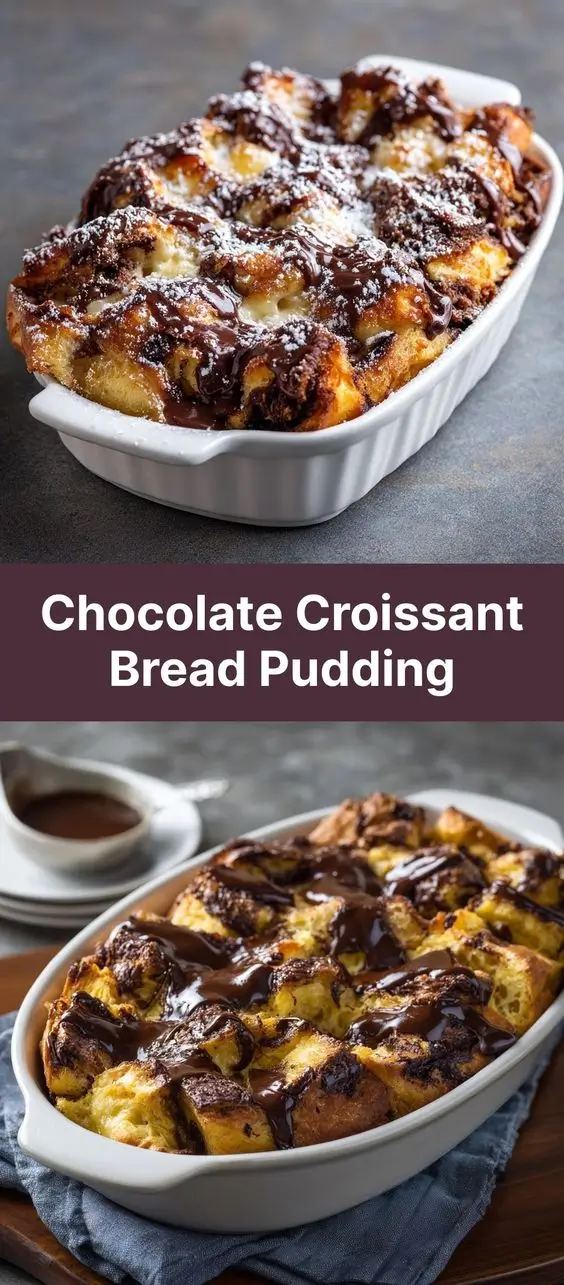
Chocolate Croissant Bread Pudding: A Decadent Twist on a Classic Comfort Dish
The History
Bread pudding, as a concept, traces its roots back to medieval Europe, particularly in England and France, where it was known as “poor man’s pudding.” Originally created as a way to use up stale or leftover bread, it evolved over centuries into a beloved dessert found across cultures. The earliest versions were simple mixtures of bread, milk, eggs, and spices, often sweetened with honey or dried fruit.
In France, the art of pastry and baking reached new heights during the 17th and 18th centuries, giving rise to the croissant — a buttery, flaky viennoiserie that became synonymous with French culinary excellence. Though the croissant’s origins are partially attributed to Austrian bakers (inspired by the kipferl), it was perfected in Parisian bakeries and adopted wholeheartedly into French cuisine.
The fusion of these two iconic foods — the humble bread pudding and the luxurious chocolate croissant — is a relatively modern innovation, born from the creative minds of American and European chefs in the late 20th century. As artisanal bakeries began selling chocolate-filled croissants and consumers found themselves with leftover pastries, inventive home cooks started repurposing them into rich, custardy desserts. Thus, chocolate croissant bread pudding emerged as a gourmet take on a classic comfort food — marrying indulgence with resourcefulness.
Today, this dessert is celebrated in brunch menus, holiday tables, and cozy family dinners alike. It embodies the perfect balance between frugality and extravagance: using yesterday’s croissants to create a dish fit for royalty.
Ingredients Breakdown
The magic of chocolate croissant bread pudding lies not only in its flavor but also in the harmony of its ingredients. Each component plays a vital role in creating a luscious, moist, and deeply satisfying dessert.
- Stale Chocolate Croissants: The star of the show. Using day-old croissants ensures they absorb the custard without turning to mush. Their buttery layers and pockets of melted chocolate add richness and surprise bursts of cocoa throughout the dish.
- Whole Milk and Heavy Cream: These form the base of the custard, providing creaminess and body. Whole milk adds mild sweetness, while heavy cream contributes velvety texture and decadence.
- Eggs: Essential for binding and thickening the custard. They help give the pudding its signature soft, set structure when baked.
- Granulated Sugar: Sweetens the custard and balances the bitterness of dark chocolate. Can be adjusted based on personal preference or the sweetness of the croissants used.
- Vanilla Extract: Adds aromatic warmth and depth, enhancing the overall flavor profile without overpowering.
- Ground Cinnamon (optional): A subtle spice that complements both chocolate and pastry, adding a hint of warmth reminiscent of French toast.
- Salt: A pinch enhances all other flavors, preventing the dish from tasting flat.
- Dark Chocolate Chips or Chunks (optional): For an extra chocolate boost — especially useful if your croissants aren’t heavily filled.
- Espresso Powder (optional): Just a teaspoon can deepen the chocolate flavor, making it more complex and restaurant-quality.
- Whipped Cream, Ice Cream, or Crème Anglaise (for serving): Not part of the bake, but essential for finishing — offering contrast in temperature and texture.
- Powdered Sugar (for garnish): Adds visual appeal and a touch of sweetness when dusted on top before serving.
Step-by-Step Recipe
- Prep the Pan: Preheat your oven to 350°F (175°C). Lightly grease a 9×13-inch baking dish with unsalted butter or non-stick spray. This prevents sticking and adds a slight golden crust to the edges.
- Cut the Croissants: Slice 6–8 stale chocolate croissants into large chunks, about 1.5 to 2 inches wide. Tear them slightly so they have uneven surfaces — this increases surface area for better custard absorption. Place them evenly in the prepared dish, layering gently to avoid compacting.
- Optional Chocolate Boost: Sprinkle ½ cup of dark or semi-sweet chocolate chips or chunks over the croissant pieces. This ensures melty pockets of chocolate even if your croissants are lightly filled.
- Warm the Dairy: In a medium saucepan over low heat, combine 2 cups of whole milk and 1 cup of heavy cream. Heat just until warm — do not boil. Stir occasionally to prevent scalding.
- Whisk the Custard Base: In a large mixing bowl, whisk together 4 large eggs, ¾ cup granulated sugar, 1 tablespoon pure vanilla extract, ½ teaspoon ground cinnamon (if using), 1/8 teaspoon salt, and 1 teaspoon instant espresso powder (optional). Whisk until smooth and slightly pale.
- Temper the Eggs: Slowly pour the warm milk mixture into the egg mixture while continuously whisking. This gradual process prevents the eggs from scrambling when baked.
- Pour Over Croissants: Slowly pour the custard over the arranged croissant pieces. Make sure all pieces are submerged. Use a spatula or the back of a spoon to gently press down any floating chunks so they soak evenly.
- Soak Time: Let the assembled pudding sit for 20–30 minutes at room temperature. This allows the croissants to fully absorb the custard. Gently press down halfway through to ensure even saturation.
- Bake Until Puffed and Set: Place the dish in the preheated oven and bake for 40–50 minutes, or until the center is just set, the top is golden brown, and a knife inserted near the center comes out mostly clean (a few moist crumbs are okay).
- Cool Slightly: Remove from the oven and let rest for 10–15 minutes. The pudding will deflate slightly — this is normal and expected.
- Serve Warm: Dust generously with powdered sugar, add a dollop of whipped cream or a scoop of vanilla ice cream, and serve immediately.
Tips
- Use Stale Croissants: Fresh croissants will disintegrate when soaked. Day-old ones hold their structure better and absorb custard like sponges.
- Don’t Skip the Soak: Allowing time for the bread to soak ensures every bite is creamy and rich. Rushing this step leads to dry spots.
- Check Doneness Carefully: Overbaking results in a rubbery texture. The center should jiggle slightly when shaken — it will continue to set as it cools.
- Add Layers of Flavor: Infuse the milk with orange zest, cinnamon sticks, or a split vanilla bean for an elevated taste profile.
- Double the Batch: This recipe freezes beautifully after baking. Cool completely, wrap tightly, and reheat in the oven when needed.
- Make Ahead: Assemble the entire dish the night before, cover, and refrigerate. Bake straight from the fridge the next morning — ideal for holiday breakfasts or brunch parties.
- Top with Crunch: Add a streusel topping or crushed praline before baking for a textural contrast.
- Uniformity Matters: Cut croissants into similar-sized pieces to ensure even soaking and cooking.
Variations and Customizations
One of the greatest strengths of chocolate croissant bread pudding is its versatility. Here are some inspired twists to suit different tastes and occasions:
- Fruit-Infused Version: Add fresh berries (raspberries, strawberries) or sliced bananas between the croissant layers. The tartness cuts through the richness beautifully.
- Nutty Crunch: Fold in toasted chopped pecans, walnuts, or almonds for added texture and earthy notes.
- Boozy Upgrade: Stir 2–3 tablespoons of Grand Marnier, Kahlúa, Baileys, or rum into the custard for an adult-friendly version.
- White Chocolate & Raspberry: Swap dark chocolate for white chocolate chips and layer in fresh raspberries for a fruity, floral twist.
- S’mores Style: Add graham cracker crumbs to the base, layer in mini marshmallows, and finish with chocolate chunks for a campfire-inspired treat.
- Dairy-Free Option: Substitute coconut milk and canned coconut cream for dairy. Use flax eggs (1 tbsp ground flax + 3 tbsp water per egg) if avoiding eggs.
- Gluten-Free Adaptation: While traditional croissants are not gluten-free, you can use high-quality gluten-free brioche-style bread or GF chocolate pastries for a similar effect.
- Mini Individual Puddings: Bake in ramekins for elegant single-serving portions — perfect for dinner parties or gift-giving.
- Breakfast Parfait Layer: Serve chilled in glasses layered with Greek yogurt and fresh fruit for a brunch parfait alternative.
- Mocha Madness: Increase espresso powder to 2 tsp or dissolve 1 tbsp instant coffee in the warm milk for a pronounced mocha flavor.
Health Considerations and Nutritional Value
While undeniably indulgent, it’s important to enjoy chocolate croissant bread pudding mindfully. Here’s a general nutritional breakdown per serving (based on 8 servings):
| Nutrient | Amount per Serving (approx.) |
|---|---|
| Calories | 420–480 |
| Total Fat | 28–32g |
| Saturated Fat | 16–18g |
| Cholesterol | 180–200mg |
| Sodium | 200–250mg |
| Total Carbohydrates | 38–42g |
| Dietary Fiber | 2–3g |
| Sugars | 22–26g |
| Protein | 8–10g |
Considerations:
- High in Saturated Fat: Due to butter-rich croissants and heavy cream, this dish should be enjoyed in moderation, especially for those monitoring heart health.
- Rich in Calories: Best served as an occasional treat rather than a daily dessert.
- Gluten and Dairy: Contains both, so not suitable for individuals with celiac disease or severe lactose intolerance unless modified.
- Blood Sugar Impact: High sugar content means people with diabetes should consume small portions or consider sugar substitutes like erythritol or monk fruit (though texture may vary).
- Protein Source: Eggs provide complete protein, helping to balance macronutrients slightly.
- Antioxidants: Dark chocolate contains flavonoids, which have antioxidant properties — a small silver lining!
Ingredients
- 6–8 stale chocolate croissants, cut into chunks
- 2 cups whole milk
- 1 cup heavy cream
- 4 large eggs
- ¾ cup granulated sugar
- 1 tablespoon pure vanilla extract
- ½ teaspoon ground cinnamon (optional)
- 1/8 teaspoon salt
- ½ cup dark chocolate chips (optional)
- 1 teaspoon instant espresso powder (optional)
- Butter, for greasing the pan
- Powdered sugar, for dusting
- Whipped cream or vanilla ice cream, for serving
Directions
- Preheat oven to 350°F (175°C). Grease a 9×13-inch baking dish with butter.
- Arrange croissant chunks evenly in the dish. Sprinkle chocolate chips over the top if using.
- In a saucepan, heat milk and heavy cream until warm (not boiling).
- In a large bowl, whisk eggs, sugar, vanilla, cinnamon, salt, and espresso powder until smooth.
- Gradually pour warm milk mixture into egg mixture, whisking constantly.
- Pour custard over croissants. Press down gently to submerge all pieces.
- Let soak for 20–30 minutes at room temperature.
- Bake for 40–50 minutes, until puffed, golden, and set in the center.
- Cool for 10–15 minutes before serving.
- Dust with powdered sugar and serve warm with whipped cream or ice cream.
FAQ
Can I use fresh chocolate croissants?
Yes, but stale ones work better. If using fresh, lightly toast them in a 300°F oven for 10 minutes first to dry them out slightly.
Can I make this ahead of time?
Absolutely! Assemble the entire dish, cover, and refrigerate overnight. Bake it the next day — add 5–10 minutes to the baking time if going from cold.
How long does it keep?
Store leftovers in an airtight container in the refrigerator for up to 3 days. Reheat in the oven at 325°F for 15–20 minutes or microwave individual portions briefly.
Can I freeze chocolate croissant bread pudding?
Yes, it freezes well. Cool completely, wrap tightly in plastic and foil, and freeze for up to 2 months. Thaw in the refrigerator overnight and reheat in the oven.
What can I substitute for heavy cream?
Half-and-half or full-fat coconut milk can work, though the texture will be less rich. Avoid skim milk — it will result in a watery pudding.
Why did my bread pudding turn out soggy?
Likely causes: too much liquid, underbaking, or croissants didn’t soak long enough to bind. Ensure proper ratios and allow full baking time.
Can I use regular croissants instead of chocolate ones?
Yes, but add ⅔ cup chocolate chips and maybe a bit more sugar to compensate for the missing chocolate filling.
Is bread pudding supposed to be jiggly?
Slightly — the center should have a gentle wobble when shaken. It will firm up as it rests. If liquid pours out, it needs more time.
Summary
Chocolate croissant bread pudding transforms leftover pastries into a sumptuous, custard-soaked delight that blends French elegance with American comfort food tradition.
Rich, aromatic, and endlessly customizable, it’s the ultimate dessert for special mornings, holiday feasts, or whenever you crave something truly indulgent.