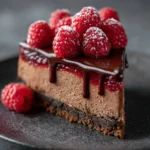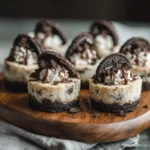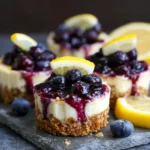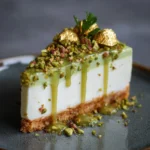
Introduction
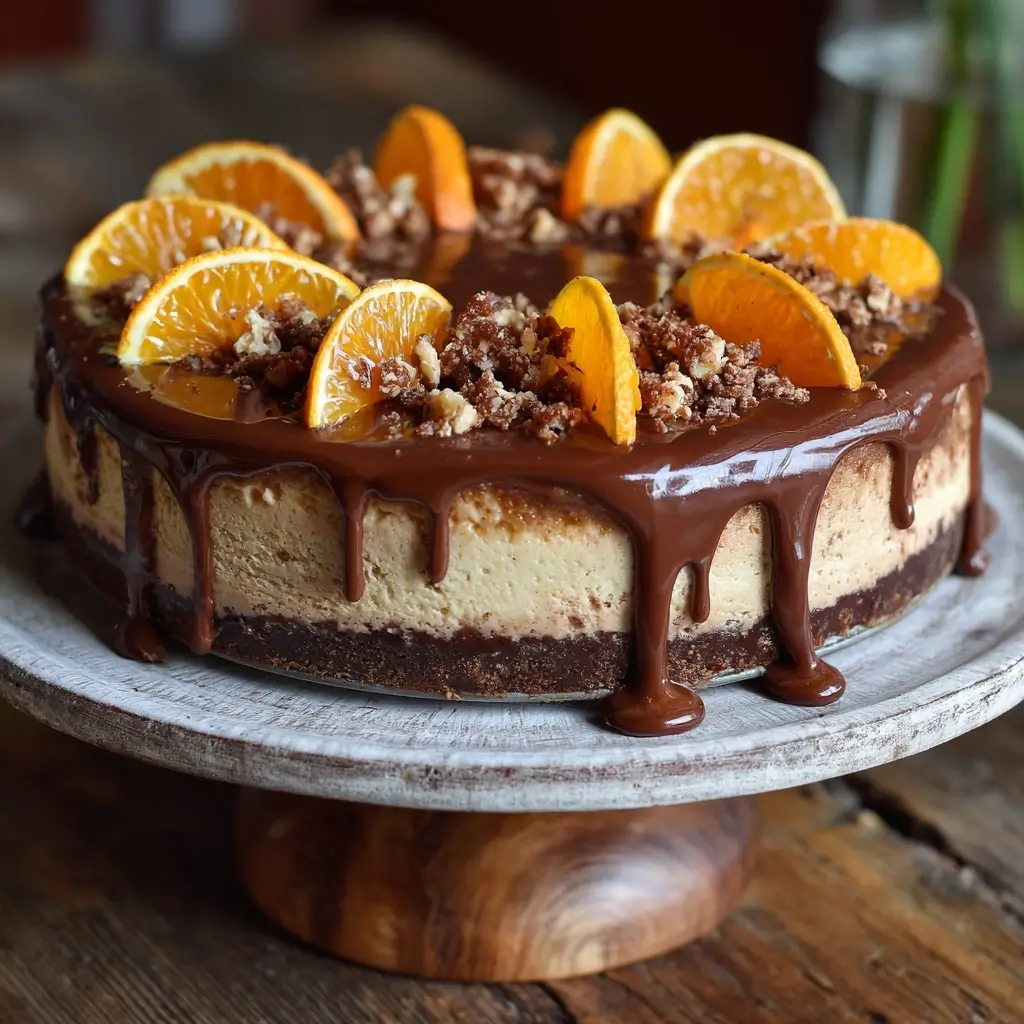
Welcome to the ultimate indulgence—Chocolate Orange Cheesecake: a luxurious, velvety fusion of rich dark chocolate and bright, zesty orange that dances on the palate with perfect balance. This isn’t just another dessert—it’s a harmonious marriage of contrasting yet complementary flavors, where the deep, earthy bitterness of high-quality cocoa meets the sun-kissed vibrancy of cold-pressed orange oil and zest. Whether served at an elegant dinner party, as a celebratory centerpiece for birthdays or holidays, or simply as a well-deserved treat after a long week, this cheesecake delivers sophistication, texture, and unforgettable flavor in every forkful. Its glossy chocolate ganache top, delicate orange-infused filling, and crisp, buttery chocolate graham cracker crust come together to create a multi-layered sensory experience—silky, creamy, citrusy, bittersweet, and utterly addictive.
The History
The origins of cheesecake stretch back over two millennia—to ancient Greece, where early versions made with fresh cheese, honey, and wheat were served to athletes during the first Olympic Games in 776 BCE as a source of energy and stamina. The Romans later adopted and adapted the recipe, adding crushed cheese, eggs, and spices before spreading it across their empire. In medieval Europe, cheesecakes evolved with regional variations—English “cheese tarts” featured curd cheese and dried fruits, while German Käsekuchen emphasized quark and cardamom. The modern American baked cheesecake emerged in the late 19th century, popularized by William Lawrence’s accidental creation of cream cheese in Chester, New York, in 1872—and soon after, the iconic New York-style dense, tangy, oven-baked version took hold.
As for the Chocolate Orange pairing—its roots are more modern and deeply tied to confectionery innovation. While chocolate and citrus have been enjoyed together since at least the 17th century (Spanish colonial chocolatiers in Mexico occasionally added bitter orange peel to drinking chocolate), the intentional, refined union gained prominence in the 20th century. British chocolatier Terry’s introduced the iconic Terry’s Chocolate Orange in 1932—a segmented, hollow sphere of milk chocolate infused with natural orange oil—sparking global fascination with the duo. By the 1980s and ’90s, pastry chefs began experimenting with orange zest and Grand Marnier in chocolate desserts, and by the early 2000s, food blogs and gourmet cookbooks widely celebrated the dynamic interplay of chocolate’s fat-soluble richness and orange’s volatile citrus oils—making Chocolate Orange Cheesecake a natural, inevitable evolution of both traditions. Today, it stands as a beloved signature dessert in boutique patisseries from Copenhagen to Tokyo, and a staple in holiday baking guides worldwide.
Ingredients Breakdown
Every exceptional Chocolate Orange Cheesecake begins not with technique alone—but with thoughtfully selected, high-intensity ingredients that each play a precise role in structure, flavor, aroma, and mouthfeel:
- Graham Cracker Crust Base: Finely ground chocolate graham crackers (not regular) provide cocoa depth and structural integrity; dark brown sugar adds molasses complexity and hygroscopic moisture retention; unsalted butter binds and enriches with dairy fat and subtle salt balance.
- Cheesecake Filling Foundation: Full-fat, brick-style Philadelphia-style cream cheese (not spreadable or low-fat) ensures density, stability, and clean lactic tang; full-fat sour cream contributes acidity, tenderness, and a slight tang that cuts through richness; heavy whipping cream (36–40% fat) lends silkiness, improves sliceability, and enhances moisture without diluting flavor.
- Chocolate Component: High-cocoa-percentage (68–72%) bittersweet chocolate—chopped, not chips—is essential for nuanced bitterness, complex fruit-and-nut notes, and proper emulsification. Dutch-processed cocoa powder (unsweetened, alkalized) adds deep color, mellowed acidity, and intensified chocolate intensity without overpowering.
- Orange Element: Freshly grated navel or Valencia orange zest (only the colored outer peel—never the pith) delivers volatile aromatic oils responsible for 90% of orange fragrance; freshly squeezed juice provides bright acidity and subtle sweetness to balance chocolate’s tannins; optional but highly recommended: ¼ tsp pure orange oil (food-grade, cold-pressed) for amplification of top-note brightness without dilution.
- Binding & Stabilizing Agents: Large Grade AA eggs at room temperature act as thermal stabilizers—coagulating gradually to set the custard without cracking; cornstarch (not flour) prevents syneresis (“weeping”) and adds gentle chew; granulated sugar dissolves fully into the batter for even sweetness and crystal-free texture; pure Madagascar bourbon vanilla extract rounds out flavor with warm, floral depth.
- Ganache Topping: Equal parts high-quality dark chocolate (70%) and heavy cream, heated and emulsified to silky perfection—then finished with a whisper of orange zest and a pinch of flaky sea salt to elevate contrast and finish.
Step-by-Step Recipe
- Prepare the Crust (Day Before Recommended): Preheat oven to 350°F (175°C). Pulse 1 ½ cups chocolate graham cracker crumbs, ¼ cup dark brown sugar, and ⅛ tsp fine sea salt in a food processor until uniform. Add 6 tbsp melted unsalted butter and pulse until mixture resembles wet sand. Press firmly and evenly into the bottom and 1.5 inches up the sides of a 9-inch springform pan lined with parchment and lightly greased. Chill uncovered for 30 minutes, then bake 10 minutes until fragrant and set. Cool completely on a wire rack—do not remove from pan.
- Temper & Soften Cream Cheese: At least 2 hours before mixing, unwrap full-fat brick cream cheese and let sit at room temperature (68–72°F) until yielding to gentle pressure—no cold lumps allowed. Over-softening causes separation; under-softening yields graininess.
- Whisk Dry Ingredients: Sift together ¼ cup Dutch-process cocoa powder, 2 tbsp cornstarch, and ¼ tsp fine sea salt into a small bowl. Set aside.
- Cream Cheese Base: Using a stand mixer fitted with paddle attachment (or hand mixer on medium-low), beat softened cream cheese on medium speed for 2 minutes until smooth and glossy. Scrape bowl thoroughly. Add ¾ cup granulated sugar and beat 1 minute until homogenous. Add ⅓ cup sour cream and ¼ cup heavy cream; beat 45 seconds until just combined—do not overmix.
- Incorporate Chocolate: Melt 6 oz finely chopped 70% dark chocolate with 2 tbsp heavy cream in a heatproof bowl over simmering water (bain-marie), stirring constantly until smooth and cooled slightly (105–110°F). Whisk into cream cheese mixture in two additions, scraping bowl each time, until fully emulsified and velvety.
- Add Orange & Vanilla: Gently whisk in 2 tbsp finely grated orange zest, 2 tbsp freshly squeezed orange juice, 1 tsp pure vanilla extract, and (if using) ¼ tsp food-grade orange oil. Mix only until incorporated—overworking introduces air bubbles.
- Introduce Eggs One at a Time: With mixer on lowest speed, add eggs one at a time, beating 15 seconds after each addition—just until yolk disappears. Overbeating incorporates excess air → cracks and puffing.
- Fold in Dry Blend: Remove bowl from mixer. Using a flexible silicone spatula, gently fold in sifted cocoa-cornstarch mixture in three additions, rotating bowl 120° each time and folding from bottom up—until no streaks remain. Batter should be thick, glossy, and pourable—not runny or frothy.
- Water Bath Setup: Wrap exterior of springform pan *tightly* with two overlapping layers of heavy-duty aluminum foil (to prevent leaks). Place pan inside a larger roasting pan. Carefully pour hot (not boiling) water into roasting pan until it reaches halfway up springform sides (~1.5 inches).
- Bake Low & Slow: Reduce oven temperature to 325°F (163°C). Bake 75 minutes—cake will appear softly jiggly at center (like set Jell-O) with firm edges. Turn off oven, crack door open 1 inch with wooden spoon handle, and let cake cool undisturbed in water bath for 1 hour.
- Chill & Cure: Remove springform from water bath. Run thin knife around inner edge to loosen. Refrigerate uncovered for minimum 12 hours—ideally 24–48 hours—for full flavor melding, texture maturation, and effortless slicing.
- Prepare Ganache: Heat ½ cup heavy cream until steaming (not boiling). Pour over 6 oz finely chopped 70% dark chocolate in heatproof bowl. Let sit 2 minutes, then stir slowly from center outward until smooth. Stir in 1 tsp orange zest and pinch flaky salt. Cool to 85°F (slightly warmer than room temp) before pouring over chilled cake.
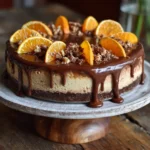
- Final Set & Serve: Refrigerate ganache-topped cake for 2 hours minimum. Run warm knife under hot water, dry thoroughly, and slice cleanly between servings. Garnish with candied orange slices, cacao nibs, and edible gold leaf for elegance.
Tips
- Room Temperature Is Non-Negotiable: Cold cream cheese, eggs, or sour cream cause lumps, curdling, and uneven emulsification. Plan ahead—ingredients must be 68–72°F for optimal incorporation.
- Zest First, Juice Second: Always zest whole oranges before juicing—they’re easier to grip and yield more vibrant, oil-rich zest. Use a microplane, not a box grater, and avoid white pith.
- Water Bath = Crack Prevention: Skipping the water bath is the #1 cause of surface fissures. The gentle, humid heat ensures even, slow coagulation of proteins. Foil wrapping must be seamless—if uncertain, double-wrap.
- No Rush on Cooling: Never refrigerate a warm cheesecake—it contracts too rapidly, causing cracks and weeping. The 1-hour oven cooldown + gradual fridge transition is essential for structural integrity.
- Chill Time Is Flavor Time: While 12 hours is safe, waiting 48 hours transforms the cake: cocoa tannins mellow, orange oils disperse evenly, and textures harmonize into sublime creaminess.
- Knife Discipline: For flawless slices: dip a long, thin, non-serrated knife in hot water, wipe dry, cut, then repeat. Never saw—press straight down with steady pressure.
- Prevent Sticking: Line the bottom of your springform with parchment cut to fit exactly—grease the parchment and pan sides separately. This guarantees lift-off without tearing.
- Orange Oil Caution: Food-grade orange oil is highly concentrated—¼ tsp equals the zest of 3 large oranges. Start with ⅛ tsp if unsure; you can always add more to the ganache.
- Altitude Adjustments: Above 3,000 ft? Reduce sugar by 1 tbsp, increase cornstarch to 3 tbsp, and extend water bath cooling to 90 minutes for stability.
- Freezing for Longevity: Unfrosted, fully chilled cake (without ganache) freezes beautifully for up to 3 months—wrap tightly in plastic, then foil. Thaw overnight in fridge before topping and serving.
Variations and Customizations
This recipe serves as a master canvas—adaptable for dietary needs, seasonal ingredients, and creative flair:
- Gluten-Free: Substitute gluten-free chocolate graham crackers or a blend of almond flour (¼ cup), cocoa powder (2 tbsp), coconut sugar (¼ cup), and 5 tbsp melted butter for the crust. Ensure all cocoa and chocolate are certified GF.
- Vegan: Use soaked cashews (1 ½ cups), silken tofu (½ cup), coconut cream (½ cup), maple syrup (⅔ cup), ¼ cup Dutch cocoa, 2 tbsp orange zest, 3 tbsp orange juice, 1 tsp orange oil, and 2 tbsp cornstarch. Blend until ultra-smooth; bake in water bath at 325°F for 65 minutes. Top with coconut-based dark chocolate ganache.
- Decadent Upscale: Infuse the ganache with 1 tsp Grand Marnier or Cointreau. Add a layer of homemade orange curd (simmered with egg yolks, sugar, butter, and zest) beneath the ganache. Finish with gold-dusted dark chocolate curls and crystallized orange peel.
- Mini Individual Versions: Bake in lined muffin tins (with foil collars) for 28–32 minutes at 325°F. Yield: 12–14 mini cheesecakes. Perfect for parties or portion control.
- White Chocolate Orange: Replace dark chocolate with high-quality white chocolate (6 oz), reduce cocoa powder to 1 tbsp, and add ¼ tsp cardamom to complement orange’s floral notes.
- Espresso-Enhanced: Dissolve 1 tbsp instant espresso powder in orange juice before adding to batter. Adds roasted depth and intensifies chocolate perception without bitterness.
- Spiced Citrus: Add ¼ tsp ground coriander and a pinch of black pepper to the crust for warm, aromatic complexity that echoes orange’s terpenes.
- Boozy Infusion: Fold 2 tbsp aged orange liqueur (e.g., Grand Marnier, Cointreau, or Pierre Ferrand Dry Curaçao) into the batter after eggs—but reduce orange juice by 1 tbsp to maintain consistency.
- Crunchy Texture Contrast: Press ⅓ cup toasted hazelnuts or pistachios into the crust pre-bake—or swirl ¼ cup crushed candied orange pieces into the batter before baking.
- Seasonal Twists: In winter: add 1 tsp dried bergamot powder to ganache. In summer: garnish with blood orange supremes and mint. In fall: infuse cream with star anise and orange peel before chilling.
Health Considerations and Nutritional Value
A single generous slice (1/12th of a 9-inch cake, approx. 180g) contains approximately:
- Calories: 495 kcal
- Total Fat: 34 g (21 g saturated)
- Cholesterol: 135 mg
- Sodium: 265 mg
- Total Carbohydrates: 42 g (32 g sugars, 2 g fiber)
- Protein: 7 g
Nutritional Highlights & Considerations:
- Antioxidant Powerhouse: Dark chocolate (70%+) delivers flavonoids (epicatechin, procyanidins) linked to improved endothelial function, reduced oxidative stress, and modest blood pressure support—especially when consumed alongside vitamin C–rich orange, which enhances flavonoid bioavailability.
- Vitamin C Synergy: Orange zest and juice supply ~18 mg vitamin C per slice—supporting collagen synthesis, iron absorption (from cocoa’s non-heme iron), and immune resilience.
- Calcium & Phosphorus: Cream cheese and sour cream contribute ~120 mg calcium and 140 mg phosphorus per slice—key for bone mineralization and ATP metabolism.
- Mindful Indulgence: While high in saturated fat and added sugar, this dessert fits within a balanced pattern when portioned intentionally (e.g., 1 slice weekly) and paired with fiber-rich berries or a green salad. Opting for organic dairy, fair-trade chocolate, and cold-pressed orange oil increases phytonutrient density and reduces pesticide load.
- Dietary Restrictions Notes: Naturally low-FODMAP in moderate portions (limit to 1 slice; avoid high-FODMAP additions like honey or agave); contains dairy and gluten unless adapted; egg-free versions require aquafaba or commercial egg replacer with careful pH balancing.
- Metabolic Impact: The combination of fat, protein, and fiber (from cocoa and crust) slows gastric emptying, promoting satiety and blunting postprandial glucose spikes compared to simple-sugar desserts—making it a comparatively thoughtful choice for mindful dessert lovers.
Ingredients
For the Chocolate Graham Crust:
- 1 ½ cups (150g) finely ground chocolate graham cracker crumbs (about 12 full crackers)
- ¼ cup (50g) dark brown sugar, packed
- ⅛ tsp fine sea salt
- 6 tbsp (85g) unsalted butter, melted and cooled
For the Chocolate Orange Cheesecake Filling:
- 24 oz (680g) full-fat brick-style cream cheese, at room temperature (68–72°F)
- ¾ cup (150g) granulated sugar
- ⅓ cup (80g) full-fat sour cream
- ¼ cup (60ml) heavy whipping cream (36–40% fat)
- 6 oz (170g) high-quality 68–72% dark chocolate, finely chopped
- 2 tbsp (30ml) heavy whipping cream (for melting chocolate)
- ¼ cup (20g) Dutch-process unsweetened cocoa powder
- 2 tbsp (16g) cornstarch
- ¼ tsp fine sea salt
- 2 tbsp (6g) finely grated orange zest (from 2 large navel or Valencia oranges)
- 2 tbsp (30ml) freshly squeezed orange juice
- 1 tsp pure Madagascar bourbon vanilla extract
- ¼ tsp food-grade cold-pressed orange oil (optional but recommended)
- 3 large Grade AA eggs, at room temperature
For the Orange-Infused Dark Chocolate Ganache:
- 6 oz (170g) high-quality 70% dark chocolate, finely chopped
- ½ cup (120ml) heavy whipping cream
- 1 tsp finely grated orange zest
- Pinch of flaky sea salt (e.g., Maldon)
For Garnish (Optional):
- Candied orange slices
- Cacao nibs
- Edible gold leaf
- Fresh mint leaves
Directions
- Prepare the Crust: Adjust oven rack to middle position and preheat oven to 350°F (175°C). Lightly grease the bottom and sides of a 9-inch springform pan. Line the bottom with a round of parchment paper. In a medium bowl, combine chocolate graham cracker crumbs, brown sugar, and salt. Pour in melted butter and stir with a fork until all crumbs are evenly moistened and mixture holds together when pinched. Firmly press mixture into the bottom and 1.5 inches up the sides of the prepared pan using the flat bottom of a measuring cup or glass. Refrigerate for 30 minutes, then bake for 10 minutes. Remove from oven and cool completely on a wire rack—minimum 45 minutes.
- Melt and Cool Chocolate: Place chopped dark chocolate and 2 tbsp heavy cream in a heatproof bowl. Set over a saucepan of barely simmering water (do not let bowl touch water). Stir constantly with a silicone spatula until smooth and fully melted (~3–4 minutes). Remove from heat and let cool to 105–110°F (40–43°C)—test with instant-read thermometer or wrist test (should feel warm but not hot).
- Make Dry Blend: In a small bowl, whisk together cocoa powder, cornstarch, and salt until no lumps remain. Set aside.
- Cream Cheese Base: Using a stand mixer fitted with paddle attachment (or hand mixer), beat cream cheese on medium speed for 2 minutes until completely smooth and glossy. Scrape bowl and paddle thoroughly. Add sugar and beat 1 minute until combined and airy. Add sour cream and ¼ cup heavy cream; beat on low for 30 seconds until just incorporated. Scrape bowl again.
- Incorporate Melted Chocolate: With mixer on low, slowly drizzle in cooled chocolate mixture in a steady stream. Once fully added, increase speed to medium and beat 45 seconds until uniform and velvety. Scrape bowl.
- Add Orange & Vanilla: Add orange zest, orange juice, vanilla extract, and orange oil (if using). Mix on low for 20 seconds until evenly distributed. Do not overmix.
- Add Eggs: With mixer on lowest speed, add eggs one at a time, beating 15 seconds after each addition until yolk disappears. Scrape bowl after each egg.
- Fold in Dry Ingredients: Remove bowl from mixer. Using a flexible silicone spatula, gently fold in cocoa-cornstarch mixture in three additions, rotating bowl 120° each time, folding from bottom upward until no streaks remain. Batter should be thick, glossy, and homogeneous.
- Prepare Water Bath: Wrap exterior of springform pan tightly with two overlapping sheets of heavy-duty aluminum foil—ensure no gaps at base or seams. Place pan inside a large roasting pan. Carefully pour hot (not boiling) water into roasting pan until water reaches halfway up the springform pan (~1.5 inches).
- Bake: Reduce oven temperature to 325°F (163°C). Carefully place roasting pan in oven. Bake 75 minutes—edges will be set and center will jiggle softly like set gelatin. Turn oven OFF. Prop oven door open 1 inch with wooden spoon handle. Let cake cool in water bath for 1 hour—do not rush.
- Chill Overnight: Carefully lift springform pan from water bath. Run thin knife around inner edge to loosen cake from sides. Refrigerate uncovered for minimum 12 hours—preferably 24–48 hours—for optimal texture and flavor development.
- Make Ganache: Heat heavy cream in small saucepan over medium-low heat until steaming and tiny bubbles form at edges (do not boil). Pour over chopped chocolate in heatproof bowl. Let sit 2 minutes. Stir slowly from center outward until smooth and glossy. Stir in orange zest and flaky salt. Let cool, stirring occasionally, until 85°F (29°C)—slightly warmer than room temperature.
- Top & Final Chill: Pour ganache over chilled cake, tilting pan gently to spread evenly. Refrigerate uncovered for 2 hours minimum—until ganache is fully set and firm to touch.
- Serve: Run warm knife around perimeter. Release springform collar. Slide thin metal spatula under parchment to lift cake onto serving platter. Slice with hot, dry knife. Serve chilled. Store covered in refrigerator up to 5 days—or freeze unfrosted cake up to 3 months.
FAQ
- Can I make this without a water bath?
- No—water bath is critical for even, gentle heat transfer and crack prevention. However, if absolutely necessary, you may use the “dry bath” method: place a shallow pan of hot water on the lowest oven rack and bake cheesecake on middle rack—but results are less reliable and cracking risk increases significantly.
- Why did my cheesecake crack?
- Most common causes: (1) Overmixing after adding eggs → excess air expands then collapses; (2) Cooling too quickly → rapid contraction; (3) Underbaking → center sags and pulls away; (4) Not using water bath; (5) Opening oven door before 60-minute mark. Prevention is always better than repair!
- Can I use orange extract instead of zest and juice?
- Not recommended. Most “orange extract” is synthetic and lacks the volatile oils and acidity that give authentic brightness. If zest is unavailable, substitute 1 tsp orange oil + 2 tbsp water—but never imitation extract.
- My ganache split—what went wrong?
- Ganache splits when water content is too low (overheated cream evaporates) or chocolate is overheated (>120°F), causing cocoa butter to separate. Fix: gently reheat over double boiler while whisking in 1 tsp warm cream at a time until emulsified. Next time, use accurate thermometer and steam—not boil—cream.
- Can I bake this in a regular cake pan instead of springform?
- Strongly discouraged. Springform pans allow clean release and prevent crust damage. If you must, line a 9-inch round cake pan with heavy-duty foil extending 3 inches above rim, grease well, and expect difficulty removing intact. Parchment sling is mandatory.
- How do I fix a soggy crust?
- Sogginess usually means water leaked into pan during bath. Next time: triple-wrap with foil, use roasting pan with higher walls, and check seal before adding water. To rescue current cake: chill thoroughly, then carefully invert onto parchment-lined plate, peel off base, and re-crisp crust-side up at 325°F for 5 minutes before reassembling