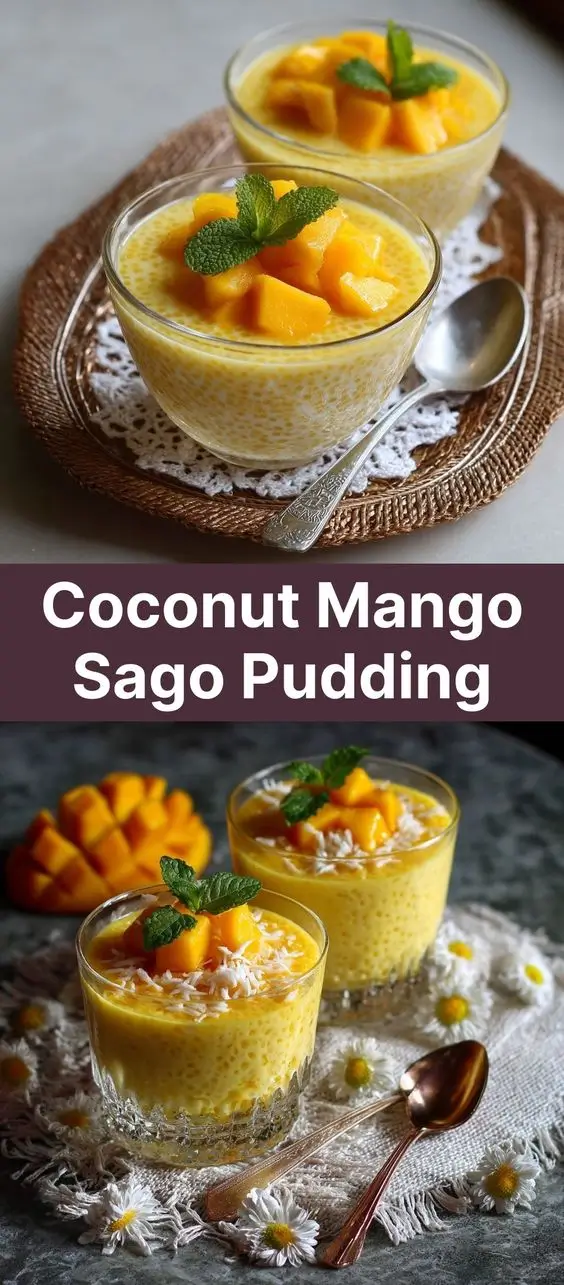
Coconut Mango Sago Pudding: A Tropical Delight from the Heart of Asia
Indulge in the creamy, fragrant world of Coconut Mango Sago Pudding—a luscious dessert that brings together the tropical sweetness of mango, the rich creaminess of coconut, and the delicate chew of sago pearls. Revered across Southeast Asia and increasingly popular around the globe, this chilled pudding is more than just a treat—it’s a celebration of flavor, texture, and cultural heritage. Whether served as a refreshing end to a spicy meal or enjoyed on a hot summer afternoon, Coconut Mango Sago Pudding delivers a perfect balance of silky smoothness and subtle bounce, making it a favorite among dessert lovers of all ages.
The History: A Dessert Steeped in Tradition
Coconut Mango Sago Pudding traces its roots to the culinary traditions of Southern China, particularly Guangdong province, where desserts known as tong sui (meaning “sugar water”) have long played an important role in family life and festive occasions. These sweet soups or puddings are traditionally consumed for their soothing properties and symbolic meanings—often associated with harmony, prosperity, and well-being.
Sago, derived from the pith of tropical palm trees (especially Metroxylon sagu), has been a staple ingredient in Southeast Asian diets for centuries. When cooked, sago transforms into translucent, pearl-like beads with a soft, chewy texture. Paired with coconut milk—a cornerstone of regional cuisine—the addition of ripe mango elevates this humble base into something luxurious.
The modern version of Coconut Mango Sago Pudding gained widespread popularity in Hong Kong during the late 20th century, where street vendors and dai pai dongs (open-air food stalls) began serving it chilled, often garnished with fresh fruit or a drizzle of evaporated milk. Today, it’s a staple in dim sum restaurants, dessert cafes, and home kitchens throughout Asia and beyond. Its rise in global fame owes much to the increasing appreciation for Asian desserts and plant-based, dairy-free treats that don’t compromise on taste or indulgence.
Ingredients Breakdown: The Building Blocks of Bliss
Every spoonful of Coconut Mango Sago Pudding sings thanks to a harmonious blend of carefully selected ingredients. Here’s a detailed look at what goes into this tropical masterpiece:
- Sago Pearls: Small, starch-based beads that become translucent and chewy when boiled. They provide a unique mouthfeel central to the dessert’s appeal.
- Ripe Mangoes: Preferably varieties like Ataulfo (Honey mango), Kent, or Tommy Atkins, which offer a velvety texture and intense sweetness without excessive fiber.
- Coconut Milk: Full-fat canned coconut milk is ideal for richness and creaminess. It forms the custard-like base that carries the mango flavor.
- Sugar: White sugar, rock sugar, or palm sugar can be used to enhance sweetness while preserving the natural flavors.
- Water: Used both for cooking sago and adjusting the consistency of the mango purée.
- Optional Add-ins: Some recipes include pandan leaves for aroma, a splash of vanilla extract, or a pinch of salt to elevate complexity.
For a refined presentation, consider garnishing with:
- Fresh mango cubes
- Toasted coconut flakes
- A drizzle of condensed milk or coconut cream
- Mint leaves for color contrast
Step-by-Step Recipe: Crafting the Perfect Bowl
Follow these detailed instructions to create a restaurant-quality Coconut Mango Sago Pudding in your own kitchen:
- Cook the Sago Pearls:
- Bring 4 cups of water to a rolling boil in a medium pot.
- Slowly add 1/2 cup of dry sago pearls while stirring gently to prevent clumping.
- Reduce heat to medium and simmer for 5–7 minutes, stirring occasionally, until the pearls turn translucent with only a tiny white dot in the center.
- Remove from heat, cover, and let sit for another 5–10 minutes until fully clear.
- Rinse under cold water to stop cooking and remove excess starch. Drain thoroughly.
- (Optional) Soak cooked sago in a little coconut milk to enhance flavor and prevent sticking.
- Prepare the Mango Purée:
- Peel 2 large ripe mangoes (about 2 cups diced).
- Blend the flesh until completely smooth. For a thinner consistency, add 1–2 tablespoons of water or coconut milk.
- Taste and adjust sweetness if needed by blending in 1–2 teaspoons of sugar or honey.
- Combine Coconut Milk Mixture:
- In a mixing bowl, combine 1 can (13.5 oz) of full-fat coconut milk with 2–3 tablespoons of sugar.
- Warm gently over low heat or microwave for 30 seconds to help dissolve the sugar.
- Let cool before combining with other ingredients to maintain a chilled final temperature.
- Assemble the Pudding:
- In each serving glass or bowl, layer in the following order:
- 1–2 tablespoons of cooked sago
- A generous scoop of mango purée
- Pour chilled coconut milk mixture over the top
- Gently stir once or leave layered for visual effect.
- Add extra fresh mango chunks on top.
- Chill in the refrigerator for at least 30 minutes before serving.
- In each serving glass or bowl, layer in the following order:
- Serve and Enjoy:
- Serve cold, optionally with a sprinkle of toasted coconut or a swirl of condensed milk.
- Best enjoyed within 24 hours, though components can be stored separately for up to 2 days.
Pro Tips for Perfection
- Don’t Overcook the Sago: Keep a close eye during boiling. Overcooked sago becomes mushy and loses its signature springy texture.
- Use Ripe But Firm Mangoes: Overripe mangoes may ferment when mixed with coconut milk; underripe ones lack sweetness and creaminess.
- Chill Components Separately: Cool the sago and coconut mixture before assembly to ensure a refreshingly cold dessert.
- Balance Sweetness Carefully: Ripe mangoes vary in sugar content. Always taste before adding extra sweetener.
- Layer for Visual Appeal: Clear glasses showcase the beautiful gradient of yellow mango and white coconut layers.
- Double-Strain for Silkiness: For a smoother purée, pass the blended mango through a fine-mesh sieve to remove any fibrous bits.
- Freeze Excess Mango: Puree and freeze leftover mango in ice cube trays for future batches—ideal for smoothies or quick desserts.
Variations and Customizations: Make It Your Own
While traditional Coconut Mango Sago Pudding is divine on its own, creative variations allow you to tailor it to dietary needs, seasonal ingredients, or adventurous palates:
- Dairy-Free & Vegan Version: Naturally vegan! Just ensure no animal-derived sugars are used (some refined sugars use bone char, so opt for organic or plant-based certified options).
- Low-Sugar or Diabetic-Friendly: Replace sugar with monk fruit sweetener, erythritol, or stevia. Use unsweetened coconut milk and rely solely on ripe mango for sweetness.
- Tropical Fusion: Mix in pureed passionfruit, pineapple, or banana for a fruity twist.
- Pandan Coconut Layer: Infuse the coconut milk with 1–2 knotted pandan leaves while warming, then strain before use for a floral, grassy aroma.
- Protein Boost: Stir in a scoop of unflavored collagen peptides or plant-based protein powder into the coconut mixture (blend well to avoid grittiness).
- Boba-Style Upgrade: Replace half the sago with small tapioca pearls for a chewier, boba-tea-inspired experience.
- Frozen Popsicle Version: Pour the mixture into molds and freeze for 4–6 hours for a healthy frozen treat.
- Alcoholic Twist (Adults Only): Add a splash of Malibu rum or mango liqueur for a tropical cocktail-style dessert.
- Crunchy Topping Option: Top with granola, crushed nuts, or chia seeds for added texture and nutrition.
Health Considerations and Nutritional Value
When enjoyed mindfully, Coconut Mango Sago Pudding offers more than just pleasure—it can contribute beneficial nutrients, though moderation is key due to its calorie density.
Nutritional Highlights (per average serving, approx. 1 cup):
| Nutrient | Amount |
|---|---|
| Calories | 280–350 kcal |
| Total Fat | 18–22g (mostly healthy saturated fats from coconut) |
| Saturated Fat | 14–17g |
| Carbohydrates | 30–38g |
| Sugars | 22–28g (naturally occurring + added) |
| Dietary Fiber | 2–3g (from mango and sago) |
| Protein | 2–3g |
| Vitamin C | 45% DV (from mango) |
| Folate | 15% DV |
| Copper & Manganese | Good sources from coconut and sago |
Health Benefits:
- Mango Power: Rich in antioxidants like vitamin C, beta-carotene, and polyphenols, which support immune function and skin health.
- Coconut Energy: Medium-chain triglycerides (MCTs) in coconut milk are quickly metabolized for energy rather than stored as fat.
- Digestive Aid: Warm sago is traditionally considered easy to digest and soothing for upset stomachs.
- Hydration Support: High water content in mango and coconut helps maintain fluid balance.
Considerations:
- High in Natural Sugars: Diabetics should monitor portion sizes and consider low-glycemic alternatives.
- Calorie-Dense: Due to coconut milk and sugar, larger servings can quickly add up in calories.
- Allergies: Contains coconut (a tree nut allergen). Sago is gluten-free but confirm sourcing if cross-contamination is a concern.
- Limited Protein: Not a complete meal; pair with protein-rich foods if serving as a snack.
Full Ingredient List
- ½ cup (100g) dry sago pearls
- 2 large ripe mangoes (approx. 2 cups diced)
- 1 can (13.5 oz / 400ml) full-fat coconut milk
- 2–4 tablespoons granulated sugar (adjust to taste)
- 4 cups water (for cooking sago)
- 1–2 tablespoons water or coconut milk (for blending mango)
- Optional: 1 pandan leaf, pinch of salt, 1 tbsp condensed milk, toasted coconut flakes
Detailed Directions Recap
- Boil 4 cups water and cook sago until translucent (about 10–15 minutes total with resting).
- Rinse cooked sago under cold water and drain well.
- Blend peeled mango flesh into a smooth purée; adjust sweetness if desired.
- Warm coconut milk with sugar until dissolved; cool to room temperature.
- Assemble in glasses: sago first, then mango purée, followed by coconut milk.
- Garnish with fresh mango cubes and optional toppings.
- Refrigerate for at least 30 minutes before serving.
- Stir gently before eating or enjoy layered.
Frequently Asked Questions (FAQ)
Q: Can I use instant or pre-cooked sago?
A: Yes, some brands sell ready-to-use sago. Rinse and chill before use. Adjust liquid ratios accordingly.
Q: Is sago the same as tapioca pearls?
A: Not exactly. While similar in appearance and texture, sago comes from palm pith, whereas tapioca is derived from cassava root. They can sometimes be substituted, but sago tends to be smaller and more delicate.
Q: Can I make this ahead of time?
A: Yes, but store components separately. Assembled pudding may separate or become watery after 24 hours.
Q: Why did my sago turn out sticky or clumped?
A: This happens if not stirred during cooking or not rinsed properly. Always rinse under cold water immediately after cooking.
Q: Can I use frozen mango?
A: Yes, thaw completely and drain excess liquid before blending. Flavor may be slightly less vibrant than fresh.
Q: Is this dessert gluten-free?
A: Yes! Sago is naturally gluten-free, and all other ingredients listed are too—just verify labels if using flavored or processed products.
Q: How do I prevent curdling when mixing mango and coconut milk?
A: Ensure both components are similarly chilled or cooled. Highly acidic mangoes can cause slight separation, but this doesn’t affect taste.
Q: Can I cook sago in coconut milk instead of water?
A: Technically yes, but it’s costly and unnecessary. Cook in water for best results, then soak briefly in coconut milk for flavor infusion.
Summary
Coconut Mango Sago Pudding is a heavenly fusion of tropical flavors and silky textures—where sweet mango meets creamy coconut and bouncy sago in a chilled, satisfying dessert rooted in Asian tradition. Easy to customize, naturally vegan, and bursting with vibrant taste, it’s a timeless treat that brings sunshine to every spoonful.