Crème Brûlée (with Liqueur Option): A Decadent French Classic
Introduction
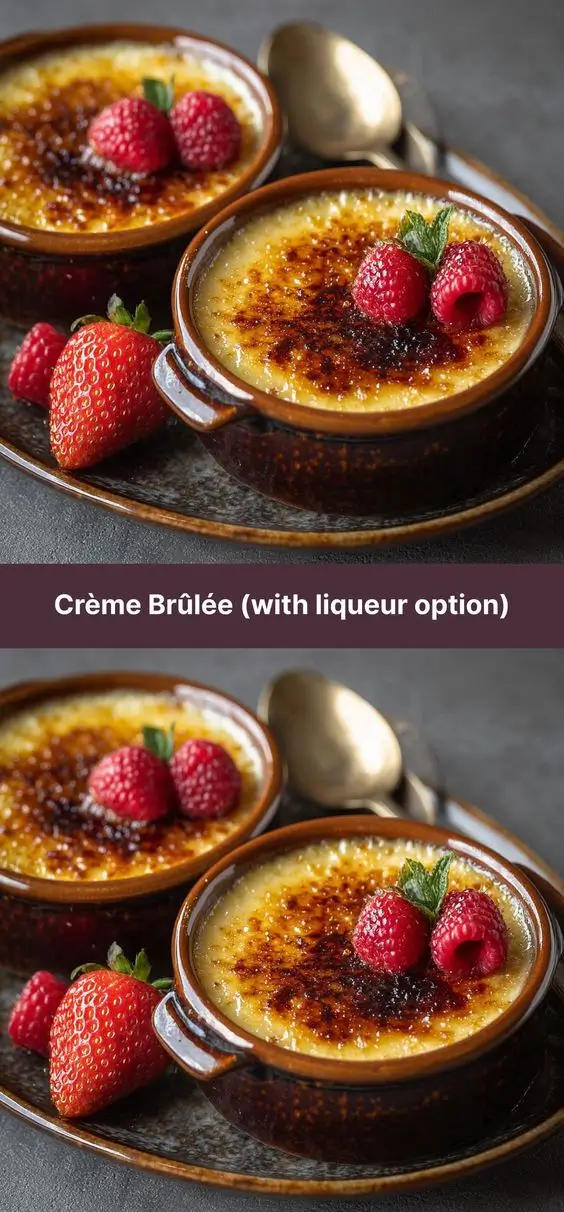
Crème Brûlée, which translates to “burnt cream,” is one of the most iconic and beloved desserts in French cuisine. Revered for its silky custard base and the dramatic crackle of a caramelized sugar crust, this dessert offers a perfect balance of textures and flavors that delight both the palate and the senses. While traditionally made with simple ingredients like cream, egg yolks, sugar, and vanilla, modern interpretations often include enhancements such as liqueurs—adding depth, aroma, and a luxurious complexity. Whether served at an elegant dinner party or enjoyed as a personal indulgence, Crème Brûlée stands as a testament to culinary elegance and refinement.
The History
The origins of Crème Brûlée are steeped in both legend and debate, with both France and Spain laying historical claim to the dessert. The earliest known reference appears in a French cookbook from 1691, titled Cuisinier Royal et Bourgeois, where it was described as “crème brûlée” with a layer of hardened sugar on top. However, a similar Spanish dessert called “Crema Catalana” has been documented even earlier, typically flavored with citrus and cinnamon and also featuring a caramelized top.
Despite these competing claims, Crème Brûlée became firmly associated with French haute cuisine by the 18th century, especially during the reign of Louis XIV. It was often served in aristocratic households and refined restaurants across Paris. The use of a blowtorch to caramelize the sugar topping became popular in the 20th century, replacing older methods such as hot irons. Today, Crème Brûlée is celebrated worldwide, appearing on fine dining menus and home kitchens alike, with countless variations—including the addition of liqueurs—that honor its rich legacy while embracing modern tastes.
Ingredients Breakdown
The magic of Crème Brûlée lies in its simplicity and the quality of its ingredients. Each component plays a crucial role in achieving the perfect custard texture and flavor profile:
- Heavy Cream: The foundation of the custard, heavy cream provides richness and a velvety mouthfeel. Its high fat content ensures a smooth, stable custard that sets beautifully after baking.
- Egg Yolks: These act as the natural thickening agent. Egg yolks give the custard its lush, dense texture without making it rubbery when cooked gently.
- Granulated Sugar: Used both in the custard and on top for caramelizing. It sweetens the mixture and creates the signature crisp shell when torched.
- Vanilla Bean (or Extract): Real vanilla bean adds aromatic depth and visible specks throughout the custard. Alternatively, pure vanilla extract can be used for convenience.
- Liqueur (Optional): This optional addition enhances flavor complexity. Popular choices include Grand Marnier, Cointreau, Amaretto, Kahlúa, or even dark rum. The alcohol should complement—not overpower—the vanilla and cream notes.
- Salt (Pinch): A tiny amount of salt enhances all the other flavors, balancing sweetness and adding subtle sophistication.
For the best results, always use fresh, high-quality ingredients—especially the cream and eggs—as they directly impact the final texture and taste.
Step-by-Step Recipe
Ingredients
- 2 cups (480 ml) heavy cream
- 1/2 cup (120 ml) whole milk (optional, for slight lightening)
- 1 vanilla bean, split and scraped (or 1 tablespoon pure vanilla extract)
- 5 large egg yolks
- 1/2 cup (100g) granulated sugar, plus 2 tablespoons for topping
- 1–2 tablespoons liqueur (optional; see suggestions above)
- Pinch of salt
Directions
- Preheat Oven: Set your oven to 325°F (160°C). Prepare a water bath (bain-marie) by placing six 4-ounce ramekins in a deep roasting pan or baking dish.
- Heat the Cream: In a medium saucepan, combine the heavy cream, milk (if using), vanilla bean pod and seeds (or extract), and salt. Warm over medium heat until it just begins to simmer. Do not boil. Remove from heat and let steep for 15 minutes if using a vanilla bean.
- Whisk Egg Yolks and Sugar: In a large bowl, whisk together the egg yolks and 1/2 cup sugar until pale and slightly thickened, about 2–3 minutes. If using liqueur, add it now and whisk to combine.
- Temper the Eggs: Slowly pour the warm cream mixture into the egg mixture, whisking constantly to prevent curdling. Strain the mixture through a fine-mesh sieve into a measuring cup or spouted container for easy pouring.
- Fill Ramekins: Carefully divide the custard among the ramekins. Place the roasting pan in the oven, then carefully pour hot water into the pan until it reaches halfway up the sides of the ramekins.
- Bake: Bake for 35–45 minutes, or until the edges are set but the center still jiggles slightly when nudged. Do not overbake.
- Cool and Chill: Remove ramekins from the water bath and let cool to room temperature. Cover with plastic wrap and refrigerate for at least 4 hours, preferably overnight.
- Caramelize the Top: Just before serving, sprinkle about 1 teaspoon of sugar evenly over each custard. Use a kitchen torch to melt and caramelize the sugar until golden and crisp. Alternatively, place under a broiler for 1–3 minutes, watching closely to avoid burning.
- Rest and Serve: Let the caramelized crust harden for 1–2 minutes before serving. Enjoy immediately for the full sensory experience.
Tips
- Use Room Temperature Eggs: Cold egg yolks can cause the hot cream to cook unevenly. Let them sit out for 20–30 minutes before using.
- Strain the Custard: Always strain the mixture to ensure a perfectly smooth texture free of any cooked egg bits or vanilla clumps.
- Avoid Air Bubbles: Pour the custard slowly to minimize bubbles. Skim off any foam with a spoon before baking.
- Water Bath is Crucial: The water bath ensures gentle, even cooking. Use hot (not boiling) water to prevent cracking.
- Don’t Overbake: The custard will continue to set as it cools. If the center doesn’t jiggle slightly, it’s likely overcooked.
- Torch Technique: Move the torch in slow, circular motions. Hold it 2–3 inches away to avoid scorching.
- Serve Immediately: The caramel crust softens over time. For best texture, serve within 10–15 minutes of torching.
- Make Ahead: Custards can be refrigerated (ungarnished) for up to 3 days. Add sugar and torch just before serving.
Variations and Customizations
While classic vanilla Crème Brûlée is timeless, there are endless ways to personalize this dessert:
- Flavored Infusions: Steep the cream with lavender, Earl Grey tea, cinnamon sticks, citrus zest, or espresso beans for unique flavor profiles.
- Fruit-Infused: Swirl in a small amount of raspberry purée or passionfruit pulp before chilling (layered beneath the custard).
- Chocolate Crème Brûlée: Add 2 oz of chopped dark chocolate to the warm cream and stir until melted before tempering the eggs.
- Coconut Version: Replace half the cream with coconut milk and top with toasted coconut flakes after torching.
- Liqueur Variants:
- Grand Marnier or Cointreau: Adds orange essence and brightness.
- Amaretto: Imparts a nutty, marzipan-like warmth.
- Kahlúa or Coffee Liqueur: Perfect for coffee lovers; pair with a hint of instant espresso.
- Rum or Bourbon: Adds a deep, oaky richness ideal for fall or winter.
- Baileys Irish Cream: Creates a creamy, dessert-like twist with whiskey and dairy notes.
- Dietary Adjustments:
- Dairy-Free: Use full-fat coconut cream instead of heavy cream.
- Low-Sugar: Substitute granulated sugar with erythritol or monk fruit blend (note: may affect caramelization).
- Egg-Free Alternatives: Though challenging, some use cornstarch or agar-agar, but texture will differ significantly.
- Garnishes: Add fresh berries, mint leaves, edible flowers, or a dusting of cocoa powder for visual appeal.
Health Considerations and Nutritional Value
Crème Brûlée is undeniably rich and calorie-dense, so it’s best enjoyed in moderation as part of a balanced diet. Here’s a nutritional estimate per serving (based on classic recipe, without liqueur):
- Calories: ~350–400 kcal
- Fat: 30–35g (mostly saturated from cream)
- Carbohydrates: 20–25g (primarily from sugar)
- Protein: 5–6g (from egg yolks)
- Cholesterol: High (due to multiple egg yolks)
- Sodium: Minimal unless extra salt is added
Considerations:
- Saturated Fat: The high cream content means elevated saturated fat levels, which should be limited for heart health.
- Sugar Content: Both in the custard and the caramelized top, sugar is abundant. Diabetics should consume cautiously or explore sugar substitutes.
- Lactose Intolerance: Traditional recipe contains dairy. Lactose-free cream alternatives exist but may alter texture.
- Eggs: Ensure eggs are pasteurized if serving to pregnant women, elderly individuals, or those with compromised immune systems.
- Alcohol: When using liqueur, remember that not all alcohol fully evaporates during baking. Those avoiding alcohol should omit it entirely.
While not a health food, Crème Brûlée can be part of mindful indulgence—savor slowly, appreciate the craftsmanship, and enjoy the moment.
FAQ
Q: Can I make Crème Brûlée without a torch?
A: Yes! Use your oven’s broiler. Place the sugared custards on a baking sheet and broil for 1–3 minutes, watching constantly to prevent burning.
Q: Why did my custard crack or curdle?
A: Overheating or too-rapid temperature changes can cause this. Ensure the water bath is not boiling, and avoid sudden temperature shocks.
Q: Can I use whole eggs instead of just yolks?
A: You can, but the texture will be lighter and less rich. For authentic Crème Brûlée, yolks are preferred.
Q: How do I store leftover Crème Brûlée?
A: Keep refrigerated, covered, for up to 3 days. Do not caramelize until ready to serve.
Q: Can I double the recipe?
A: Absolutely. Just maintain the same proportions and ensure your water bath can accommodate more ramekins without overcrowding.
Q: Why does my custard wobble too much?
A: It may be underbaked or not chilled long enough. Refrigerate for at least 4 hours—or better yet, overnight—for optimal set.
Q: Can I use brown sugar for the top?
A: Yes, but it will impart a molasses flavor and create a darker, chewier crust. Traditional white sugar gives the cleanest crackle.
Summary
Crème Brûlée is a luxurious French dessert featuring a rich vanilla custard topped with a crisp layer of caramelized sugar, optionally enhanced with liqueur for added depth. With careful technique and quality ingredients, it delivers an unforgettable contrast of textures and flavors that elevate any dining experience.