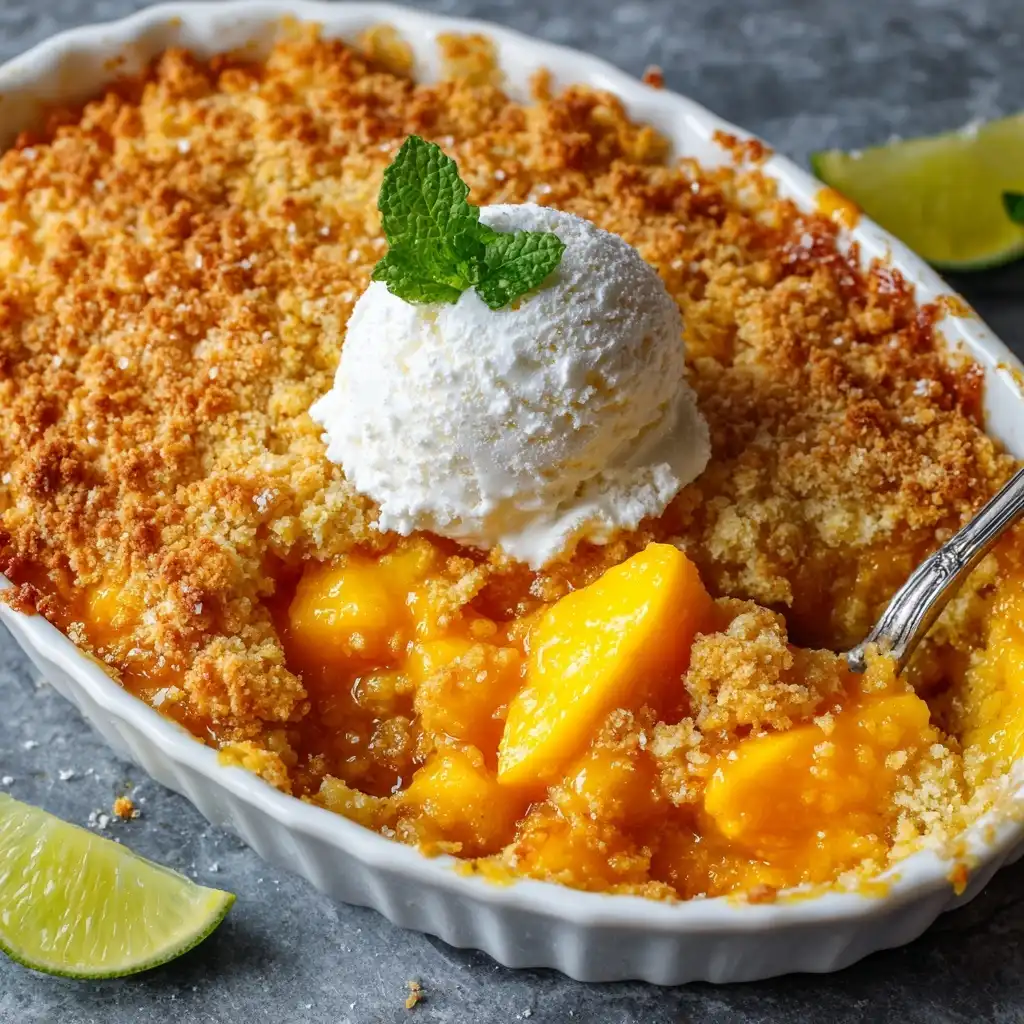
Easy Mango Cobbler: A Sun-Drenched, Effortless Dessert Classic
There’s something irresistibly comforting about a warm, bubbling fruit cobbler—golden crust giving way to tender, juicy fruit beneath. And when that fruit is ripe, fragrant, sun-ripened mango? You’ve just elevated dessert to pure tropical bliss. This Easy Mango Cobbler is designed for home bakers of all skill levels: no fancy techniques, no obscure ingredients, and absolutely no stress. Whether you’re whipping it up for a weeknight treat, a summer potluck, or a spontaneous Sunday indulgence, this recipe delivers restaurant-quality results with pantry-friendly simplicity. From its humble origins in American farmhouse kitchens to its vibrant modern reinvention with tropical flair, the mango cobbler bridges tradition and innovation—one spoonful at a time.
The History of Cobbler—and How Mango Found Its Place
The cobbler—a rustic, baked fruit dessert crowned with biscuit-like dough, cake batter, or drop biscuits—traces its roots to 18th-century England and colonial America, where resourceful cooks adapted limited ingredients into satisfying sweets. Early cobblers used seasonal fruits like apples, peaches, and berries, baked in cast-iron skillets or Dutch ovens over open hearths. The name “cobbler” likely comes from the irregular, “cobbled” appearance of the topping—rough-hewn, uneven, and wholly unpretentious.
Mangoes, native to South Asia over 4,000 years ago, arrived in the Americas via Portuguese traders in the 16th century and later flourished in Caribbean, Mexican, and Floridian climates. Yet mango cobblers remained rare until the late 20th century, when global ingredient access, improved mango cultivation in the U.S., and the rise of fusion baking sparked culinary curiosity. Today, mango cobbler stands proudly among regional favorites—not as a novelty, but as a celebrated evolution: a testament to how cultural exchange and seasonal abundance can transform a humble dessert into something luminous, aromatic, and deeply nostalgic—even if you’ve never stepped foot on a mango grove.
Ingredients Breakdown: Why Each Component Matters
This recipe intentionally avoids shortcuts that compromise flavor or texture—yet remains refreshingly simple. Below is a thoughtful, chef-tested breakdown of every ingredient, including its functional role and smart substitutions:
- Fresh Ripe Mangos (3–4 medium, ~4 cups diced): The soul of the cobbler. Use Ataulfo (Honey or Champagne) mangos for creamy sweetness and low fiber, or Tommy Atkins for firmer texture and bold color. Underripe mangos lack depth; overripe ones turn mushy. Peel carefully with a sharp knife or mango slicer, then dice into uniform ¾-inch pieces for even cooking.
- Granulated Sugar (⅔ cup, plus 1 tbsp for topping): Balances mango’s natural acidity and draws out juices for a luscious syrup. Adjust down to ½ cup if your mangos are exceptionally sweet—or up to ¾ cup + 1 tbsp if using tart green varieties (e.g., Keitt).
- Light Brown Sugar (¼ cup, packed): Adds subtle molasses notes, moisture retention, and caramelized depth to the filling. Dark brown sugar works but imparts stronger flavor—ideal for spiced variations.
- Cornstarch (3 tbsp): The essential thickener. Unlike flour, cornstarch creates a glossy, clear, non-gritty syrup that clings beautifully to mango without clouding its vibrant hue. Never substitute arrowroot unless reducing acidity (see Tips), and avoid tapioca for this application—it can become stringy.
- Lemon Juice (1½ tbsp fresh): Brightens flavor, prevents browning, and enhances mango’s natural aromatics. Bottled juice lacks nuance—always use freshly squeezed.
- Ground Ginger (½ tsp): A quiet but transformative spice—warm, zesty, and synergistic with mango. Not overpowering; just enough to lift the fruit’s complexity. Optional but highly recommended.
- Salted Butter (6 tbsp, cold & cubed): Used in the biscuit topping for flakiness and richness. Cold butter melts slowly in the oven, creating steam pockets that yield tender, layered texture. Unsalted butter is fine—just add ¼ tsp salt to the dry ingredients.
- All-Purpose Flour (1¼ cups): Provides structure to the topping. For gluten-free versions, use a 1:1 certified GF blend (like King Arthur or Bob’s Red Mill)—no xanthan gum needed if the blend already contains it.
- Baking Powder (2 tsp) & Baking Soda (¼ tsp): A dual-leavening system ensures maximum rise and tenderness. Baking soda neutralizes acidity from lemon and brown sugar, while baking powder provides consistent lift.
- Granulated Sugar (¼ cup) & Salt (½ tsp) for topping: Sweetness and balance—plus a delicate crunch when sprinkled before baking.
- Buttermilk (⅔ cup, well-shaken): The magic liquid! Its acidity reacts with leaveners for tenderness, while its fat and tang enrich the biscuit without heaviness. No buttermilk? Make “faux buttermilk”: stir 2 tsp white vinegar or lemon juice into ⅔ cup whole milk; let sit 5 minutes.
- Vanilla Extract (1 tsp, pure): Deepens aroma and rounds out sweetness. Skip imitation—its alcohol harshness clashes with delicate mango.
Step-by-Step Recipe: Foolproof Methodology for Perfect Results Every Time
- Preheat & Prep (10 min): Position oven rack in the center. Preheat oven to 375°F (190°C). Generously grease a 9×13-inch baking dish (glass or ceramic preferred for even heating) with butter or nonstick spray. Line bottom with parchment paper for effortless removal (optional but recommended).
- Prepare the Mango Filling (8 min): In a large bowl, gently combine diced mango, granulated sugar, brown sugar, cornstarch, lemon juice, and ground ginger. Stir with a silicone spatula—just until evenly coated (do not crush fruit). Let sit 10 minutes at room temperature to begin macerating. This step jumpstarts syrup formation and ensures thickening begins before baking.
- Make the Biscuit Topping (7 min): In a food processor (or large bowl + pastry cutter), pulse or cut cold butter into flour, ¼ cup sugar, baking powder, baking soda, and salt until mixture resembles coarse crumbs with some pea-sized butter pieces remaining. Add vanilla to buttermilk; pour over flour mixture. Pulse or stir *just until* a shaggy dough forms—do not overmix. Small dry spots are okay; overworking = tough topping.
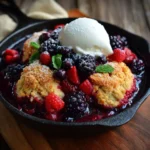
- Assemble with Care (3 min): Pour mango mixture into prepared baking dish, spreading evenly. Using a ¼-cup ice cream scoop or spoon, drop 8–10 generous mounds of biscuit dough over fruit—do not flatten. Leave space between mounds; they’ll spread and knit together as they bake. Lightly sprinkle tops with 1 tbsp granulated sugar for caramelized sparkle.
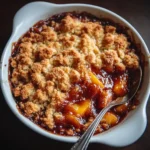
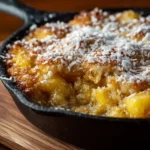
- Bake with Precision (40–45 min): Bake uncovered for 40 minutes. At 40 minutes, check: topping should be golden and puffed, filling should bubble vigorously at the edges. If topping browns too fast, loosely tent with foil. Continue baking 3–5 more minutes if center filling isn’t bubbling steadily. Total bake time varies by oven and mango juiciness—the visual cue matters more than the timer.
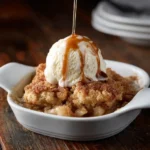
- Cool & Set (20+ min): Remove from oven and place on a wire rack. Let cool *at least* 20 minutes before serving. This crucial rest allows the cornstarch to fully set—preventing a runny mess and letting flavors harmonize. Serve warm (not hot), ideally with a scoop of vanilla bean ice cream or a drizzle of coconut whipped cream.
Pro Tips That Elevate Your Mango Cobbler from Good to Unforgettable
- Chill Your Bowl & Tools: For extra-flaky topping, chill the mixing bowl and pastry cutter (or food processor bowl/blades) for 10 minutes before making dough. Cold = tender.
- Don’t Skip the Maceration: That 10-minute rest isn’t optional—it ensures syrup develops *before* heat hits, preventing under-thickened filling.
- Test Mango Ripeness Like a Pro: Gently press near the stem end—it should yield slightly, like a ripe avocado. Sniff the stem end: intense floral-fruity aroma = peak ripeness. Avoid bruised or fermented-smelling fruit.
- Adjust for Humidity & Altitude: At high altitudes (>3,000 ft), increase oven temp by 15–25°F and reduce baking powder by ⅛ tsp. In humid climates, add ½ tsp extra cornstarch to combat moisture absorption.
- Freeze for Future Joy: Assemble unbaked cobbler (filling + raw topping), cover tightly with plastic + foil, and freeze up to 3 months. Bake from frozen—add 15–20 minutes to bake time and tent with foil first 25 minutes to prevent over-browning.
- Revive Leftovers Brilliantly: Reheat individual servings in a toaster oven or air fryer (350°F, 5–7 min) for crisp topping. Microwaving makes topping soggy—avoid.
- Prevent Soggy Bottoms: Ensure your baking dish is *completely dry* before greasing. Any water residue creates steam that steams the crust instead of baking it.
- Taste Before Baking: Dip a clean spoon into the filling—adjust lemon or sugar *now*. Once baked, corrections are impossible.
Variations and Customizations: Make It Uniquely Yours
This base recipe is a canvas—not a cage. Explore these beloved twists, each tested for structural integrity and flavor harmony:
- Tropical Fusion Cobbler: Add ½ cup toasted shredded coconut (unsweetened) and ¼ cup chopped macadamia nuts to the biscuit dough. Stir 1 tsp lime zest into the mango filling.
- Spiced Chai Mango Cobbler: Infuse the buttermilk with 1 chai tea bag (steep 5 min, cool completely) and add ¼ tsp cardamom + ⅛ tsp cinnamon to dry ingredients.
- Coconut-Mango Cobbler: Replace buttermilk with full-fat canned coconut milk (shaken well). Top with toasted coconut flakes before baking.
- Gluten-Free Mango Cobbler: Use 1:1 GF flour blend. Add 1 tsp xanthan gum *only if blend doesn’t include it*. Increase buttermilk by 1 tbsp for moisture compensation.
- Vegan Mango Cobbler: Swap butter for cold vegan butter (Miyoko’s or Earth Balance); use almond milk + 1 tbsp apple cider vinegar (instead of buttermilk); ensure sugar is vegan (most organic brands are). Cornstarch remains vegan-friendly.
- Low-Sugar Mango Cobbler: Reduce total sugar to ⅓ cup (all granulated), increase cornstarch to 3½ tbsp, and add 1 tsp monk fruit extract (like Lakanto) for sweetness lift without calories.
- Grilled Mango Cobbler: Grill peeled mango slices over medium heat (2 min/side) before dicing. Adds smoky depth—reduce lemon juice to 1 tbsp.
- Mini Mason Jar Cobblers: Portion filling and topping into 6–8 (12-oz) wide-mouth mason jars. Bake at 375°F for 28–32 minutes. Perfect for gifting or portion control.
Health Considerations and Nutritional Value: Balanced Indulgence
A single ¾-cup serving (without ice cream) delivers approximately:
- Calories: 285 kcal
- Total Carbohydrates: 48g (including 34g naturally occurring sugars from mango)
- Dietary Fiber: 3.2g (13% DV — thanks to mango’s pectin and whole-fruit integrity)
- Vitamin C: 92mg (102% DV — mango is richer in vitamin C than oranges per gram)
- Vitamin A (as beta-carotene): 1,200mcg RAE (133% DV — supports vision and immunity)
- Folate: 62mcg (16% DV — vital for cellular repair)
- Antioxidants: Mangiferin, quercetin, and gallotannins—linked to anti-inflammatory and neuroprotective benefits in emerging research.
Nutritionist Notes: While desserts shouldn’t be daily staples, this cobbler shines nutritionally compared to many alternatives. It contains zero refined oils, no artificial additives, and prioritizes whole fruit over syrup or jam. To enhance wellness alignment:
- Boost fiber by stirring 2 tbsp ground flaxseed into the biscuit dough.
- Reduce saturated fat by replacing 2 tbsp butter with unsweetened applesauce in the topping (maintains moisture without heaviness).
- Add probiotic power: serve with a dollop of plain, unsweetened coconut yogurt instead of ice cream.
- Pair mindfully: enjoy after a balanced meal rich in protein and healthy fats to moderate glycemic response.
Note: Those managing diabetes should monitor portions and consider pairing with protein (e.g., Greek yogurt) to slow glucose absorption. Always consult a registered dietitian for personalized guidance.
Complete Ingredient List (Print-Ready)
For the Mango Filling:
- 4 cups peeled and diced ripe mango (about 3–4 medium mangos)
- ⅔ cup granulated sugar
- ¼ cup light brown sugar, packed
- 3 tablespoons cornstarch
- 1½ tablespoons fresh lemon juice
- ½ teaspoon ground ginger
For the Biscuit Topping:
- 1¼ cups all-purpose flour (spooned & leveled)
- ¼ cup granulated sugar
- 2 teaspoons baking powder
- ¼ teaspoon baking soda
- ½ teaspoon fine sea salt
- 6 tablespoons cold unsalted butter, cubed
- ⅔ cup well-shaken buttermilk
- 1 teaspoon pure vanilla extract
- 1 tablespoon granulated sugar (for sprinkling)
Detailed Directions Recap (Concise & Clear)
- Preheat oven to 375°F (190°C). Grease a 9×13-inch baking dish.
- In a large bowl, combine mango, ⅔ cup sugar, brown sugar, cornstarch, lemon juice, and ginger. Stir gently and let sit 10 minutes.
- In a food processor or bowl, pulse/cut butter into flour, ¼ cup sugar, baking powder, baking soda, and salt until crumbly.
- Add vanilla to buttermilk. Pour over flour mixture; stir/pulse until just combined (shaggy dough).
- Pour mango mixture into baking dish. Drop biscuit dough by ¼-cup scoops over fruit. Sprinkle with 1 tbsp sugar.
- Bake 40–45 minutes, until topping is golden and filling bubbles vigorously at edges.
- Cool on wire rack for at least 20 minutes before serving warm.
Frequently Asked Questions (FAQ)
- Can I use frozen mango?
- Yes—but thaw completely and drain *excess liquid* through a fine-mesh strainer (press gently). Add ½ extra tsp cornstarch to compensate for ice crystals. Flavor is excellent, though texture may be slightly softer than fresh.
- Why did my topping sink or get soggy?
- Most often caused by: (1) Overmixing the biscuit dough (develops gluten), (2) Adding warm/melted butter, (3) Pouring cold filling into a cold dish (causes steam condensation), or (4) Cutting into cobbler too soon—always wait 20+ minutes.
- Can I make this dairy-free?
- Absolutely. Use cold vegan butter and “buttermilk” made from plant milk + acid (almond, soy, or oat milk work best). Ensure cornstarch and sugars are vegan-certified.
- How do I store leftovers?
- Cover tightly and refrigerate up to 5 days. Reheat in oven or toaster oven (350°F, 10–12 min) for best texture. Freezing baked cobbler is not recommended—topping becomes mealy.
- What’s the best mango variety for cobbler?
- Ataulfo (Honey) mangos are ideal—buttery, low-fiber, intensely sweet. Tommy Atkins holds shape well if you prefer firmer texture. Avoid Francis or Kent for baking unless very ripe—they can turn watery.
- Can I add other fruits?
- Yes—pair mango with 1 cup diced pineapple (fresh or well-drained canned) or ½ cup blackberries for complexity. Reduce lemon juice by ½ tsp if adding pineapple.
- Is there a stovetop version?
- Not traditionally—but you can cook filling on medium-low until thickened (8–10 min), cool completely, then top with raw biscuit dough and bake as directed. Never assemble hot filling + cold dough—it melts the butter prematurely.
- Can I prepare this ahead?
- Filling can be made 1 day ahead and refrigerated (covered). Topping dough can be mixed, shaped into mounds, and refrigerated up to 8 hours—place cold mounds directly onto cold filling before baking (add 3–5 min to bake time).
Summary
This Easy Mango Cobbler celebrates summer’s brightest fruit with effortless elegance—juicy, fragrant mangoes enveloped in a tender, golden biscuit crown, all achieved with pantry staples and under an hour of hands-on time.
Whether you’re a novice baker seeking confidence or a seasoned cook craving a vibrant, no-fuss dessert, this recipe delivers unforgettable flavor, reliable texture, and the pure, sun-drenched joy of mango—straight from oven to soul.