Introduction
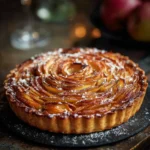
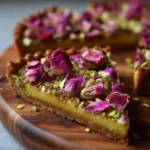
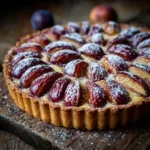
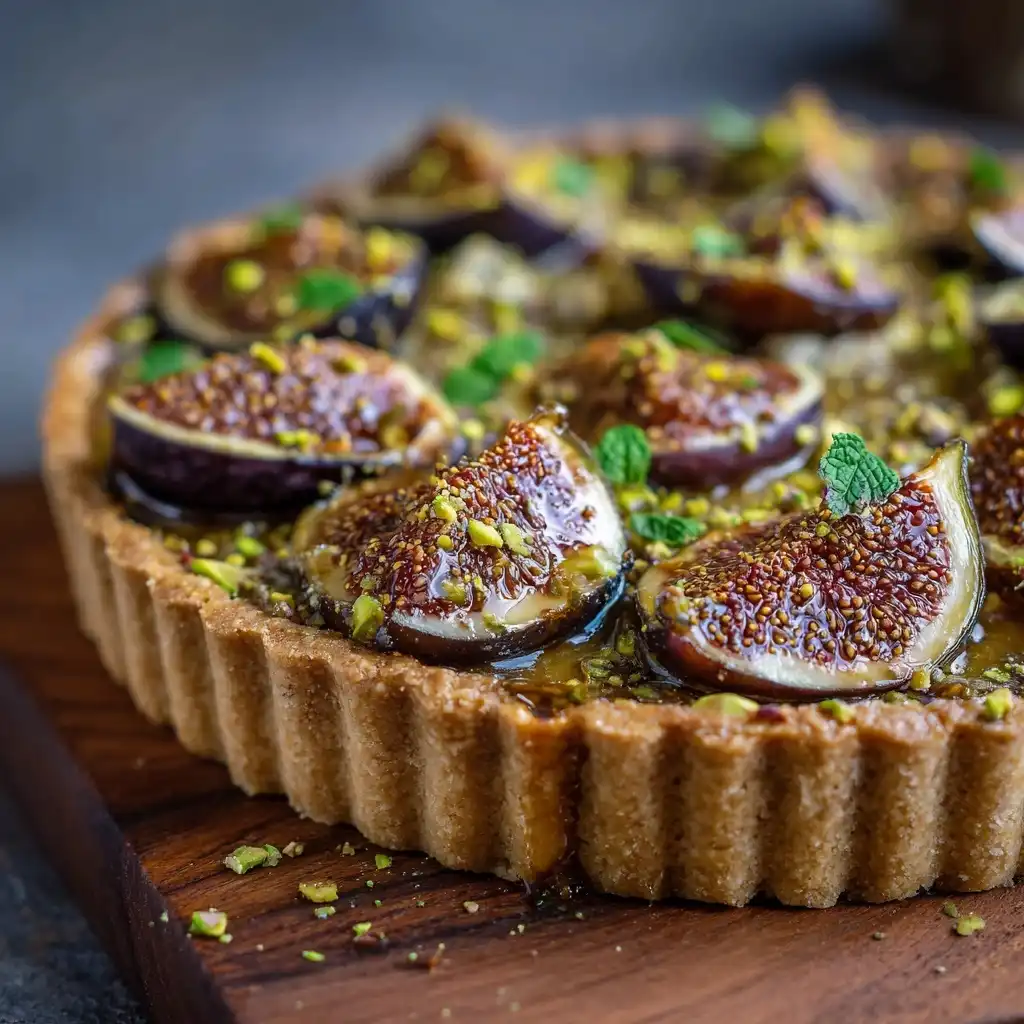
Welcome to the exquisite world of seasonal elegance—where summer’s sweetest jewel meets nutty sophistication. The Fresh Fig Tart with Pistachio is more than a dessert; it’s a celebration of terroir, texture, and tradition. Delicate, honeyed figs—plump and fragrant at peak ripeness—are artfully arranged atop a buttery shortcrust tart shell, then crowned with a luxuriously creamy pistachio frangipane (or alternatively, a luscious pistachio crème pâtissière), finished with a glossy, barely-there apricot glaze and a final flourish of crushed roasted pistachios. Visually arresting with its natural maroon-and-amber palette and rustic-chic presentation, this tart balances earthiness, sweetness, acidity, and crunch in every bite. Whether served at a sun-drenched garden brunch, an intimate dinner party, or as a mindful afternoon indulgence, it evokes the quiet luxury of Mediterranean orchards and artisanal French patisseries—reimagined with modern restraint and whole-food integrity.
The History
The lineage of the Fresh Fig Tart with Pistachio is a tapestry woven across millennia and continents. Figs (Ficus carica) are among the oldest cultivated fruits—archaeological evidence from Neolithic sites in the Jordan Valley dates fig domestication to nearly 11,400 years ago, predating wheat, barley, and legumes. Revered in ancient Egypt, Greece, and Rome—not only as sustenance but as sacred symbols of fertility, abundance, and wisdom—figs appeared in temple offerings, mythological narratives (like Dionysus’ association with the fig tree), and daily fare. Meanwhile, pistachios—native to Central Asia and the Middle East—were prized by Achaemenid kings, traded along the Silk Road, and later embraced by Persian, Ottoman, and Levantine cuisines for their vivid green hue, rich oil content, and subtly sweet, resinous flavor. The fusion of fig and pistachio, however, is a relatively recent culinary innovation—emerging prominently in the late 20th and early 21st centuries as chefs and home bakers rediscovered heritage ingredients and championed seasonal, regional pairings. Influences from Provençal tarts, Turkish fig-pistachio desserts like incirli fıstık tatlısı, and contemporary Californian farm-to-table movements converged to birth this iconic combination. Its rise parallels the global resurgence of fig orchards in California’s Central Valley and sustainable pistachio farming in New Mexico and Sicily—making today’s Fresh Fig Tart not just delicious, but deeply rooted in agrarian revival and cross-cultural dialogue.
Ingredients Breakdown
Every element in this tart serves a precise sensory and structural role—no ingredient is arbitrary. Here’s an in-depth look at the purpose, sourcing notes, and science behind each component:
- Fig Selection & Ripeness Science: Use only fresh, fully ripe Mission, Brown Turkey, Kadota, or Calimyrna figs. Underripe figs lack fructose development and contain excessive ficin (a proteolytic enzyme) that can inhibit gelatin set and impart bitterness. Peak ripeness is indicated by slight softness at the blossom end, a bent neck, syrupy exudate (“fig sweat”), and deep, complex aroma—signaling optimal sugar/acid balance (Brix ~18–22°) and minimal astringency. Never refrigerate ripe figs—they bruise easily and lose aromatic volatiles.
- Butter in the Tart Shell: European-style cultured butter (82–84% fat, e.g., Plugrá or Kerrygold) delivers superior flakiness and nuanced tang due to lactic acid fermentation. Its higher fat content reduces gluten development while enhancing browning via Maillard reactions during blind baking.
- Pistachios – Raw vs. Roasted: For frangipane or crème pâtissière, use unsalted, shelled, raw pistachios (preferably Sicilian or Iranian for intense chlorophyll-derived green color and lower bitterness). Roast them separately for garnish—heat unlocks volatile oils (α-pinene, limonene) and deepens nuttiness without scorching delicate compounds. Avoid pre-salted or oil-roasted varieties, which add sodium and interfere with emulsification.
- Almond Flour in Frangipane: Not merely a filler—almond flour adds protein and fat that stabilize the pistachio paste, prevent weeping, and contribute marzipan-like depth. Its fine grind ensures seamless integration and avoids grittiness.
- Apricot Glaze Chemistry: Simmered apricot jam (preferably seedless, low-sugar) + water + lemon juice creates a pectin-rich, pH-balanced glaze. Lemon juice lowers pH (~3.2–3.5), optimizing pectin gel strength and yielding a brilliant, non-tacky sheen that seals moisture without masking fig flavor.
- Vanilla Bean vs. Extract: A scraped Madagascar bourbon vanilla bean contributes over 250 aromatic compounds (vanillin, piperonal, heliotropin) versus ~5–10 in most extracts. The tiny black seeds also provide visual elegance against pale frangipane.
- Sea Salt Flakes (Maldon or Fleur de Sel): Added post-baking, these delicate crystals dissolve slowly on the tongue, heightening sweetness perception via sodium-glutamate interactions and providing textural contrast to creamy and juicy elements.
Step-by-Step Recipe
Makes one 9-inch (23 cm) tart; serves 8–10
- Prepare the Sweet Shortcrust Pastry (Pâte Sucrée): In a food processor, pulse 1 ¼ cups (160g) all-purpose flour, ¼ cup (30g) confectioners’ sugar, and ¼ tsp fine sea salt until combined. Add ½ cup (115g) very cold unsalted European butter, cut into ½-inch cubes, and pulse 8–10 times until mixture resembles coarse meal with pea-sized butter pieces. Add 1 large egg yolk and 2 tsp ice-cold water; pulse just until dough begins to clump. Turn onto parchment, gather into a disc, wrap tightly, and chill ≥2 hours (or overnight). Chilling solidifies butter, prevents shrinkage, and relaxes gluten.
- Blind Bake the Shell: Preheat oven to 375°F (190°C). Roll chilled dough to ⅛-inch thickness on lightly floured surface; gently transfer to 9-inch fluted tart pan with removable bottom. Trim excess, crimp edges, and prick base thoroughly with fork. Line with parchment and fill with ceramic pie weights or dried beans. Bake 20 minutes. Remove weights and parchment; bake 12–15 more minutes until golden and dry. Cool completely on wire rack—do not skip cooling; residual heat causes frangipane to slump.
- Make Pistachio Frangipane (Preferred Method): In a high-speed blender or food processor, combine 1 cup (130g) raw unsalted pistachios (toasted lightly and cooled), ½ cup (60g) blanched almond flour, ⅓ cup (70g) granulated sugar, ¼ tsp fine sea salt, and seeds from 1 vanilla bean. Blend until finely ground (1–2 min). Add ¼ cup (60g) softened unsalted butter and 1 large egg; blend until smooth, scraping sides. Optional: stir in 1 tbsp Amaretto or orange blossom water for aromatic complexity. Chill 30 minutes to thicken.
- Assemble & Bake: Spread frangipane evenly into cooled tart shell (≈¾ inch thick). Gently arrange 12–14 fresh figs—halved lengthwise or quartered depending on size—with cut sides facing upward in concentric circles, slightly overlapping. Tuck fig stems inward for neat appearance. Sprinkle lightly with 1 tbsp turbinado sugar for caramelized edges. Bake at 350°F (175°C) for 35–42 minutes—frangipane should be puffed, set at center (no jiggle), and edges deeply golden. Cool on rack ≥2 hours—this sets the filling and prevents fig juice from bleeding.
- Glaze & Garnish: Warm ⅓ cup (115g) seedless apricot jam with 1 tsp water and ½ tsp fresh lemon juice over low heat; strain through fine-mesh sieve. While tart is still slightly warm (but not hot), brush glaze gently over figs using pastry brush. Sprinkle generously with ¼ cup (30g) roughly chopped, roasted unsalted pistachios and a pinch of flaky sea salt. Refrigerate uncovered 30 minutes before slicing—this firms the frangipane for clean cuts.
Tips
- Freshness Is Non-Negotiable: Figs deteriorate rapidly. Buy the day you’ll bake—or at most, store ripe figs stem-side down on a single layer of paper towel in a shallow container, loosely covered, in the coldest part of your fridge (32–34°F) for ≤24 hours. Bring to room temperature 30 minutes before assembling.
- Prevent Soggy Bottoms: Ensure tart shell is completely cool before adding frangipane. For extra insurance, brush baked shell interior with thin layer of melted white chocolate or egg wash and re-bake 2 minutes—creates a moisture barrier.
- Frangipane Texture Mastery: If frangipane appears too runny after blending, chill 15–20 minutes before spreading. If too stiff, let sit at room temp 5 minutes—never add liquid, which disrupts emulsion. A silicone spatula helps achieve perfectly even layer.
- Cutting Like a Pro: Use a hot, thin-bladed knife (dip in hot water, wipe dry between slices) for clean, unsmudged cuts. Wipe blade after each slice to preserve the tart’s pristine appearance.
- Glazing Timing Matters: Apply glaze only when tart is warm—not hot (steam melts glaze) and not cold (glaze won’t adhere). Ideal temp: 95–105°F (35–40°C). Too-cool glaze becomes cloudy; too-warm glaze slides off.
- Seasonal Flexibility: In fig off-season, substitute roasted quince paste or poached Asian pears—but never canned figs (texture and flavor are irrecoverable).
- Storage Wisdom: Best served same day. Store uncovered in fridge ≤2 days. Do not freeze—figs turn mushy and frangipane separates. Revive slightly by warming 5 minutes at 300°F (150°C).
Variations and Customizations
This tart is a canvas for creativity—respecting its core philosophy of seasonality and balance while inviting thoughtful adaptation:
- Dairy-Free / Vegan Version: Replace butter in pastry with refined coconut oil (for neutral flavor) + 1 tsp apple cider vinegar in ice water. Use vegan butter (e.g., Miyoko’s) and flax egg (1 tbsp ground flax + 2.5 tbsp water, rested 5 min) in frangipane. Swap apricot glaze for reduced pear nectar + agar-agar (½ tsp dissolved in 2 tbsp water).
- Ginger-Cardamom Infusion: Steep 1 tbsp freshly grated ginger and 6 crushed green cardamom pods in warm milk; cool, strain, and use in frangipane instead of water. Garnish with candied ginger ribbons.
- Honey-Roasted Fig Variation: Toss halved figs in 1 tbsp local wildflower honey + ½ tsp cracked black pepper; roast at 400°F (200°C) for 8 minutes before arranging. Deepens umami and adds glossy intensity.
- Herbal Elegance: Fold 1 tsp finely minced fresh rosemary or thyme into frangipane. Pair with figs brushed lightly with rosewater before glazing.
- Chocolate-Pistachio Fusion: Swirl 2 tbsp melted 70% dark chocolate into frangipane before spreading. Top with dark chocolate curls and pistachios.
- Savory-Sweet Brunch Tart: Omit sugar from frangipane; add 2 tbsp crumbled goat cheese and 1 tsp lemon zest. Use black mission figs and garnish with arugula microgreens and drizzle of aged balsamic reduction.
- Gluten-Free Adaptation: Substitute pastry with 1:1 GF flour blend containing xanthan gum (e.g., King Arthur Measure for Measure). Add 1 tsp psyllium husk powder to improve elasticity. Chill dough 30 minutes longer before rolling.
- Mini-Tartlets: Press dough into 3-inch muffin tin cups. Fill with frangipane and 1–2 fig halves each. Bake 22–26 minutes. Perfect for weddings or tasting menus.
Health Considerations and Nutritional Value
While undeniably indulgent, this tart offers meaningful nutritional benefits when enjoyed mindfully—especially compared to conventional desserts laden with refined flour, artificial additives, and excessive added sugars. Per generous slice (1/10 of tart, ≈185g), approximate values are:
- Calories: 295 kcal — moderate for a dessert, driven largely by healthy fats and complex carbs rather than empty sugar.
- Fiber: 4.2g (17% DV) — primarily from figs (skin included) and almond flour. Supports gut microbiota diversity, slows glucose absorption, and promotes satiety.
- Healthy Fats: 18g total fat, of which 14g are monounsaturated (oleic acid from pistachios and olive oil–infused butter) — clinically shown to improve LDL cholesterol profiles and endothelial function.
- Antioxidants & Polyphenols: Figs deliver quercetin, anthocyanins (in purple-skinned varieties), and vitamin K; pistachios contribute γ-tocopherol (vitamin E), lutein, and zeaxanthin — all combat oxidative stress and support cognitive and ocular health.
- Minerals: Rich in potassium (310mg), magnesium (48mg), and copper (0.3mg) — essential for nerve transmission, muscle relaxation, and mitochondrial energy production.
- Low Glycemic Impact: Natural fructose/glucose ratio in ripe figs + fiber and fat content yields estimated GI ≈ 35–40 (low), making it suitable for balanced blood sugar management when portion-controlled.
Considerations: Contains tree nuts (pistachios, almonds) — not suitable for those with allergies. For lower-sugar needs, reduce turbinado sugar to 1 tsp and rely on figs’ intrinsic sweetness. Those monitoring sodium should omit added salt and use unsalted pistachios exclusively. While gluten-free options exist, cross-contamination risk remains unless certified GF ingredients and equipment are used.
Ingredients
For the Sweet Shortcrust Pastry:
- 1 ¼ cups (160g) all-purpose flour, plus extra for dusting
- ¼ cup (30g) confectioners’ sugar
- ¼ teaspoon fine sea salt
- ½ cup (115g) unsalted European-style butter, very cold, cubed
- 1 large egg yolk
- 2 teaspoons ice-cold water
For the Pistachio Frangipane:
- 1 cup (130g) raw unsalted shelled pistachios
- ½ cup (60g) blanched almond flour
- ⅓ cup (70g) granulated sugar
- ¼ teaspoon fine sea salt
- Seeds from 1 vanilla bean (or 1 ½ tsp pure vanilla extract)
- ¼ cup (60g) unsalted butter, softened
- 1 large egg, room temperature
- Optional: 1 tablespoon Amaretto or orange blossom water
For Assembly & Finish:
- 12–14 fresh ripe figs (Mission or Brown Turkey preferred), stems removed, halved or quartered
- 1 tablespoon turbinado sugar (for sprinkling)
- ⅓ cup (115g) seedless apricot jam
- 1 teaspoon water
- ½ teaspoon fresh lemon juice
- ¼ cup (30g) roasted unsalted pistachios, roughly chopped
- Flaky sea salt (e.g., Maldon), for finishing
Directions
- Make the pastry dough: In a food processor, pulse flour, confectioners’ sugar, and salt until combined. Add cold butter cubes; pulse until mixture resembles coarse crumbs with visible pea-sized butter bits (about 8–10 pulses). In a small bowl, whisk egg yolk and ice water. With processor running, slowly drizzle yolk mixture through feed tube until dough just begins to clump together (15–20 seconds). Do not over-process. Turn dough onto lightly floured surface, gather into a disc, wrap in plastic, and refrigerate for at least 2 hours or up to 3 days.
- Preheat oven to 375°F (190°C). Blind bake the shell: On a lightly floured surface, roll chilled dough to ⅛-inch thickness. Carefully transfer to a 9-inch fluted tart pan with removable bottom. Gently press into bottom and up sides. Trim excess dough with a knife, then crimp edges decoratively. Prick base all over with a fork. Line with parchment paper and fill with pie weights or dried beans. Bake for 20 minutes. Carefully remove weights and parchment. Return shell to oven and bake 12–15 minutes more, until golden brown and dry to touch. Transfer to a wire rack and cool completely—minimum 1 hour.
- Toast pistachios (optional but recommended): Spread pistachios on a parchment-lined baking sheet. Toast in 350°F (175°C) oven for 6–8 minutes, shaking pan halfway, until fragrant and slightly deepened in color. Cool completely.
- Make frangipane: In a high-speed blender or food processor, combine cooled toasted pistachios, almond flour, granulated sugar, salt, and vanilla bean seeds. Blend on high for 1–2 minutes until very finely ground. Add softened butter and egg; blend until completely smooth and homogenous, stopping to scrape down sides as needed (≈1 minute). Stir in Amaretto or orange blossom water if using. Transfer to a bowl, cover, and refrigerate 30 minutes to firm up.
- Assemble: Spread chilled frangipane evenly into cooled tart shell, smoothing top with an offset spatula. Arrange figs cut-side up in concentric circles, slightly overlapping. Sprinkle turbinado sugar evenly over figs.
- Bake: Place tart on center oven rack. Reduce oven temperature to 350°F (175°C). Bake 35–42 minutes, rotating halfway, until frangipane is puffed, deeply golden at edges, and just set at center (a toothpick inserted near center should come out with moist crumbs, not wet batter). Cool on wire rack for at least 2 hours—critical for structural integrity.
- Glaze and garnish: In a small saucepan, combine apricot jam, water, and lemon juice. Heat over low heat, stirring, until melted and smooth (≈3 minutes). Strain through a fine-mesh sieve into a small bowl. While tart is still slightly warm (not hot), gently brush glaze over fig surfaces using a pastry brush. Immediately sprinkle with chopped roasted pistachios and a light pinch of flaky sea salt. Refrigerate uncovered for 30 minutes before slicing.
- Serve: Cut with a hot, thin knife wiped clean between slices. Serve at cool room temperature. Optional accompaniments: crème fraîche, mascarpone, or a scoop of lavender-honey ice cream.
FAQ
- Can I use dried figs instead of fresh?
- No—dried figs lack the delicate juiciness, floral aroma, and enzymatic complexity essential to this tart’s identity. Their concentrated sugar and chewy texture disrupt balance. If fresh figs are unavailable, consider the seasonal variations suggested above.
- Why does my frangipane crack during baking?
- Cracking usually indicates over-baking or rapid temperature change. Ensure your oven is properly calibrated (use an oven thermometer), avoid opening the oven door before 30 minutes, and allow the tart to cool gradually in the turned-off oven with door ajar for 10 minutes post-baking.
- My figs released too much juice—how do I prevent a soggy tart?
- Excess juice signals underripe figs or insufficient blind baking. Always use fully ripe figs (soft, fragrant, bent-neck), ensure tart shell is *completely* cool and thoroughly baked, and consider brushing the shell interior with melted white chocolate pre-frangipane as a moisture barrier.
- Can I prepare components ahead?
- Absolutely. Pastry dough keeps refrigerated 3 days or frozen 3 months. Blind-baked shell stays crisp in an airtight container at room temperature up to 2 days. Frangipane lasts refrigerated 3 days or frozen 1 month (thaw overnight in fridge). Assemble and bake day-of for best texture.
- What’s the best way to store leftovers?
- Refrigerate uncovered on a wire rack set over a tray (prevents condensation) for up to 48 hours. Do not cover with plastic—it traps moisture and softens crust. Re-crisp briefly in a 325°F (160°C) oven for 4–5 minutes before serving.
- Are there nut-free alternatives?
- True nut-free substitution compromises core flavor and texture. Sunflower seed butter or roasted pumpkin seed paste can mimic richness but lack pistachio’s signature green notes. For severe allergies, consider a fig-and-lemon curd tart with oat-based crust instead.
- Can I make this dairy-free?
- Yes—with careful substitutions: use refined coconut oil + vinegar water for pastry; vegan butter and flax egg for frangipane; and agar-based glaze. Note texture will be slightly denser and less buttery, but still elegant and flavorful.
- Why use turbinado sugar instead of regular granulated?
- Turbinado’s larger crystals caramelize beautifully at high heat, creating delightful crunchy pockets and enhancing the figs’ natural molasses notes—without adding refined flavor. It’s less processed and retains trace minerals.
Summary
The Fresh Fig Tart with Pistachio is a masterclass in seasonal reverence—uniting ancient fruit and heirloom nut in a buttery, golden vessel that celebrates ripeness, texture, and terroir with minimalist sophistication.
It’s nutritionally resonant, culturally layered, endlessly adaptable, and technically rewarding—transforming humble, sun-ripened ingredients into a dessert that feels both timeless and utterly of the moment.