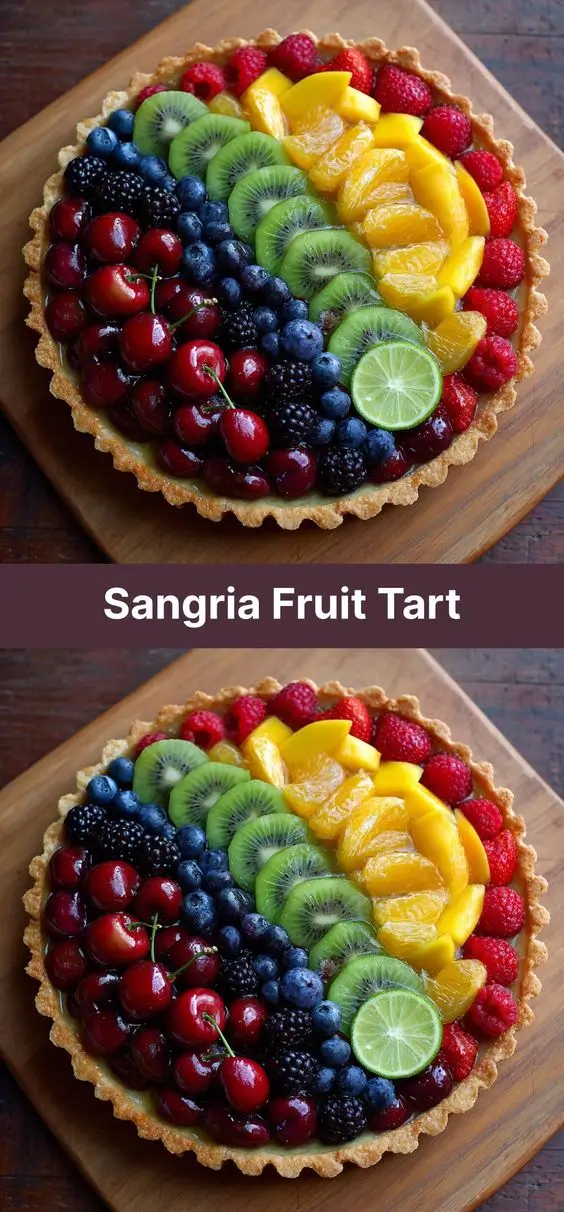
Sangria Fruit Tart: A Refreshing Fusion of Wine-Infused Flavors and Fresh Fruit Elegance
Introduction
The Sangria Fruit Tart is a modern dessert masterpiece that marries the vibrant, fruity essence of traditional Spanish sangria with the buttery richness of a classic tart crust. This show-stopping dessert captures the spirit of summer gatherings, garden parties, and festive celebrations with its dazzling array of colorful fruits bathed in a lightly wine-infused syrup. Unlike conventional fruit tarts that rely solely on fresh produce, the Sangria Fruit Tart incorporates the complex flavors of red wine, citrus, and spices—hallmarks of authentic sangria—into both the filling and the fruit maceration process, creating a multi-layered sensory experience.
Perfect for wine lovers and dessert enthusiasts alike, this tart offers a sophisticated twist on the standard fruit tart. Whether you’re hosting a dinner party, attending a potluck, or simply craving something refreshing and indulgent, the Sangria Fruit Tart delivers an elegant balance of sweet, tart, and slightly alcoholic notes. While it can be adapted to be non-alcoholic, the true charm lies in the subtle depth imparted by the wine-soaked fruits. With its stunning visual appeal and crowd-pleasing flavor profile, this dessert has quickly become a favorite among home bakers and professional pastry chefs.
The History
To understand the origins of the Sangria Fruit Tart, we must first explore the roots of its two primary inspirations: sangria and the fruit tart. Sangria, as a beverage, dates back centuries to Spain and Portugal, where it was originally created as a way to make lower-quality red wine more palatable. The word “sangria” comes from the Spanish word “sangre,” meaning blood, referencing the deep red color of the drink. Historical records suggest that Romans may have been making similar wine punches when they occupied the Iberian Peninsula over 2,000 years ago, blending wine with fruits, spices, and honey.
Traditional sangria typically consists of red wine, chopped fruit, a sweetener (like sugar or honey), orange juice or soda water, and sometimes brandy. Over time, variations emerged, including white sangria (made with white wine) and sparkling versions. Meanwhile, the fruit tart has its roots in French patisserie traditions, dating back to the 19th century. These delicate desserts featured a crisp pastry shell filled with custard or pastry cream and topped with fresh seasonal fruits, often glazed for shine and preservation.
The Sangria Fruit Tart is a relatively recent culinary innovation—likely emerging in the late 20th or early 21st century—as global fusion cuisine gained popularity. Chefs and home cooks began experimenting with infusing desserts with adult beverages, leading to creations like champagne cupcakes, bourbon pecan pie, and wine-poached pears. The idea of combining the fruit-macerating technique of sangria with the structure of a tart was a natural progression. The result is a dessert that honors tradition while embracing modern tastes, offering a playful yet refined take on two beloved classics.
Ingredients Breakdown
The success of a Sangria Fruit Tart hinges on the quality and harmony of its ingredients. Each component—from the crust to the glaze—plays a vital role in delivering the final taste and texture. Below is a detailed breakdown of every ingredient and its purpose:
For the Tart Crust:
- All-Purpose Flour: Provides structure to the dough. Its moderate protein content ensures a tender yet sturdy crust.
- Cold Unsalted Butter: Adds richness and flakiness. Keeping it cold prevents gluten development and ensures a crisp texture after baking.
- Powdered Sugar: Sweetens the crust subtly without adding moisture (unlike granulated sugar) and helps create a fine crumb.
- Sea Salt: Enhances flavor and balances sweetness.
- Egg Yolk: Binds the dough and adds tenderness and color.
- Ice Water: Hydrates the flour without warming the butter. Just enough to bring the dough together.
For the Sangria Poaching Liquid:
- Dry Red Wine (e.g., Tempranillo, Merlot): The base of the sangria infusion. It imparts deep berry notes and tannic complexity.
- Orange Juice: Adds brightness and acidity, balancing the wine’s richness.
- Lemon Juice: Enhances tartness and prevents fruit browning.
- Honey or Granulated Sugar: Sweetens the mixture; honey adds floral notes, while sugar provides clean sweetness.
- Orange Zest: Contributes aromatic oils and a citrus perfume.
- Cinnamon Stick: Adds warmth and a hint of spice, reminiscent of traditional sangria.
- Whole Cloves (optional): For additional depth, though use sparingly to avoid overpowering.
- Brandy or Orange Liqueur (e.g., Cointreau): Deepens flavor and enhances alcohol content (can be omitted for non-alcoholic version).
For the Filling:
- Pastry Cream or Vanilla Custard: Acts as a creamy base layer between the crust and fruit, absorbing some of the sangria flavors while providing richness.
- Cream Cheese Layer (optional): Some variations include a light, sweetened cream cheese layer for tang and contrast.
For the Fruit Topping:
- Strawberries: Sliced and macerated; their juicy texture absorbs sangria beautifully.
- Blood Oranges or Navel Oranges: Segmented and added for bursts of citrus.
- Green and Red Grapes: Halved for even distribution and visual contrast.
- Peaches or Nectarines: Sliced thinly; best when ripe but firm.
- Pineapple (optional): Adds tropical flair and extra sweetness.
- Apples or Pears (for fall variation): Thinly sliced and lightly poached to retain shape.
For the Glaze:
- Apricot Jam or Clear Fruit Glaze: Heated and brushed over the fruit to add shine and seal in moisture.
- Reserved Sangria Syrup (strained): Can be reduced and used as part of the glaze for intensified flavor.
Garnishes (Optional):
- Mint leaves
- Edible flowers
- Whipped cream or vanilla ice cream (served on the side)
- Dark chocolate shavings
- Toasted sliced almonds
Step-by-Step Recipe
Step 1: Prepare the Tart Crust
- In a food processor, pulse 1½ cups all-purpose flour, ¼ cup powdered sugar, and ¼ teaspoon sea salt until combined.
- Add ½ cup (1 stick) cold unsalted butter, cut into cubes. Pulse until the mixture resembles coarse sand with pea-sized butter pieces.
- Add 1 large egg yolk and 2–3 tablespoons ice water, one at a time, pulsing just until the dough begins to clump.
- Turn the dough onto a floured surface and gently shape into a disk. Wrap in plastic wrap and refrigerate for at least 1 hour (or up to 2 days).
- Preheat oven to 375°F (190°C). Roll out the dough on a floured surface to fit a 9-inch tart pan with removable bottom. Press into the pan, trim edges, and prick the bottom with a fork.
- Line the crust with parchment paper and fill with pie weights or dried beans. Blind bake for 15 minutes. Remove weights and bake another 10–12 minutes until golden. Let cool completely.
Step 2: Make the Sangria Poaching Liquid
- In a medium saucepan, combine 2 cups dry red wine, ½ cup orange juice, 2 tablespoons lemon juice, ⅓ cup honey (or sugar), zest of 1 orange, 1 cinnamon stick, and 3 whole cloves (if using).
- Bring to a gentle simmer over medium heat, stirring to dissolve sweetener. Simmer for 5 minutes to meld flavors.
- Remove from heat and stir in 2 tablespoons brandy or orange liqueur (optional). Let cool to room temperature.
- Strain the liquid into a bowl, discarding solids. Reserve ½ cup for glaze; the rest will be used to macerate the fruit.
Step 3: Prepare the Pastry Cream
- In a saucepan, heat 1 cup milk with 1 split vanilla bean (or 1 tsp vanilla extract) until steaming.
- In a bowl, whisk 3 egg yolks, ¼ cup sugar, and 2 tbsp cornstarch until pale and thick.
- Slowly pour hot milk into egg mixture, whisking constantly. Return to saucepan and cook over medium heat, stirring, until thick and bubbling.
- Remove from heat, stir in 1 tbsp butter. Strain into a bowl, press plastic wrap directly on surface, and chill for 2+ hours.
Step 4: Assemble the Layers
- Spread chilled pastry cream evenly over the cooled tart shell. For a richer version, mix in a few spoonfuls of sweetened cream cheese before spreading.
- Prepare fruits: slice strawberries, halve grapes, peel and slice peaches, segment oranges. Place in a large bowl.
- Pour 1 cup of the reserved sangria liquid over the fruit. Gently toss and let macerate for 30–60 minutes in the refrigerator, stirring occasionally.
- Drain fruit, reserving excess liquid. Arrange fruit artistically over the pastry cream in concentric circles or a rustic mosaic pattern.
Step 5: Glaze and Chill
- In a small saucepan, warm ¼ cup apricot jam with 1 tablespoon reserved sangria syrup until runny. Strain if needed.
- Using a pastry brush, gently apply the glaze over the arranged fruit to create a glossy finish.
- Refrigerate the assembled tart for at least 1 hour to set and allow flavors to meld.
- Just before serving, garnish with mint leaves, edible flowers, or a dusting of powdered sugar.
Tips for Success
- Chill Ingredients: Always use cold butter and ice water for the crust to ensure flakiness.
- Don’t Overwork the Dough: Mix only until it comes together to avoid toughness.
- Blind Bake Thoroughly: Prevents a soggy bottom. Ensure the crust is fully baked and golden before adding fillings.
- Use Ripe But Firm Fruit: Overripe fruit will turn mushy when macerated.
- Pat Fruit Dry: After draining, lightly pat fruit with paper towels to prevent excess moisture from thinning the cream.
- Reduce the Sangria Syrup: For a stronger flavor, simmer the reserved liquid until slightly thickened before using in glaze or drizzle.
- Assemble Close to Serving Time: For best texture, assemble no more than 4 hours ahead. Store covered in the fridge.
- Customize Seasonally: Use berries in summer, apples and pears in fall, citrus in winter.
- Non-Alcoholic Option: Replace wine with grape juice and add a splash of vinegar for acidity.
- Gluten-Free Adaptation: Use a gluten-free flour blend for the crust (add xanthan gum if needed).
Variations and Customizations
The beauty of the Sangria Fruit Tart lies in its versatility. Here are some inspired variations to suit different tastes, seasons, and dietary needs:
White Sangria Fruit Tart
Swap red wine for a crisp white wine like Sauvignon Blanc or Pinot Grigio. Use lighter fruits such as green grapes, kiwi, mango, white peaches, and pineapple. Add lime juice instead of lemon, and omit cinnamon for a fresher profile. Garnish with coconut flakes for a tropical touch.
Rosé Sangria Tart
Use rosé wine as the base for a pink-hued dessert. Pair with strawberries, raspberries, cherries, and pink grapefruit. Infuse the poaching liquid with rosemary instead of cinnamon for a herbal note.
Sparkling Sangria Tart
Incorporate prosecco or cava into the poaching liquid for a bubbly twist. Add the sparkling wine after cooling to preserve effervescence. Best served immediately.
Vegan Version
Use vegan butter and a flax egg (1 tbsp ground flax + 3 tbsp water) in the crust. Replace pastry cream with coconut milk custard (thickened with cornstarch and agar-agar). Use maple syrup instead of honey.
Mini Individual Tarts
Make personal-sized versions using muffin tins or small tartlet molds. Perfect for parties and portion control.
Chocolate Sangria Tart
Add a thin layer of dark chocolate ganache (½ cup melted chocolate + ¼ cup cream) over the baked crust before adding pastry cream. Pairs especially well with red wine-infused fruits.
Kid-Friendly Version
Omit alcohol entirely. Use grape or apple juice mixed with citrus juices and spices. Serve with yogurt instead of custard for a healthier option.
Fall-Inspired Tart
Use poached apples, pears, figs, and cranberries. Infuse the liquid with apple cider, cinnamon, nutmeg, and cloves. Serve with a dollop of spiced whipped cream.
Health Considerations and Nutritional Value
While undeniably delicious, the Sangria Fruit Tart should be enjoyed in moderation due to its sugar and calorie content. However, it does offer some nutritional benefits depending on preparation choices:
- Fruit Content: Rich in vitamins (especially vitamin C from citrus and strawberries), antioxidants, and dietary fiber.
- Red Wine: Contains resveratrol and polyphenols, which have been linked to heart health in moderate consumption.
- Dairy Components: Provide calcium and protein, though higher in saturated fat.
- Sugar Levels: Can be high due to added sweeteners in both the sangria and custard. Opt for natural sweeteners like honey or maple syrup and reduce quantities where possible.
- Gluten and Allergens: Contains gluten (flour), dairy (butter, milk, cream), eggs, and potential tree nuts (if garnished). Adaptations can make it gluten-free, vegan, or allergen-conscious.
- Alcohol Content: Even after maceration, trace alcohol remains. Not suitable for children, pregnant individuals, or those avoiding alcohol.
A typical slice (1/8 of a 9-inch tart) may contain approximately:
- Calories: 320–400
- Total Fat: 15–20g
- Saturated Fat: 8–10g
- Carbohydrates: 40–50g
- Sugars: 25–35g
- Protein: 4–6g
- Fiber: 2–3g
Note: Values vary based on ingredients and portion size. Lighter versions using low-fat dairy, less sugar, and more fruit can reduce caloric density.
Ingredients
Tart Crust:
- 1½ cups all-purpose flour
- ¼ cup powdered sugar
- ¼ tsp sea salt
- ½ cup (1 stick) cold unsalted butter, cubed
- 1 large egg yolk
- 2–3 tbsp ice water
Sangria Poaching Liquid:
- 2 cups dry red wine (e.g., Tempranillo)
- ½ cup fresh orange juice
- 2 tbsp lemon juice
- ⅓ cup honey or granulated sugar
- Zest of 1 orange
- 1 cinnamon stick
- 3 whole cloves (optional)
- 2 tbsp brandy or orange liqueur (optional)
Pastry Cream:
- 1 cup whole milk
- 1 vanilla bean (or 1 tsp vanilla extract)
- 3 large egg yolks
- ¼ cup granulated sugar
- 2 tbsp cornstarch
- 1 tbsp unsalted butter
Fruit Topping:
- 1 cup strawberries, hulled and sliced
- 1 cup red and green grapes, halved
- 1 large peach or nectarine, thinly sliced
- 1 orange, peeled and segmented
- Optional: pineapple, kiwi, mango, or apples
Glaze:
- ¼ cup apricot jam
- 1 tbsp reserved sangria syrup
Garnish (Optional):
- Fresh mint leaves
- Edible flowers
- Whipped cream or vanilla ice cream
Directions
- Make the Crust: Combine flour, sugar, and salt in a food processor. Add cold butter and pulse until crumbly. Add egg yolk and ice water; pulse until dough forms. Shape into a disk, wrap, and chill for 1 hour.
- Roll and Bake: Roll dough to fit a 9-inch tart pan. Blind bake at 375°F for 15 minutes with weights, then 10–12 minutes uncovered. Cool completely.
- Prepare Sangria Liquid: In a saucepan, combine wine, juices, sweetener, zest, and spices. Simmer 5 minutes. Cool, strain, and reserve ½ cup for glaze.
- Make Pastry Cream: Heat milk with vanilla. Whisk yolks, sugar, and cornstarch. Temper with hot milk, return to heat, and cook until thick. Stir in butter, cover, and chill.
- Macerate Fruit: Toss prepared fruit with 1 cup sangria liquid. Refrigerate 30–60 minutes. Drain and pat dry.
- Assemble: Spread pastry cream over cooled crust. Arrange drained fruit in a decorative pattern.
- Glaze: Warm apricot jam with reserved sangria syrup. Brush gently over fruit.
- Chill and Serve: Refrigerate for 1 hour. Garnish before serving. Slice with a sharp knife.
FAQ
Can I make the Sangria Fruit Tart ahead of time?
Yes, but with caveats. The crust and pastry cream can be made 1–2 days in advance. The fruit should be macerated and assembled no more than 4–6 hours before serving to prevent sogginess.
Can I freeze this tart?
Not recommended. Freezing will alter the texture of the custard and cause fruit to release water upon thawing.
Is the alcohol cooked out?
No, the wine is not boiled long enough to remove all alcohol. The macerated fruit retains some alcohol content. For a non-alcoholic version, substitute with fruit juice.
Why is my crust soggy?
Ensure thorough blind baking. Also, drain and pat fruit dry before arranging to minimize moisture transfer.
Can I use store-bought crust or pastry cream?
Absolutely! A graham cracker or shortbread crust works in a pinch. Pre-made custard or instant pudding can substitute, though homemade yields superior flavor.
What wine is best for this tart?
Use a dry, fruity red like Tempranillo, Merlot, or Garnacha. Avoid oaky or tannic wines. For white sangria versions, choose Sauvignon Blanc or Pinot Grigio.
How long does it last in the fridge?
Up to 2 days, though best within 24 hours. Cover loosely with plastic wrap.
Can I add other fruits?
Yes! Blueberries, blackberries, plums, cherries, and melon also work well. Avoid very watery fruits like watermelon.
Can I make it without eggs?
For the custard, try a cornstarch-based pudding with plant-based milk. For the crust, use a vegan butter and aquafaba or flax egg.
Is this tart suitable for vegetarians?
Yes, all standard ingredients are vegetarian. Check labels if using specialty products.
Summary
The Sangria Fruit Tart is a luxurious dessert that blends the bold, fruity flavors of Spanish sangria with the elegance of a French-style fruit tart, resulting in a visually stunning and deeply flavorful treat. Perfect for entertaining or special occasions, it offers endless possibilities for customization while celebrating the harmony of wine, fruit, and pastry craftsmanship.