Introduction
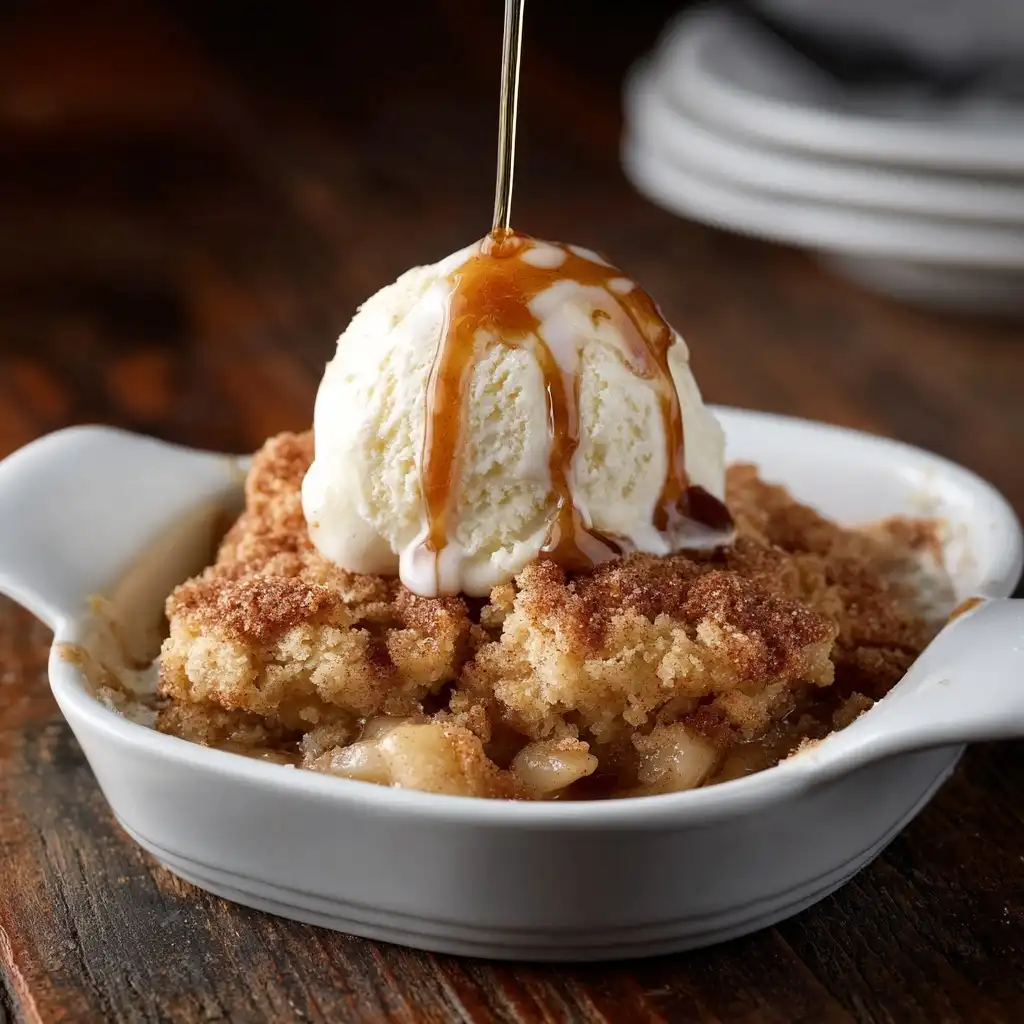
Snickerdoodle Apple Cobbler is a soul-warming, nostalgic dessert that marries the cozy spice of classic snickerdoodles with the tender, caramelized sweetness of baked apples—elevated into a rustic, oven-baked cobbler format. Unlike traditional apple crisp or pie, this hybrid creation features a soft, cake-like snickerdoodle-inspired topping generously dusted with cinnamon-sugar, crowning a luxuriously spiced apple filling that bubbles with golden syrup and aromatic warmth. It’s comfort food reimagined: familiar yet inventive, homey yet elegant enough for holiday gatherings, potlucks, or quiet Sunday evenings with a scoop of vanilla bean ice cream melting slowly into its steamy crannies. Whether you grew up dunking snickerdoodles in milk or slicing tart apples for your grandmother’s pie, this cobbler bridges generations—and palates—with buttery tenderness, crackling sugar crusts, and the unmistakable fragrance of freshly ground cinnamon and nutmeg.
The History
Understanding Snickerdoodle Apple Cobbler requires tracing two beloved American dessert lineages—the snickerdoodle cookie and the fruit cobbler—each steeped in regional ingenuity and resourceful baking traditions. The snickerdoodle, believed to have German-Dutch roots (possibly from the German *Schneckennudel*, meaning “snail noodle,” though linguists debate this), gained widespread popularity in the late 19th century across New England and the Midwest. Its defining traits—tangy cream of tartar leavening, chewy-crisp texture, and signature cinnamon-sugar coating—were born from pantry staples and clever chemical leavening before modern baking powder became ubiquitous.
Meanwhile, the cobbler emerged as a frontier adaptation of English suet puddings and colonial “slump” or “grunt” desserts. Without access to pie tins or precise pastry skills, early American settlers tossed fruit into cast-iron skillets or Dutch ovens and topped them with biscuit dough, dumplings, or simple batter—hence the “cobbled” appearance of the uneven, rustic topping. By the early 1900s, cobblers were standard fare in Southern and Midwestern kitchens, often featuring seasonal fruits like peaches, blackberries, and apples—especially during fall harvests.
Snickerdoodle Apple Cobbler itself is a relatively modern fusion, gaining traction in the 2010s via food blogs, Pinterest trends, and viral recipe videos. It reflects a broader culinary movement toward “elevated nostalgia”—reinterpreting childhood flavors through sophisticated technique and layered textures. Chefs and home bakers alike began experimenting by replacing traditional biscuit or oat-topped cobblers with snickerdoodle batter, recognizing how the cookie’s tangy richness complements apples’ natural acidity, while its sugar crust delivers irresistible textural contrast. Today, it appears on café menus from Portland to Charleston, graces Thanksgiving tables alongside pumpkin pie, and inspires countless Instagram-worthy variations—from bourbon-infused versions to gluten-free adaptations using almond flour and psyllium husk.
Ingredients Breakdown
Every exceptional Snickerdoodle Apple Cobbler begins with intentionality—not just measurements, but understanding *why* each ingredient matters. Below is a meticulous, chef-level breakdown:
For the Apple Filling:
- Apples (6–7 medium, ~2.5 lbs): A strategic blend is key—use 3–4 tart, firm varieties (like Granny Smith or Braeburn) for structure and bright acidity, and 2–3 sweeter, softer types (such as Honeycrisp, Fuji, or Pink Lady) for depth and natural caramelization. Avoid Red Delicious—they turn mealy; skip Gala if overripe—they lack backbone.
- Granulated Sugar (¾ cup): Balances apple tannins and fuels caramelization. Reduce by 1–2 tbsp if using very sweet apples or adding maple syrup.
- Brown Sugar (¼ cup, packed light or dark): Adds molasses notes, moisture retention, and rich color. Dark brown sugar intensifies flavor; light yields a cleaner finish.
- Lemon Juice (2 tbsp fresh): Essential for brightness and preventing browning—also enhances perception of sweetness without added sugar.
- Unsalted Butter (2 tbsp, cubed): Not just for richness—its milk solids aid Maillard browning and lend subtle nuttiness as it melts into the filling.
- Spices: Cinnamon (1½ tsp, preferably Vietnamese or Saigon for intensity), freshly grated nutmeg (¼ tsp), allspice (⅛ tsp, optional but recommended for complexity), and a whisper of cardamom (a pinch) for floral lift.
- Thickener: 2 tbsp cornstarch (classic, reliable) or 1½ tbsp tapioca starch (for glossier, more transparent gel and superior freeze-thaw stability). Arrowroot works but can thin upon prolonged baking.
- Salt (¼ tsp fine sea salt): Heightens all other flavors—don’t omit.
For the Snickerdoodle Topping:
- All-Purpose Flour (1¾ cups): Standard choice for tender-yet-structured crumb. For extra tenderness, substitute ¼ cup with cake flour; for whole-grain depth, replace 3 tbsp with finely milled whole wheat pastry flour.
- Baking Powder (1½ tsp) & Cream of Tartar (½ tsp): This dynamic duo replicates the snickerdoodle’s signature tang and lift. Baking powder alone yields bland fluff; cream of tartar adds acidity that reacts with baking soda (if used) and balances sweetness.
- Granulated Sugar (½ cup): Provides sweetness and aids in forming the signature crackly top. Reserve ¼ cup separately for the cinnamon-sugar coating.
- Unsalted Butter (½ cup / 1 stick, cold and cubed): Cold butter = flaky pockets and steam lift. Cut with pastry cutter or fingers until pea-sized crumbs form. Overworking creates toughness.
- Egg (1 large, cold): Binds the batter and contributes richness and structure. For extra chew, add 1 tbsp sour cream or full-fat Greek yogurt.
- Vanilla Extract (1½ tsp, pure, not imitation): Enhances warmth and rounds out spice notes. Madagascar bourbon vanilla is ideal.
- Milk or Buttermilk (¼ cup): Buttermilk adds gentle tang and tenderness; whole milk works well if thinned with ½ tsp lemon juice or vinegar and rested 5 minutes.
For the Cinnamon-Sugar Coating (The Crown Jewel):
- Granulated Sugar (¼ cup): Base for crunch and sparkle.
- Ground Cinnamon (1½–2 tsp): Use high-quality, freshly ground if possible—pre-ground loses volatile oils rapidly.
- Fine Sea Salt (⅛ tsp): Balances sweetness and amplifies cinnamon’s warmth.
- Optional Luxe Touches: A pinch of ground clove, a few drops of orange blossom water in the milk, or a tablespoon of toasted pecans folded into the topping batter.
Step-by-Step Recipe
This method prioritizes precision, timing, and sensory cues—not just timers—to ensure flawless texture, balanced sweetness, and that coveted contrast between bubbling filling and crisp-sugared topping.
- Preheat & Prep (15 minutes ahead): Position rack in lower third of oven. Preheat to 350°F (175°C). Generously grease a deep 9×13-inch ceramic or metal baking dish (or two 8×8-inch dishes for portion control). Line bottom with parchment paper for foolproof removal, if desired.
- Peel, Core & Slice Apples (10 minutes): Peel apples uniformly (a Y-peeler ensures speed and thinness). Quarter, core with a melon baller or small paring knife, then slice into ¼-inch thick half-moons. Place in a large bowl. Toss immediately with lemon juice to prevent oxidation.
- Make the Filling (5 minutes): In a separate small bowl, whisk together granulated sugar, brown sugar, spices, cornstarch, and salt. Pour over apples and toss thoroughly with hands or silicone spatula until every slice glistens and is evenly coated. Let sit 10 minutes—this draws out juices and activates the starch.
- Prepare the Topping Batter (8–10 minutes): In a food processor (preferred) or large bowl, pulse or whisk flour, baking powder, cream of tartar, and ½ cup sugar. Add cold cubed butter; pulse 8–10 times (or cut in with pastry cutter) until mixture resembles coarse meal with visible butter flakes. In a measuring cup, whisk egg, vanilla, and milk/buttermilk. Pour into flour mixture; pulse or stir *just* until a shaggy, slightly lumpy batter forms—do NOT overmix. It should be thick, scoopable, and hold together when pinched. If too dry, add milk ½ tsp at a time; if too wet, sprinkle in 1 tsp flour.
- Layer with Intention (3 minutes): Transfer apple mixture into prepared dish, spreading evenly. Pour topping batter over apples *without spreading*—let it naturally settle and pool. Gently shake dish side-to-side to encourage even coverage. Some apples will peek through—that’s ideal for caramelization.
- Coat & Chill (5 minutes + 15 min rest): In a small bowl, combine ¼ cup sugar, cinnamon, and salt. Sprinkle *generously and evenly* over entire surface. For maximum crunch, refrigerate uncovered for 15 minutes—this firms the butter and prevents topping from sliding during initial bake.
- Bake with Precision (55–65 minutes): Place dish on center oven rack. Bake 30 minutes uncovered. Rotate pan 180°. Continue baking 25–35 minutes until topping is deeply golden brown, edges are crisp and pull away slightly from sides, and filling bubbles *vigorously* around the perimeter (not just a slow simmer). Internal temperature of filling should read 205–210°F on an instant-read thermometer—this ensures apples are tender but not mushy and starch is fully activated. A toothpick inserted into the center of the topping should emerge with moist crumbs—not wet batter nor dry cake.
- Cool Strategically (Minimum 45 minutes): Remove from oven and place on a wire rack. Resist cutting! Let cool *at least* 45 minutes—ideally 1 hour. This allows the filling to thicken fully (starch retrogradation) and topping to set. Cutting too soon releases precious syrup and collapses texture.
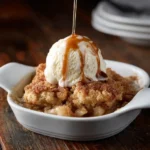
- Serve & Savor: Scoop warm (not hot) into bowls. Pair with premium vanilla ice cream (preferably Madagascar bean or honey-vanilla), lightly sweetened whipped cream, or a drizzle of salted caramel sauce. Garnish with flaky sea salt, a cinnamon stick, or candied apple chips.
Tips
- Apple Selection is Non-Negotiable: Test ripeness by pressing near the stem—if it gives slightly, it’s perfect. Overripe apples release excess water; underripe ones stay chalky. When in doubt, use 4 Granny Smith + 3 Honeycrisp.
- Cold Butter, Cold Egg, Cold Milk: Chilling all wet ingredients prevents premature fat melting, ensuring distinct layers and airy lift—not dense cake.
- Don’t Skip the Rest: That 15-minute chill isn’t optional—it’s the secret to a crisp, defined topping edge and prevents “soggy bottom” syndrome.
- Rotate & Monitor Relentlessly: Ovens vary wildly. Start checking at 50 minutes. If topping browns too fast, tent loosely with foil—but only after 45 minutes to avoid steaming.
- Thickener Timing Matters: Cornstarch must reach 205°F+ to activate fully. Underbaking = runny filling. Trust the thermometer over the timer.
- Texture Troubleshooting: Too dense? You overmixed the batter or used melted butter. Too crumbly? Not enough liquid or overbaked. Too sweet? Reduce granulated sugar in filling by 2 tbsp next time and rely on brown sugar’s depth.
- Make-Ahead Magic: Assemble filling and topping batter separately up to 24 hours ahead. Store filling covered in fridge; keep topping batter chilled in bowl covered with plastic wrap pressed directly on surface. Assemble cold and bake straight from fridge—add 5–7 minutes to bake time.
- Freezing Friendly: Fully baked and cooled cobbler freezes beautifully for up to 3 months. Wrap tightly in foil, then freezer bag. Thaw overnight in fridge, then reheat covered at 325°F for 25–30 minutes, uncovering last 10 minutes to recrisp topping.
Variations and Customizations
This recipe is a canvas—not a cage. Embrace creativity while honoring foundational balance:
Dietary Adaptations:
- Gluten-Free: Replace all-purpose flour with 1:1 GF blend containing xanthan gum (like King Arthur or Bob’s Red Mill). Add ½ tsp psyllium husk powder to topping batter for elasticity. Ensure oats (if using in streusel variants) are certified GF.
- Vegan: Use vegan butter (Miyoko’s or Earth Balance), flax egg (1 tbsp ground flax + 2.5 tbsp water, rested 5 min), and unsweetened almond or soy milk. Boost richness with 1 tbsp coconut oil in filling and 1 tsp apple cider vinegar in milk for buttermilk effect.
- Reduced-Sugar: Cut total sugar by ⅓—reduce filling sugars first, keep topping sugar for crunch. Amplify spice (extra cinnamon, ginger) and add 1 tsp orange zest to filling for brightness. Use monk fruit/erythritol blends labeled “baking stable.”
Flavor & Texture Twists:
- Bourbon-Apple: Add 2 tbsp aged bourbon to filling along with lemon juice. Soak ¼ cup chopped dried cherries in bourbon for 15 minutes, then fold in.
- Nutty Delight: Fold ¾ cup toasted walnuts or pecans into topping batter. Sprinkle extra on top before baking.
- Spiced Pear-Ginger: Replace 2 apples with ripe Bosc pears; add 1 tbsp finely grated fresh ginger to filling.
- Oatmeal Snickerdoodle: Replace ½ cup flour in topping with old-fashioned rolled oats (not quick oats) for chewy, hearty texture.
- Maple-Caramel Swirl: Drizzle ¼ cup pure maple syrup over apples before adding topping. After pouring batter, swirl in 3 tbsp salted caramel sauce with a knife.
- Chai-Spiced: Infuse milk with 1 chai tea bag for 5 minutes, cool, then use in topping. Add ½ tsp ground ginger, ¼ tsp ground cloves, and 1 star anise (removed before baking) to filling.
Format Innovations:
- Individual Ramekins: Divide filling among six 6-oz ramekins. Top with 2 tbsp batter each, coat, and bake 35–40 minutes. Perfect for dinner parties.
- Skillet Cobbler: Use a 10-inch cast-iron skillet. Adjust bake time to 45–50 minutes. Serve straight from pan for rustic charm.
- Sheet Pan Version: Double recipe for a 13×18-inch sheet pan—ideal for crowds. Bake 40–45 minutes; check center for doneness.
Health Considerations and Nutritional Value
While Snickerdoodle Apple Cobbler is inherently a celebratory dessert—not a health food—mindful preparation transforms it into a nutrient-dense, balanced treat with meaningful functional benefits:
Nutritional Highlights (Per Standard Serving – 1/12 of 9×13-inch dish):
- Calories: ~320–360 kcal (varies by apple variety, butter, and sugar adjustments)
- Fiber: 3.5–4.5g (primarily from apples’ pectin and skin—peeling reduces fiber by ~40%; consider leaving skins on for rustic version)
- Vitamin C: 8–12mg (10–15% DV) from apples and lemon juice—supports immunity and collagen synthesis.
- Potassium: ~180mg—supports healthy blood pressure and nerve function.
- Antioxidants: Quercetin (in apple skin), cinnamon polyphenols (anti-inflammatory, insulin-sensitizing), and nutmeg myristicin (neuroprotective in moderation).
- Healthy Fats: Monounsaturated fats from butter (when consumed in context of balanced diet) support hormone health and nutrient absorption.
Smart Swaps for Enhanced Wellness:
- Boost Fiber: Leave apple skins on (wash thoroughly) and add 1 tbsp chia or ground flaxseed to topping batter.
- Reduce Refined Sugar: Replace half the granulated sugar in filling with date paste (¼ cup, blended smooth) or mashed ripe banana. Compensate with extra spice.
- Heart-Healthy Fats: Substitute 1 tbsp butter in filling with walnut oil; use grass-fed butter for higher CLA and omega-3 content.
- Gut-Friendly: Add 1 tsp apple cider vinegar to milk for buttermilk—provides acetic acid and trace probiotics.
Considerations for Specific Needs:
- Diabetes-Friendly: Focus on low-glycemic apples (Granny Smith), reduce total sugar by 30%, increase cinnamon (shown to improve insulin sensitivity), and pair with protein-rich toppings (Greek yogurt instead of ice cream).
- Weight Management: Serve smaller portions (⅙ of dish) with ½ cup nonfat Greek yogurt instead of ice cream. Prioritize satiety with fiber and protein.
- Food Sensitivities: Always verify cream of tartar is aluminum-free (some brands contain alum); choose organic, non-GMO cornstarch.
Enjoyment Mindset:
Research consistently shows that mindful, pleasurable eating—savoring aroma, texture, and memory—enhances digestion and satisfaction more than restrictive rules. This cobbler, made with care and shared with love, delivers profound psychological nourishment: comfort, connection, and joy. That’s wellness, too.
Ingredients
Makes one 9×13-inch cobbler (12 servings)
For the Apple Filling:
- 6–7 medium apples (about 2.5 lbs), such as 4 Granny Smith and 3 Honeycrisp, peeled, cored, and sliced ¼-inch thick
- ¾ cup granulated sugar
- ¼ cup packed light or dark brown sugar
- 2 tablespoons fresh lemon juice
- 2 tablespoons unsalted butter, cold and cubed
- 1½ teaspoons ground cinnamon
- ¼ teaspoon freshly grated nutmeg
- ⅛ teaspoon ground allspice (optional but recommended)
- Pinch of ground cardamom (optional)
- 2 tablespoons cornstarch (or 1½ tbsp tapioca starch)
- ¼ teaspoon fine sea salt
For the Snickerdoodle Topping:
- 1¾ cups all-purpose flour (spooned and leveled)
- 1½ teaspoons baking powder
- ½ teaspoon cream of tartar
- ½ cup granulated sugar
- ½ cup (1 stick) unsalted butter, cold and cubed
- 1 large egg, cold
- 1½ teaspoons pure vanilla extract
- ¼ cup whole milk or buttermilk, cold
For the Cinnamon-Sugar Coating:
- ¼ cup granulated sugar
- 1½–2 teaspoons ground cinnamon (preferably Saigon or Vietnamese)
- ⅛ teaspoon fine sea salt
Directions
- Preheat oven to 350°F (175°C). Generously grease a 9×13-inch baking dish and line bottom with parchment paper for easy removal (optional but recommended).
- In a large bowl, combine apple slices and lemon juice; toss to coat and prevent browning.
- In a small bowl, whisk together granulated sugar, brown sugar, cinnamon, nutmeg, allspice, cardamom, cornstarch, and salt. Pour over apples and toss thoroughly until evenly coated. Let stand 10 minutes to macerate.
- In a food processor or large bowl, combine flour, baking powder, cream of tartar, and ½ cup sugar. Add cold cubed butter and pulse (or cut in) until mixture resembles coarse crumbs with visible butter pieces about the size of peas.
- In a liquid measuring cup, whisk together cold egg, vanilla, and cold milk. Pour over flour mixture and pulse or stir with a silicone spatula *just* until a shaggy, thick batter forms—do not overmix. It should hold together when pinched but remain slightly lumpy.
- Transfer apple mixture to prepared baking dish, spreading evenly. Spoon topping batter over apples without smoothing—allow it to settle naturally. Gently shake dish to help batter distribute.
- In a small bowl, combine ¼ cup sugar, cinnamon, and salt. Sprinkle generously and evenly over entire surface. Refrigerate uncovered for 15 minutes.
- Bake in preheated oven for 30 minutes. Rotate pan. Continue baking 25–35 minutes, until topping is deep golden brown, edges are crisp and pulling away from sides, and filling is bubbling vigorously around the perimeter. Internal temperature of filling should read 205–210°F.
- Remove from oven and cool on a wire rack for at least 45 minutes before serving. This step is essential for proper setting.
- Serve warm, scooped into bowls, ideally with high-quality vanilla ice cream or lightly sweetened whipped cream. Garnish with flaky sea salt or a cinnamon stick if desired.
FAQ
- Can I make this ahead of time?
- Yes! Prepare filling and topping batter separately up to 24 hours ahead. Store filling covered in the refrigerator; keep topping batter chilled in its bowl, covered with plastic wrap pressed directly onto the surface. Assemble cold and bake straight from the fridge—add 5–7 minutes to total bake time.
- Why does my cobbler have a soggy bottom?
- This usually occurs from underbaking (filling didn’t reach 205°F), using overly juicy apples without adequate thickener, or skipping the 15-minute chill before baking. Ensure vigorous bubbling at edges and internal temp verification. Also, avoid opening the oven door before 45 minutes.
- Can I use frozen apples?
- Fresh is strongly preferred—their texture and pectin content are ideal. If frozen, thaw completely, drain *all* liquid (press gently in a clean towel), and increase cornstarch by 1 tsp. Expect slightly softer apples.
- What’s the role of cream of tartar?
- Cream of tartar provides the signature tangy depth of snickerdoodles and reacts with baking soda (if included) for optimal rise. It also stabilizes egg whites if you whip them separately for a lighter topping. Don’t omit it—it’s irreplaceable for authentic flavor.
- My topping sank into the apples. What went wrong?
- Most commonly, the batter was overmixed (developing gluten), the butter was too warm (melting before baking), or the apples released excessive juice due to overcooking before assembly. Ensure cold ingredients, minimal mixing, and proper apple selection.
- Can I double this recipe?
- Absolutely—double all ingredients and bake in a 13×18-inch sheet pan at 350°F for 40–45 minutes, rotating halfway. Check doneness with thermometer and visual cues.
- How do I store leftovers?
- Cool completely, cover tightly with plastic wrap or transfer to an airtight container, and refrigerate for up to 4 days. Reheat individual portions in the microwave (30–45 sec) or entire dish covered with foil at 325°F for 20–25 minutes, then uncover for 5 minutes to crisp topping.
- Is there a way to make it dairy-free?
- Yes: use high-quality dairy-free butter (like Miyoko’s), unsweetened almond or soy milk (add ½ tsp vinegar for buttermilk effect), and vegan butter in the filling. Ensure all extracts and spices are dairy-free certified.
- Can I add nuts or oats?
- Definitely! Fold ¾ cup toasted pecans or walnuts into the topping batter