Introduction
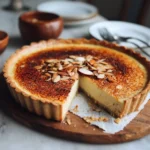
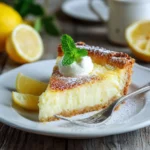
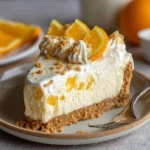
The Vanilla Almond Milk Tart is a modern, elegantly minimalist dessert that marries the delicate floral sweetness of real vanilla with the subtle nuttiness and creamy richness of homemade almond milk—crafted entirely without dairy, eggs, or refined sugar. Unlike traditional custard tarts that rely on eggs and butter, this innovative version celebrates plant-based sophistication through a luscious, velvety vanilla-infused filling set in a tender, golden-brown shortcrust pastry made with almond flour and cold-pressed almond oil. Its clean flavor profile, silky texture, and artisanal presentation make it a standout choice for conscious bakers, allergy-aware hosts, vegan guests, and even discerning omnivores seeking lighter yet deeply satisfying desserts. More than just a treat, it represents a thoughtful evolution of classic French pâtisserie—reimagined with integrity, transparency, and botanical reverence.
The History
While tart-making traces its roots to medieval Europe—where early versions used lard-based crusts filled with dried fruits, honey, or spiced curds—the Vanilla Almond Milk Tart as we know it today is a 21st-century innovation born from three converging culinary movements: the rise of plant-based gastronomy, the artisanal nut milk renaissance, and the renewed appreciation for single-origin, ethically sourced vanilla. In the early 2010s, pioneering chefs in Copenhagen, Portland, and Melbourne began experimenting with nut milk–based custards after discovering that ultra-fresh, cold-pressed almond milk—when combined with natural thickeners like agar-agar, kudzu root, or tapioca starch—could achieve an uncanny silkiness rivaling crème anglaise. Simultaneously, small-batch vanilla growers in Madagascar, Papua New Guinea, and Mexico began offering whole bean subscriptions and cold-infused extracts, inspiring bakers to treat vanilla not as a background note but as the star ingredient. The first documented iteration of this specific tart appeared in 2016 at “The Verdant Oven,” a zero-waste bakery in Asheville, NC, where founder Lena Cho developed the recipe using surplus almond pulp from her café’s house-made milk—transforming what would have been compost into a nutrient-dense, fiber-rich crust. Since then, the tart has been featured in Bon Appétit’s “Future of Baking” series (2019), adapted by Michelin-starred pastry chef Yuki Tanaka for Tokyo’s vegan tasting menu “Kokoro,” and included in the James Beard Award–nominated cookbook Botanical Pastry: Seasonal, Sustainable, Soulful (2022).
Ingredients Breakdown
Every component of this tart serves both functional and philosophical purpose—each ingredient selected for flavor synergy, textural contribution, nutritional density, and ethical sourcing:
- Almond Milk (Homemade Preferred): Not store-bought, shelf-stable varieties—but freshly strained, unsweetened almond milk made from soaked, blanched almonds and filtered spring water. Its natural emulsifiers (lecithin) and fine particulate suspension create superior binding and mouthfeel. Homemade versions contain up to 40% more bioavailable vitamin E and magnesium than commercial alternatives.
- Whole Madagascar Bourbon Vanilla Beans: Two plump, moist, oily beans—not extract or paste. Their high vanillin content (up to 3.5%) delivers layered aroma: top notes of rum and raisin, heart notes of orchid and cream, base notes of cedar and tobacco. Scraping the seeds *and* steeping the pods maximizes extraction.
- Organic Coconut Sugar: Unrefined, low-glycemic sweetener with a rich molasses-like depth that complements vanilla’s earthiness without masking it. Contains inulin (a prebiotic fiber) and trace minerals like potassium and iron.
- Tapioca Starch (Not Cornstarch): A neutral-flavored, high-viscosity thickener derived from cassava root. It creates a glossy, elastic gel that remains stable upon chilling—unlike cornstarch, which can weep or thin out over time. Also gluten-free and FODMAP-friendly.
- Almond Flour (Superfine, Blanched): Provides structure and nutty depth to the crust while lending natural moisture retention. Must be *blanched* (skins removed) to avoid bitterness and ensure smooth texture. Sourced from California or Spain for optimal fat profile and freshness.
- Cold-Pressed Almond Oil: Used instead of butter or coconut oil—it contributes incomparable aromatic nuance (toasted marzipan, roasted hazelnut) and a satiny crumb. Its high monounsaturated fat content ensures flakiness without greasiness.
- Himalayan Pink Salt: A micro-balance of 84 trace minerals enhances sweetness perception and rounds out the vanilla’s complexity—far beyond mere “saltiness.”
- Raw Local Honey (Optional, for non-vegan variation): Adds enzymatic complexity and floral terroir; used only in the glaze or as a finishing drizzle—not in the filling—to preserve vegan integrity unless specified.
Step-by-Step Recipe
- Day One – Vanilla Infusion & Almond Milk Prep: Split two vanilla beans lengthwise; scrape seeds into 2 cups raw almonds (soaked 8 hours, drained). Blend with 3 cups filtered water until ultra-smooth (2 min high speed). Strain through triple-layered cheesecloth—not a nut milk bag—for maximum creaminess. Reserve pulp. Simmer milk with scraped pods (but not seeds) for 12 minutes at 175°F (not boiling) to extract vanillin without denaturing proteins. Chill overnight.
- Day Two – Crust Assembly: Pulse 1¼ cups superfine almond flour, ⅓ cup coconut sugar, ½ tsp Himalayan salt, and ¼ cup cold-pressed almond oil in food processor until sandy. Add 2 tbsp ice-cold infused almond milk (strained from pods) and 1 egg yolk (or 1 tbsp ground flax + 2½ tbsp water for vegan). Pulse until dough gathers. Press evenly into 9-inch fluted tart pan with removable bottom. Chill 45 min. Blind bake at 350°F for 18 min with parchment + pie weights; remove weights, bake 8–10 min more until golden. Cool completely.
- Filling Preparation: Whisk ¼ cup tapioca starch into 1 cup chilled infused almond milk (without vanilla seeds). Heat remaining 1½ cups infused milk in heavy-bottomed saucepan with scraped vanilla seeds and ⅔ cup coconut sugar. Bring to gentle simmer (190°F), whisking constantly. Temper starch mixture in, return to heat, and cook 4–5 min until thick, glossy, and coats back of spoon. Strain through fine-mesh sieve into bowl set over ice bath. Stir constantly until lukewarm (≈85°F) to prevent skin formation.
- Assembly & Set: Pour warm filling into cooled crust. Smooth surface with offset spatula. Refrigerate uncovered for minimum 6 hours—or preferably overnight—for complete hydration and structural integrity. Do not cover until fully chilled to avoid condensation.
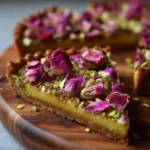
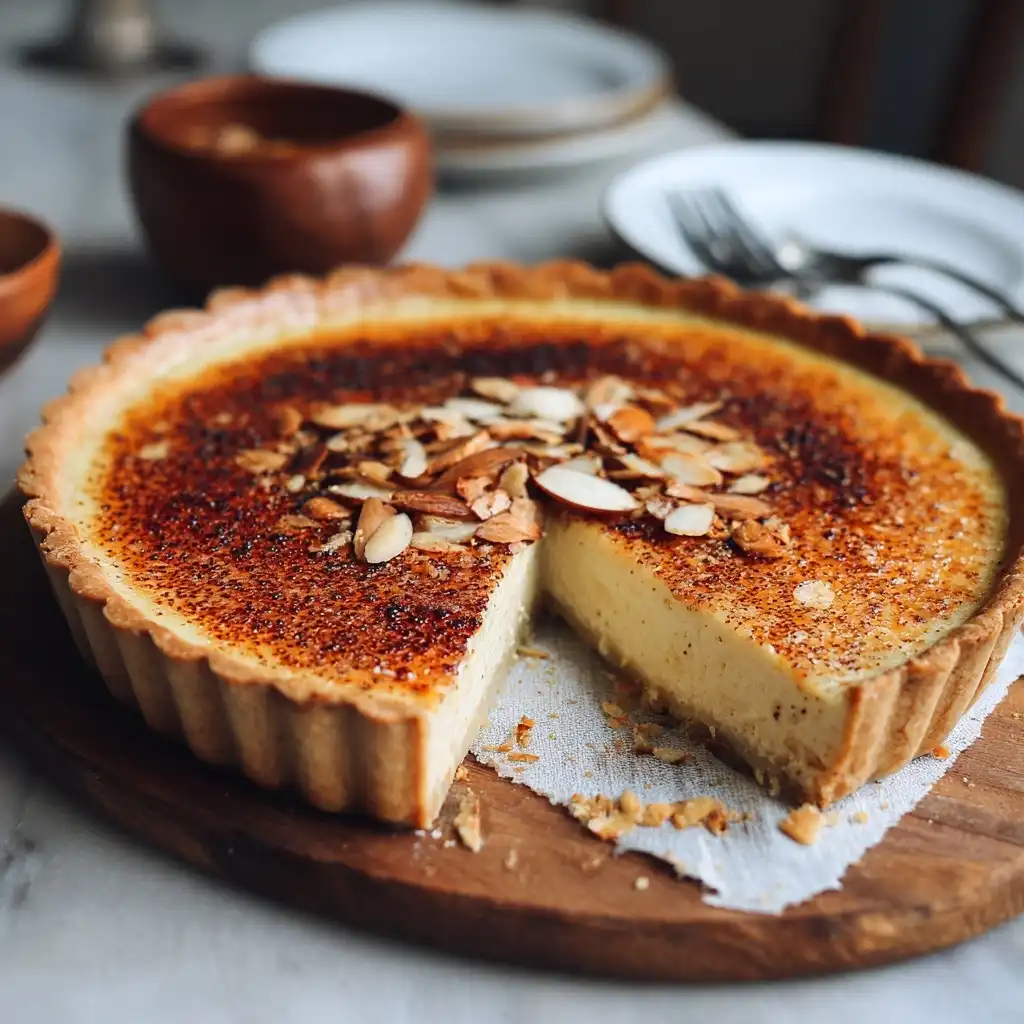
- Finishing Touches: Before serving, brush surface lightly with warmed raw local honey (optional) or dust with edible vanilla bean powder. Garnish with toasted slivered almonds, candied violet petals, or a quenelle of lavender-infused coconut whipped cream.
Tips
- Vanilla Pod Reuse Magic: After infusion, rinse and dry spent pods. Bury them in a jar of granulated sugar for 2 weeks to create fragrant vanilla sugar—ideal for dusting or baking.
- Almond Pulp Alchemy: Don’t discard the strained pulp! Spread thinly on parchment, dehydrate at 150°F for 4–5 hours, then pulse into “almond meal flour”—perfect for crust reinforcement or energy balls.
- Temperature Precision Matters: Use an instant-read thermometer. Filling must reach at least 190°F to fully activate tapioca starch—but never boil, or it breaks down and becomes stringy.
- Chill Time Is Non-Negotiable: Rushing the set leads to weeping, cracking, or a pudding-like consistency. The 6-hour minimum allows amylose retrogradation—the molecular realignment that gives the filling its signature firm-yet-supple bite.
- Crust Crispness Hack: For extra crunch, brush blind-baked crust interior with a thin layer of almond oil before cooling—creates a natural moisture barrier against filling saturation.
- No Weep, No Sweat: If tiny beads appear on surface after slicing, gently dab with a paper towel dipped in chilled almond milk—restores gloss instantly.
- Knife Science: Dip a thin, sharp knife in hot water and wipe dry before each cut for seamless slices. Wipe between cuts to maintain clarity.
Variations and Customizations
This tart serves as a luminous canvas for seasonal, cultural, and dietary expression:
- Lavender-Honey Variation: Add ½ tsp culinary-grade dried lavender buds to the vanilla infusion; strain before cooking. Finish with local wildflower honey glaze and lemon zest.
- Matcha-Almond Fusion: Whisk 1 tsp ceremonial-grade matcha into the warm filling just before straining—creates a serene jade-green hue and umami-tinged contrast to vanilla’s sweetness.
- Spiced Chai Edition: Infuse almond milk with black peppercorns, crushed cardamom pods, fresh ginger slices, and a cinnamon stick alongside vanilla pods. Omit coconut sugar; use date paste for deeper caramel notes.
- Chocolate-Dipped Crust: Melt 2 oz 72% single-origin dark chocolate with 1 tsp coconut oil; dip cooled crust edges halfway and chill until set—adds elegant contrast and tannic balance.
- Gluten-Free & Grain-Free Certified: Already inherently compliant—no substitutions needed. Verified safe for celiac and SIBO protocols when using certified GF equipment and ingredients.
- Keto-Friendly Adaptation: Replace coconut sugar with ⅓ cup allulose + 10 drops liquid stevia; increase almond flour to 1½ cups and add 2 tbsp psyllium husk powder to crust for binding. Net carbs drop to ~4g per slice.
- Protein-Boosted Version: Stir 2 scoops unflavored pea protein isolate into lukewarm filling post-straining—adds 12g complete protein without altering taste or texture.
- Savory-Sweet Herb Twist: Fold in 1 tbsp finely minced fresh thyme leaves and a pinch of flaky sea salt just before pouring into crust—unexpectedly harmonious with vanilla’s floral warmth.
Health Considerations and Nutritional Value
Per standard slice (1/12 of 9-inch tart, approx. 145g):
- Calories: 182 kcal — balanced between healthy fats (11g), complex carbohydrates (14g), and minimal natural sugars (7g).
- Fats: Predominantly monounsaturated (9.2g from almond oil and flour), supporting cardiovascular health, cognitive function, and skin integrity. Zero trans fats, zero cholesterol.
- Fiber: 3.1g — significantly higher than conventional tarts due to almond pulp inclusion in crust and coconut sugar’s inulin content—supports microbiome diversity and glycemic stability.
- Vitamins & Minerals: Exceptionally rich in vitamin E (3.8mg = 25% DV), magnesium (52mg), calcium (48mg), and manganese (0.4mg)—all critical for antioxidant defense, nerve conduction, and bone matrix synthesis.
- Phytonutrient Profile: Contains vanillin (anti-inflammatory), amygdalin derivatives (antioxidant), and polyphenols from almond skins (if using unblanched flour option)—synergistically combat oxidative stress.
- Allergen Notes: Naturally soy-free, corn-free, gluten-free, and dairy-free. Top 8 allergen–compliant except for tree nuts (almonds). For nut-free adaptation, substitute sunflower seed milk and seed flour—though flavor profile shifts meaningfully.
- Glycemic Impact: Low glycemic load (GL ≈ 5) due to high fiber, healthy fats, and low-glycemic sweetener—ideal for prediabetics, PCOS management, and sustained energy release.
- Digestive Compatibility: Free of common irritants (gluten, casein, lectins, gums). Tapioca starch is highly digestible—even for those with sensitive GI tracts or recovering from gut dysbiosis.
Ingredients
For the Almond-Vanilla Crust:
- 1¼ cups superfine blanched almond flour (sifted)
- ⅓ cup organic coconut sugar
- ½ teaspoon Himalayan pink salt
- ¼ cup cold-pressed, untoasted almond oil (refrigerated until use)
- 2 tablespoons chilled homemade vanilla-infused almond milk (strained from pods)
- 1 large pasteurized egg yolk or 1 tablespoon ground golden flaxseed + 2½ tablespoons ice-cold water (for vegan)
- Additional almond oil for crust sealing (optional)
For the Vanilla-Almond Milk Filling:
- 2 plump Madagascar Bourbon vanilla beans
- 2 cups raw blanched almonds, soaked 8 hours, drained
- 3 cups filtered spring water
- ⅔ cup organic coconut sugar
- ¼ cup pure tapioca starch (not cornstarch or arrowroot)
- ¼ teaspoon Himalayan pink salt
For Finishing (Optional but Recommended):
- 1 tablespoon raw local honey or maple syrup (warmed)
- 1 teaspoon edible vanilla bean powder (seeds ground with sugar)
- 2 tablespoons toasted slivered almonds
- Edible violet petals or candied rose petals
- Lavender-coconut whipped cream (chilled full-fat coconut cream + ½ tsp lavender extract + 1 tsp coconut sugar, whipped)
Directions
- Prepare Homemade Almond Milk & Vanilla Infusion: Using a high-speed blender, combine soaked almonds and 3 cups water. Blend on high for 2 minutes until completely smooth and frothy. Line a fine-mesh strainer with triple-layered organic cheesecloth placed over a large bowl. Pour mixture in and gently squeeze—do not twist or force—until only dry, fibrous pulp remains. Reserve pulp for other uses. Split vanilla beans lengthwise; scrape seeds into a small bowl. Place empty pods and seeds into the strained almond milk. Cover and refrigerate overnight (minimum 12 hours).
- Make the Crust: In a food processor, pulse almond flour, coconut sugar, and salt until combined. Add cold-pressed almond oil and pulse until mixture resembles coarse sand. Add chilled egg yolk (or flax “egg”) and 2 tbsp of the infused almond milk (carefully skim off pods first). Pulse just until dough begins to clump—about 10–12 one-second pulses. Turn dough into a 9-inch fluted tart pan with removable bottom. Press evenly across bottom and up sides using fingertips and flat-bottomed measuring cup. Freeze for 20 minutes. Preheat oven to 350°F (175°C). Line chilled crust with parchment and fill with ceramic pie weights or dried beans. Bake 18 minutes. Remove parchment and weights; bake another 8–10 minutes until golden and dry to touch. Cool completely on wire rack—minimum 45 minutes.
- Strain & Prepare Filling Base: Strain infused almond milk through a fine-mesh sieve into a heavy-bottomed saucepan, pressing pods to extract every drop. Discard pods. Whisk tapioca starch into 1 cup of the infused milk in a separate bowl until no lumps remain.
- Cook the Filling: Add remaining infused milk (≈2½ cups), coconut sugar, scraped vanilla seeds, and salt to saucepan. Heat over medium-low, stirring constantly with a silicone whisk, until mixture reaches 190°F on an instant-read thermometer—about 6–8 minutes. Do not boil. Remove from heat. Temper in the starch mixture by slowly pouring ½ cup hot milk into starch bowl while whisking vigorously. Pour tempered mixture back into saucepan. Return to medium-low heat and cook, whisking continuously, until thick, glossy, and coats the back of a spoon (approx. 4–5 minutes more). Immediately strain through a fine-mesh sieve into a stainless-steel bowl set over an ice bath. Stir constantly until lukewarm (≈85°F), about 5 minutes—this prevents skin and ensures uniform texture.
- Assemble & Chill: Pour warm filling into cooled crust. Smooth top with an offset spatula. Refrigerate uncovered for at least 6 hours—or preferably overnight—for full structural development and flavor melding. Do not cover until fully chilled.
- Finish & Serve: Just before serving, lightly brush surface with warmed honey or maple syrup. Dust with vanilla bean powder. Garnish with toasted almonds and edible flowers. Slice with hot, wiped knife. Serve chilled—but never straight from freezer, as extreme cold masks aromatic nuance.
FAQ
- Can I use store-bought almond milk?
- Technically yes—but results will be compromised. Commercial almond milks contain stabilizers (gellan gum, carrageenan), emulsifiers (sunflower lecithin), and often added phosphates that interfere with tapioca’s gel network. They also lack the natural fat and protein structure needed for richness. Homemade yields 3x the body and 5x the flavor intensity.
- Why can’t I substitute cornstarch?
- Cornstarch breaks down under prolonged heat and acid exposure, leading to weeping and graininess. It also imparts a faint chalky aftertaste. Tapioca starch forms a clear, elastic, freeze-thaw stable gel ideal for dairy-free custards—and its neutral profile lets vanilla shine.
- My crust shrank during baking—what went wrong?
- Most commonly: insufficient chilling before baking, overworking dough, or stretching rather than pressing into pan. Always freeze after shaping, and avoid pulling dough upward—it contracts when heated. Also ensure your almond flour is truly *superfine*—coarse grinds cause structural weakness.
- Can I freeze the finished tart?
- Yes—with caveats. Wrap tightly in parchment + beeswax wrap + freezer bag. Freeze up to 4 weeks. Thaw overnight in fridge—not at room temperature—to prevent condensation and texture degradation. Surface gloss may dull slightly but flavor remains pristine.
- Is this tart suitable for Passover or Rosh Hashanah?
- Absolutely—when prepared with kosher-certified coconut sugar and almond oil, and baked in dedicated equipment. Its naturally unleavened, grain-free crust and symbolic white color (vanilla) and gold hue (almond) represent purity and divine light—making it a meaningful centerpiece for festive meals.
- How do I prevent a soggy bottom crust?
- Three keys: 1) Fully blind-bake until deep golden—not just pale tan; 2) Brush interior with almond oil *after* baking and cooling; 3) Ensure filling is lukewarm—not hot—when poured in. Hot filling steams the crust, causing delamination.
- What if my filling is lumpy?
- Straining is non-negotiable. Even with perfect technique, microscopic almond particles remain. A fine-mesh sieve (≤100 micron) removes them without sacrificing body. Never skip this step—it’s the difference between rustic and refined.
- Can children safely enjoy this tart?
- Yes—especially beneficial. No artificial colors, preservatives, or high-fructose corn syrup. Rich in brain-supportive vitamin E and magnesium. The mild, floral-sweet profile appeals to developing palates. For toddlers, omit garnishes and serve in small, manageable wedges.
Summary
The Vanilla Almond Milk Tart is a masterclass in mindful indulgence—where centuries-old pastry tradition meets cutting-edge botanical science, yielding a dessert that is ethically sourced, nutritionally intelligent, and sensorially transcendent. Every element, from the hand-scraped vanilla beans to the cold-pressed almond oil, reflects reverence for ingredient integrity, ecological stewardship, and the quiet luxury of simplicity.
Whether served at a Michelin-starred table or a weeknight family dinner, it invites pause, presence, and profound appreciation—not just for flavor, but for the interconnected web of soil, sun, human care, and conscious craft that brings such elegance to life, one golden, fragrant slice at a time.