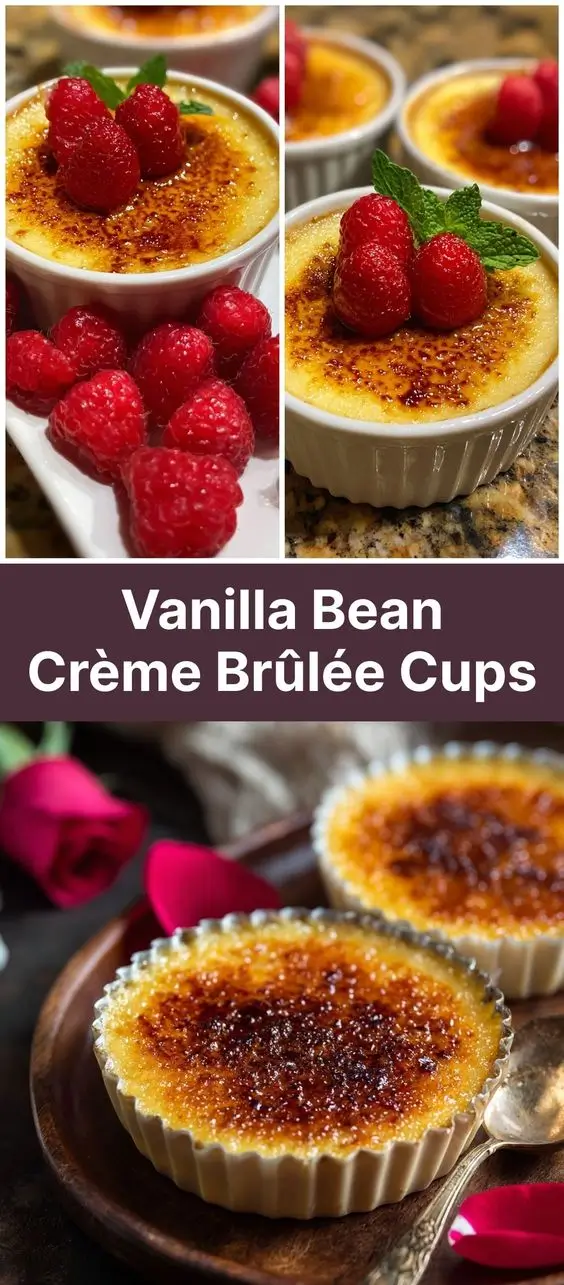
Vanilla Bean Crème Brûlée Cups
Indulge in the velvety elegance of Vanilla Bean Crème Brûlée Cups—a classic French dessert reimagined into individual servings that dazzle both the palate and the plate. With its luxuriously smooth custard base, rich vanilla aroma, and that iconic crackling layer of caramelized sugar on top, each cup delivers a perfect harmony of textures and flavors. Whether served at an intimate dinner party or enjoyed as a quiet after-dinner treat, these crème brûlées elevate any occasion with their sophisticated simplicity.
The History of Crème Brûlée
The origins of crème brûlée are steeped in centuries of culinary evolution and cross-cultural debate. While today it is considered a quintessential French dessert, historical records suggest similar custard-and-caramel desserts existed in England as early as the 14th century under names like “burnt cream” or “Cambridge burnt cream.” The earliest known recipe resembling modern crème brûlée appears in François Massialot’s 1691 cookbook Le Cuisinier Royal et Bourgeois, where it was titled “Crème brûlée” — meaning “burnt cream” in French.
Despite its French name and widespread association with French cuisine, Spain also claims a version called crema catalana, traditionally flavored with cinnamon and citrus zest and served on Saint Joseph’s Day. The key distinction lies in the cooking method and flavor profile: while crema catalana is often thickened with cornstarch and has a slightly grainier texture, French crème brûlée relies solely on egg yolks and heavy cream for richness and is baked in a water bath for a silky finish.
The dish gained international fame in the 20th century, particularly after being featured on menus at high-end French restaurants around the world. Its minimalist presentation—served in shallow ramekins with a golden, glass-like sugar crust—epitomizes refined dessert craftsmanship. Today, the vanilla bean variation stands out as one of the most beloved renditions, prized for its pure, aromatic vanilla essence extracted directly from real vanilla beans.
Ingredients Breakdown: What Makes This Dessert So Luxurious?
The magic of Vanilla Bean Crème Brûlée lies not only in technique but in the quality and synergy of its ingredients. Each component plays a crucial role in achieving the final balance of creaminess, fragrance, and crunch.
- Heavy Cream: The foundation of the custard, heavy cream (with at least 36% fat content) provides the lush mouthfeel and richness essential to authentic crème brûlée. It carries the vanilla flavor beautifully and ensures a dense yet delicate texture when properly baked.
- Vanilla Bean: Using a whole vanilla bean pod—rather than extract—is what elevates this dessert from good to extraordinary. Scraping the tiny black seeds infuses the cream with natural vanillin compounds, delivering floral, sweet, and slightly earthy notes. The spent pod can even be reused to make vanilla sugar or infused into other recipes.
- Egg Yolks: These act as the natural thickening agent, giving the custard structure without making it stiff. Their high fat content contributes to the silky texture and deep yellow hue. Too few yolks result in a runny custard; too many can make it overly firm or eggy-tasting.
- Granulated Sugar: Added to the custard base for sweetness and later used in a thin layer on top for caramelization. Fine white sugar melts evenly under the broiler or torch, forming a crisp, glossy shell.
- Vanilla Extract (optional): A splash enhances the vanilla depth, especially if using a less potent bean. However, purists argue that a fresh bean alone should suffice.
- Salt: Just a pinch helps balance the sweetness and intensify the overall flavor profile.
Optional additions may include a strip of orange or lemon zest during the cream infusion for brightness, or a tablespoon of liqueur such as Grand Marnier, bourbon, or dark rum for complexity. However, the traditionalist approach celebrates minimalism—allowing the vanilla and cream to shine unadorned.
Step-by-Step Recipe: Crafting Perfect Vanilla Bean Crème Brûlée Cups
Making crème brûlée at home is surprisingly accessible, though it demands attention to detail. Follow these steps carefully for flawless results every time.
Ingredients (Makes 6 servings)
- 2 cups (480 ml) heavy cream
- 1/2 cup (120 ml) whole milk (optional, for slight lightening)
- 1 premium-quality vanilla bean (Madagascar or Tahitian preferred)
- 5 large egg yolks
- 1/3 cup (65g) granulated sugar, plus 6 teaspoons for topping
- Pinch of fine sea salt
- 1/2 teaspoon pure vanilla extract (optional)
Equipment Needed
- 6 oven-safe ramekins (4-ounce size ideal)
- Large saucepan
- Whisk
- Fine-mesh strainer
- Mixing bowls
- Baking dish (for water bath)
- Kitchen torch or broiler
- Pastry brush (optional)
Directions
- Preheat Oven & Prepare Ramekins: Preheat your oven to 325°F (160°C). Place six 4-ounce ramekins in a large, deep baking dish or roasting pan. Ensure they sit flat and aren’t wobbly.
- Split the Vanilla Bean: Using a sharp knife, split the vanilla bean lengthwise. Scrape out the tiny black seeds with the back of the knife. Reserve both the seeds and the pod.
- Heat Cream Mixture: In a medium saucepan, combine the heavy cream, milk (if using), scraped vanilla seeds, and the empty pod. Add the pinch of salt. Warm over medium heat until steaming and small bubbles form around the edges—do not boil. Remove from heat, cover, and let steep for 20–30 minutes to fully infuse the vanilla flavor.
- Whisk Egg Yolks and Sugar: In a mixing bowl, whisk together the egg yolks and 1/3 cup sugar until pale yellow and slightly thickened—about 2–3 minutes by hand or 1 minute with a hand mixer. Do not over-whisk; you want to incorporate air gently without creating foam.
- Temper the Eggs: Slowly pour the warm cream mixture into the egg mixture while whisking constantly. This gradual addition prevents the eggs from scrambling. If desired, stir in vanilla extract now.
- Sieve the Custard: Strain the mixture through a fine-mesh sieve into a clean bowl or large measuring cup with a spout. Discarding the vanilla pod at this stage. This step removes any cooked egg bits and ensures a perfectly smooth texture.
- Fill Ramekins: Carefully pour the custard into the prepared ramekins, filling each nearly to the top. Wipe any spills from the rims with a damp cloth to ensure proper setting.
- Create Water Bath (Bain-Marie): Place the baking dish with ramekins into the oven. Carefully pour hot water into the dish until it reaches halfway up the sides of the ramekins. Use a kettle or heat-resistant jug for safety. The water bath regulates temperature and prevents curdling.
- Bake Until Set: Bake for 35–45 minutes, or until the edges are set but the centers still jiggle slightly when nudged. Overbaking leads to cracking or a rubbery texture. When done, the internal temperature should be about 170–175°F (77–80°C).
- Cool and Chill: Remove ramekins from the water bath using tongs or a slotted spatula. Let them cool to room temperature on a wire rack, then cover each loosely with plastic wrap and refrigerate for at least 4 hours—or preferably overnight. Chilling allows the custard to fully set and develop flavor.
- Caramelize the Tops: Just before serving, sprinkle exactly 1 teaspoon of granulated sugar evenly over the surface of each chilled custard. Use a kitchen torch to melt and caramelize the sugar in circular motions until a deep amber, glassy crust forms. Alternatively, place under a preheated broiler for 2–4 minutes, watching closely to avoid burning. Allow the caramelized layer to harden for 1–2 minutes before serving.
Tips for Success: Mastering the Art of Crème Brûlée
To achieve restaurant-quality crème brûlée consistently, consider these expert tips:
- Use Fresh, High-Quality Ingredients: Opt for organic heavy cream and farm-fresh egg yolks. The better the ingredients, the more vibrant the flavor.
- Don’t Rush the Infusion: Letting the vanilla steep in warm cream for 30 minutes maximizes flavor extraction. For deeper aroma, leave it longer—even up to 1 hour.
- Strain Twice for Ultimate Smoothness: After initial straining, pass the custard through the sieve a second time to catch any stray particles.
- Avoid Air Bubbles: Tap the filled ramekins gently on the counter before baking to release trapped air, which can cause uneven texture.
- Control the Water Bath Temperature: Always use hot (not cold) water in the bain-marie to maintain even heat distribution and reduce baking time.
- Watch the Jiggle Test: The center should quiver like gelatin—too firm means overcooked, too liquid means underdone.
- Cool Gradually: Rapid cooling can cause condensation or cracking. Let custards come to room temp before chilling.
- Sugar Application Matters: Use fine granulated sugar for even melting. Coarse sugars may burn before fully liquefying.
- Torch Technique: Hold the flame about 3–4 inches away and move continuously. Focus on spots that haven’t darkened yet. Never hover in one place.
- Serve Immediately After Torch: The caramelized top begins absorbing moisture from the custard after 15–20 minutes, losing its crisp snap. Timing is everything.
Variations and Customizations: Elevate Your Crème Brûlée Game
While classic vanilla bean remains timeless, feel free to experiment with creative twists that suit different seasons, occasions, or dietary preferences.
- Lavender Honey Crème Brûlée: Infuse the cream with culinary lavender buds (1 tsp dried) and replace half the sugar with local honey for a fragrant, floral twist.
- Chocolate-Vanilla Swirl: Melt 2 oz dark chocolate and swirl into the custard before baking for a marbled effect.
- Coffee Crème Brûlée: Add 1 tbsp instant espresso powder or 2 shots of strong brewed coffee to the warm cream mixture.
- Coconut-Lime Zest: Substitute coconut milk for half the cream and add lime zest for a tropical flair.
- Bourbon Vanilla: Stir in 1–2 tablespoons of aged bourbon before baking for a warm, smoky note.
- Matcha Green Tea: Whisk 1–2 tsp ceremonial-grade matcha into the egg yolk mixture for an earthy, vibrant green version.
- Fruit-Infused: Layer macerated berries (raspberries, strawberries) at the bottom of the ramekin before pouring custard over.
- Dairy-Free Option: Use full-fat canned coconut milk instead of cream. Note: texture will be slightly softer, so chill longer.
- Mini Mason Jar Presentation: Serve in small mason jars for a rustic-chic look—perfect for weddings or brunches.
- Seasonal Flavors: Pumpkin spice in fall, peppermint in winter, rosewater in spring—adapt flavors to holidays and harvests.
Health Considerations and Nutritional Value
Vanilla Bean Crème Brûlée is undeniably decadent, so understanding its nutritional profile helps in enjoying it mindfully.
Nutrition Facts (Per Serving – Approximate)
| Calories | 320 kcal |
| Total Fat | 28g |
| Saturated Fat | 17g |
| Cholesterol | 290mg |
| Sodium | 35mg |
| Total Carbohydrates | 16g |
| Sugars | 15g |
| Protein | 5g |
| Vitamin A | 18% DV |
| Calcium | 4% DV |
| Iron | 1% DV |
Considerations:
- High in Saturated Fat: Due to heavy cream and egg yolks, this dessert isn’t suitable for those managing heart health or cholesterol levels. Moderation is key.
- Rich in Cholesterol: Each serving contains nearly 100% of the daily recommended limit, so individuals with hypercholesterolemia should consume sparingly.
- Gluten-Free: Naturally gluten-free, making it safe for celiacs—as long as all equipment is clean and uncontaminated.
- Keto-Friendly? Not Quite: With ~15g net carbs per serving, it exceeds typical keto limits unless modified (e.g., sugar substitute, reduced dairy).
- Allergens: Contains dairy and eggs—common allergens. No nut content unless added via variation.
- Pregnancy Safety: Since the custard is fully baked (eggs reach 170°F+), it’s generally safe during pregnancy. Avoid raw or lightly cooked versions.
- Dietary Modifications: To lighten the recipe, try substituting half the cream with evaporated milk or Greek yogurt (though texture changes). Use erythritol or monk fruit for sugar-free tops (results vary with caramelization).
Frequently Asked Questions (FAQ)
Q: Can I make crème brûlée without a torch?
A: Yes! Use your oven’s broiler. Place the sugared ramekins on a baking sheet and broil 3–5 inches from the heat source for 2–5 minutes, rotating as needed. Watch constantly to prevent burning.
Q: Why did my custard crack?
A: Cracking usually occurs due to overbaking or rapid cooling. Bake slowly in a water bath and allow gradual cooling before refrigeration.
Q: Can I prepare crème brûlée in advance?
A: Absolutely. You can bake and chill the custards up to 3 days ahead. Add the sugar and torch just before serving for maximum crunch.
Q: My caramel layer didn’t harden. What went wrong?
A: This happens if the custard is too cold or moist. Let it sit at room temperature for 10 minutes before torching. Also, avoid humid environments when caramelizing.
Q: Can I freeze crème brûlée?
A: Not recommended. Freezing alters the custard’s texture, making it grainy upon thawing. Best stored refrigerated for up to 4 days.
Q: Is there a substitute for vanilla bean?
A: Yes, though flavor won’t be identical. Use 1 tablespoon of pure vanilla extract or 1 teaspoon of vanilla bean paste. Avoid artificial extracts for best taste.
Q: Can I use brown sugar for the top?
A: Yes—brown sugar adds molasses notes and creates a darker, chewier crust. Turbinado or demerara sugars work well too for extra crunch.
Q: How do I prevent bubbles in my custard?
A: Skim foam off the surface before baking and tap ramekins gently after filling. Pouring through a spouted container also minimizes splashing.
Q: Can I double the recipe?
A: Yes, but ensure your water bath has space for all ramekins without overcrowding. Rotate pans halfway if baking two layers.
Q: Why use a water bath?
A: The steam from surrounding water provides gentle, even heat, preventing curdling and ensuring a creamy consistency throughout.
Summary
Vanilla Bean Crème Brûlée Cups offer an exquisite blend of silken custard and crisp caramelized sugar, crafted through precise baking and premium ingredients. Time-honored yet effortlessly elegant, this dessert transforms simple components into a memorable culinary experience.