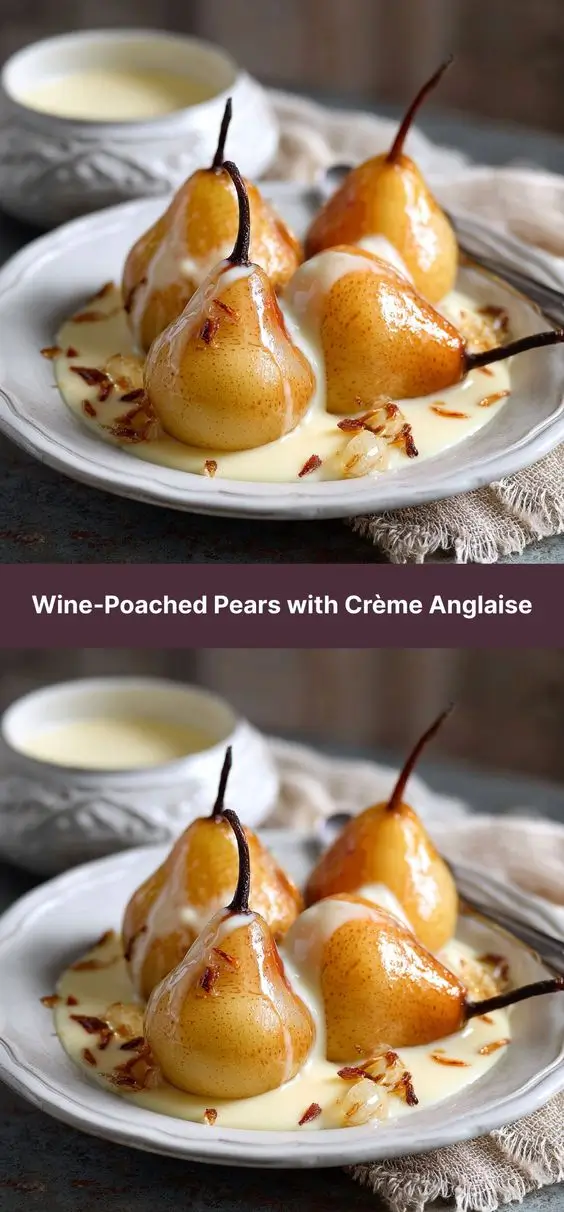
Wine‑Poached Pears with Crème Anglaise
Indulge in the elegant simplicity of Wine-Poached Pears with Crème Anglaise, a timeless dessert that marries tender fruit with rich, velvety custard. This classic French treat is as beautiful on the eye as it is delightful on the palate—perfect for dinner parties, romantic evenings, or simply elevating your weeknight dessert routine. With its deep ruby hues from red wine and aromatic spices, each spoonful delivers comfort and sophistication in equal measure. Whether you’re a seasoned home cook or just beginning to explore the world of gourmet desserts, this recipe is approachable, rewarding, and endlessly customizable.
The History of Poached Pears
Poached pears have graced European tables since at least the Middle Ages, when preserving fruits in sweet syrups and wines became a popular method among nobility. The technique was both practical—extending the shelf life of seasonal produce—and luxurious, showcasing wealth through access to imported spices and fine wines. By the 17th century, France had elevated poaching into an art form, particularly under the reign of Louis XIV, whose royal chefs perfected delicate preparations using wine, sugar, and aromatics.
The term “poire à la Beaujolais” emerged in eastern France, referring specifically to pears poached in red wine from the Beaujolais region. Over time, variations spread across Europe: Germany developed Birnen mit Rotwein, Italy crafted Pere al Vino Rosso, and England embraced Red Wine Pears during Victorian times as part of elaborate dessert courses. Today, wine-poached pears are considered a hallmark of refined European cuisine, often served with creamy accompaniments like crème fraîche, vanilla ice cream, or the iconic crème anglaise.
Crème anglaise itself dates back to 17th-century France and literally means “English cream,” though ironically, it’s quintessentially French. It was likely named either as a compliment to English dairy traditions or as a playful jab—historians debate which. Regardless, this luscious pouring custard has become the gold standard for pairing with poached fruits, cakes, and pastries.
Ingredients Breakdown
To create an authentic, restaurant-quality dish, selecting high-quality ingredients is essential. Each component plays a crucial role in flavor, texture, and presentation.
For the Wine-Poached Pears:
- Pears (4 firm, ripe Bosc or Anjou): These varieties hold their shape well during poaching and have a slightly sweet, floral taste that complements wine beautifully.
- Red wine (750 ml / 3 cups dry, such as Pinot Noir, Merlot, or Cabernet Sauvignon): Choose a wine you’d enjoy drinking—its flavor concentrates during cooking. Avoid “cooking wine” due to added salt and preservatives.
- Sugar (¾ cup granulated): Balances the tannins in the wine and enhances natural fruit sweetness. Adjust based on pear ripeness and wine dryness.
- Water (1 cup): Dilutes the alcohol content slightly and helps extract flavors evenly without overpowering the pears.
- Vanilla bean (1 whole, split and scraped) or 1 tsp pure vanilla extract: Adds warm, floral depth that pairs exquisitely with wine and spice.
- Citrus peel (zest of 1 orange or ½ lemon): Brightens the mixture, cutting through richness and adding complexity.
- Whole spices (1 cinnamon stick, 4–5 whole cloves, 2 star anise, optional: cardamom pods or allspice berries): Infuse warmth and aroma. Whole spices are preferred over ground for cleaner flavor and easy removal.
- Lemon juice (1 tbsp): Prevents browning and stabilizes color during poaching.
For the Crème Anglaise:
- Egg yolks (6 large): The base of the custard, providing richness and emulsification.
- Granulated sugar (½ cup): Sweetens without overpowering; dissolves smoothly into warm milk.
- Whole milk (2 cups): Preferably organic or unhomogenized for superior mouthfeel.
- Heavy cream (1 cup): Adds silkiness and prevents curdling by lowering protein concentration.
- Vanilla bean (1 pod, split and seeded) or 1½ tsp pure vanilla extract: Deepens flavor profile and complements the poached pears.
- Pinch of salt: Enhances overall flavor balance.
Step-by-Step Recipe
Part 1: Poaching the Pears
- Prepare the pears: Peel them carefully, leaving the stem intact for an elegant presentation. To prevent oxidation, immediately place peeled pears in a bowl of water mixed with 1 tablespoon lemon juice.
- Create the poaching liquid: In a large, heavy-bottomed pot or Dutch oven, combine red wine, water, sugar, scraped vanilla bean (and pod), citrus zest, lemon juice, and all whole spices. Stir gently over medium heat until sugar fully dissolves.
- Bring to a simmer: Heat the liquid until it reaches a gentle simmer—small bubbles forming around the edges—but do not boil vigorously. Boiling can make the liquid too harsh and may discolor the pears.
- Add the pears: Gently place the prepared pears into the liquid, ensuring they are mostly submerged. If needed, use a heatproof plate or trivet to weigh them down.
- Poach slowly: Simmer uncovered for 20–35 minutes, depending on ripeness and size. Test doneness by inserting a skewer—it should slide in easily, but the pear should still hold its shape.
- Cool and infuse: Once cooked, turn off the heat and let the pears cool in the liquid for at least 1 hour—or ideally, refrigerate overnight for deeper color and flavor penetration.
- Reduce the syrup (optional): Remove pears and strain the poaching liquid. Return liquid to low heat and reduce by half (about 20–25 minutes) to create a glossy, concentrated sauce. Let cool before drizzling over servings.
Part 2: Making the Crème Anglaise
- Heat the dairy: In a medium saucepan, combine milk, cream, vanilla seeds, and the vanilla pod (if using). Warm over medium-low heat until steaming and small bubbles appear around the rim—do not boil.
- Whisk egg yolks and sugar: In a separate bowl, whisk together egg yolks and sugar until pale yellow and slightly thickened (about 2–3 minutes).
- Temper the eggs: Slowly pour about one-third of the hot milk mixture into the egg yolk mixture while whisking constantly. This gradual warming prevents scrambling.
- Combine and thicken: Pour the tempered egg mixture back into the saucepan with the remaining milk. Cook over low heat, stirring continuously with a wooden spoon or silicone spatula, until the custard coats the back of the spoon (approx. 170–175°F or 76–80°C). Do not let it boil.
- Strain and chill: Immediately remove from heat and strain through a fine-mesh sieve into a clean bowl. Discard the vanilla pod and any impurities. Press plastic wrap directly onto the surface to prevent a skin from forming. Chill for at least 2 hours, or up to 2 days.
Tips for Perfection
- Choose uniform pears: Select pears of similar size and ripeness so they cook evenly.
- Don’t rush the poach: Low and slow ensures tenderness without disintegration. High heat will toughen the fruit.
- Use non-reactive cookware: Stainless steel or enameled cast iron pots prevent metallic reactions with the acidic wine.
- Keep crème anglaise moving: Constant stirring prevents scorching and curdling. A silicone spatula helps scrape corners where heat builds.
- Chill thoroughly: Cold crème anglaise flows better and contrasts beautifully with room-temperature pears.
- Garnish thoughtfully: Fresh mint, edible flowers, or a dusting of cocoa powder elevate visual appeal.
- Serve in glassware: Clear coupes or wine glasses showcase the layered colors and textures.
- Make ahead friendly: Both components keep well—poached pears last 5 days in syrup; crème anglaise lasts 3 days refrigerated.
Variations and Customizations
This recipe is wonderfully adaptable to seasons, dietary needs, and flavor preferences:
- White wine version: Substitute white wine (like Riesling or Chardonnay) for a lighter, golden-hued dessert. Omit red wine and add extra citrus zest for brightness.
- Spiced poaching liquid: Add fresh ginger slices, nutmeg, or black peppercorns for a more complex profile.
- Alcohol-free option: Replace wine with grape juice, pomegranate juice, or strong brewed tea (hibiscus or black tea work well), plus 1 tsp vinegar for acidity.
- Fruit swaps: Try peaches, plums, figs, or quinces—adjust poaching time accordingly.
- Dairy-free crème anglaise: Use full-fat coconut milk or oat cream blended with cornstarch and vanilla. Temper carefully to avoid separation.
- Infused syrups: After reducing the poaching liquid, stir in a splash of liqueur (e.g., Grand Marnier, Amaretto, or Chambord) for adult flair.
- Savory twist: For a modern take, add fresh rosemary or thyme sprigs to the poaching liquid—pairs especially well with blue cheese garnish.
- Chocolate drizzle: Serve with warm dark chocolate sauce instead of reduced wine syrup for decadence.
- Nutty crunch: Top with toasted almonds, crushed amaretti cookies, or candied pecans for contrast.
Health Considerations and Nutritional Value
While undeniably indulgent, wine-poached pears with crème anglaise can be enjoyed mindfully as part of a balanced diet.
- Pears: Naturally fat-free, rich in dietary fiber (especially soluble fiber like pectin), and packed with vitamin C, potassium, and antioxidants. They support digestive health and may help regulate blood sugar levels.
- Red wine: Contains resveratrol, a polyphenol linked to heart health and anti-inflammatory effects—though most alcohol evaporates during cooking, trace amounts remain.
- Sugar content: The recipe includes added sugars in both poaching liquid and custard. Reduce sugar by 25% or substitute with honey, maple syrup, or monk fruit sweetener for lower glycemic impact.
- Dairy: Whole milk and heavy cream provide calcium, vitamin D, and healthy fats but contribute saturated fat and calories. Opt for reduced-fat versions if desired, though texture may suffer slightly.
- Eggs: High in choline, selenium, and high-quality protein. Concerns about cholesterol have been largely debunked for most people—moderation is key.
- Calories per serving (1 pear + ¼ cup crème anglaise): Approximately 320–380 kcal, depending on wine reduction and portion size.
- Allergens: Contains dairy and eggs. Not suitable for vegans or those with egg/dairy allergies unless modified.
- Gluten-free: Naturally gluten-free—ideal for sensitive diets when served alone.
Full Ingredients List
Wine-Poached Pears:
- 4 firm Bosc or Anjou pears, peeled with stems intact
- 750 ml (3 cups) dry red wine (Pinot Noir, Merlot)
- 1 cup water
- ¾ cup granulated sugar
- 1 vanilla bean, split and seeds scraped (or 1 tsp vanilla extract)
- Zest of 1 orange (plus juice of ½ lemon)
- 1 tbsp fresh lemon juice
- 1 cinnamon stick
- 4–5 whole cloves
- 2 star anise (optional)
Crème Anglaise:
- 6 large egg yolks
- ½ cup granulated sugar
- 2 cups whole milk
- 1 cup heavy cream
- 1 vanilla bean, split and seeded (or 1½ tsp vanilla extract)
- Pinch of sea salt
Directions
- Poach the pears: In a large pot, combine wine, water, sugar, vanilla bean (pod and seeds), orange zest, lemon juice, and spices. Heat over medium until sugar dissolves and mixture simmers.
- Peel pears, keeping stems attached, and submerge in lemon water briefly. Drain and place in poaching liquid.
- Simmer gently for 20–35 minutes, turning occasionally, until tender when pierced. Remove from heat and cool in liquid for 1 hour. Refrigerate for best results (up to 24 hours).
- Reduce syrup (optional): Strain liquid, discard solids, and reduce by half over medium-low heat. Cool completely.
- Make crème anglaise: Warm milk, cream, vanilla, and salt in a saucepan until steaming. Do not boil.
- In a bowl, whisk egg yolks and sugar until light and creamy.
- Slowly pour ⅓ of hot milk into yolks while whisking. Then return mixture to saucepan.
- Cook over low heat, stirring constantly, until custard thickens enough to coat the back of a spoon (do not exceed 175°F).
- Strain immediately into a bowl, press plastic wrap on surface, and chill 2+ hours.
- To serve: Place chilled pear in shallow bowl or glass. Spoon a little reduced syrup around or over. Drizzle with crème anglaise or serve on the side. Garnish as desired.
FAQ
Can I use canned pears?
No—canned pears are already soft and lack structure. Fresh firm pears are essential for proper poaching.
Do the pears get drunk from the wine?
Most alcohol cooks off during poaching (about 85%), but trace amounts remain. For zero alcohol, use non-alcoholic wine or juice substitutes.
Why did my crème anglaise curdle?
Overheating or adding hot milk too quickly can scramble eggs. Always temper slowly and never let the custard boil.
Can I freeze wine-poached pears?
Not recommended—the texture becomes mushy upon thawing. Store in syrup in the fridge instead.
Can I make crème anglaise without egg yolks?
You’ll lose richness and thickness. Some use cornstarch or arrowroot, but it won’t replicate true crème anglaise.
What wine should I avoid?
Sweet wines like Port or Moscato can overwhelm the dish. Stick to dry or off-dry reds.
How do I know when pears are done?
A skewer or knife should slide in easily, but the fruit shouldn’t fall apart. Err on the side of firmer—you can always continue poaching.
Can I double the recipe?
Yes, but ensure your pot allows pears to lie flat without crowding. Double batches of crème anglaise require careful temperature control.
Summary
Wine-Poached Pears with Crème Anglaise is a stunning fusion of fruit elegance and creamy luxury, steeped in centuries of culinary tradition. Simple ingredients transform into a sophisticated dessert that delights the senses and impresses every time.