Introduction
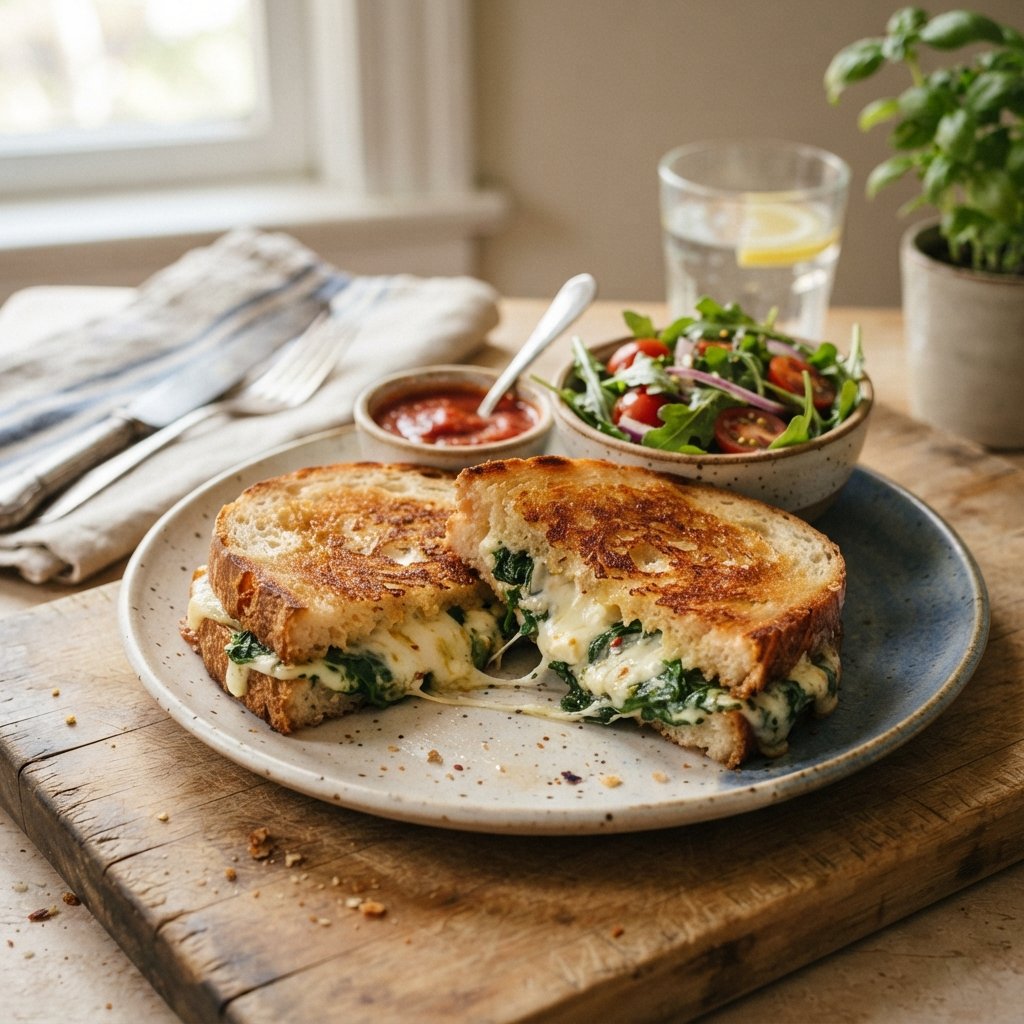
There are few culinary experiences quite as comforting as the sound of a sandwich hitting a hot skillet, followed by the irresistible aroma of toasted bread and melting cheese. The Spinach Feta Grilled Cheese elevates this classic comfort food into a sophisticated yet accessible meal that balances creamy richness with earthy freshness. While the traditional grilled cheese is often celebrated for its simplicity, incorporating spinach and feta introduces a Mediterranean twist that adds layers of flavor, texture, and nutritional value. This sandwich is not merely a quick fix for hunger; it is a celebration of contrasting elements—the crunch of golden-brown crust against the soft, gooey interior, and the salty tang of feta cheese mellowed by the mild sweetness of wilted spinach.
Whether you are looking for a quick lunch solution, a light dinner option, or a impressive snack to serve guests, this recipe delivers on all fronts. It bridges the gap between nostalgic American diner food and vibrant Greek-inspired cuisine. In this comprehensive guide, we will explore every facet of creating the perfect Spinach Feta Grilled Cheese, from the historical origins of its components to the scientific nuances of achieving the perfect melt. Prepare to transform your kitchen into a gourmet sandwich shop.
The History
To truly appreciate the Spinach Feta Grilled Cheese, one must understand the lineage of its constituent parts. The concept of melting cheese between slices of bread dates back centuries, but the modern “grilled cheese” as we know it gained popularity in the United States during the 1920s and 1930s. During the Great Depression, cheese and bread were affordable staples, making the open-faced “Cheese Dream” a household favorite. It wasn’t until sliced bread was invented in 1928 and the electric toaster became common that the closed sandwich variant began to dominate.
However, the ingredients used in this specific variation tell a different historical tale. Feta cheese is one of the oldest known cheeses, with production records in Greece dating back to the 8th century BCE. Mentioned in Homer’s Odyssey, feta was traditionally made from sheep’s milk and stored in brine, making it a durable food source for travelers and sailors. Spinach, originating in ancient Persia, was introduced to Europe by the Arabs in the Middle Ages and became a staple in Mediterranean cooking due to its hardiness and nutritional profile.
The fusion of these elements represents the modern globalization of cuisine. As American palates became more adventurous in the late 20th century, the standard cheddar or American cheese sandwich began to evolve. Chefs and home cooks alike started experimenting with international flavors, incorporating ingredients like pesto, sun-dried tomatoes, and Mediterranean cheeses. The Spinach Feta Grilled Cheese is a product of this culinary evolution, merging the comforting technique of the American grilled cheese with the flavor profile of a Greek spanakopita (spinach pie), creating a dish that honors both traditions.
Ingredients Breakdown
Creating an exceptional sandwich requires more than just throwing ingredients together; it requires an understanding of how each component interacts with heat and flavor. Here is a detailed analysis of what goes into the perfect Spinach Feta Grilled Cheese.
The Bread Structure
The foundation of any grilled cheese is the bread. You need a loaf that is sturdy enough to hold the filling without falling apart, yet porous enough to absorb some of the fat for flavor. Sourdough is a top choice because its tangy flavor complements the saltiness of the feta, and its thick crust provides a satisfying crunch. Whole Grain or Multigrain breads add a nutty flavor and extra fiber, though they can burn faster than white bread. Country White or Texas Toast offers a softer, more nostalgic experience, allowing the cheese to be the star. Avoid overly thin sliced sandwich bread, as it may become soggy from the spinach moisture.
The Cheese Matrix
Feta is the star, but it is not a high-melt cheese. Pure feta can become oily or grainy when heated too aggressively. To achieve the desired gooey texture, it is often recommended to blend the feta with a melting cheese. Mozzarella provides stretch, Provolone offers a sharp bite, and Gruyère adds a nutty depth. Using crumbled feta ensures even distribution, while block feta that you crumble yourself tends to be fresher and less dried out than pre-crumbled varieties found in tubs.
The Green Element
Spinach introduces moisture and earthiness. Fresh baby spinach is preferred for its tender leaves and mild flavor. However, it must be wilted and squeezed dry before assembling the sandwich; otherwise, the released water will steam the bread from the inside, resulting in a soggy texture. Frozen spinach is a viable alternative, provided it is thoroughly thawed and pressed between paper towels to remove excess liquid. Some cooks prefer to sauté the spinach with garlic beforehand to deepen the flavor profile.
The Cooking Fat
The exterior crispiness comes from the fat used on the outside of the bread. Salted Butter is the classic choice, providing rich flavor and excellent browning due to its milk solids. Mayonnaise is a modern secret weapon; its higher smoke point and oil content can create an incredibly even, golden crust. Olive Oil aligns with the Mediterranean theme and adds a fruity note, though it may not brown as uniformly as butter.
Step-by-Step Recipe
Follow this detailed workflow to ensure consistency and quality every time you prepare this dish. Precision in preparation leads to perfection in execution.
Phase 1: Preparation
Begin by gathering all your ingredients and tools. You will need a skillet (cast iron is ideal for heat retention), a spatula, a mixing bowl, and paper towels. Wash your fresh spinach thoroughly. If using block feta, crumble it into small, uniform pieces to ensure even melting. If you are adding aromatics like garlic or onions, mince them now. Pre-measuring your cheese blend ensures you don’t overstuff the sandwich, which can make it difficult to flip.
Phase 2: Wilt the Spinach
Heat a small amount of olive oil in your skillet over medium heat. Add the fresh spinach and toss it continuously until it has reduced in volume by about half. This should take no more than 2-3 minutes. Remove the spinach from the heat and transfer it to a fine-mesh strainer or onto a layer of paper towels. Press down firmly to extract as much moisture as possible. This step is critical; dry spinach equals crispy bread. Season the wilted spinach with a pinch of black pepper and nutmeg if desired.
Phase 3: Assemble the Sandwich
Lay out your slices of bread on a clean surface. Butter one side of each slice generously, ensuring you cover the corners to prevent uneven browning. On the non-buttered side of one slice, layer half of your cheese blend. Follow this with a compact layer of the dried spinach mixture, and then top with the remaining feta and cheese. The cheese should act as the glue, so ensure some cheese is touching both slices of bread. Cap the sandwich with the second slice of bread, buttered side facing out.
Phase 4: The Grilling Process
Place your skillet over medium-low heat. Allow it to preheat for a minute. Place the sandwich in the pan. Cook for 3-4 minutes without moving it. This allows the Maillard reaction to occur, creating that deep golden-brown color and complex flavor. Peek underneath occasionally to monitor browning. Once the first side is golden, flip the sandwich carefully with a spatula. Press down gently to ensure contact with the pan. Cook for another 3-4 minutes. If the bread is browning too quickly before the cheese melts, cover the pan with a lid for the last minute to trap heat and steam the interior slightly.
Phase 5: Resting and Serving
Remove the sandwich from the pan and place it on a cutting board. Let it rest for at least two minutes. This allows the cheese to set slightly, preventing it from oozing out immediately upon cutting, and prevents burning the roof of your mouth. Slice diagonally for the classic presentation, which also makes it easier to handle. Serve immediately while warm.
Tips
Mastering the grilled cheese is about managing heat and moisture. Here are professional tips to elevate your technique:
- Control the Heat: Impatience is the enemy of grilled cheese. High heat burns the bread before the cheese melts. Always opt for medium-low heat for a slow, even cook.
- The Lid Trick: If you are using a thick bread or a lot of filling, place a lid on the skillet for the last minute of cooking. This creates an oven-like environment that helps melt the cheese without further browning the crust.
- Room Temperature Ingredients: Take your cheese out of the fridge 20 minutes before cooking. Cold cheese takes longer to melt, increasing the risk of burning the bread.
- Grate Your Own: Pre-shredded cheeses contain anti-caking agents like cellulose which can inhibit melting. Grating cheese from a block ensures a smoother melt.
- Double Buttering: For an ultra-crispy exterior, butter the bread and then lightly sprinkle grated Parmesan cheese on the outside of the buttered surface before grilling. This creates a savory, lace-like crust.
Variations and Customizations
The beauty of this recipe lies in its versatility. Once you have mastered the base, you can customize it to suit dietary needs or flavor cravings.
Protein Additions
To make this a heartier meal, consider adding proteins. Crispy Bacon adds a smoky saltiness that pairs beautifully with feta. Grilled Chicken strips can turn this into a full dinner entrée. For a vegetarian protein boost, add chickpeas mashed slightly into the spinach mixture.
Vegetable Enhancements
Expand the vegetable profile by adding caramelized onions for sweetness, roasted red peppers for smokiness, or sliced tomatoes for acidity. If using tomatoes, ensure they are seeded and dried to prevent sogginess. Artichoke hearts are another Mediterranean favorite that complements spinach and feta.
Sauce and Condiments
Don’t shy away from spreads. A thin layer of pesto on the inside of the bread amplifies the herbal notes. Tzatziki can be used as a dipping sauce on the side. A drizzle of balsamic glaze after cooking adds a touch of sweetness and acidity to cut through the richness of the cheese.
Dietary Adjustments
For a Gluten-Free version, use your favorite GF bread, but be aware that it may brown faster. For a Vegan adaptation, use plant-based feta and mozzarella alternatives, and swap butter for olive oil or vegan spread. Ensure the spinach is organic if you are strict about pesticide use.
Health Considerations and Nutritional Value
While grilled cheese is often viewed as an indulgence, the Spinach Feta variation offers a more balanced nutritional profile than its standard counterparts.
Benefits of Spinach
Spinach is a nutrient-dense leafy green packed with vitamins A, C, and K, as well as minerals like iron and magnesium. It is also high in antioxidants such as lutein and zeaxanthin, which are beneficial for eye health. Incorporating spinach into your sandwich increases the fiber content, aiding in digestion.
Feta and Calcium
Feta cheese is a good source of calcium and protein, essential for bone health and muscle repair. Compared to harder aged cheeses, feta is often lower in calories and fat, though it is higher in sodium due to the brine curing process. Those monitoring sodium intake should rinse the feta briefly before use or use it sparingly.
Caloric Awareness
The calorie count largely depends on the bread and the amount of butter used. A typical serving might range from 400 to 600 calories. To reduce calories, use a single slice of bread open-faced and broil it, or use a light spray of olive oil instead of butter. Choosing whole grain bread increases satiety, helping you feel full longer with fewer calories.
Ingredients
- Bread: 4 slices of Sourdough, Country White, or Whole Grain bread
- Cheese: 1 cup of crumbled Feta cheese (preferably block)
- Melting Cheese: 1 cup of shredded Mozzarella or Provolone cheese
- Spinach: 2 cups of fresh baby spinach, packed
- Fat: 2 tablespoons of unsalted butter, softened (or mayonnaise)
- Aromatics: 1 clove of garlic, minced (optional)
- Seasoning: Freshly cracked black pepper and a pinch of nutmeg
- Oil: 1 teaspoon of olive oil for wilting spinach
Directions
- Heat olive oil in a skillet over medium heat. Add minced garlic if using, and sauté for 30 seconds until fragrant.
- Add the fresh spinach to the skillet. Toss continuously for 2-3 minutes until wilted and reduced in volume.
- Transfer spinach to a strainer or paper towels. Press firmly to remove all excess moisture. Season with pepper and nutmeg.
- In a small bowl, combine the crumbled feta and shredded melting cheese.
- Butter one side of each slice of bread generously.
- On the non-buttered side of two bread slices, layer half the cheese mixture, followed by the dried spinach, and top with the remaining cheese.
- Place the remaining bread slices on top, buttered side facing out, to close the sandwiches.
- Wipe the skillet clean and place over medium-low heat.
- Add the sandwiches to the skillet. Cook for 3-4 minutes until the bottom is golden brown.
- Flip the sandwiches carefully. Cook for another 3-4 minutes. Cover with a lid for the last minute if needed to melt cheese.
- Remove from heat and let rest for 2 minutes.
- Slice diagonally and serve warm.
FAQ
Can I make this sandwich ahead of time?
Grilled cheese is best served immediately. However, you can assemble the sandwiches up to 4 hours in advance and keep them wrapped in the refrigerator. Cook them just before serving to ensure crispiness.
Why is my bread burning before the cheese melts?
Your heat is too high. Lower the temperature to medium-low and be patient. You can also cover the pan with a lid to trap heat and help the cheese melt without further browning the crust.
Can I use frozen spinach?
Yes, frozen chopped spinach works well. Ensure you thaw it completely and squeeze out every drop of water using a clean kitchen towel or cheesecloth.
What is the best dip for this sandwich?
Tomato soup is the classic pairing. For a Mediterranean twist, try a roasted red pepper soup or a side of marinara sauce for dipping.
Is feta too salty for this recipe?
Feta is naturally salty. If you are sensitive to sodium, look for “low sodium” feta or rinse the crumbles under water before using. Balancing it with unsalted butter and fresh spinach helps mitigate the saltiness.
Summary
The Spinach Feta Grilled Cheese combines crispy toasted bread with a creamy, savory filling of wilted spinach and tangy cheese for a perfect Mediterranean comfort meal.
Mastering heat control and moisture removal ensures a golden crust and gooey interior every time you cook this versatile sandwich.