Introduction
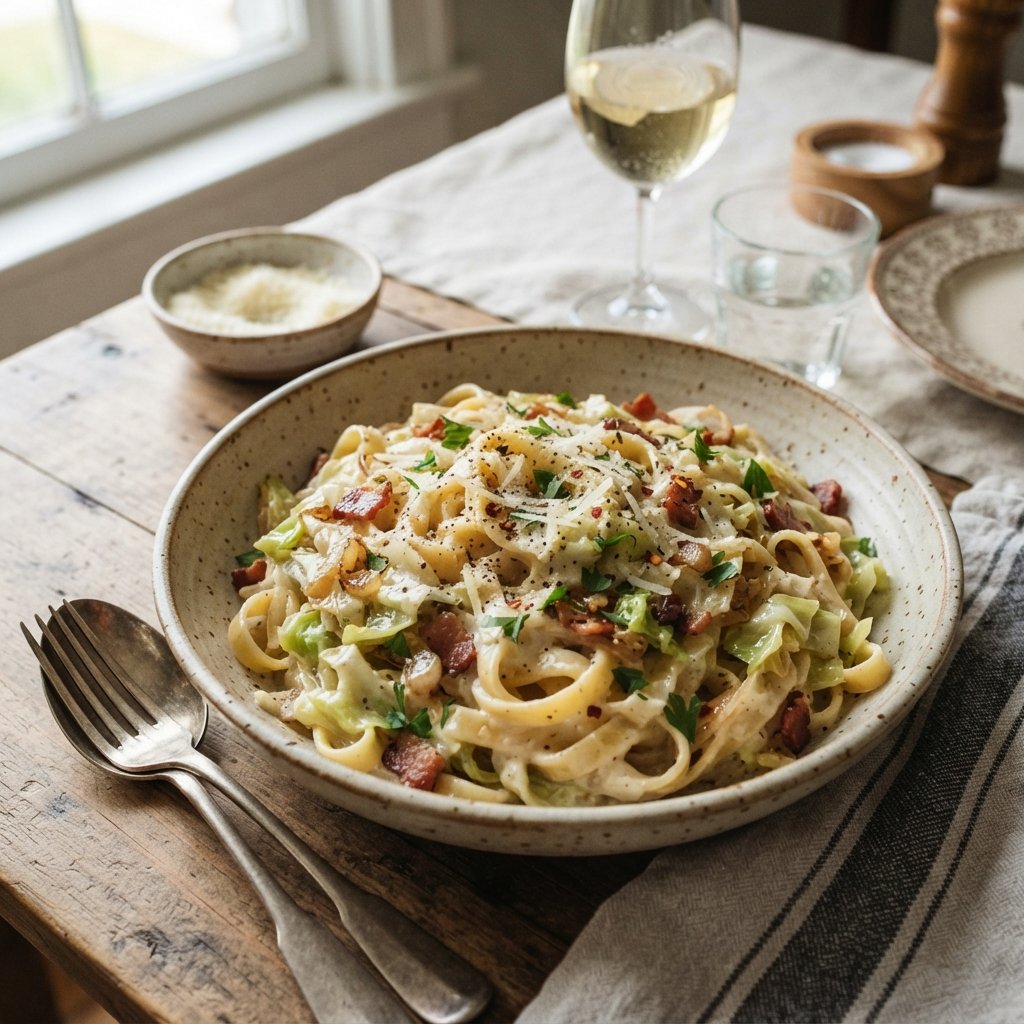
There is a specific kind of comfort found in a bowl of pasta that transcends mere hunger; it is a culinary embrace that warms the soul during the coldest evenings or the most exhausting days. Creamy Garlic Alfredo with Tender Cabbage represents the pinnacle of this comfort food evolution, merging the luxurious, velvety texture of a classic Alfredo sauce with the earthy, sweet simplicity of slowly cooked cabbage. While traditional Alfredo is often associated with heavy indulgence, the addition of cabbage introduces a delightful crunch, a natural sweetness that caramelizes during cooking, and a nutritional boost that balances the richness of the cream and cheese. This dish is not merely a meal; it is an experience that highlights how humble vegetables can elevate a classic sauce into something sophisticated yet deeply satisfying.
Imagine biting into a forkful of perfectly al dente fettuccine, coated in a sauce that clings to every ridge, infused with the aromatic punch of fresh garlic, and interspersed with ribbons of cabbage that have been cooked just enough to lose their raw bite but retain a pleasant texture. The interplay between the savory Parmesan, the pungent garlic, and the mild sweetness of the cabbage creates a harmonious flavor profile that appeals to both children and adults alike. Whether you are looking for a quick weeknight dinner that feels gourmet or a vegetarian main course that stands on its own merits, this recipe delivers on flavor, texture, and satisfaction without requiring hours of labor in the kitchen.
The History
To truly appreciate Creamy Garlic Alfredo with Tender Cabbage, one must understand the lineage of its components. The story of Alfredo sauce begins in Rome, Italy, in the early 20th century. Contrary to popular belief, the original Fettuccine Alfredo created by Alfredo di Lelio at his restaurant “Alfredo alla Scrofa” did not contain cream. It was a simple emulsion of high-quality butter and aged Parmigiano-Reggiano cheese, tossed vigorously with hot pasta to create a creamy consistency through mechanical agitation rather than dairy addition. However, as Italian cuisine migrated to the United States, American palates and available ingredients influenced the recipe. Heavy cream was added to stabilize the sauce and provide a richer, more consistent texture that could withstand reheating and transportation, giving birth to the “American-style” Alfredo we know today.
The inclusion of cabbage in this context draws from a different historical thread. Cabbage, a member of the Brassica oleracea family, has been a staple in European peasant cooking for centuries due to its hardiness, long storage life, and nutritional density. In many cultures, from the boiled cabbage of Ireland to the sauerkraut of Germany, this vegetable was a survival food. In Italian cuisine, cabbage often appears in hearty soups like Minestrone or braised side dishes. The fusion of these two histories—the luxurious Roman pasta sauce and the humble European vegetable—creates a modern dish that respects tradition while embracing practicality. It reflects the modern cook’s desire to reduce food waste, increase vegetable intake, and create hearty meals without sacrificing the indulgent qualities of comfort food. This dish is a testament to culinary adaptation, proving that high comfort and nutritional value can coexist on the same plate.
Ingredients Breakdown
Understanding the role of each component in Creamy Garlic Alfredo with Tender Cabbage is crucial for mastering the recipe. Each ingredient serves a specific chemical and flavor purpose that contributes to the final outcome.
The Pasta
Fettuccine is the traditional choice for Alfredo due to its broad, flat surface area, which allows the heavy sauce to cling effectively. However, the shape is not arbitrary; the thickness of the noodle provides a chewy contrast to the tender cabbage. If you substitute with penne or rigatoni, ensure they have ridges to capture the sauce. The starch released by the pasta during boiling is also essential for thickening the sauce naturally.
The Cabbage
Green Cabbage is preferred for its mild flavor and ability to hold its structure during sautéing. Red cabbage can be used for visual appeal, but it may bleed color into the white sauce. The key is to slice the cabbage into thin ribbons. This increases the surface area, allowing for faster cooking and better caramelization, which brings out the natural sugars and reduces the sulfurous notes often associated with boiled cabbage.
The Aromatics
Fresh Garlic is non-negotiable. Garlic powder lacks the enzymatic complexity and pungency required to cut through the richness of the cream. Fresh cloves, minced or pressed, release allicin when crushed, providing that signature aromatic kick. Some recipes suggest sautéing the garlic gently to avoid bitterness, which occurs when garlic burns.
The Dairy
Heavy Cream provides the fat content necessary for a luxurious mouthfeel. A fat content of at least 36% is ideal to prevent the sauce from breaking or curdling under heat. Butter is used to sauté the vegetables and adds a layer of richness that cream alone cannot achieve. Parmigiano-Reggiano should be freshly grated. Pre-shredded cheese contains anti-caking agents like cellulose that prevent it from melting smoothly, leading to a grainy sauce.
Seasonings
Salt and Black Pepper enhance the natural flavors. Nutmeg is a secret weapon in cream sauces; a tiny pinch adds warmth and depth without tasting distinctly of spice. Fresh parsley is used at the end for a burst of color and a fresh, herbal note that lightens the dish.
Step-by-Step Recipe
Creating the perfect bowl of Creamy Garlic Alfredo with Tender Cabbage requires attention to timing and heat management. Follow this narrative guide to ensure every element comes together seamlessly.
Phase 1: Preparation and Mise en Place
Before turning on the stove, gather all your ingredients. Grate the Parmesan cheese and set it aside in a bowl at room temperature; cold cheese can shock the sauce and cause clumping. Mince the garlic finely. Remove the core from the cabbage and slice it into thin shreds, approximately a quarter-inch thick. Measure out the cream and butter. Having everything ready prevents the sauce from burning while you search for ingredients.
Phase 2: Cooking the Pasta
Bring a large pot of heavily salted water to a rolling boil. The water should taste like the sea; this is your only chance to season the pasta itself. Add the fettuccine and cook until it is just shy of al dente, usually one minute less than the package instructions. This is crucial because the pasta will finish cooking in the sauce. Before draining, reserve at least one cup of the starchy pasta water. This liquid gold is essential for adjusting the sauce consistency later.
Phase 3: Sautéing the Cabbage and Garlic
In a large, deep skillet or Dutch oven, melt the butter over medium heat. Once the foam subsides, add the shredded cabbage. Sauté the cabbage for about 5 to 7 minutes, stirring occasionally. You want the cabbage to wilt and become tender but not mushy. Look for slight browning on the edges, which indicates caramelization. Push the cabbage to the side of the pan and add the minced garlic to the center. Cook the garlic for about 1 minute until fragrant, being careful not to let it burn, as burnt garlic turns bitter and can ruin the sauce.
Phase 4: Building the Sauce
Pour the heavy cream into the skillet with the cabbage and garlic. Bring the mixture to a gentle simmer, not a rolling boil. High heat can cause the cream to separate. Let it simmer for 3 to 5 minutes to allow it to reduce slightly and thicken. Gradually whisk in the grated Parmesan cheese. Stir constantly until the cheese is fully melted and the sauce is smooth. If the sauce appears too thick, add a splash of the reserved pasta water. Season with salt, black pepper, and a pinch of nutmeg.
Phase 5: Combining and Serving
Add the drained pasta directly into the skillet with the sauce. Toss everything together using tongs, ensuring every noodle is coated. The residual heat from the pasta will help meld the flavors. If the sauce tightens up too much, add more pasta water a tablespoon at a time until it reaches a creamy, flowing consistency. Serve immediately, garnished with fresh parsley and extra cheese.
Tips
- Prevent Sauce Separation: Never boil the cream vigorously once the cheese has been added. High heat causes the proteins in the cheese and cream to curdle. Keep the heat low during the final mixing stage.
- Avoid Bitter Cabbage: Overcooking cabbage can release sulfurous compounds that smell and taste unpleasant. Aim for tender-crisp rather than mushy. If you are sensitive to the smell, add a slice of bread to the pot while cooking to absorb odors.
- Cheese Quality: Buy a block of Parmigiano-Reggiano and grate it yourself. Pre-grated cheese is coated in starch to prevent clumping in the bag, which prevents it from melting smoothly in your sauce.
- Pasta Water is Key: Do not discard all the pasta water. The starch helps emulsify the fat and water in the sauce, creating a silky texture that coats the pasta rather than sliding off.
- Garlic Management: If you are worried about burning garlic, add it after the cream has been poured in. The liquid will protect the garlic from direct heat while still infusing the sauce with flavor.
- Reheating: Alfredo sauce thickens when cold. When reheating leftovers, do so gently on the stove with a splash of milk or water to restore the creamy consistency. Avoid microwaving at high power, which can separate the fats.
Variations and Customizations
One of the greatest strengths of this recipe is its versatility. You can adapt it to suit dietary needs, flavor preferences, or whatever ingredients you have on hand.
Protein Additions
While delicious as a vegetarian dish, this Alfredo pairs beautifully with protein. Grilled chicken breast sliced into strips is a classic choice. For a seafood twist, add seared shrimp or scallops during the last few minutes of cooking. Crispy bacon bits or pancetta can add a smoky saltiness that complements the sweet cabbage.
Vegetable Swaps
If cabbage is not available, broccoli florets or cauliflower work well with Alfredo sauce. Spinach can be wilted in at the very end for a boost of iron and color. For a roasted flavor, try adding cubes of butternut squash.
Dietary Adjustments
For a Gluten-Free version, simply swap the fettuccine for a high-quality brown rice or chickpea-based pasta. To make it Lighter, you can substitute half-and-half for the heavy cream, though the sauce will be less rich. For a Vegan adaptation, use cashew cream or coconut cream instead of dairy, nutritional yeast instead of Parmesan, and vegan butter.
Flavor Profiles
Add a teaspoon of Dijon mustard to the sauce for a tangy kick that cuts through the fat. For heat, include red pepper flakes when sautéing the garlic. A splash of white wine deglazed into the pan before adding the cream can add acidity and complexity.
Health Considerations and Nutritional Value
While Creamy Garlic Alfredo with Tender Cabbage is undoubtedly a comfort food, understanding its nutritional profile allows you to enjoy it mindfully. The dish is energy-dense, primarily due to the heavy cream, butter, and cheese. These ingredients provide saturated fats, which should be consumed in moderation within a balanced diet. However, the dish is not devoid of nutritional benefits.
Cabbage is a nutrient powerhouse. It is low in calories and high in fiber, which aids in digestion and promotes satiety, helping you feel full longer. It is rich in Vitamin K, essential for blood clotting and bone health, and Vitamin C, which supports the immune system. Cabbage also contains antioxidants like anthocyanins (especially in red cabbage) and sulfur compounds that may have anti-inflammatory properties.
Parmesan Cheese is high in calcium and protein, contributing to bone strength and muscle repair. While heavy cream is high in calories, it also provides fat-soluble vitamins like A and D. To make the meal healthier, consider increasing the ratio of cabbage to pasta, using whole wheat pasta for added fiber, or controlling portion sizes. Pairing this dish with a light green salad dressed with vinaigrette can help balance the richness of the Alfredo sauce.
Ingredients
- 1 pound fettuccine pasta (or preferred pasta shape)
- 1 medium head of green cabbage, core removed and thinly sliced
- 4 cloves garlic, minced
- 2 cups heavy cream (minimum 36% fat)
- 1 cup unsalted butter, divided (4 tablespoons for cabbage, rest for sauce)
- 1 ½ cups Parmigiano-Reggiano cheese, freshly grated
- 1 cup reserved pasta water
- Salt and freshly ground black pepper to taste
- ¼ teaspoon ground nutmeg (optional)
- Fresh parsley, chopped (for garnish)
- Optional: Red pepper flakes for heat
Directions
- Bring a large pot of salted water to a boil. Add the fettuccine and cook according to package directions until al dente. Before draining, reserve 1 cup of pasta water.
- While the pasta cooks, prepare the vegetables. Remove the core from the cabbage and slice into thin ribbons. Mince the garlic cloves.
- In a large skillet or Dutch oven, melt 4 tablespoons of butter over medium heat. Add the sliced cabbage and sauté for 5-7 minutes until tender and slightly caramelized.
- Add the minced garlic to the skillet and cook for 1 minute until fragrant, stirring constantly to prevent burning.
- Pour in the heavy cream and bring to a gentle simmer. Reduce heat to low.
- Gradually whisk in the grated Parmesan cheese until melted and smooth. Stir in the remaining butter until incorporated.
- Season the sauce with salt, pepper, and nutmeg. If the sauce is too thick, thin it with reserved pasta water.
- Add the drained pasta to the skillet. Toss thoroughly to coat the noodles in the sauce and combine with the cabbage.
- Serve immediately, garnished with fresh parsley and additional cheese if desired.
FAQ
Can I freeze Creamy Garlic Alfredo?
It is not recommended to freeze Alfredo sauce made with heavy cream and cheese. Upon thawing, the emulsion often breaks, resulting in a grainy or separated texture. It is best enjoyed fresh or stored in the refrigerator for up to 3 days.
Why is my sauce grainy?
Grainy sauce is usually caused by high heat or pre-shredded cheese. Ensure you simmer gently and use freshly grated Parmigiano-Reggiano. Adding cheese off the heat can also help.
Can I use milk instead of heavy cream?
You can, but the sauce will be much thinner and less rich. To compensate, you may need to create a roux with flour and butter to thicken the milk, or simmer it longer to reduce.
How do I stop the cabbage from smelling strong?
Avoid overcooking. The sulfurous smell intensifies the longer cabbage cooks. Sautéing it quickly over medium-high heat rather than boiling it helps minimize the odor.
Is this dish suitable for meal prep?
Yes, but keep in mind the pasta will absorb the sauce over time. Store in airtight containers and reheat with a splash of milk or water to restore creaminess.
Indulge in the velvety richness of homemade Alfredo sauce perfectly balanced with sweet, tender cabbage.
This comforting dish delivers gourmet flavor in every bite while offering a clever twist on a classic pasta favorite.