Introduction
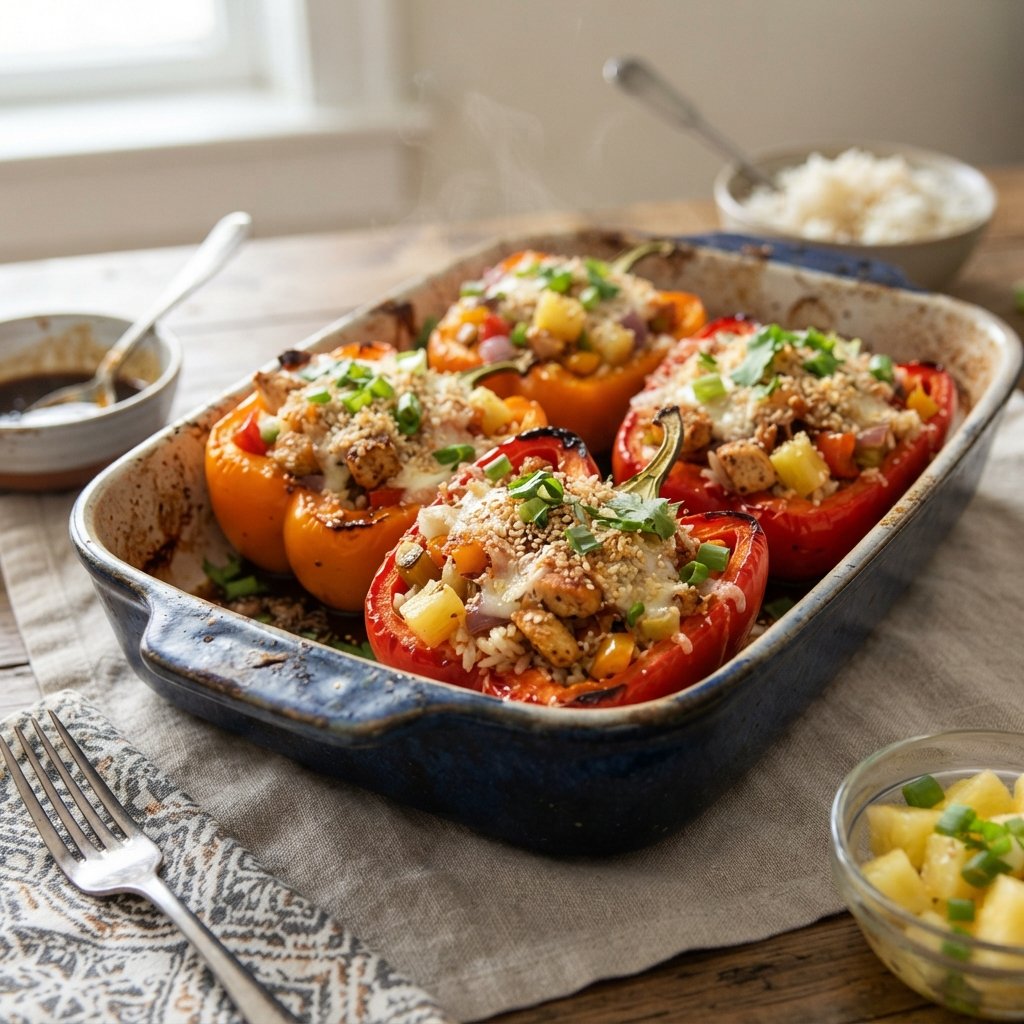
Welcome to the ultimate fusion of comfort and exotic flavor with our Teriyaki Pineapple Chicken and Rice Stuffed Peppers. This dish represents a harmonious marriage between classic Western stuffing techniques and the vibrant, sweet-savory profiles of Asian-inspired cuisine. Imagine tender bell peppers roasted to perfection, acting as edible bowls for a succulent mixture of juicy chicken chunks, caramelized pineapple, and fluffy rice, all coated in a glossy, homemade teriyaki glaze. It is a meal that delights the eyes with its colorful presentation and satisfies the palate with its complex layers of taste.
Perfect for weeknight dinners or impressive enough for weekend guests, this recipe balances health consciousness with indulgent flavor. The natural sweetness of the pineapple cuts through the salty umami of the soy-based sauce, while the chicken provides lean protein to keep you full and satisfied. Whether you are looking to expand your culinary repertoire or simply find a new way to enjoy vegetables, this dish offers a memorable dining experience that brings the tropics to your kitchen table.
The History
The concept of stuffing vegetables is ancient, with roots tracing back to various cultures around the Mediterranean and the Middle East, where dishes like dolma and gemista have been staples for centuries. However, the specific combination of stuffed peppers with rice and meat gained significant popularity in Eastern European and Latin American cuisines during the 19th and 20th centuries. As globalization increased, culinary boundaries began to blur, allowing chefs and home cooks to experiment with flavor profiles that were previously kept separate.
Teriyaki cooking originates from Japan, dating back to the Edo period, where the technique involved grilling fish with a soy sauce glaze. The addition of pineapple to savory dishes is often associated with Hawaiian cuisine, particularly the controversial but beloved pineapple on pizza debate, which started in the 1960s. This recipe bridges those gaps, creating a modern fusion dish that honors the technique of stuffing peppers while infusing it with the sweet and savory dynamics of Teriyaki and the tropical brightness of pineapple. It is a testament to how modern cooking evolves by respecting tradition while embracing innovation.
Ingredients Breakdown
To achieve the best results, understanding the role of each component is crucial. Here is a detailed look at why we choose specific ingredients for this dish:
Bell Peppers
We recommend using large, sturdy bell peppers in various colors such as red, yellow, or orange. These colors indicate ripeness and offer a sweeter flavor profile compared to green peppers. Their structural integrity allows them to hold the filling without collapsing during the baking process, and they provide a significant dose of Vitamin C and antioxidants.
Chicken
Boneless, skinless chicken thighs are preferred over breasts for this recipe. Thighs have a higher fat content, which ensures the meat remains juicy and tender even after being baked inside the pepper. While breasts are leaner, they can easily become dry when subjected to the prolonged heat required to soften the peppers.
Pineapple
Fresh pineapple is ideal because it contains bromelain, an enzyme that helps tenderize the chicken, though canned pineapple chunks in juice work well for convenience and consistent sweetness. The acidity and sugar in the pineapple caramelize during baking, adding depth to the teriyaki sauce.
Rice
Jasmine or medium-grain white rice is recommended for its sticky texture, which helps bind the filling together. Brown rice can be used for a nuttier flavor and higher fiber content, but it requires pre-cooking as it takes longer to soften than the peppers will bake.
Teriyaki Sauce
A homemade sauce allows you to control the sodium and sugar levels. The base consists of soy sauce for umami, mirin for sweetness, sake for depth, and fresh ginger and garlic for aromatic heat. Cornstarch is used as a slurry to thicken the sauce into a glaze that coats every grain of rice.
Step-by-Step Recipe
Creating this dish is a journey through preparation, cooking, and assembly. Follow this narrative guide to ensure every element comes together perfectly.
Phase One: Preparation
Begin by preheating your oven to ensure it is fully hot when the peppers go in. Wash the bell peppers thoroughly and slice off the tops, removing the seeds and white membranes inside. If the peppers do not sit flat, slice a thin layer off the bottom without cutting through the flesh. Parboiling the peppers for a few minutes can help soften them slightly before stuffing, ensuring they cook evenly with the filling.
Phase Two: The Filling
While the peppers are prepping, cook your rice according to package instructions. In a large skillet, sauté diced chicken until it is no longer pink. Add aromatics like minced garlic and ginger, followed by the pineapple chunks. Once the chicken is seared, mix in the cooked rice and pour over half of your teriyaki sauce. This mixture should be moist but not soupy, allowing it to bind together when stuffed.
Phase Three: Assembly and Baking
Spoon the chicken and rice mixture generously into each pepper cavity. Pack it down gently to remove air pockets but do not overstuff to the point of bursting. Place the stuffed peppers in a baking dish and pour a small amount of water or broth into the bottom of the dish to create steam. Cover with foil and bake until the peppers are tender. Remove the foil, brush with remaining sauce, and broil briefly for a caramelized finish.
Tips
- Prevent Soggy Peppers: Do not skip the step of draining your pineapple chunks thoroughly. Excess moisture can make the rice filling mushy and prevent the peppers from roasting properly.
- Sauce Consistency: When making the teriyaki glaze, ensure your cornstarch slurry is mixed with cold water before adding it to the hot sauce. This prevents clumping and ensures a smooth, glossy finish.
- Stability: If your peppers wobble in the baking dish, slice a very thin strip off the bottom stem area to create a flat base. This prevents them from tipping over and spilling the filling during baking.
- Flavor Boost: Toast your sesame seeds before garnishing. Dry toast them in a pan for a minute until fragrant to unlock their nutty oils and enhance the overall aroma of the dish.
- Resting Time: Let the stuffed peppers rest for 5 to 10 minutes after removing them from the oven. This allows the juices to redistribute and the filling to set, making them easier to serve without falling apart.
Variations and Customizations
This recipe is highly adaptable to suit various dietary needs and flavor preferences. Here are several ways to customize your stuffed peppers:
Protein Swaps
For a lighter option, substitute chicken with ground turkey or lean ground beef. For a seafood twist, cooked shrimp can be added in the last few minutes of cooking the filling. Vegetarians can replace the chicken with firm tofu, tempeh, or a mixture of black beans and lentils to maintain the protein content.
Grain Alternatives
To make the dish gluten-free or lower in carbohydrates, swap white rice for quinoa or cauliflower rice. Quinoa offers a complete protein profile and a pleasant texture, while cauliflower rice significantly reduces the calorie count while keeping the bulk of the filling.
Spice Levels
If you enjoy heat, add red pepper flakes, sriracha, or finely diced jalapeños to the filling mixture. You can also infuse the teriyaki sauce with chili garlic sauce for a sticky, spicy glaze that contrasts beautifully with the sweet pineapple.
Cheese Topping
Although not traditional for teriyaki, adding a sprinkle of mozzarella or provolone cheese on top of the peppers during the last five minutes of baking creates a delicious fusion of Italian and Asian flavors, adding a creamy texture to the dish.
Health Considerations and Nutritional Value
This dish is designed to be a balanced meal containing proteins, carbohydrates, and vegetables in one serving. Bell peppers are low in calories and high in fiber, Vitamin A, and Vitamin C, which support immune function and skin health. Chicken provides essential amino acids necessary for muscle repair and growth.
However, attention should be paid to the sodium content in the soy sauce and the sugar content in the teriyaki glaze. Using low-sodium soy sauce and reducing the amount of brown sugar or honey in the sauce can make the dish more heart-healthy. The pineapple adds natural sweetness, reducing the need for added sugars. Overall, when portioned correctly, this meal provides sustained energy and essential nutrients without excessive empty calories.
Ingredients
- 4 large bell peppers (red, yellow, or orange), tops cut and seeds removed
- 1 pound boneless, skinless chicken thighs, cut into bite-sized pieces
- 1 cup jasmine rice, uncooked
- 2 cups chicken broth (for cooking rice)
- 1 cup pineapple chunks, fresh or canned (drained well)
- 3 cloves garlic, minced
- 1 tablespoon fresh ginger, grated
- 2 green onions, sliced for garnish
- 1 tablespoon sesame seeds, toasted
- 2 tablespoons vegetable oil
- For the Teriyaki Sauce:
- 1/2 cup soy sauce (low sodium preferred)
- 1/4 cup brown sugar
- 2 tablespoons honey
- 1 tablespoon rice vinegar
- 1 teaspoon sesame oil
- 1 tablespoon cornstarch mixed with 2 tablespoons cold water
Directions
- Preheat and Prep: Preheat your oven to 375°F (190°C). Cut the tops off the bell peppers and remove all seeds and membranes. If necessary, slice a thin layer off the bottom so they stand upright. Place them in a baking dish.
- Cook the Rice: Rinse the jasmine rice under cold water until the water runs clear. Combine rice and chicken broth in a pot, bring to a boil, then reduce heat to low, cover, and simmer for 15 minutes until liquid is absorbed. Fluff with a fork and set aside.
- Make the Sauce: In a small saucepan, combine soy sauce, brown sugar, honey, rice vinegar, and sesame oil. Bring to a simmer over medium heat. Stir in the cornstarch slurry and cook for 2-3 minutes until thickened. Remove from heat.
- Cook the Chicken: Heat vegetable oil in a large skillet over medium-high heat. Add chicken pieces and cook until browned and cooked through, about 5-7 minutes. Add garlic and ginger during the last minute of cooking.
- Combine Filling: In a large mixing bowl, combine the cooked rice, cooked chicken, pineapple chunks, and half of the teriyaki sauce. Mix well until evenly coated.
- Stuff the Peppers: Spoon the filling mixture into each bell pepper, packing it down gently. Pour about 1/4 cup of water into the bottom of the baking dish around the peppers.
- Bake: Cover the baking dish tightly with aluminum foil. Bake for 35-40 minutes until the peppers are tender when pierced with a fork.
- Glaze and Serve: Remove the foil and brush the tops of the filling with the remaining teriyaki sauce. Broil for 2-3 minutes to caramelize. Garnish with green onions and sesame seeds before serving.
FAQ
Can I make these stuffed peppers ahead of time?
Yes, you can assemble the peppers up to 24 hours in advance. Keep them covered in the refrigerator and add 10 minutes to the baking time if cooking from cold.
How do I store leftovers?
Store leftovers in an airtight container in the refrigerator for up to 3 days. Reheat in the microwave or oven until heated through.
Can I freeze this dish?
It is best to freeze the filling separately from the peppers, as cooked bell peppers can become mushy after freezing and thawing. The filling can be frozen for up to 3 months.
What if I don’t have chicken thighs?
Chicken breast is a suitable substitute. Just be careful not to overcook it, as it dries out faster than thighs. You can also use ground chicken for a different texture.
Is this dish gluten-free?
To make it gluten-free, ensure you use tamari or certified gluten-free soy sauce instead of regular soy sauce, and verify that your rice vinegar is gluten-free.
Summary
Delicious fusion stuffed peppers combining teriyaki chicken, sweet pineapple, and rice for a healthy meal.
Easy to bake and customize, this dish offers a perfect balance of savory, sweet, and nutritious flavors.