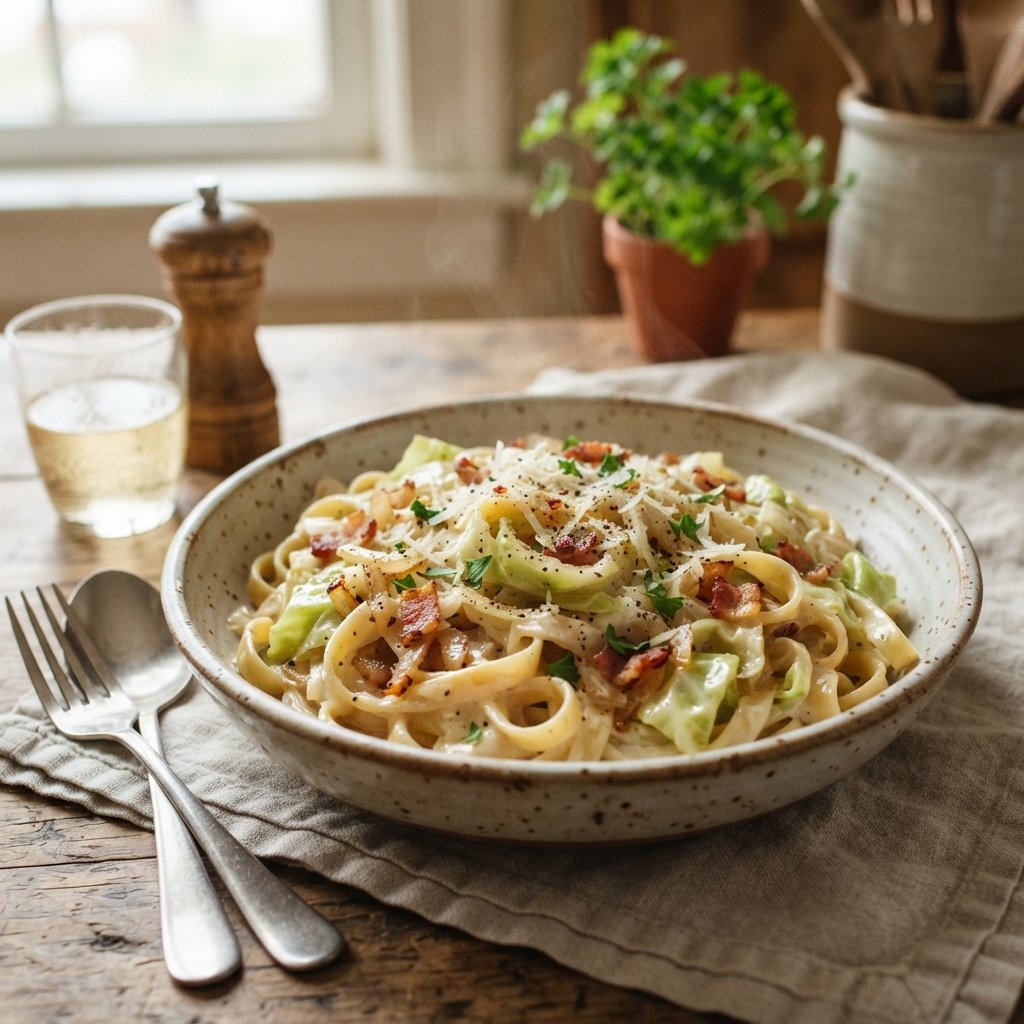
Creamy Garlic Alfredo with Tender Cabbage
Introduction
There is a specific kind of comfort that emanates from a hot plate of pasta, specifically when that pasta is coated in a luxurious, velvety sauce that clings to every noodle. The Creamy Garlic Alfredo with Tender Cabbage is not merely a meal; it is an experience that bridges the gap between indulgent Italian-American classics and humble, earthy vegetable-forward cooking. This dish transforms the humble cabbage, often overlooked in fine dining, into a star ingredient that provides a delightful crunch and a subtle sweetness that cuts through the richness of the Alfredo sauce. When you combine the aromatic punch of sautéed garlic, the decadent mouthfeel of heavy cream and butter, and the nutty complexity of aged Parmesan cheese, you create a symphony of flavors that satisfies the soul on the deepest level.
Perfect for busy weeknights when you need something quick yet impressive, or for cozy weekends when you want to indulge without leaving the house, this recipe is designed to be foolproof. The cabbage is cooked until it reaches a state of perfect tenderness, losing its raw bite but retaining enough structure to provide textural contrast against the soft pasta. The garlic is infused into the butter to ensure that every bite carries a warm, savory fragrance that fills the kitchen. Whether you are a seasoned home cook or a beginner looking to expand your repertoire, this dish offers a rewarding culinary journey that results in a restaurant-quality meal right at your dining table.
The History
To truly appreciate this dish, one must understand the lineage of its components. The Alfredo sauce, as we know it today, has a romanticized origin story rooted in early 20th-century Rome. It is attributed to Alfredo Di Lelio, who owned a restaurant called Alfredo alla Scrofa. Legend has it that in 1914, he created the dish to help his wife recover from the nausea associated with her pregnancy. The original recipe was far simpler than the Americanized version, consisting primarily of high-quality butter and Parmigiano-Reggiano cheese emulsified with pasta water. Over the decades, as the dish crossed the Atlantic, heavy cream was added to stabilize the sauce and create the thick, creamy consistency that modern palates expect.
Cabbage, on the other hand, has a history that stretches back thousands of years. It was a staple crop for the ancient Greeks and Romans, valued for its medicinal properties and its ability to store well through harsh winters. In many European cultures, cabbage was the food of the common people, often boiled or fermented into sauerkraut. The fusion of cabbage with rich Alfredo sauce is a modern innovation, reflecting a contemporary desire to incorporate more vegetables into comfort food without sacrificing flavor. This specific combination highlights a culinary trend known as “elevated comfort,” where inexpensive, accessible ingredients are treated with techniques usually reserved for premium dishes, resulting in a meal that is both economically sensible and gastronomically satisfying.
Ingredients Breakdown
Understanding the role of each ingredient is crucial for mastering this recipe. Here is a detailed analysis of what goes into the pot and why each component matters.
The Pasta Base
We recommend using Fettuccine for this dish. The wide, flat surface area of fettuccine is ideal for heavy cream-based sauces because it allows the sauce to adhere better than it would on round spaghetti. However, rigatoni or penne can also work well if you prefer a shape that traps pockets of sauce within the tubes. The quality of the pasta matters; look for bronze-die extruded pasta which has a rougher texture, helping the Alfredo cling to every ridge.
The Cabbage
Green cabbage is the standard choice, offering a robust flavor that holds up well to cooking. However, Savoy cabbage is an excellent alternative if you desire a more delicate texture and a sweeter taste profile. The cabbage should be shredded thinly to ensure it cooks evenly and integrates seamlessly with the pasta. The goal is to wilt the cabbage until it is tender but not mushy, preserving a slight bite that contrasts with the creamy sauce.
The Aromatics
Garlic is the heart of this dish. We use fresh cloves rather than powder because fresh garlic provides a pungent, spicy kick that mellows into sweetness when sautéed in butter. The key is to cook it gently; burnt garlic turns bitter and can ruin the entire batch. Some variations include shallots or onions, but pure garlic keeps the flavor profile clean and focused.
The Sauce Components
Unsalted Butter provides the fat base for sautéing the garlic and enriching the sauce. Using unsalted butter allows you to control the sodium levels precisely. Heavy Cream is non-negotiable for a true Alfredo; milk will not provide the same viscosity or richness. Finally, Parmigiano-Reggiano is preferred over pre-grated parmesan. Freshly grated cheese melts smoother and contains no anti-caking agents that can make the sauce grainy.
Step-by-Step Recipe
Follow this detailed guide to ensure your Creamy Garlic Alfredo with Tender Cabbage turns out perfectly every time. We will break this down into phases to manage the timing effectively.
Phase 1: Preparation
Before you turn on the stove, ensure all your ingredients are prepped. This is known as mise en place. Grate your cheese, mince your garlic, and shred your cabbage. Alfredo sauce comes together very quickly, and you do not want to be chopping garlic while your cream is simmering. Fill a large pot with water and add a generous amount of salt; it should taste like the sea. This is your only chance to season the pasta itself.
Phase 2: Cooking the Pasta
Bring the water to a rolling boil. Add your fettuccine and cook until it is just shy of al dente. You want the pasta to finish cooking in the sauce. Reserve at least one cup of the starchy pasta water before draining. This liquid gold is essential for adjusting the consistency of the sauce later.
Phase 3: Wilting the Cabbage
In a large skillet or deep pan, melt a portion of your butter over medium heat. Add the shredded cabbage. Sauté the cabbage for about 5 to 7 minutes. You are looking for the cabbage to reduce in volume significantly and become translucent at the edges. If the pan gets too dry, add a splash of the pasta water to steam the cabbage gently. This step ensures the cabbage is tender before the cream is added.
Phase 4: Building the Sauce
Push the cabbage to the side of the pan or remove it temporarily if your pan is crowded. Add the remaining butter and the minced garlic. Cook for 1 to 2 minutes until fragrant, being careful not to let it brown. Pour in the heavy cream and bring to a gentle simmer. Let it reduce slightly for 3 to 5 minutes. This concentrates the flavor and thickens the base.
Phase 5: Combining and Emulsifying
Add the drained pasta directly into the skillet with the sauce and cabbage. Toss continuously over low heat. Begin sprinkling in the Parmesan cheese gradually while tossing. The heat from the pasta and the sauce will melt the cheese. If the sauce becomes too thick, add the reserved pasta water a tablespoon at a time until you reach a silky, flowing consistency. Serve immediately while hot.
Tips
To elevate this dish from good to extraordinary, consider these professional tips and tricks gathered from years of culinary experimentation.
- Low and Slow Garlic: Never rush the garlic. If the heat is too high, the solids in the butter and the sugars in the garlic will burn. Keep the heat at medium-low when infusing the butter.
- Room Temperature Cream: Take your heavy cream out of the fridge 20 minutes before cooking. Cold cream hitting a hot pan can sometimes shock the emulsion, leading to separation.
- Cheese Quality: Buy a block of Parmigiano-Reggiano and grate it yourself using a microplane. Pre-grated cheese often contains cellulose which prevents melting smoothly.
- Pasta Water is Key: Do not underestimate the starchy pasta water. It contains amylose which helps bind the fat and water in the sauce, creating a stable emulsion that doesn’t break.
- Resting Time: Let the pasta sit in the sauce for a minute off the heat before serving. This allows the noodles to absorb some of the flavor and the sauce to thicken slightly to the perfect coating consistency.
- Avoid Boiling the Sauce: Once the cream and cheese are combined, do not let the sauce boil vigorously. High heat can cause the cheese to become oily and the cream to curdle.
Variations and Customizations
While the classic recipe is divine, cooking is about creativity. Here are several ways to customize this dish to suit different dietary needs or flavor preferences.
Protein Additions
To make this a heartier meal, consider adding protein. Grilled Chicken strips seasoned with salt and pepper are a classic pairing. Pan-Seared Shrimp cook quickly and add a sweet brininess that complements the garlic. For a vegetarian protein boost, Crispy Chickpeas roasted with paprika can add a wonderful crunch and substance to the dish.
Vegetable Swaps
If cabbage isn’t your favorite, you can substitute it with Broccoli Florets or Spinach. Spinach should be added at the very end just to wilt, whereas broccoli should be blanched before adding to the sauce. Mushrooms sautéed until golden brown also add a meaty texture and umami depth that pairs beautifully with the cream.
Sauce Tweaks
For a bit of heat, add Red Pepper Flakes while cooking the garlic. A splash of White Wine deglazed into the pan before adding the cream can add acidity and complexity. For a herbaceous note, stir in fresh Parsley or Chives right before serving. Some cooks even add a touch of Nutmeg to the cream sauce, a traditional Italian trick to enhance the dairy flavor.
Dietary Adjustments
For a Gluten-Free version, simply use your favorite GF fettuccine and ensure it is cooked carefully as it can become mushy faster. For a Lighter Version, you can substitute half-and-half for the heavy cream, though the sauce will be less thick. For a Vegan adaptation, use cashew cream or coconut cream and nutritional yeast instead of dairy products, though the flavor profile will shift significantly.
Health Considerations and Nutritional Value
It is important to approach this dish with a balanced perspective regarding nutrition. This is a comfort food meant to be enjoyed in moderation, but it does offer some nutritional benefits alongside the indulgence.
Caloric Density
Due to the heavy cream, butter, and cheese, this dish is calorie-dense. A standard serving can range significantly based on portion sizes. It is best enjoyed as a main course where a smaller portion is satisfying due to the richness of the fats.
Benefits of Cabbage
Cabbage is a nutritional powerhouse often overlooked. It is rich in Vitamin K, which is essential for blood health, and Vitamin C, which supports the immune system. It is also high in fiber, which aids in digestion and helps regulate blood sugar levels. The cruciferous vegetables family, to which cabbage belongs, contains antioxidants that may help reduce inflammation in the body.
Dairy and Calcium
The Parmesan cheese and cream provide a significant amount of Calcium, which is vital for bone health. However, they also contain saturated fats. Using high-quality dairy ensures you are getting nutrients without unnecessary additives. Balancing this dish with a side salad or a light soup can help create a more rounded meal profile.
Sodium Content
Parmesan cheese and salted butter can contribute to high sodium levels. To manage this, use unsalted butter and low-sodium pasta water, relying on the natural saltiness of the cheese and fresh garlic to carry the flavor. Those monitoring blood pressure should be mindful of portion sizes.
Ingredients
Here is the concise list of everything you will need to gather before you begin cooking.
- 1 pound Fettuccine pasta (dried or fresh)
- 1 medium head Green Cabbage (shredded thinly)
- 1 cup Unsalted Butter (divided)
- 6 cloves Garlic (minced finely)
- 2 cups Heavy Cream (full fat)
- 2 cups Parmigiano-Reggiano (freshly grated)
- Salt (to taste for pasta water and seasoning)
- Black Pepper (freshly cracked)
- Fresh Parsley (chopped, for garnish)
- Reserved Pasta Water (as needed for consistency)
Directions
Follow these ordered steps to execute the recipe efficiently.
- Bring a large pot of salted water to a boil. Cook fettuccine according to package directions until just shy of al dente. Reserve 1 cup of pasta water, then drain.
- While pasta cooks, melt 4 tablespoons of butter in a large skillet over medium heat.
- Add the shredded cabbage to the skillet. Sauté for 5-7 minutes until tender and slightly caramelized. Remove cabbage from pan and set aside.
- In the same skillet, melt the remaining butter over medium-low heat. Add minced garlic and cook for 1-2 minutes until fragrant but not browned.
- Pour in the heavy cream. Bring to a gentle simmer and cook for 3-5 minutes to slightly thicken.
- Reduce heat to low. Gradually whisk in the grated Parmesan cheese until melted and smooth.
- Add the cooked pasta and sautéed cabbage back into the skillet. Toss to coat evenly.
- If the sauce is too thick, add reserved pasta water one tablespoon at a time until desired consistency is reached.
- Season with freshly cracked black pepper and salt to taste. Remember the cheese is already salty.
- Serve immediately, garnished with fresh parsley and extra cheese if desired.
FAQ
Here are answers to the most common questions regarding this recipe.
Can I make this dish ahead of time?
Alfredo sauce is best served fresh. However, you can prep the cabbage and grate the cheese in advance. If you must reheat leftovers, do so gently on the stove with a splash of milk or water to revive the emulsion. Microwaving can cause the sauce to separate.
Why is my sauce grainy?
Grainy sauce is usually caused by high heat or pre-grated cheese. Ensure you are using freshly grated Parmigiano-Reggiano and keep the heat low when melting the cheese. Never let the sauce boil after adding the cheese.
Can I freeze this meal?
Cream-based sauces do not freeze well as they tend to separate and become oily upon thawing. It is highly recommended to consume this dish within 2-3 days of preparation while stored in an airtight container in the refrigerator.
What wine pairs well with this dish?
A crisp white wine like a Pinot Grigio or a Chardonnay works beautifully. The acidity cuts through the richness of the cream. If you prefer red, a light-bodied Pinot Noir can complement the earthiness of the cabbage without overpowering the sauce.
How do I prevent the cabbage from smelling too strong?
Overcooking cabbage releases sulfur compounds that create a strong odor. By sautéing it quickly over medium-high heat rather than boiling it for a long time, you minimize the smell. Adding garlic and herbs also helps mask any strong vegetal aromas.
Summary
Creamy Garlic Alfredo with Tender Cabbage is a luxurious comfort dish that combines rich dairy sauce with earthy vegetables.
Enjoy this easy-to-make meal that delivers restaurant-quality flavor and texture right at your home dining table.