Introduction
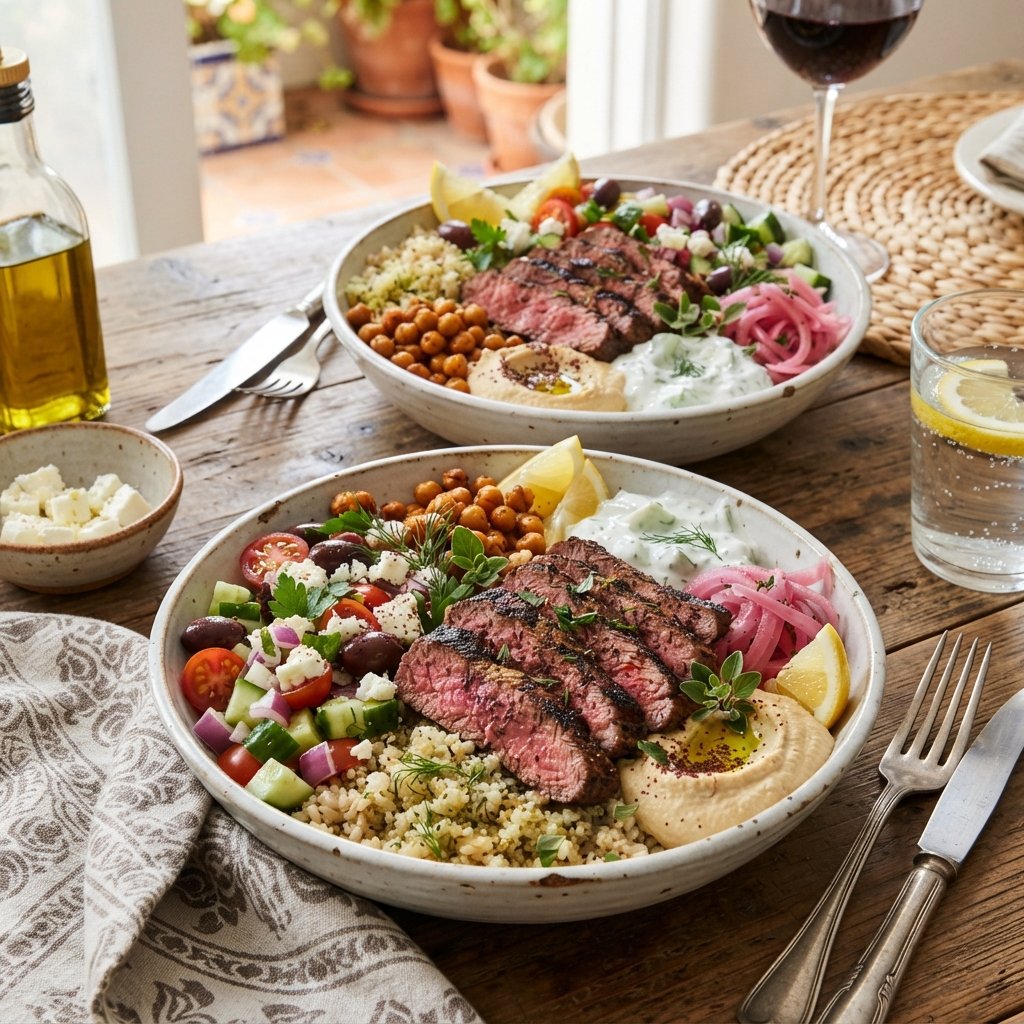
Welcome to a culinary escape that brings the sun-drenched coasts of the Mediterranean directly to your dinner table. The Mediterranean Steak Bowl is not merely a meal; it is a vibrant celebration of fresh ingredients, bold flavors, and wholesome nutrition designed to satisfy both the body and the soul. Imagine tender, perfectly seared steak resting atop a bed of fluffy, nutrient-dense grains, surrounded by a colorful mosaic of crisp vegetables, briny olives, and creamy cheeses. Each bite offers a harmonious balance of savory, tangy, and herbaceous notes that transport you to a seaside taverna in Greece or a bustling market in Morocco. This dish represents the modern evolution of comfort food, prioritizing high-quality proteins and fresh produce without sacrificing the deep satisfaction of a hearty dinner. Whether you are meal prepping for the week ahead or hosting a casual gathering, this bowl provides a versatile canvas for flavor that is as beautiful to look at as it is delicious to eat. Embrace the art of slow living and fast cooking with this recipe that proves healthy eating can be incredibly indulgent.
The History
The concept of the grain bowl has ancient roots, tracing back to the earliest civilizations where grains served as the staple foundation of sustenance. However, the specific fusion found in the Mediterranean Steak Bowl is a modern innovation that bridges traditional dietary patterns with contemporary culinary trends. The Mediterranean diet itself has been celebrated for decades, renowned for its emphasis on heart-healthy fats, fresh vegetables, and lean proteins, originally stemming from the eating habits of countries bordering the Mediterranean Sea such as Italy, Greece, and Spain. Historically, red meat was consumed sparingly in these regions, reserved for special occasions, while fish and poultry were more common.
In recent years, the global popularity of the “power bowl” has allowed chefs and home cooks to reinterpret these traditional flavor profiles. By introducing high-quality steak into the mix, this recipe honors the Mediterranean commitment to quality ingredients while adapting to modern protein preferences. The combination of ingredients like tzatziki, hummus, tabbouleh, and falafel elements with a perfectly cooked strip or sirloin steak creates a cross-cultural dialogue on the plate. It respects the heritage of the Mediterranean diet while acknowledging the universal love for a well-prepared cut of beef. This dish stands as a testament to how culinary traditions can evolve, maintaining their health benefits and flavor integrity while embracing new textures and proteins that appeal to a global audience seeking both comfort and nourishment.
Ingredients Breakdown
Understanding the role of each component in your bowl is essential for mastering the balance of flavors and textures. Here is a detailed look at why each ingredient matters and how to select the best quality for your kitchen.
The Protein Foundation
The steak is the star of the show, providing a rich, umami depth that anchors the lighter elements of the bowl. Choosing the right cut is crucial; sirloin, flank, or skirt steak are excellent choices because they offer robust beefy flavors that stand up well to bold marinades. Look for marbling within the meat, as this fat will render during cooking, keeping the steak juicy and tender. The quality of the beef directly impacts the final taste, so opting for grass-fed or organic options can enhance the nutritional profile and flavor intensity.
The Grain Base
Instead of plain white rice, this recipe utilizes whole grains like quinoa, farro, or brown rice to add texture and nutritional value. Quinoa offers a complete protein profile and a light, fluffy texture, while farro provides a chewy, nutty bite that feels rustic and satisfying. These grains act as a sponge, absorbing the juices from the steak and the dressings, ensuring that every forkful is infused with flavor. They also provide complex carbohydrates that offer sustained energy release, keeping you fuller for longer compared to refined grains.
The Fresh Vegetables
Crunch and freshness are provided by a medley of raw vegetables. English cucumbers offer hydration and a cool contrast to the warm steak, while cherry tomatoes burst with sweetness and acidity. Red onions add a sharp bite that mellows slightly when pickled or soaked, and Kalamata olives introduce a necessary briny saltiness that is hallmark to Mediterranean cuisine. Fresh parsley and mint are not just garnishes; they are essential herbs that brighten the dish with their aromatic oils, cutting through the richness of the meat and cheese.
The Sauces and Finishes
No Mediterranean bowl is complete without a creamy, tangy sauce. Tzatziki, made from yogurt, cucumber, garlic, and lemon, provides a cooling effect that balances the heat of the seared meat. A drizzle of high-quality extra virgin olive oil adds fruitiness and healthy fats, while a squeeze of fresh lemon juice wakes up all the flavors. Crumbled feta cheese adds a salty, creamy finish that ties all the disparate elements together into a cohesive bite.
Step-by-Step Recipe
Creating the perfect Mediterranean Steak Bowl requires attention to timing and technique. Follow this detailed guide to ensure every component is prepared to perfection.
- Prepare the Marinade: Begin by whisking together olive oil, minced garlic, lemon juice, dried oregano, salt, and black pepper in a small bowl. Place your steak in a resealable bag or shallow dish and pour the marinade over it, ensuring the meat is fully coated. Allow it to rest for at least 30 minutes at room temperature, or up to 4 hours in the refrigerator, to tenderize the meat and infuse it with flavor.
- Cook the Grains: While the steak marinates, rinse your chosen grain under cold water to remove excess starch. Combine the grain with water or broth in a saucepan according to package instructions. Bring to a boil, then reduce heat to low, cover, and simmer until tender. Once cooked, fluff with a fork and stir in a little lemon zest and chopped parsley for added freshness.
- Prep the Vegetables: Wash and dice the cucumbers, halve the cherry tomatoes, and thinly slice the red onion. If you find raw onion too sharp, soak the slices in cold water for 10 minutes to mellow the bite. Chop the fresh herbs finely and crumble the feta cheese. Keep these components separate in bowls until assembly to maintain their distinct textures.
- Sear the Steak: Remove the steak from the marinade and pat it dry with paper towels to ensure a good sear. Heat a cast-iron skillet or grill pan over high heat until smoking hot. Add a touch of oil, then place the steak in the pan. Sear for 3-5 minutes per side depending on thickness and desired doneness. Use a meat thermometer to check for an internal temperature of 130°F for medium-rare.
- Rest and Slice: Transfer the cooked steak to a cutting board and let it rest for at least 5 to 10 minutes. This crucial step allows the juices to redistribute throughout the meat, preventing them from spilling out when sliced. Once rested, slice the steak against the grain into thin strips to ensure maximum tenderness.
- Assemble the Bowls: Divide the cooked grains among your serving bowls. Arrange the sliced steak on top of the grains. Surround the meat with the prepared vegetables, olives, and herbs. Drizzle generously with tzatziki and olive oil, finishing with a sprinkle of feta cheese and a wedge of lemon on the side.
Tips
- Room Temperature Meat: Always allow your steak to come to room temperature before cooking. This ensures even cooking throughout the cut, preventing a raw center and an overcooked exterior.
- Hot Pan Technique: Do not overcrowd the pan when searing the steak. If the pan is too crowded, the temperature will drop, and the meat will steam instead of sear, resulting in a gray crust rather than a flavorful brown one.
- Drain Cucumbers: If you are making the tzatziki yourself or adding cucumber to the bowl, salt the diced cucumbers and let them sit for 10 minutes, then drain the excess liquid. This prevents your bowl from becoming soggy.
- Resting is Key: Never skip the resting phase for the steak. Cutting into it immediately will cause the juices to run out onto the board, leaving the meat dry and less flavorful.
- Meal Prep Friendly: This recipe is excellent for meal prep. Store the components separately in airtight containers. Assemble the bowls just before eating to keep the greens crisp and the steak tender.
- Acid Balance: Taste your vegetables before assembling. If the tomatoes are not sweet enough, add a pinch of sugar or a extra drizzle of balsamic glaze to balance the acidity of the lemon and olives.
Variations and Customizations
- Protein Swap: For a lighter option, substitute the steak with grilled chicken thighs or lamb kebabs. For a vegetarian version, use roasted chickpeas spiced with cumin and paprika or crispy falafel balls.
- Grain Alternatives: To make this dish keto-friendly or lower carb, swap the grains for cauliflower rice or a base of mixed leafy greens like arugula and spinach.
- Dairy-Free Option: Omit the feta cheese and use a coconut milk-based yogurt for the tzatziki sauce to make the bowl completely dairy-free without losing the creamy texture.
- Spicy Kick: Add heat by incorporating sliced jalapeños, a drizzle of harissa paste, or a sprinkle of red pepper flakes over the steak before serving.
- Seasonal Twists: In the summer, add grilled zucchini or eggplant. In the winter, incorporate roasted sweet potatoes or butternut squash for a heartier, warming bowl.
- Sauce Variations: Experiment with different sauces such as a chimichurri made with parsley and garlic, a tahini lemon dressing, or a roasted red pepper hummus thinned out with water.
Health Considerations and Nutritional Value
The Mediterranean Steak Bowl is designed to be as nourishing as it is delicious, aligning closely with the principles of the renowned Mediterranean diet. This dietary pattern is associated with numerous health benefits, including improved heart health, better weight management, and reduced inflammation. The lean beef provides high-quality protein essential for muscle repair and growth, while also supplying iron and zinc. By choosing whole grains over refined carbohydrates, you increase your fiber intake, which aids in digestion and helps regulate blood sugar levels.
The abundance of vegetables contributes vital vitamins, minerals, and antioxidants that support immune function and overall vitality. The healthy fats from the olive oil, olives, and nuts (if added) are monounsaturated fats that promote cardiovascular health. However, portion control is important, particularly with the steak and cheese, to manage calorie intake. This bowl offers a balanced macronutrient profile, providing sustained energy without the crash associated with processed foods. It is a wholesome choice for those looking to maintain a healthy lifestyle without compromising on flavor or satisfaction.
Ingredients
- 1 pound sirloin or flank steak
- 1 cup quinoa or farro, uncooked
- 2 cups water or beef broth
- 1 English cucumber, diced
- 1 cup cherry tomatoes, halved
- 1/2 red onion, thinly sliced
- 1/2 cup Kalamata olives, pitted
- 1/2 cup feta cheese, crumbled
- 1/4 cup fresh parsley, chopped
- 1/4 cup fresh mint, chopped
- 3 tablespoons extra virgin olive oil
- 1 lemon, juiced and zested
- 3 cloves garlic, minced
- 1 teaspoon dried oregano
- Salt and black pepper to taste
- 1 cup tzatziki sauce
Directions
- In a small bowl, combine 1 tablespoon olive oil, half the lemon juice, garlic, oregano, salt, and pepper. Marinate the steak for 30 minutes.
- Rinse the grain and cook it in water or broth until fluffy. Stir in lemon zest and half the parsley.
- Dice the cucumber, tomatoes, and onion. Combine with olives and remaining herbs in a separate bowl.
- Heat a skillet over high heat. Sear the steak for 3-5 minutes per side until desired doneness is reached.
- Let the steak rest for 10 minutes, then slice thinly against the grain.
- Divide grains into bowls, top with steak and vegetable mixture.
- Drizzle with tzatziki, remaining olive oil, and lemon juice. Top with feta and serve immediately.
FAQ
Can I freeze the leftover steak?
Yes, you can freeze the cooked steak for up to 3 months. However, for the best texture, it is recommended to freeze the steak separately from the vegetables and grains. Thaw it in the refrigerator overnight and reheat gently to avoid overcooking.
How do I make this dish gluten-free?
To make this recipe gluten-free, ensure you select a gluten-free grain such as quinoa or rice instead of farro or couscous. Also, verify that your tzatziki sauce and any packaged spices do not contain hidden gluten additives.
What is the best way to reheat this bowl?
It is best to reheat the components separately. Warm the grains and steak in a skillet or microwave, but keep the vegetables and sauce cold. Assembling the bowl fresh after reheating the warm elements ensures the vegetables remain crisp and the sauce retains its creamy texture.
Can I use a different cut of beef?
Absolutely. While sirloin and flank are recommended for their flavor and texture, you can also use skirt steak, hanger steak, or even tenderloin if you prefer a more tender cut. Adjust the cooking time accordingly based on the thickness of the cut.
Summary
This Mediterranean Steak Bowl combines tender seared beef with fresh vegetables and whole grains for a healthy, flavorful dinner.
Enjoy a balanced meal rich in protein and nutrients that brings the vibrant taste of the Mediterranean coast to your home table.