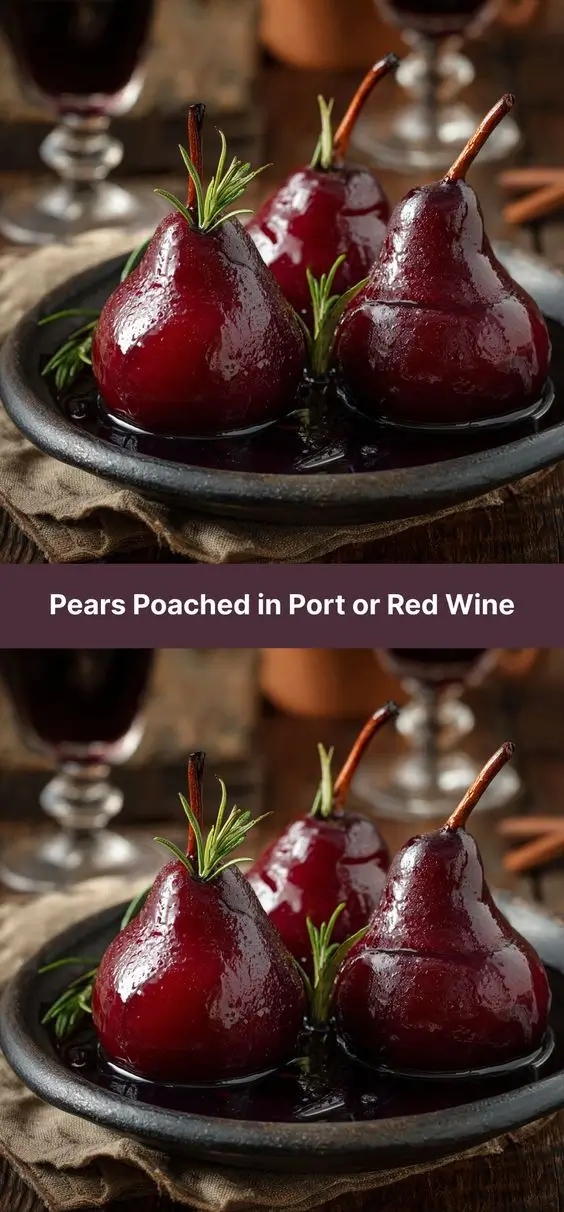
Pears Poached in Port or Red Wine: A Decadent and Elegant Dessert
Indulge in the rich, velvety flavors of pears poached in port or red wine—a dessert that effortlessly combines simplicity with sophistication. This classic European treat is beloved for its luscious texture, aromatic spices, and deep ruby-red hues that make it as visually stunning as it is delicious. Whether served warm after a cozy dinner or chilled at a summer gathering, poached pears offer a refined sweetness that appeals to both traditionalists and modern food lovers alike.
The History of Poached Pears
Poached pears have graced tables across Europe for centuries, with roots tracing back to ancient Roman and medieval French culinary traditions. The technique of gently simmering fruit in sweetened liquid was originally developed not only to preserve seasonal fruits but also to enhance their flavor and digestibility. In France, this method evolved into poires à la Beaujolais or poires au vin rouge, where pears were slowly cooked in red wine with sugar and spices such as cinnamon, cloves, and star anise.
Port wine, a fortified wine from the Douro Valley in Portugal, became a popular alternative during the 18th century, especially among British and Portuguese nobility who appreciated its deeper, sweeter profile. Over time, the dish transcended borders and class distinctions, becoming a staple in fine dining and home kitchens around the world. Today, poached pears are celebrated not just for their taste but also for their elegance—often featured in gourmet restaurants, holiday menus, and even vegan or gluten-free dessert spreads.
Ingredients Breakdown: What Goes Into Perfectly Poached Pears?
The beauty of poached pears lies in the harmony of a few high-quality ingredients. Each component plays a vital role in creating the final dish’s aroma, color, and balance of sweetness and acidity.
- Pears: Choose firm, ripe varieties like Bosc, Anjou, or Concorde. These hold their shape well during cooking and have a mildly sweet flavor that absorbs the poaching liquid beautifully.
- Liquid Base – Port Wine or Red Wine: Port wine offers a richer, more syrupy sweetness with notes of plum, cherry, and chocolate, while dry red wines like Cabernet Sauvignon, Merlot, or Pinot Noir provide a tart, earthy counterpoint. You can use either exclusively or blend them.
- Sugar: Granulated sugar, brown sugar, or honey adjusts the sweetness. Brown sugar adds molasses depth, enhancing warmth in colder months.
- Water: Dilutes the alcohol slightly and helps create enough volume to fully submerge the pears.
- Citrus: Lemon juice prevents browning and brightens the overall flavor; orange zest or slices add subtle citrus complexity.
- Spices: Whole spices like cinnamon sticks, cloves, star anise, cardamom pods, and vanilla bean infuse the syrup with aromatic warmth without overpowering the delicate pear.
- Optional Enhancements: Fresh ginger, black peppercorns, or a splash of brandy or Grand Marnier deepen the flavor profile.
Step-by-Step Recipe: How to Make Pears Poached in Port or Red Wine
Ingredients
- 4 firm, ripe pears (Bosc or Anjou recommended)
- 3 cups (720 ml) port wine OR dry red wine (or a mix of both)
- 1 cup (240 ml) water
- ¾ cup (150g) granulated or light brown sugar (adjust to taste)
- Zest and juice of 1 lemon
- 1 orange, sliced thinly (optional)
- 1 cinnamon stick
- 4 whole cloves
- 1 star anise (optional)
- 1 vanilla bean, split and scraped (or 1 tsp pure vanilla extract added at the end)
- Peel of one orange (for zest infusion)
Directions
- Prepare the Pears: Peel the pears carefully, leaving the stems intact for an elegant presentation. If desired, use a melon baller to remove the core from the bottom so they sit flat when plated.
- Prevent Browning: As you peel each pear, place it immediately into a bowl of cold water mixed with a tablespoon of lemon juice to prevent oxidation and discoloration.
- Create the Poaching Liquid: In a large, heavy-bottomed saucepan or Dutch oven, combine the wine, water, sugar, lemon juice, lemon zest, orange slices, cinnamon stick, cloves, star anise, vanilla bean (and seeds), and orange peel. Stir over medium heat until the sugar dissolves completely.
- Bring to a Simmer: Heat the mixture just until it begins to simmer—do not boil vigorously, as this could evaporate too much alcohol and concentrate bitterness.
- Add the Pears: Remove the pears from the lemon water and gently place them into the warm liquid. Ensure they are mostly submerged. If needed, place a small heatproof plate or trivet on top to keep them under the surface.
- Slow Poach: Reduce heat to low and let the pears simmer very gently, uncovered, for 20 to 40 minutes depending on ripeness and size. Test doneness by inserting a skewer—it should slide in easily, but the pear should still hold its shape.
- Infuse Flavor: Once tender, turn off the heat and allow the pears to cool in the liquid for at least 1–2 hours, or refrigerate overnight. This step is crucial for maximum flavor absorption and vibrant coloring.
- Reduce the Syrup (Optional): For a glossy, restaurant-style sauce, remove the pears and simmer the remaining liquid over medium-high heat until reduced by half or to a syrupy consistency. Strain out spices before serving.
- Serve: Serve chilled or at room temperature. Place each pear on a plate or shallow bowl, drizzle with warm or cooled syrup, and garnish with fresh mint, whipped cream, Greek yogurt, or a scoop of vanilla ice cream.
Tips for Perfect Poached Pears Every Time
- Choose the Right Pear: Firm, unripe pears will take longer to cook and may remain hard inside; overly ripe ones will fall apart. Aim for just-ripe fruit that yields slightly to gentle pressure near the stem.
- Don’t Boil—Simmer Gently: Vigorous boiling breaks down the pears’ structure. Keep the liquid at a bare simmer for even, delicate cooking.
- Use a Wide Pan: A wide pot allows pears to lie close together without crowding, ensuring even exposure to the poaching liquid.
- Keep Them Submerged: Use a parchment paper lid (“cartouche”) or a heatproof plate to weigh down the pears and maintain consistent color and texture.
- Chill Before Serving: Cold pears absorb more flavor and have a firmer, juicier bite. Overnight chilling produces superior results.
- Save the Syrup: Store leftover poaching liquid in a sealed jar in the fridge for up to two weeks. Use it as a sauce, cocktail mixer, or to poach other fruits like apples or peaches.
- Check Alcohol Content: Most alcohol cooks off during reduction, but if serving to children or those avoiding alcohol, increase water ratio and reduce wine accordingly.
Variations and Customizations
This recipe is wonderfully adaptable. Here are some creative twists to suit different tastes and occasions:
- Vegan Version: Ensure your sugar is certified vegan (some white sugars are processed with bone char). Use maple syrup instead for a plant-based sweetener with earthy tones.
- Low-Sugar Option: Replace sugar with monk fruit sweetener or erythritol blends, adjusting to taste. Note that natural sugars help with texture and preservation.
- Fruit Swaps: Try quinces, apples, peaches, or plums using the same method—adjust cooking times accordingly.
- Spice Variations:
- Warm Winter Blend: Add nutmeg, allspice, and fresh ginger slices.
- Floral Touch: Infuse with dried rose petals or a drop of orange blossom water.
- Exotic Twist: Cardamom and saffron lend a Persian-inspired flair.
- Wine Alternatives: Use apple cider, pomegranate juice, or cranberry juice for non-alcoholic versions. Add a splash of vinegar (like balsamic) for depth.
- Dessert Pairings:
- Serve over almond cake or polenta cake for a rustic twist.
- Top with crumbled amaretti cookies and mascarpone.
- Add toasted walnuts or pistachios for crunch.
- Make It Festive: For holidays, add pomegranate arils, edible gold leaf, or rosemary sprigs for a festive presentation.
- Individual Jars: Can the pears in sterilized mason jars for homemade gifts—they keep up to 6 months unopened.
Health Considerations and Nutritional Value
While undeniably decadent, poached pears offer surprising health benefits when prepared thoughtfully:
- Fiber-Rich: Pears are an excellent source of dietary fiber, particularly soluble fiber like pectin, which supports digestive health and helps regulate blood sugar levels.
- Antioxidants: Red wine contains resveratrol, a polyphenol linked to heart health and anti-inflammatory effects. Though present in smaller amounts post-cooking, some benefits remain.
- Low Fat: Naturally fat-free, this dessert relies on fruit and liquid for richness—ideal for lighter dessert rotations.
- Vitamins & Minerals: Pears contribute vitamin C, potassium, and copper, while citrus additions boost vitamin C further.
- Calorie Control: A single serving (one pear with moderate syrup) ranges from 180–250 calories depending on sugar and wine content. Using less sugar or alternative sweeteners reduces caloric load.
- Alcohol Content: Most ethanol evaporates during simmering and cooling, but trace amounts may remain. For zero alcohol, substitute entirely with grape juice and a splash of vinegar for acidity.
- Diabetic-Friendly Options: With careful sweetener substitution (e.g., stevia or monk fruit), this dish can be adapted for diabetic diets—consult a nutritionist for personalized advice.
Balance is key: enjoy poached pears as part of a varied diet, savoring their sensory pleasure without overindulgence.
Frequently Asked Questions (FAQ)
Q: Can I use canned pears?
A: While possible, canned pears lack the firmness and freshness of raw pears and often come pre-sweetened, leading to overly sugary results. Fresh is always best.
Q: Do I need to peel the pears?
A: Yes, peeling ensures a smooth texture and allows the poaching liquid to penetrate evenly. Leaving skins on can result in uneven color and toughness.
Q: Why did my pears turn brown?
A: Exposure to air causes oxidation. Always store peeled pears in acidulated water (water + lemon juice) until ready to use.
Q: Can I freeze poached pears?
A: Yes! Freeze pears in their syrup in airtight containers for up to 3 months. Thaw in the refrigerator and reheat gently if desired.
Q: How long do poached pears last in the fridge?
A: When stored in their liquid in a sealed container, they keep for 5–7 days in the refrigerator.
Q: Can I make this ahead of time?
A: Absolutely! Poached pears actually improve in flavor after 24–48 hours of marinating. They’re ideal for meal prep or dinner parties.
Q: Is there a non-alcoholic version?
A: Yes! Substitute wine with equal parts grape juice, pomegranate juice, or black tea blended with sugar and spices.
Q: Why didn’t my syrup thicken?
A: Reduction takes time. Simmer uncovered until volume decreases by half. Adding a bit of cornstarch slurry (1 tsp cornstarch + 1 tbsp water) can help if needed—but use sparingly to avoid cloudiness.
Summary
Pears poached in port or red wine are a timeless dessert that marries elegance with ease, offering tender fruit infused with spiced wine syrup in every bite. Perfect for entertaining or quiet nights in, this dish proves that simple ingredients can create extraordinary moments.