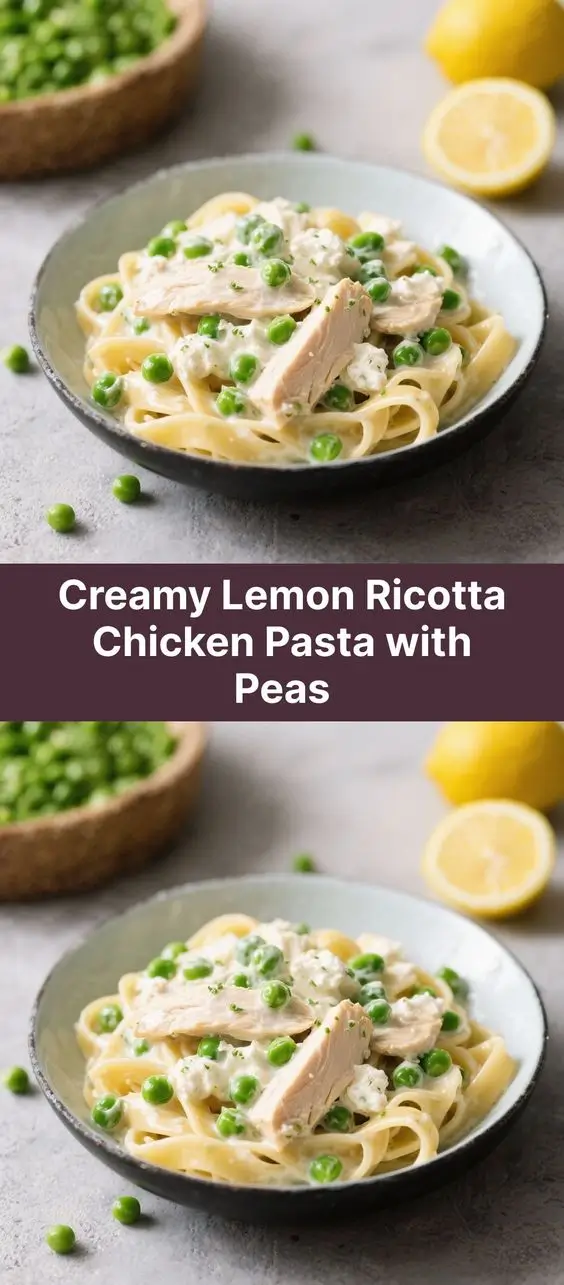
Creamy Lemon Ricotta Chicken Pasta with Peas: A Luxurious Yet Light One-Pot Wonder
If you’re searching for a dish that strikes the perfect balance between rich and refreshing, creamy and zesty, indulgent and wholesome—look no further than Creamy Lemon Ricotta Chicken Pasta with Peas. This modern Italian-inspired recipe brings together tender chicken, al dente pasta, sweet peas, velvety ricotta, and a bright lemon infusion to create a meal that feels both comforting and elegant. Whether it’s a weeknight dinner or a cozy weekend treat, this dish is guaranteed to impress.
The History Behind the Dish
While there isn’t a single documented origin of Creamy Lemon Ricotta Chicken Pasta with Peas, its roots lie deeply embedded in Italian culinary traditions. Italy has long celebrated simple ingredients transformed into extraordinary meals. The use of ricotta cheese dates back centuries, particularly in southern regions like Sicily and Campania, where fresh dairy was abundant. Traditionally used in desserts like cannoli and cassata, ricotta has also found its place in savory dishes such as ravioli fillings and baked pastas.
Lemons, especially from the Amalfi Coast and Sorrento, are another hallmark of Italian cuisine. Their vibrant zest and juice have been used to cut through richness and elevate flavors since ancient times. Combining lemon with creamy cheeses is a time-honored technique seen in dishes like spaghetti al limone, which features pasta tossed with butter, cream, Parmesan, and loads of lemon.
The addition of chicken and peas turns this into a complete protein-rich meal. While not traditional in classic Italian cooking (where pasta is often served as a first course), modern home cooks around the world now embrace one-pot pasta dishes that combine proteins, vegetables, and starches for convenience and flavor. This particular fusion—creamy ricotta, citrus brightness, lean chicken, and garden-fresh peas—reflects contemporary tastes that value both comfort and nutrition.
Over the past decade, food bloggers and chefs have popularized versions of this dish using ricotta as a lighter alternative to heavy cream, appealing to health-conscious eaters without sacrificing decadence. Thus, Creamy Lemon Ricotta Chicken Pasta with Peas emerges as a delicious amalgamation of old-world charm and new-age sensibility.
Ingredients Breakdown: What Makes This Dish Shine?
Every ingredient in this recipe plays a vital role in building layers of flavor, texture, and nourishment. Let’s dive deep into each component:
- Chicken Breast or Thighs: Lean chicken breast offers a clean protein base, while thighs bring more moisture and depth due to their higher fat content. Either works beautifully; just adjust cooking time accordingly.
- Pasta (preferably short shapes): Penne, fusilli, rigatoni, or farfalle hold the sauce exceptionally well. Whole wheat or gluten-free options can be substituted based on dietary needs.
- Ricotta Cheese: Full-fat whole milk ricotta is essential for creaminess and body. Low-fat versions may result in a watery or chalky texture. Opt for high-quality fresh ricotta, ideally from a local dairy or artisanal producer.
- Fresh Lemon: Both zest and juice are crucial. The zest contains aromatic oils that infuse the dish with intense citrus perfume, while the juice adds acidity that balances the richness.
- Peas: Fresh spring peas are ideal when in season, but frozen peas work perfectly year-round—they retain color, sweetness, and nutrients. No need to thaw before adding.
- Garlic and Shallot/Onion: These aromatics build the foundational flavor profile. Shallots offer a milder, slightly sweeter note compared to yellow onions.
- Chicken Broth: Adds savory depth and helps deglaze the pan. Use low-sodium to control salt levels.
- Heavy Cream or Half-and-Half: Enhances silkiness. For a lighter version, substitute with evaporated milk or even unsweetened oat milk (though results may vary).
- Parmesan Cheese: Salty, nutty, and umami-rich, freshly grated Parmigiano-Reggiano boosts savoriness and helps emulsify the sauce.
- Olive Oil and Butter: Olive oil for searing, butter for finishing—this combination gives richness and mouthfeel.
- Fresh Herbs: Basil, parsley, or chives add freshness and visual appeal. Add at the end to preserve their vibrancy.
- Salt and Pepper: Essential for seasoning throughout the cooking process.
Step-by-Step Recipe: How to Make Creamy Lemon Ricotta Chicken Pasta with Peas
This one-pot recipe simplifies cleanup while maximizing flavor development. Follow these detailed steps for restaurant-quality results at home.
Preparation (Before You Begin)
- Gather all ingredients and measure them out (mise en place).
- Grate the Parmesan cheese.
- Zest one lemon (avoid the white pith) and juice two lemons (you’ll need about ¼ cup).
- Dice the chicken into uniform bite-sized pieces for even cooking.
- Mince the garlic and finely chop the shallot or onion.
- Cook the pasta separately if not using the one-pot method (see Tips section).
Cooking Instructions
- Season and Sear the Chicken: Pat the chicken dry and season generously with salt and pepper. Heat 2 tablespoons of olive oil in a large deep skillet or Dutch oven over medium-high heat. Add the chicken in a single layer (work in batches if needed to avoid crowding) and sear until golden brown on all sides, about 5–6 minutes total. Remove and set aside.
- Sauté Aromatics: In the same pan, reduce heat to medium. Add 1 tablespoon of butter and sauté the chopped shallot until translucent (about 3 minutes). Add the minced garlic and cook for another 30 seconds until fragrant—do not let it burn.
- Build the Sauce Base: Pour in ½ cup of chicken broth to deglaze the pan, scraping up any browned bits (flavor gold!). Allow it to simmer and reduce by half, about 2–3 minutes.
- Add Liquids and Simmer: Stir in ¾ cup heavy cream (or half-and-half), followed by 1 cup of whole-milk ricotta. Whisk gently until smooth and creamy. Do not boil vigorously—keep the heat moderate to prevent curdling.
- Incorporate Lemon: Add the lemon zest and 3 tablespoons of lemon juice. Taste and adjust—add more juice gradually if desired for extra brightness.
- Add Peas and Partially Cooked Pasta: If using the one-pot method, add uncooked pasta directly to the sauce along with an additional 1½ cups of chicken broth (total liquid should cover the pasta). Bring to a gentle simmer, cover, and cook for 10–12 minutes, stirring occasionally, until pasta is al dente and most liquid is absorbed.
- Return Chicken to Pan: Add the seared chicken back into the skillet. Stir gently to reheat and integrate flavors.
- Finish the Dish: Remove from heat. Stir in ½ cup freshly grated Parmesan, 1 tablespoon cold butter, and chopped fresh herbs (parsley or basil). Adjust seasoning with salt and pepper. Add remaining lemon juice to taste.
- Serve Immediately: Garnish with extra Parmesan, a sprinkle of lemon zest, red pepper flakes (optional), and a drizzle of good olive oil.
Pro Tips for Success
- Don’t Overcook the Ricotta: Ricotta can separate if exposed to high heat for too long. Always keep the temperature moderate when incorporating it into sauces.
- Use Warm Broth: Adding cold liquid can cause the sauce to seize or become grainy. Warm your broth slightly before pouring it in.
- Reserve Pasta Water: If cooking pasta separately, save at least ½ cup of starchy water. It works wonders in loosening the sauce and helping it cling to the noodles.
- One-Pot vs. Separate Cooking: The one-pot method saves time and dishes but requires precise liquid ratios. If unsure, cook pasta separately to al dente and finish it in the sauce for better control.
- Browning Matters: Take time to properly sear the chicken—it builds fond (browned bits) that enriches the entire dish.
- Balance Acidity: Lemon can dominate quickly. Start with less juice and add incrementally after tasting.
- Let It Rest: Allow the finished dish to sit off the heat for 2–3 minutes before serving. This lets the sauce thicken and flavors meld.
Variations and Customizations
This recipe is incredibly adaptable. Here are some creative twists to suit different tastes and dietary preferences:
- Vegan Version: Substitute chicken with sautéed mushrooms or chickpeas, use vegan ricotta (store-bought or homemade from tofu/nuts), swap cream with cashew cream, and omit Parmesan or use nutritional yeast.
- Gluten-Free: Use certified gluten-free pasta such as brown rice, quinoa, or corn-based varieties. Ensure broth is GF-labeled.
- Keto/Low-Carb: Replace pasta with spiralized zucchini (zoodles), roasted cauliflower florets, or shirataki noodles. Reduce or omit peas due to natural sugars.
- Seafood Twist: Swap chicken for cooked shrimp or scallops added at the end. Shrimp only need 2–3 minutes to warm through.
- Extra Veggies: Boost nutrition by adding spinach, arugula, roasted asparagus, artichoke hearts, or sun-dried tomatoes.
- Herb Variations: Try tarragon for a French flair, dill for a Mediterranean touch, or mint for a surprising freshness.
- Spicy Kick: Add red pepper flakes during sautéing or swirl in harissa or sriracha for heat.
- Dairy-Free Creaminess: Blend silken tofu with lemon and nutritional yeast for a ricotta-like texture without dairy.
- Baked Option: Transfer everything to an oven-safe dish, top with breadcrumbs and mozzarella, and bake at 375°F (190°C) for 15–20 minutes for a casserole-style meal.
Health Considerations and Nutritional Value
Creamy doesn’t have to mean unhealthy. With mindful substitutions and portion control, this dish can fit into a balanced diet.
Nutrient Highlights (Per Serving, Approximate)
- Calories: ~550–650 kcal
- Protein: ~35–40g (excellent source from chicken and dairy)
- Carbohydrates: ~50–60g (mostly from pasta and peas)
- Fat: ~25–30g (includes healthy fats from olive oil and saturated fats from dairy)
- Fiber: ~5–7g (especially if using whole grain pasta and peas)
- Vitamin C: High from lemon juice and peas
- Calcium: Rich from ricotta and Parmesan
- Iron and B Vitamins: From chicken and enriched pasta
Health Benefits
- Lemon: Packed with antioxidants and vitamin C, supports immune function and aids iron absorption.
- Peas: A plant-based source of protein, fiber, and vitamins A, K, and folate.
- Ricotta: Lower in fat than many cheeses, rich in whey protein and calcium.
- Olive Oil: Heart-healthy monounsaturated fats with anti-inflammatory properties.
Dietary Modifications
- Lower Sodium: Use low-sodium broth, limit added salt, and rinse canned peas if used (though fresh/frozen preferred).
- Heart-Healthy: Reduce cream amount, increase broth, and use skim ricotta (though texture will change).
- Diabetes-Friendly: Monitor carb intake by reducing pasta portion and increasing non-starchy veggies.
- Lactose Sensitivity: Ricotta and Parmesan are relatively low in lactose, but consider lactose-free alternatives if sensitive.
Full Ingredient List (Serves 4)
- 1½ lbs (680g) boneless, skinless chicken breasts or thighs, diced
- 12 oz (340g) short pasta (penne, fusilli, etc.)
- 1½ cups whole milk ricotta cheese (drained if watery)
- 1 cup freshly grated Parmesan cheese, plus extra for serving
- 1 cup frozen or fresh green peas
- Zest and juice of 2 medium lemons (about ¼ cup juice)
- 3 cloves garlic, minced
- 1 small shallot or ½ small onion, finely chopped
- 2 tbsp olive oil
- 2 tbsp unsalted butter, divided
- 2½ cups low-sodium chicken broth (divided use)
- ¾ cup heavy cream or half-and-half
- ½ cup fresh parsley or basil, chopped
- Salt and freshly ground black pepper, to taste
- Optional: red pepper flakes, extra virgin olive oil for drizzling
Detailed Directions Recap
- Season chicken with salt and pepper. Sear in olive oil over medium-high heat until golden. Remove and set aside.
- In the same pan, melt 1 tbsp butter. Sauté shallot until soft, then add garlic and cook 30 seconds.
- Pour in ½ cup chicken broth to deglaze. Simmer 2–3 minutes until reduced slightly.
- Stir in ricotta, cream, lemon zest, and 3 tbsp lemon juice. Whisk until smooth.
- Add uncooked pasta, peas, and remaining 2 cups broth. Cover and simmer 10–12 minutes, stirring occasionally, until pasta is tender.
- Return chicken to pan. Stir to combine and heat through.
- Remove from heat. Stir in Parmesan, remaining 1 tbsp butter, herbs, and additional lemon juice to taste.
- Season with salt and pepper. Let rest 3 minutes.
- Serve hot, garnished with extra cheese, herbs, lemon zest, and a drizzle of olive oil.
Frequently Asked Questions (FAQ)
Can I make this ahead of time?
Yes, but it’s best served fresh. You can prep ingredients (chop chicken, measure spices, zest lemon) up to 24 hours in advance. Reheat leftovers gently with a splash of broth or water to restore creaminess.
How do I store leftovers?
Store in an airtight container in the refrigerator for up to 3 days. Freeze for up to 2 months, though dairy-based sauces may separate slightly upon thawing. Reheat slowly on the stove.
Why is my sauce grainy?
This usually happens when the ricotta is overheated or cold liquids are added abruptly. Always use warm broth and avoid boiling once ricotta is added. Whisk gently and maintain a low simmer.
Can I use cottage cheese instead of ricotta?
You can, but the texture and flavor differ. Cottage cheese is tangier and lumpier. Blend it first for a smoother consistency, but ricotta remains the superior choice.
Is this dish freezer-friendly?
It can be frozen, but dairy-heavy sauces sometimes undergo texture changes. Thaw overnight in the fridge and reheat slowly, adding extra cream or broth as needed.
What wine pairs well with this dish?
A crisp white wine complements the lemon and cream beautifully. Try Pinot Grigio, Sauvignon Blanc, Vermentino, or a light Chardonnay (unoaked).
Can I use pre-cooked chicken?
Absolutely! Use leftover grilled or rotisserie chicken. Add it toward the end just to warm through and prevent drying out.
How can I boost the protein further?
Add white beans (cannellini or navy) or serve with a side of grilled salmon or a poached egg on top.
My sauce is too thick/thin—how do I fix it?
Too thick? Stir in warm broth or cream, 1 tablespoon at a time. Too thin? Simmer uncovered for a few extra minutes to reduce, or mix in a bit more ricotta or Parmesan to thicken.
Can I cook this in an Instant Pot?
Yes! Use the sauté function to brown chicken and aromatics. Add all ingredients except ricotta, Parmesan, lemon juice, and herbs. Pressure cook on high for 4 minutes, quick release, then stir in remaining ingredients and let sit covered for 5 minutes.
Summary
Creamy Lemon Ricotta Chicken Pasta with Peas is a harmonious blend of rich dairy, zesty citrus, tender protein, and sweet vegetables—all coming together in one satisfying pot. Elegant enough for guests, easy enough for busy nights, it’s a modern classic in the making.