Introduction
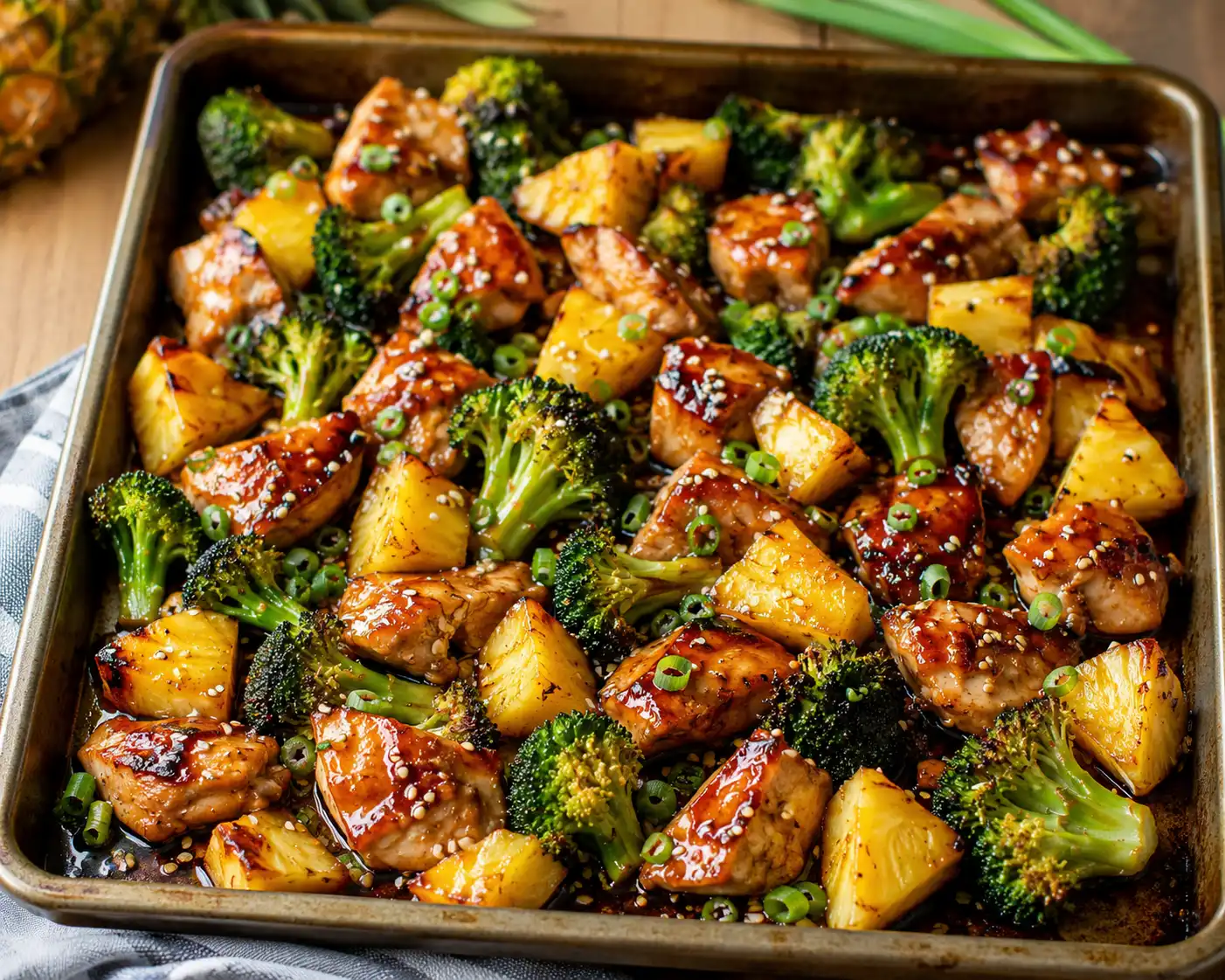
Welcome to a vibrant, fuss-free, and flavor-packed weeknight dinner solution: Teriyaki Sheet Pan Pineapple Chicken and Broccoli. This harmonious one-pan wonder brings together tender marinated chicken breast or thighs, crisp-tender broccoli florets, juicy golden pineapple chunks (fresh or canned in juice—never syrup!), and a glossy, umami-rich homemade teriyaki glaze—all roasted together on a single sheet pan for effortless prep, minimal cleanup, and maximum caramelized deliciousness. Designed with busy home cooks in mind, this dish balances sweet, salty, tangy, and savory notes while delivering bold color, satisfying texture contrast, and aromatic warmth from toasted sesame and fresh ginger. Whether you’re meal prepping for the week, feeding a hungry family, or impressing guests with minimal effort, this recipe delivers restaurant-quality depth and comfort without the complexity.
The History
Teriyaki—a cornerstone of Japanese culinary tradition—derives its name from the words teri (meaning “luster” or “shine”) and yaki (meaning “grill” or “broil”). Historically, teriyaki sauce emerged in 17th-century Japan as a preservation and flavor-enhancing technique, where fish or meat was simmered in a mixture of soy sauce, mirin (a sweet rice wine), and sugar to create a glossy, deeply savory-sweet glaze that both protected against spoilage and elevated humble ingredients. Over centuries, the sauce evolved alongside Japan’s trade routes and domestic innovations—mirin became more widely available, sake was sometimes substituted, and regional variations incorporated local herbs, citrus, or even fruit infusions. When Japanese immigrants brought teriyaki to Hawaii in the late 19th and early 20th centuries, it encountered tropical abundance—especially pineapple—and gave rise to the iconic Hawaiian teriyaki, which embraced sweetness and acidity more boldly. The modern sheet pan iteration—popularized in the 2010s by food bloggers and wellness influencers seeking healthy, scalable, and visually compelling meals—marries this cross-cultural legacy with contemporary cooking principles: high-heat roasting for Maillard browning, intentional ingredient layering for even cooking, and built-in freshness via raw garnishes added post-oven. This recipe honors that lineage while optimizing for today’s kitchens: no stir-fry wok required, no last-minute sauce reduction, and zero risk of soggy broccoli.
Ingredients Breakdown
Every component in this dish serves a distinct functional and sensory role—understanding their interplay ensures consistent success:
- Chicken (boneless, skinless breasts or thighs): Provides lean protein and structural integrity. Breasts yield a lighter, firmer bite; thighs offer richer flavor, higher fat content for juiciness, and greater forgiveness during roasting. Uniform 1-inch cubes ensure even cooking and optimal surface area for glaze adhesion.
- Fresh broccoli florets: Chosen for its nutritional density, vibrant green hue, and textural resilience. The florets caramelize at the edges while retaining a pleasant, slightly toothsome center when roasted at high heat. Stems are peeled and sliced for zero-waste utilization—adding subtle sweetness and crunch.
- Pineapple (fresh or unsweetened canned in 100% juice): Adds natural fructose for balanced sweetness, bromelain enzymes that gently tenderize proteins, and bright acidity that cuts through umami richness. Fresh pineapple contributes floral top notes and superior texture; canned offers convenience and consistent tenderness—just be sure to drain thoroughly and pat dry to prevent steaming instead of roasting.
- Homemade teriyaki sauce: Far superior to store-bought versions, which often contain excessive sodium, corn syrup, artificial colors, and preservatives. Our version uses low-sodium tamari or coconut aminos for gluten-free adaptability, real brown sugar (not refined white) for molasses depth, toasted sesame oil for nutty aroma, fresh grated ginger and garlic for pungent brightness, and a touch of rice vinegar for lift—all simmered just long enough to thicken slightly without losing vibrancy.
- Neutral high-smoke-point oil (avocado, grapeseed, or refined coconut): Ensures even heat transfer, promotes caramelization, and prevents sticking—critical for achieving that coveted golden-brown crust on both chicken and broccoli.
- Garnishes (toasted sesame seeds, sliced scallions, optional red pepper flakes): Added after roasting to preserve freshness, fragrance, and visual appeal. Toasted sesame seeds contribute nuttiness and crunch; scallions lend allium sharpness and verdant contrast; chili flakes introduce controlled heat for those who crave dimension.
Crucially, this recipe intentionally omits cornstarch or flour thickeners in the base sauce—relying instead on natural reduction and the inherent sugars in pineapple and brown sugar to achieve viscosity—keeping it clean-label, paleo-friendly, and free from unwanted gummy textures.
Step-by-Step Recipe
- Prep & Marinate (15 minutes + 30–60 minutes chilling): Cube chicken into uniform 1-inch pieces. In a large bowl, whisk together all teriyaki sauce ingredients—tamari, brown sugar, rice vinegar, toasted sesame oil, grated ginger, minced garlic, and a pinch of black pepper. Reserve ¼ cup of sauce for final glazing. Pour remaining sauce over chicken, toss thoroughly to coat, cover, and refrigerate for at least 30 minutes (up to 4 hours). Longer marination enhances tenderness but avoid exceeding 6 hours with fresh pineapple due to bromelain activity.
- Preheat & Prep Pan (5 minutes): Position oven rack in upper third. Preheat oven to 425°F (220°C). Line a large rimmed baking sheet (18×13 inches recommended) with parchment paper or a silicone mat—this prevents sticking and simplifies cleanup. Lightly brush or spray with neutral oil.
- Arrange Components Strategically (7 minutes): Drain excess marinade from chicken (do not rinse)—reserve marinade. Spread broccoli florets and peeled, sliced stems in an even single layer on one half of the sheet pan. On the other half, arrange marinated chicken in a single layer—not touching—to ensure air circulation and even browning. Scatter drained pineapple chunks evenly among both sections, nestling them gently so they’re partially embedded—not piled—to maximize surface exposure to heat.
- Initial Roast (15 minutes): Place pan in preheated oven. Roast undisturbed for 15 minutes. This initial phase renders chicken fat (if using thighs), begins broccoli edge-caramelization, and concentrates pineapple sugars. Do not open the oven door—maintaining temperature is essential for proper Maillard reaction.
- Flip, Glaze & Rotate (3 minutes): Carefully remove pan. Using tongs, flip chicken pieces and gently toss broccoli and pineapple. Brush or spoon the reserved ¼ cup teriyaki sauce evenly over all components—this adds fresh flavor and sheen without overwhelming sweetness. Rotate pan ½ turn (front-to-back) for even oven heat distribution.
- Final Roast & Caramelization (10–12 minutes): Return pan to oven. Roast until chicken reaches 165°F internally (check with instant-read thermometer), broccoli is tender-crisp with deep golden edges, and pineapple is bubbling and lightly charred in spots—about 10–12 minutes. Watch closely during the last 3 minutes to prevent burning, especially if using brown sugar (which caramelizes quickly).
- Rest & Garnish (5 minutes): Remove pan from oven. Let rest for 5 minutes—this allows juices to redistribute into chicken and prevents sauce from sliding off. While resting, prepare garnishes: thinly slice scallion greens, toast sesame seeds in a dry skillet over medium-low heat until golden (1–2 minutes), and have red pepper flakes ready. Sprinkle generously over the hot sheet pan just before serving.
Tips
- Uniform Sizing Is Non-Negotiable: Use a sharp chef’s knife to cut chicken and broccoli to precisely 1-inch pieces. Irregular sizes lead to uneven cooking—some pieces underdone, others dried out.
- Pat Ingredients Dry: After draining pineapple and before arranging on the pan, blot chicken, broccoli, and pineapple with paper towels. Excess moisture creates steam instead of sear, resulting in soggy, pale results.
- Oven Thermometer Recommended: Many ovens run hot or cold. An inexpensive oven thermometer ensures your 425°F is accurate—critical for proper caramelization and food safety.
- Don’t Crowd the Pan: If doubling the recipe, use two sheet pans rather than one overloaded pan. Crowding drops oven temperature and causes steaming—defeating the purpose of high-heat roasting.
- Broccoli Stem Utilization: Don’t discard those fibrous stems! Peel the tough outer layer with a vegetable peeler, then slice crosswise into ¼-inch coins. They roast beautifully alongside florets and add delightful crunch and subtle sweetness.
- Sauce Consistency Control: If your reserved glaze seems too thin after marinating, simmer it in a small saucepan over medium heat for 1–2 minutes until slightly thickened and syrupy. Conversely, if it thickens too much in the fridge, whisk in 1 tsp warm water.
- Acid Balance Matters: If the finished dish tastes overly sweet, a tiny splash (½ tsp) of rice vinegar or lime juice stirred in at the end will instantly rebalance it. Keep a bottle nearby for tasting and adjusting.
- Sheet Pan Choice Affects Results: Heavy-duty aluminum or stainless steel pans conduct heat best. Avoid flimsy disposable pans—they warp, cause uneven cooking, and may leach chemicals when exposed to acidic pineapple and soy.
- Resting Is Flavor Insurance: Skipping the 5-minute rest leads to juice loss when cutting or serving. That precious teriyaki-infused liquid is flavor gold—let it reabsorb.
- Make-Ahead Friendly: Marinate chicken up to 24 hours ahead. Chop broccoli and pineapple (store separately, refrigerated, covered) up to 1 day ahead. Assemble everything on the pan just before roasting for peak freshness.
Variations and Customizations
This recipe is a brilliant canvas—easily adapted for dietary needs, seasonal produce, pantry constraints, or global inspiration:
- Vegetarian/Vegan Option: Swap chicken for extra-firm pressed tofu (cubed and baked separately for 20 mins at 400°F first), tempeh, or hearty chickpeas (roasted 10 mins before adding other components). Use coconut aminos instead of tamari and maple syrup instead of brown sugar for full plant-based compliance.
- Low-Carb/Keto Adaptation: Replace brown sugar with 1–2 tsp powdered erythritol or monk fruit blend; increase ginger and garlic for flavor compensation. Omit pineapple entirely or use 2–3 small chunks per serving for trace sweetness only. Add sliced bell peppers or zucchini for volume and color.
- Spice It Up: Stir 1 tsp gochujang (Korean fermented chili paste) or ½ tsp crushed Sichuan peppercorns into the teriyaki sauce. Or finish with pickled jalapeños or Thai bird chilies for vibrant heat.
- Umami Bomb Upgrade: Add 1 tbsp finely chopped dried shiitake mushrooms to the sauce while simmering—or sprinkle 1 tsp nutritional yeast over the pan before final roasting for cheesy, savory depth.
- Grain-Free Serving Ideas: Serve over cauliflower rice, spiralized zucchini noodles (“zoodles”), konjac shirataki noodles (well-rinsed and pan-dried), or simply enjoy as-is with a side of miso soup and seaweed salad.
- Breakfast Reinvention: Cool leftovers completely, then fold into scrambled eggs or an omelet with scallions and a drizzle of extra teriyaki. Add avocado slices for creaminess.
- Meal Prep Powerhouse: Divide into 4 airtight containers. Refrigerate up to 4 days. Reheat gently in a skillet with 1 tsp water to revive moisture—or enjoy chilled over mixed greens for a deconstructed teriyaki bowl.
- Global Twists: For a Hawaiian riff, add 2 tbsp macadamia nuts in the last 3 minutes of roasting. For a Thai fusion, swap ginger for 1 tbsp lemongrass paste and add 1 tbsp lime zest at the end. For a Korean twist, mix 1 tsp toasted sesame oil and 1 tsp gochugaru into the glaze.
- Kid-Friendly Version: Reduce ginger and garlic by half, omit red pepper flakes, and serve with mild cucumber ribbons or edamame on the side. Let kids assemble their own bowls—a fun, interactive way to encourage veggie consumption.
- Gluten-Free Guarantee: Use certified gluten-free tamari (not regular soy sauce) or liquid aminos. Double-check that your pineapple (if canned) has no gluten-containing additives—plain juice-packed is safest.
Health Considerations and Nutritional Value
This dish is nutritionally thoughtful by design—prioritizing whole foods, mindful sodium, natural sweetness, and balanced macros:
- Protein-Powered & Satiating: Chicken breast provides ~31g high-quality complete protein per 4-oz serving—supporting muscle maintenance, satiety, and metabolic health. Thighs offer more monounsaturated fats and iron, beneficial for energy and oxygen transport.
- Fiber-Rich Cruciferous Boost: One cup of cooked broccoli delivers 3.5g fiber (14% DV), sulforaphane (a potent antioxidant linked to cellular detoxification), vitamin C (135% DV), folate, potassium, and glucosinolates shown in studies to support healthy inflammation response.
- Natural Sugar Intelligence: Pineapple contributes vitamin C (131% DV per cup), manganese (76% DV—essential for bone health and antioxidant enzyme function), and bromelain—studied for its potential anti-inflammatory and digestive-support properties. Using fresh or juice-packed (not syrup) keeps added sugar near zero.
- Sodium Savvy: By making teriyaki from scratch, sodium is reduced by up to 60% versus commercial sauces. Using low-sodium tamari further cuts salt while preserving umami—critical for heart health and blood pressure management.
- Healthy Fat Profile: Toasted sesame oil supplies heart-healthy polyunsaturated and monounsaturated fats, plus sesamin and sesamolin—lignans associated with cholesterol modulation and antioxidant protection.
- No Refined Carbs or Additives: Free from cornstarch, MSG, artificial colors, preservatives, or high-fructose corn syrup—making it suitable for clean-eating, elimination diets, and sensitive digestive systems.
- Glycemic Responsiveness: The combination of lean protein, high-fiber broccoli, and moderate natural fruit sugar results in a low-to-moderate glycemic load—ideal for sustained energy and blood sugar stability.
- Antioxidant Synergy: Ginger contains gingerol (anti-nausea, anti-inflammatory), garlic delivers allicin (immune-supportive), and broccoli’s sulforaphane works synergistically with selenium (found in chicken and sesame seeds) for enhanced cellular defense.
- Dietitian-Approved Flexibility: Easily adapted for Mediterranean, DASH, Weight Watchers (SmartPoints® friendly), and PCOS-friendly eating patterns thanks to its emphasis on lean protein, non-starchy vegetables, and controlled portions of natural fruit.
- Portion Guidance: A standard serving is ~5 oz chicken, 1.5 cups broccoli, ½ cup pineapple, and 2 tbsp sauce—totaling approximately 420–480 calories, 42g protein, 18g carbs (of which 5g fiber and 10g natural sugar), and 16g healthy fats.
Ingredients
- 1.5 lbs boneless, skinless chicken breasts or thighs, cut into 1-inch cubes
- 1 large head broccoli (about 1 lb), cut into uniform 1-inch florets, stems peeled and sliced ¼-inch thick
- 1 cup fresh pineapple chunks (or unsweetened canned in 100% juice, well-drained and patted dry)
- ⅓ cup low-sodium tamari or coconut aminos (gluten-free)
- ¼ cup packed light brown sugar (or pure maple syrup for unrefined option)
- 2 tbsp unseasoned rice vinegar
- 1 tbsp toasted sesame oil
- 1 tbsp fresh ginger, finely grated (about 1-inch knob, skin left on)
- 3 cloves garlic, finely minced
- ¼ tsp freshly ground black pepper
- 1 tbsp neutral high-heat oil (avocado, grapeseed, or refined coconut), for roasting
- 2 tbsp toasted white sesame seeds, for garnish
- 3 scallions, thinly sliced (green parts only), for garnish
- ¼ tsp red pepper flakes (optional), for garnish
Directions
- In a medium bowl, whisk together tamari, brown sugar, rice vinegar, toasted sesame oil, grated ginger, minced garlic, and black pepper until sugar fully dissolves. Set aside ¼ cup for final glaze.
- Place chicken cubes in a large bowl. Pour remaining teriyaki mixture over chicken. Toss to coat thoroughly. Cover and refrigerate for 30–60 minutes (or up to 4 hours).
- Preheat oven to 425°F (220°C). Line a large rimmed baking sheet (18×13 inches) with parchment paper. Lightly brush with neutral oil.
- Drain excess marinade from chicken (discard marinade—do not reuse). Pat chicken, broccoli, and pineapple very dry with paper towels.
- Arrange broccoli florets and stems in an even layer on one half of the prepared sheet pan. Arrange marinated chicken in a single layer on the other half. Scatter pineapple chunks evenly among both sections.
- Roast in preheated oven for 15 minutes without opening the door.
- Remove pan. Flip chicken pieces and gently toss broccoli and pineapple. Brush or spoon reserved ¼ cup teriyaki sauce evenly over all components. Rotate pan ½ turn.
- Return to oven and roast 10–12 minutes longer, until chicken reaches 165°F internally, broccoli is tender-crisp with golden edges, and pineapple is bubbling and lightly caramelized.
- Let rest on counter for 5 minutes. Garnish generously with toasted sesame seeds, sliced scallions, and red pepper flakes (if using). Serve immediately.
FAQ
- Can I use frozen chicken?
- Yes—but thaw completely in the refrigerator overnight first. Never marinate or roast partially frozen chicken, as it will steam rather than sear and may not reach safe internal temperature evenly.
- Why can’t I use regular soy sauce?
- Traditional soy sauce contains wheat and is significantly higher in sodium (often 900+ mg per tbsp vs. 600 mg in low-sodium tamari). For gluten-free needs or sodium control, tamari or coconut aminos are superior, cleaner alternatives with deeper, less harsh flavor.
- My sauce turned out too thin—what went wrong?
- Most likely the reserved glaze wasn’t reduced, or too much residual marinade clung to chicken before roasting. Next time, simmer reserved sauce 1–2 minutes before brushing—or pat chicken extremely dry. Also, avoid using “light” or “reduced-sodium” versions of ingredients with added water—they dilute flavor and consistency.
- Can I add other vegetables?
- Absolutely! Bell peppers, red onion wedges, snap peas, or baby corn roast beautifully alongside these ingredients. Add denser veggies (like carrots or potatoes) in the first 5 minutes of roasting; delicate ones (like snow peas) in the last 5 minutes to retain crunch.
- Is this dish freezer-friendly?
- Best enjoyed fresh—but you can freeze marinated, uncooked chicken for up to 3 months. Thaw overnight in fridge before roasting. Cooked leftovers freeze well for up to 2 months—reheat from frozen in a covered skillet with 1 tbsp water over medium-low heat.
- What if I don’t have a toaster for sesame seeds?
- Toast them in a dry skillet over medium-low heat, shaking constantly, for 1–2 minutes until fragrant and golden. Or bake at 350°F for 5–7 minutes on a parchment-lined sheet—watch carefully!
- Can I make this in an air fryer?
- Yes—with adjustments. Use a 6-qt basket-style air fryer. Cook in batches: chicken 12–14 mins at 400°F, shaking halfway; broccoli and pineapple 8–10 mins at 380°F. Glaze in the last 2 minutes. Note: Air fryers vary widely—monitor closely.
- How do I prevent broccoli from turning mushy?
- Key factors: (1) Cut uniformly, (2) Pat completely dry, (3) Roast at high heat (425°F+), (4) Don’t overcrowd, (5) Pull out when edges are deep golden but centers still have slight resistance—overcooking happens fast.
- Is pineapple really necessary?
- It’s highly recommended—not just for sweetness, but for acidity, texture contrast, and enzymatic tenderizing. However, if avoiding fruit, substitute with ½ cup quartered cherry tomatoes (add in last 5 minutes) or julienned jicama for crunch and subtle sweetness.
- Can I double this recipe?
- Yes—but use two separate sheet pans. Doubling on one pan causes steaming, uneven roasting, and poor caramelization. Set both pans on the same oven rack, rotating positions halfway through initial roast for even heating.
Summary
Teriyaki Sheet Pan Pineapple Chicken and Broccoli is a masterclass in streamlined, globally inspired home cooking—melding Japanese umami tradition, Hawaiian tropical flair, and modern sheet pan efficiency into one dazzling, nutrient-dense, family-approved meal.
With minimal prep, zero last-minute sauce fuss, and maximal flavor payoff—from sticky-sweet glaze and golden-crisp broccoli to juicy, aromatic chicken and bright bursts of pineapple—it transforms weeknight exhaustion into culinary joy, one perfectly roasted pan at a time.