Introduction
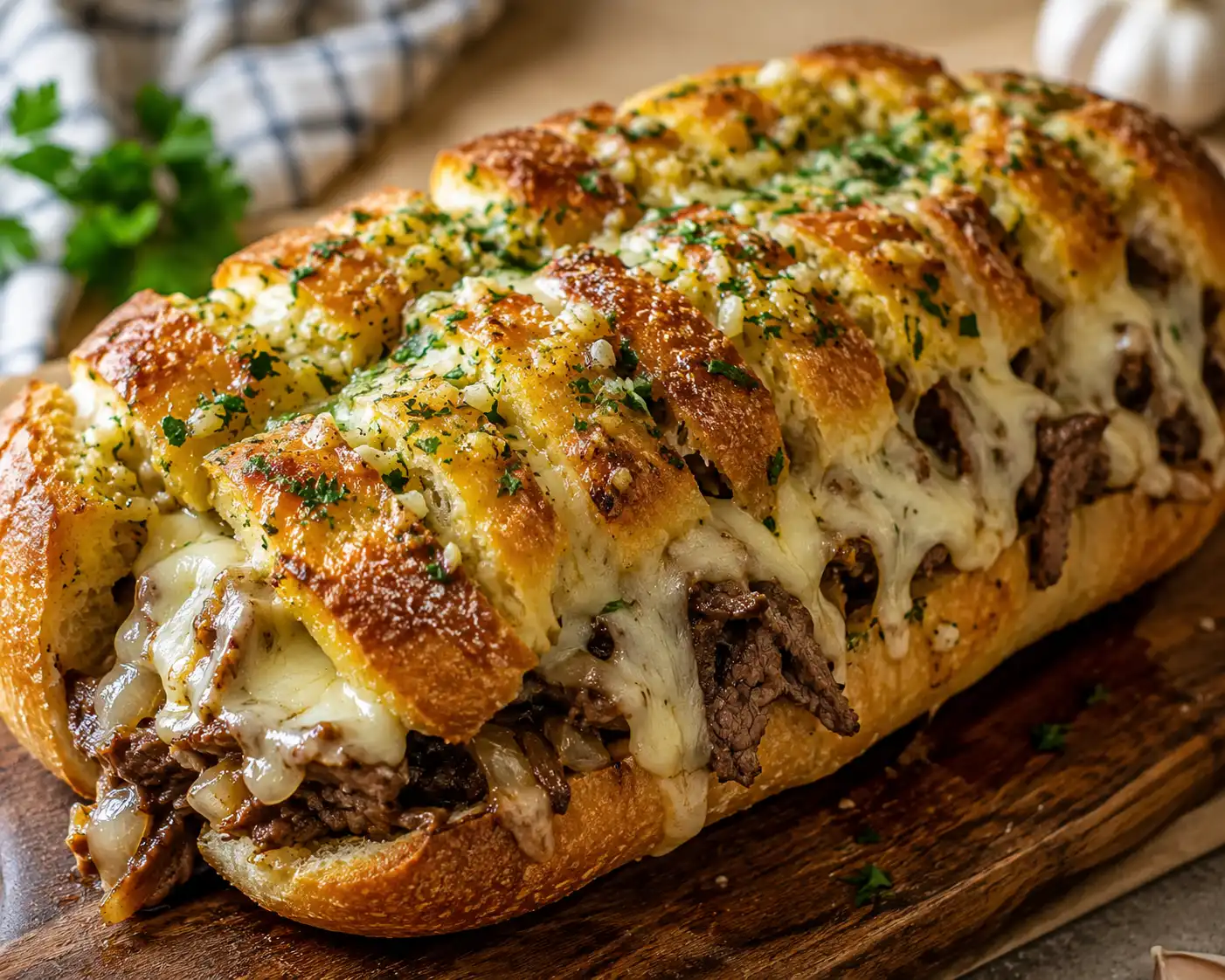
The Cheesesteak Stuffed Garlic Loaf is a bold, decadent fusion of two beloved American comfort food icons: the Philly cheesesteak and the savory, aromatic garlic bread. This isn’t just garlic bread with a little cheese—it’s a showstopping, crowd-pleasing centerpiece that transforms humble ingredients into an unforgettable culinary experience. Imagine a golden-brown, crusty Italian loaf, hollowed and generously stuffed with tender strips of ribeye steak, sautéed onions and green peppers, melted provolone and American cheese, all infused with rich garlic butter, fresh herbs, and a whisper of Worcestershire and hot sauce for depth and balance. Baked until the crust crackles and the filling bubbles luxuriously, every slice reveals a molten, meaty, cheesy core wrapped in garlicky, herb-flecked bread. Whether served as an elevated game-day appetizer, a hearty dinner main, or the star of a holiday buffet, this dish delivers maximum flavor, texture, and nostalgia—with a deliciously indulgent twist.
The History
The Cheesesteak Stuffed Garlic Loaf is a modern culinary hybrid born from the natural evolution of American sandwich culture and home-cooking ingenuity. Its roots trace back to two distinct traditions: the iconic Philadelphia cheesesteak—reportedly invented by Pat Olivieri in the 1930s as a quick, protein-packed meal for taxi drivers—and garlic bread, which rose to national prominence in the mid-20th century alongside the rise of Italian-American pizzerias and frozen food aisles. While traditional garlic bread was often a simple vehicle for butter and herbs, home cooks and chefs began experimenting with stuffing techniques in the 1970s and ’80s—think “stuffed mushrooms,” “stuffed bell peppers,” and later, “stuffed French bread.” The first documented iterations of cheesesteak-stuffed bread appeared on regional diner menus in Pennsylvania and New Jersey in the early 2000s, often labeled “Philly Bread” or “Steak-Stuffed Hoagie Loaf.” Social media—particularly Instagram and TikTok—catapulted the concept into viral fame around 2019–2021, where slow-motion pulls of stretchy cheese and glistening ribeye captivated millions. Today, it stands as a testament to American comfort food innovation: deeply rooted in tradition, unapologetically generous, and endlessly adaptable to personal taste and occasion.
Ingredients Breakdown
Every element of this recipe plays a critical role—not just in flavor, but in structure, moisture control, and textural harmony. Below is a detailed functional breakdown of each component:
- Italian or French Baguette (1 large, ~16–18 inches): Provides the structural “vessel.” A crisp, sturdy crust is essential to hold the heavy, moist filling without collapsing or becoming soggy. Avoid soft sandwich rolls or brioche—they lack integrity when baked filled.
- Ribeye Steak (1 lb, thinly sliced against the grain): Chosen for its ideal marbling—enough fat to stay juicy during high-heat sautéing, yet lean enough to avoid greasiness. Sirloin works as a leaner alternative; flank or skirt steak adds chew and flavor but requires careful slicing and shorter cook time.
- Yellow Onion (1 large, thinly sliced): Adds sweetness and body when caramelized slowly. Red onion offers sharper bite; sweet Vidalias deepen umami when cooked low and slow.
- Green Bell Pepper (1 medium, julienned): Contributes vegetal freshness, crunch contrast, and classic cheesesteak color. Sub with red or yellow peppers for subtle sweetness, or poblano for mild heat.
- Garlic (8–10 cloves, minced): The aromatic backbone. Freshly minced (not powdered) releases allicin—the compound responsible for both pungency and health benefits. Roasted garlic can be folded in at the end for mellow depth.
- Unsalted Butter (1 cup / 2 sticks, room temperature): Carries fat-soluble flavors (garlic, herbs), creates richness, and promotes browning. Salted butter may oversalt the final dish due to added cheeses and seasonings.
- Fresh Parsley (¼ cup, finely chopped): Adds bright, grassy notes that cut through richness. Flat-leaf (Italian) parsley is preferred for superior flavor and texture over curly.
- Dried Oregano (1 tsp) & Dried Basil (½ tsp): Earthy, warm Mediterranean notes that complement beef and garlic without overpowering. Toast lightly before adding to intensify aroma.
- Worcestershire Sauce (1½ tbsp): A complex umami bomb—fermented anchovies, tamarind, molasses, and vinegar add savory depth, tang, and subtle sweetness that enhances the beef’s natural savoriness.
- Hot Sauce (1 tsp—e.g., Frank’s RedHot or Crystal): Not for heat alone—it provides acidity and brightness that balances fat and salt. Adjust to preference; smoked chipotle hot sauce adds complexity.
- Provolone Cheese (8 oz, sliced thin or shredded): Melts smoothly with a mild, nutty, slightly tangy profile. Low-moisture provolone prevents excess water release. Avoid pre-shredded (coated in anti-caking starch).
- American Cheese (4 oz, sliced or shredded): Adds unparalleled meltability and creamy richness thanks to sodium citrate. Combines with provolone for the ideal stretch-and-gloss texture.
- Mozzarella (optional, 2 oz, low-moisture, shredded): For extra pull and mild milky sweetness—best used sparingly to avoid rubberiness.
- Salt (1½ tsp total, plus more to taste): Crucial for seasoning the steak *before* cooking (enhances browning and internal flavor) and balancing the entire dish.
- Freshly Ground Black Pepper (1 tsp): Adds aromatic warmth and subtle spice—always added freshly ground for volatile oil release.
- Olive Oil (2 tbsp): High-smoke-point fat for searing steak and sautéing vegetables without burning garlic.
Step-by-Step Recipe
- Prep the Loaf (15 minutes, plus chilling): Preheat oven to 375°F (190°C). Using a serrated knife, carefully slice the top third off the loaf lengthwise (like a lid). Hollow out the interior crumb with your fingers or a spoon, leaving a ½-inch-thick shell—reserve the removed bread for breadcrumbs or croutons. Lightly brush the interior and lid with olive oil and bake on a parchment-lined sheet for 8–10 minutes until lightly toasted and dry (this prevents sogginess). Let cool completely on a wire rack.
- Season & Sear the Steak (10 minutes): Pat ribeye strips *very* dry with paper towels. Season generously with 1 tsp salt and ½ tsp black pepper. Heat 1 tbsp olive oil in a wide stainless steel or cast-iron skillet over medium-high heat until shimmering. Add steak in a single layer—do not overcrowd. Sear 1–1.5 minutes per side until deeply browned but still slightly pink within. Transfer to a plate; tent loosely with foil.
- Sauté the Aromatics (8 minutes): In same skillet, reduce heat to medium. Add remaining 1 tbsp olive oil, then onions and peppers. Cook 5–6 minutes, stirring occasionally, until softened and edges begin to caramelize. Push veggies to the pan’s perimeter, add minced garlic to center, and cook 30–45 seconds until fragrant—do not let brown. Stir in Worcestershire, hot sauce, oregano, basil, remaining ½ tsp salt, and ½ tsp pepper. Cook 1 minute to meld flavors. Remove from heat; let cool 5 minutes.
- Prepare Garlic Butter (5 minutes): In a medium bowl, combine softened butter, 3 tbsp of the reserved sautéed veggie mixture (for concentrated flavor), 2 tbsp chopped parsley, and a pinch of red pepper flakes (optional). Beat with a fork or hand mixer until smooth and emulsified. Taste and adjust salt.
- Assemble the Loaf (12 minutes): Spread half the garlic butter evenly over the *inside* of the hollowed loaf and the underside of the lid. Layer bottom with half the provolone, then all the seared steak, followed by all the sautéed veggie mixture, remaining provolone, American cheese, and mozzarella (if using). Top with remaining garlic butter and remaining 2 tbsp parsley. Gently press down to compact layers. Replace lid and wrap entire loaf *tightly* in double-layer aluminum foil, sealing seams well to trap steam and ensure even heating.
- Bake (35–40 minutes): Place foil-wrapped loaf on baking sheet. Bake at 375°F for 25 minutes. Carefully open foil (watch for steam!), rotate loaf, and reseal. Bake 10–15 minutes more until internal temperature reaches 165°F (74°C) and cheese is fully molten. For crispier crust: Unwrap, brush exterior with remaining garlic butter, and broil 2–3 minutes until golden and blistered—watch closely!
- Rest & Serve (10 minutes): Transfer to cutting board; tent loosely with foil. Rest 10 minutes—this allows juices to redistribute and cheese to set slightly for cleaner slices. Slice crosswise into 1½-inch thick portions with a serrated knife. Serve immediately with extra garlic butter for dipping and pickled jalapeños for contrast.
Tips
- Chill Before Cutting: Refrigerate assembled, foil-wrapped loaf for 30–60 minutes before baking. Cold filling helps maintain structural integrity and prevents cheese from weeping prematurely.
- Control Moisture Relentlessly: Excess liquid is the #1 cause of soggy garlic loaf. Always pat steak bone-dry, cook onions/peppers until most moisture evaporates, and toast the hollowed loaf thoroughly. A light dusting of cornstarch (½ tsp) over the steak before searing absorbs surface moisture.
- Layer Like a Pro: Cheese *under* and *over* the steak locks in juices. Place provolone directly against bread to create a protective barrier; American cheese goes atop steak for ultimate melt. Never skip the garlic butter layer on the lid—it steams the top into golden, aromatic perfection.
- Use a Meat Thermometer: Insert into the thickest part of the filling (avoiding cheese pockets). 165°F ensures safety *and* optimal texture—higher temps dry out steak and make cheese oily.
- Double-Foil is Non-Negotiable: Single foil tears under steam pressure. Use heavy-duty foil, fold seams tightly, and place seam-side up to prevent leaks onto your oven.
- Reserve Bread Crumbs: Pulse reserved crumb in a food processor with 1 tbsp garlic butter and 1 tsp Parmesan. Toast in oven at 350°F for 5 minutes—sprinkle over finished slices for crunch and visual appeal.
- Don’t Skip the Rest: Cutting too soon releases molten cheese and juices, causing structural collapse. Resting lets proteins relax and starches in cheese rebind—ensuring each slice holds together gloriously.
- Low-and-Slow Onions: For deeper sweetness, start onions in cold olive oil and cook over medium-low heat for 15+ minutes before adding peppers and garlic. Caramelization = umami gold.
- Freeze for Later: Assemble (unbaked), wrap in foil + freezer bag. Freeze up to 3 months. Bake from frozen: add 15–20 minutes to initial bake time, then proceed as directed.
Variations and Customizations
This recipe is a canvas—adapt it for dietary needs, seasonal ingredients, global flavors, or pantry constraints:
- Vegetarian “Steak” Version: Replace ribeye with 2 cups king oyster mushroom stems (sliced thin, marinated in soy-tamari, liquid smoke, and garlic powder, then seared until chewy) or 1½ cups seasoned, crumbled tempeh. Boost umami with 1 tsp nutritional yeast and ½ tsp smoked paprika in garlic butter.
- Spicy Philly Kick: Add 2 diced pickled jalapeños to the veggie sauté; swap hot sauce for chipotle in adobo (1 tbsp, minced); top with pepper jack cheese instead of American.
- Gourmet Mushroom & Gruyère: Use a mix of cremini, shiitake, and oyster mushrooms sautéed in thyme and shallots. Replace provolone/American with 6 oz Gruyère and 2 oz fontina. Finish with truffle oil drizzle.
- Breakfast Loaf: Swap steak for 8 oz crumbled breakfast sausage and 4 scrambled eggs mixed with cheddar. Add ¼ tsp smoked paprika and 1 tbsp chopped chives to garlic butter.
- Low-Carb/Keto Adaptation: Use a large, hollowed-out portobello cap or “bread” made from almond flour, egg, and psyllium husk (baked separately). Fill with steak, peppers, onions, and full-fat cheeses. Reduce garlic butter to ½ cup (use ghee).
- Gluten-Free Option: Substitute gluten-free artisan boule (check for sturdy crumb structure) or use two large gluten-free hoagie rolls, hollowed and joined with cheese before baking. Verify Worcestershire is GF-certified (many contain malt vinegar).
- Mediterranean Twist: Replace steak with grilled chicken strips marinated in lemon-oregano; use feta and kalamata olives instead of provolone; add sun-dried tomatoes and spinach to filling.
- Buffalo Blue Version: Toss seared steak in ¼ cup buffalo sauce; replace provolone/American with 6 oz crumbled blue cheese and 2 oz cream cheese (softened, mixed into garlic butter). Garnish with celery leaves.
- Loaded Nacho Loaf: Use ground beef or chorizo instead of ribeye; add black beans (rinsed), corn, pickled red onions, and pepper jack. Top with pickled jalapeños and fresh cilantro.
Health Considerations and Nutritional Value
While undeniably indulgent, mindful preparation can enhance nutritional balance without sacrificing satisfaction. A standard serving (1 slice, approx. 200g) contains roughly:
- Calories: 480–540 kcal (varies by cheese/butter ratio)
- Protein: 28–32g (high-quality complete protein from beef and dairy)
- Fat: 26–31g (55–60% unsaturated—primarily from olive oil, garlic butter, and lean beef fat)
- Carbohydrates: 32–38g (mostly complex carbs from whole-grain bread option; 2–3g fiber)
- Sodium: 890–1,150mg (moderate—reduce by using low-sodium Worcestershire and omitting added salt on veggies)
- Vitamins/Minerals: Rich in iron (beef), calcium (cheese), vitamin B12 (beef/dairy), vitamin C (bell peppers), and allicin (raw garlic—partially retained post-cook).
Smart Swaps for Health-Conscious Enjoyment:
- Boost Fiber & Micronutrients: Add 1 cup baby spinach or kale to the veggie sauté—wilts down, adds negligible calories, and contributes folate, K, and antioxidants.
- Reduce Saturated Fat: Use ½ cup butter + ½ cup heart-healthy avocado oil in garlic butter; opt for part-skim provolone and reduced-fat American (check meltability).
- Lower Sodium Strategy: Rinse canned peppers (if using), skip added salt on onions/peppers, use no-salt-added Worcestershire, and choose low-sodium cheeses like Swiss or Monterey Jack.
- Portion Control Hack: Slice loaf into 12 servings instead of 8—and serve with a large, vibrant side salad (mixed greens, cherry tomatoes, cucumber, lemon-tahini dressing) to increase volume and nutrient density without added calories.
- Consider Glycemic Load: For those managing blood sugar, pair with non-starchy sides and emphasize leaner cuts (eye of round steak) to reduce overall fat load.
Note: This dish is best enjoyed as an occasional centerpiece—not an everyday staple—but its protein and healthy fats promote satiety, making it a satisfying choice when portioned mindfully.
Ingredients
- 1 large Italian or French baguette (16–18 inches long, ~12 oz)
- 1 lb ribeye steak, thinly sliced against the grain (¼ inch thick)
- 1 large yellow onion, thinly sliced
- 1 medium green bell pepper, julienned
- 8–10 garlic cloves, finely minced (about 2 tbsp)
- 1 cup (2 sticks) unsalted butter, at room temperature
- ¼ cup fresh flat-leaf parsley, finely chopped
- 1 teaspoon dried oregano
- ½ teaspoon dried basil
- 1½ tablespoons Worcestershire sauce
- 1 teaspoon hot sauce (e.g., Frank’s RedHot)
- 1½ teaspoons kosher salt, divided
- 1 teaspoon freshly ground black pepper, divided
- 2 tablespoons olive oil, divided
- 8 ounces provolone cheese, thinly sliced or coarsely shredded
- 4 ounces American cheese, thinly sliced or shredded
- (Optional) 2 ounces low-moisture mozzarella, shredded
- (Optional garnish) Extra chopped parsley, pickled jalapeños, grated Parmesan
Directions
- Preheat oven to 375°F (190°C). Line a baking sheet with parchment paper.
- Carefully slice the top third off the loaf lengthwise to create a lid. Hollow out the interior crumb, leaving a ½-inch-thick shell. Reserve crumb for breadcrumbs. Brush interior and lid lightly with 1 tsp olive oil. Bake hollowed loaf and lid on prepared sheet for 8–10 minutes, until lightly golden and dry. Cool completely on a wire rack.
- Pat steak strips very dry. Season with 1 tsp salt and ½ tsp pepper. Heat 1 tbsp olive oil in a large skillet over medium-high heat. Sear steak in batches (don’t crowd) for 1–1.5 minutes per side until browned but still tender. Transfer to a plate; tent with foil.
- In same skillet over medium heat, add remaining 1 tbsp olive oil. Add onions and peppers; cook 5–6 minutes until softened and lightly caramelized. Push to edges, add garlic to center, and cook 30–45 seconds until fragrant. Stir in Worcestershire, hot sauce, oregano, basil, remaining ½ tsp salt, and ½ tsp pepper. Cook 1 minute. Remove from heat; cool 5 minutes.
- In a bowl, combine softened butter, 3 tbsp of the cooled veggie mixture, 2 tbsp parsley, and optional red pepper flakes. Beat until smooth.
- Spread half the garlic butter inside the loaf and on underside of lid. Layer: half provolone → all steak → all veggie mixture → remaining provolone → American cheese → mozzarella (if using) → remaining garlic butter → remaining 2 tbsp parsley.
- Replace lid. Wrap entire loaf tightly in double-layer heavy-duty aluminum foil, sealing seams well.
- Place on baking sheet. Bake 25 minutes. Carefully open foil (steam will escape), rotate loaf, reseal. Bake 10–15 minutes more until internal temp reaches 165°F (74°C) and cheese is bubbling.
- For crispier crust: Unwrap, brush exterior with any remaining garlic butter, and broil 2–3 minutes until golden and blistered—watch closely.
- Transfer to cutting board; tent loosely with foil. Rest 10 minutes.
- Slice crosswise into 1½-inch thick portions. Serve immediately with extra garlic butter for dipping.
FAQ
- Can I make this ahead of time?
- Absolutely! Assemble completely (up to step 8), wrap tightly in foil + plastic wrap, and refrigerate for up to 24 hours. Add 5–8 minutes to initial bake time. For longer storage, freeze unbaked (up to 3 months); bake from frozen with +15–20 minutes added.
- What if my loaf gets soggy?
- Sogginess usually stems from moisture: (1) Undried steak—pat thoroughly; (2) Wet veggies—cook onions/peppers until most liquid evaporates; (3) Untoasted bread—don’t skip the pre-bake step; (4) Under-wrapped foil—double-foil and seal tightly. Also, resting before slicing is critical—cutting too soon releases steam and juices.
- Can I use frozen steak?
- Yes—but thaw completely in the fridge overnight, then pat *extremely* dry. Frozen-thawed steak releases more water, so extend veggie sauté time by 2 minutes to compensate.
- Is there a vegetarian version that still feels “steaky”?
- Yes! King oyster mushrooms are the gold standard—their dense, fibrous stems mimic steak’s chew perfectly. Slice ½ inch thick, marinate 15 minutes in 2 tbsp soy sauce, 1 tsp liquid smoke, 1 tsp garlic powder, and 1 tbsp olive oil, then sear hard in a hot pan until deeply browned and slightly crisp-edged.
- Why do you recommend both provolone AND American cheese?
- Provolone delivers authentic Philly flavor and nutty depth, while American cheese contains sodium citrate—a natural emulsifier that prevents separation and creates ultra-creamy, glossy melt. Together, they give you stretch *and* stability—neither cheese alone achieves the ideal balance.
- Can I air-fry this?
- Yes—with caveats. Use a 6-qt+ air fryer. Assemble as directed, but wrap *only loosely* in foil (air fryers need airflow). Cook at 350°F for 25 minutes, flip carefully, then cook 10–12 more minutes until internal temp hits 165°F. Broil uncovered 1–2 minutes for crispness. Monitor closely—smaller units may require halving the loaf.
- What’s the best way to reheat leftovers?
- Avoid the microwave—it makes bread rubbery and cheese greasy. Instead, slice leftovers, place on parchment-lined baking sheet, cover loosely with foil, and bake at 325°F for 12–15 minutes until heated through and crust is revived. For extra crisp: uncover last 3 minutes.
- Can I use a different cheese?
- You can—but meltability matters. Good alternatives: Muenster (mild, stretchy), young Gouda (buttery, melts well), or Havarti (creamy). Avoid aged cheddar (oily), feta (crumbly), or paneer (doesn’t melt). For vegan: Use high-fat, fermented cashew-based “mozzarella” and smoked tofu “steak.”
- My garlic butter tastes bitter—what went wrong?
- Burnt garlic. Always add minced garlic to warm (not smoking-hot) oil, and cook only 30–45 seconds until fragrant—not brown. If using roasted garlic, stir it in *after* cooking, not during sautéing.
- How do I get maximum cheese pull?
- Three keys: (1) Use low-moisture cheeses (fresh mozzarella has too much water); (2) Don’t overcook the filling—165°F is the sweet spot; (3) Let it rest 10 minutes—this allows proteins to relax and rebind for clean, elastic stretch.
Summary
The Cheesesteak Stuffed Garlic Loaf is a masterclass in American comfort food engineering—where crusty artisan bread becomes a vessel for savory-sweet sautéed peppers and onions, tender ribeye steak, and a luxurious blend of provolone and American cheese, all bound by aromatic garlic butter and fresh herbs. It’s a dish built for sharing, designed for impact, and endlessly customizable—whether you’re feeding a crowd, elevating weeknight dinner, or crafting a centerpiece worthy of celebration.
With meticulous attention to moisture control, layered assembly, precise temperatures, and thoughtful substitutions, this recipe delivers restaurant-worthy results in your own kitchen—transforming familiar ingredients into an unforgettable, deeply satisfying experience that honors tradition while boldly embracing creativity.