Introduction
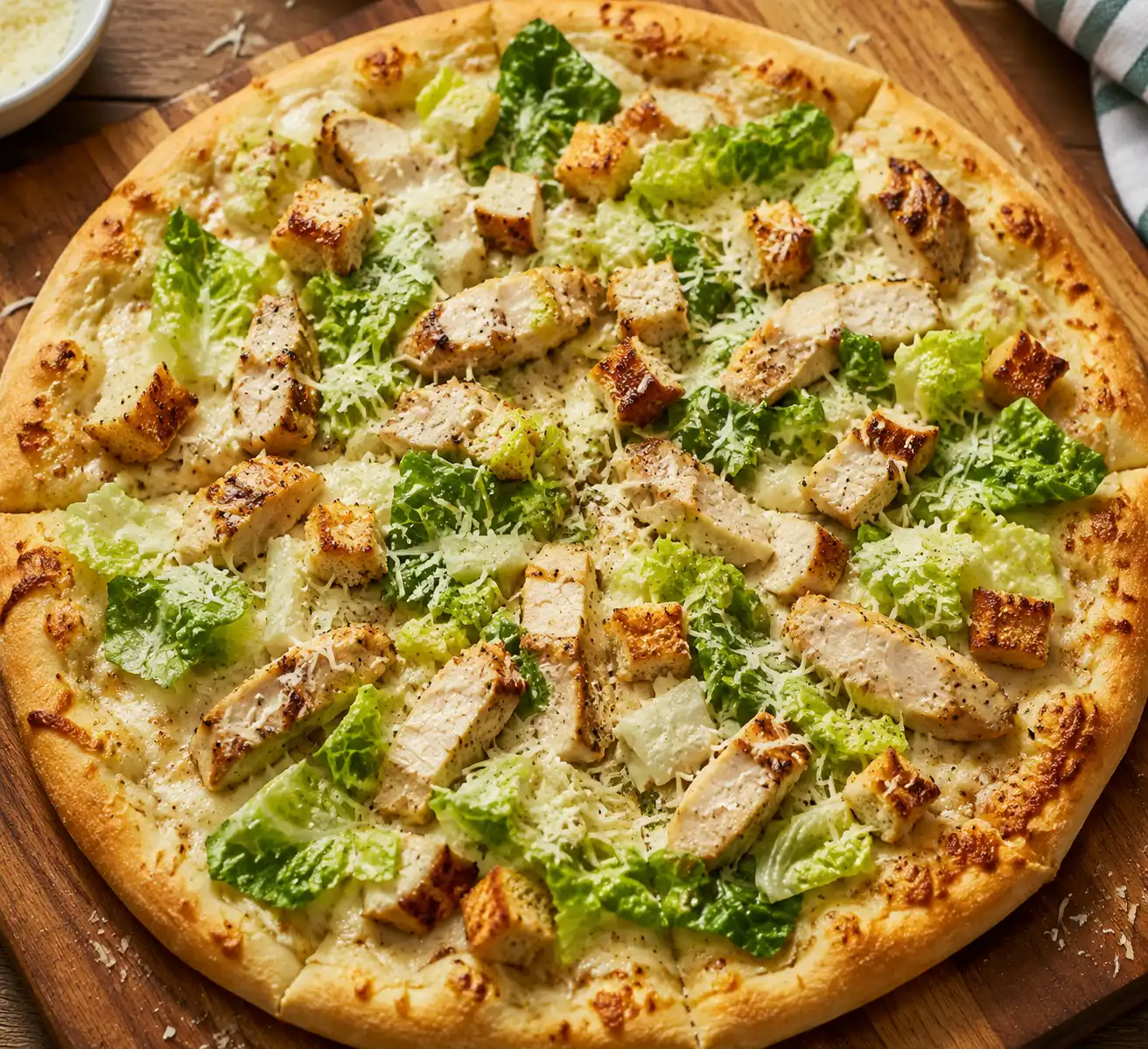
Chicken Caesar Salad Pizza is a brilliant culinary fusion that marries the bold, savory flavors of a classic Caesar salad with the comforting warmth and structure of a hand-tossed pizza. This innovative dish transforms traditional salad components—romaine lettuce, Parmesan cheese, garlicky Caesar dressing, and grilled chicken—into vibrant, texturally dynamic toppings on a crisp, golden crust. Far from being just a trendy gimmick, Chicken Caesar Salad Pizza represents a thoughtful evolution in modern comfort food: it satisfies cravings for both freshness and heartiness, bridges the gap between appetizer and main course, and offers endless opportunities for customization without sacrificing authenticity. Whether served at a casual family dinner, elevated at a gastropub, or prepared for meal prep with smart ingredient swaps, this pizza redefines what “salad on a crust” can be—elegant yet approachable, nutritious yet indulgent, and deeply flavorful without relying on excessive processing or artificial enhancers.
The History
The origins of Chicken Caesar Salad Pizza are rooted not in a single eureka moment, but in the gradual, organic cross-pollination of American culinary trends over the past three decades. The Caesar salad itself was invented in 1924 by Italian-Mexican restaurateur Caesar Cardini in Tijuana, Mexico—a fact often overlooked amid its enduring association with American dining culture. Its rise to national prominence accelerated in the 1950s–60s as pre-packaged dressings and romaine lettuce became widely available, cementing its status as a lunchtime staple. Meanwhile, pizza’s American evolution—from Neapolitan immigrant tradition to Midwestern deep-dish and New York–style thin crust—created fertile ground for experimentation. The first documented appearances of salad-topped pizzas emerged in the late 1980s and early 1990s among California-based chefs championing “California pizza,” a movement led by figures like Ed LaDou (who helped develop the menu for Spago) and Wolfgang Puck. These chefs treated pizza as a canvas—not bound by Old World rules—and began layering unconventional ingredients like arugula, goat cheese, and roasted vegetables post-bake. Chicken Caesar entered this lexicon naturally: grilled chicken was already a common Caesar add-on, and the creamy, anchovy-kissed dressing lent itself beautifully to pairing with mozzarella and aged cheeses. By the mid-2000s, national chains (including California Pizza Kitchen and MOD Pizza) introduced variations, while food bloggers and home cooks amplified its popularity through social media—especially Instagram and Pinterest—where its photogenic contrast of green leaves, golden crust, and snowy cheese made it an instant visual standout. Today, Chicken Caesar Salad Pizza stands as a testament to American culinary adaptability: a globally inspired, locally executed dish that honors tradition while boldly rewriting the rules of two beloved classics.
Ingredients Breakdown
Understanding each component—and why it matters—is key to mastering this recipe. Unlike simpler pizzas, Chicken Caesar Salad Pizza relies on layered flavor development, where timing, temperature, and ingredient integrity dramatically affect the final result.
- Crust: A thin-to-medium, slightly chewy, well-fermented dough is ideal. High-protein bread flour (12–13% protein) yields superior gluten structure and oven spring, while a 24–72 hour cold fermentation enhances complexity and digestibility. Optional additions include a tablespoon of olive oil for tenderness or a pinch of garlic powder for subtle depth.
- Base Sauce: Authenticity begins here: skip traditional tomato sauce entirely. Instead, use a high-quality, emulsified Caesar dressing—preferably homemade (see below) or a premium refrigerated brand (avoid shelf-stable versions with excessive preservatives or sugar). The dressing acts as both binder and primary seasoning; its balance of umami (anchovies), acidity (lemon juice), richness (egg yolk or mayo base), and salt (Parmesan, garlic, Worcestershire) must shine without overwhelming.
- Cheeses: A dual-cheese strategy delivers optimal melt and finish. Freshly grated full-fat mozzarella (low-moisture, part-skim works too) provides stretch and structural cohesion during baking. Finely grated authentic Parmigiano-Reggiano or Grana Padano adds nutty, salty complexity and a delicate crystalline crunch when sprinkled both under and over the toppings. Optional: a light dusting of Pecorino Romano for extra sharpness.
- Chicken: Boneless, skinless chicken breasts or thighs—brined for 30 minutes in 1 cup water + 1 tbsp kosher salt + 1 tsp black pepper—ensure juiciness. Grilled or pan-seared over medium-high heat until internal temperature reaches 165°F (74°C), then rested for 5 minutes before slicing against the grain into thin, even strips. Marinating in lemon zest, garlic, oregano, and olive oil prior to cooking adds aromatic dimension.
- Romaine Lettuce: Only crisp, inner hearts of romaine—never iceberg or butter lettuce—deliver the necessary crunch and clean bitterness. Leaves must be thoroughly dried (a salad spinner is essential) and torn—not chopped—to prevent sogginess and maximize surface area for dressing adhesion. For best texture, add romaine after baking, while still cool and fresh.
- Croutons: Homemade croutons outshine store-bought every time. Cube day-old rustic bread (ciabatta or sourdough preferred), toss with garlic-infused olive oil, sea salt, black pepper, and a whisper of dried oregano, then bake at 375°F (190°C) for 12–15 minutes until golden and crisp—not browned. Cool completely before use to preserve crunch.
- Finishing Elements: Freshly cracked black pepper, lemon zest, a final drizzle of high-quality extra-virgin olive oil, and optional microgreens or shaved fennel for brightness and sophistication.
Step-by-Step Recipe
- Prepare the Dough (Day Before Recommended): In a large bowl, combine 3¾ cups (480g) bread flour, 1¼ tsp (7g) instant yeast, 2 tsp (12g) fine sea salt, and 1¼ cups (300ml) lukewarm filtered water (85–90°F). Mix with a wooden spoon until shaggy, then knead by hand or stand mixer with dough hook for 8–10 minutes until smooth and elastic. Place in an oiled bowl, cover with damp cloth, and let rise at room temperature for 2 hours. Transfer to a sealed container and refrigerate for 24–72 hours for optimal flavor and texture.
- Make the Caesar Dressing (Optional but Highly Recommended): In a blender or food processor, combine 2 anchovy fillets (rinsed), 2 garlic cloves, 1 large egg yolk, 2 tsp Dijon mustard, 2 tbsp fresh lemon juice, ½ cup (120ml) extra-virgin olive oil, ¼ cup (25g) finely grated Parmigiano-Reggiano, 1 tsp Worcestershire sauce, and ¼ tsp freshly ground black pepper. Blend until thick and emulsified. Refrigerate for at least 30 minutes to meld flavors. Yield: ~1 cup.
- Prepare the Chicken: Brine chicken in saltwater solution (above) for 30 minutes. Pat dry, rub with 1 tbsp olive oil, lemon zest, 1 minced garlic clove, ½ tsp dried oregano, and black pepper. Grill or sear over medium-high heat for 5–6 minutes per side. Rest 5 minutes, then slice thinly across the grain.
- Bake the Croutons: Preheat oven to 375°F (190°C). Cube 2 cups (about 150g) day-old bread. Toss with 3 tbsp garlic-infused olive oil, ½ tsp sea salt, ¼ tsp black pepper, and pinch of oregano. Spread on parchment-lined sheet tray. Bake 12–15 minutes, flipping halfway, until golden and crisp. Cool completely.
- Shape and Top the Pizza: Remove dough from fridge 2 hours before baking. Divide into two 12-oz (340g) portions. On a floured surface, gently stretch each into a 12-inch round, leaving a slightly thicker rim. Transfer to lightly floured pizza peel or inverted baking sheet. Brush edges lightly with olive oil. Spread ¼ cup Caesar dressing evenly over base, leaving ½-inch border. Sprinkle with ½ cup shredded mozzarella and 2 tbsp grated Parmigiano-Reggiano. Arrange half the sliced chicken evenly over cheese. Bake immediately.
- Bake to Perfection: Preheat pizza stone or heavy-duty baking steel at 500°F (260°C) for at least 1 hour. Slide pizza onto hot surface. Bake 9–12 minutes—until crust is puffed, blistered, and golden with dark flecks, and cheese is fully melted and beginning to brown at edges.
- Finish with Freshness: Remove from oven. Immediately scatter half the chilled, dried romaine over hot pizza. Sprinkle generously with croutons and remaining 1 tbsp Parmigiano-Reggiano. Finish with freshly cracked black pepper, lemon zest, and a delicate drizzle of extra-virgin olive oil. Let rest 2 minutes before slicing.
Tips
- Dry Romaine Relentlessly: Even a trace of moisture will steam the crust and wilt the greens. Spin dry twice, then lay on triple-layered paper towels and refrigerate uncovered for 15 minutes pre-assembly.
- Use a Pizza Steel Over Stone: Steel conducts heat faster and more evenly, yielding superior oven spring and bottom char—critical for balancing the weight of toppings without gumminess.
- Underseason the Chicken—Not the Dressing: Since Caesar dressing is inherently salty and umami-rich, keep chicken seasoning minimal (just salt, pepper, lemon, garlic) to avoid sodium overload.
- Don’t Skip the Rest: Allowing baked pizza to rest 2 minutes lets residual heat gently soften romaine just enough—without cooking it—while letting cheese set for cleaner slices.
- Scale Dressing Wisely: Too much dressing makes the pizza soggy; too little leaves it bland. Start with ¼ cup per 12-inch pizza and adjust based on dough absorption and personal preference.
- Grate Cheese Yourself: Pre-grated cheeses contain anti-caking agents (like cellulose) that inhibit melting and create graininess. Freshly grated melts smoother and tastes exponentially richer.
- Freeze Dough Balls Individually: Portion dough after bulk fermentation, wrap tightly in plastic + foil, and freeze up to 3 months. Thaw overnight in fridge before use—no loss in quality.
- Repurpose Leftovers Creatively: Extra dressing becomes a stellar pasta toss or potato salad binder; leftover chicken shines in grain bowls or wraps; extra croutons elevate soups or yogurt bowls.
Variations and Customizations
This recipe is gloriously adaptable—whether accommodating dietary needs, seasonal produce, or global flavor inspirations. Below are rigorously tested, chef-approved variations that maintain structural integrity and flavor harmony:
- Gluten-Free Version: Substitute certified GF all-purpose flour blend (with xanthan gum) + 1 tsp psyllium husk powder for elasticity. Use GF bread for croutons (toasted longer at 350°F to avoid burning). Ensure Caesar dressing is GF-certified (many contain malt vinegar or wheat-based thickeners).
- Vegan Adaptation: Use plant-based mozzarella shreds (Miyoko’s or Violife perform best), chickpea- or tofu-based Caesar dressing (with capers, nori, and Dijon for umami), and marinated, baked tempeh or seitan “chicken.” Top with hemp seeds instead of Parmesan and lemon-thyme croutons.
- Keto/Low-Carb Option: Replace crust with a fathead dough (almond flour, cream cheese, mozzarella, egg) or portobello “crusts.” Reduce croutons to toasted almond slivers and increase healthy fats (avocado slices, pine nuts, olive oil drizzle).
- Mediterranean Twist: Swap romaine for baby arugula and radicchio; replace chicken with grilled shrimp or flaked wild-caught salmon; add kalamata olives, sun-dried tomatoes, and crumbled feta. Use lemon-oregano dressing instead of classic Caesar.
- Smoky BBQ Variation: Marinate chicken in smoked paprika, chipotle, and apple cider vinegar; swap Caesar for a tangy, low-sugar BBQ ranch hybrid (ranch + 1 tbsp BBQ sauce + splash of apple cider vinegar); top with pickled red onions and crispy fried shallots.
- Breakfast Pizza Edition: Use breakfast sausage instead of chicken; substitute Caesar with a dill- and chive-infused Greek yogurt “Caesar”; top with soft-scrambled eggs added in the last 2 minutes of baking and chives.
- Spicy Arrabbiata Style: Add 1 tsp Calabrian chili paste to Caesar dressing; top with pepperoncini, pickled jalapeños, and crumbled spicy soppressata. Finish with basil ribbons and burrata dollops.
- Seasonal Produce Swaps: In spring: add blanched asparagus tips and pea shoots. In summer: grilled corn, heirloom cherry tomatoes, and basil. In fall: roasted delicata squash and toasted pepitas. In winter: caramelized fennel and citrus segments.
Health Considerations and Nutritional Value
Chicken Caesar Salad Pizza can be a nutrient-dense, balanced meal—when thoughtfully composed—but also carries potential pitfalls if shortcuts are taken. A standard 12-inch serving (½ recipe) contains approximately:
- Calories: 780–920 kcal (varies with crust thickness, cheese quantity, and dressing richness)
- Protein: 42–51g (from chicken, cheese, and egg yolk in dressing—excellent for satiety and muscle maintenance)
- Fat: 38–46g (predominantly unsaturated from olive oil, avocado oil in dressing, and cheese; moderate saturated fat from dairy)
- Carbohydrates: 52–64g (mostly complex carbs from whole-grain or fermented dough; refined flour versions spike glycemic load)
- Fiber: 4–7g (enhance with whole-wheat dough, added flaxseed, or extra romaine)
- Vitamins & Minerals: Rich in calcium (cheese), vitamin K (romaine), B12 (chicken, cheese), selenium (chicken), and antioxidants (garlic, lemon, olive oil)
Key Health Notes:
- Anchovies & Omega-3s: Traditional Caesar includes anchovies—small but potent sources of EPA/DHA omega-3s, supporting heart and brain health. Don’t omit them for flavor or nutrition; they dissolve into the dressing, adding depth—not fishiness.
- Sodium Awareness: Commercial dressings and cheeses can contribute >1,200mg sodium per serving. Make your own dressing (control salt), choose low-sodium mozzarella, and rinse canned anchovies to mitigate.
- Digestibility: Cold-fermented dough contains prebiotic fibers and reduced phytic acid, improving mineral absorption and gut tolerance—especially beneficial for those with mild gluten sensitivity.
- Added Sugar Red Flag: Many bottled Caesar dressings contain 3–5g added sugar per tablespoon. Homemade versions eliminate this entirely—critical for metabolic health and avoiding energy crashes.
- Vegetable Density Matters: One cup of romaine contributes only ~8 calories but delivers 100%+ DV of vitamin K and folate. Maximize volume—pile high! Consider doubling the romaine for lower-calorie density and increased fiber.
- Pairing Wisdom: Serve with a side of lemon-water infused with mint or a small mixed-greens salad to boost phytonutrient diversity without excess calories.
Ingredients
- For the Dough (Makes Two 12-Inch Pizzas):
– 3¾ cups (480g) unbleached bread flour, plus more for dusting
– 1¼ tsp (7g) instant yeast
– 2 tsp (12g) fine sea salt
– 1¼ cups (300ml) lukewarm filtered water (85–90°F)
– 1 tbsp (15ml) extra-virgin olive oil (optional, for enriched dough) - For the Homemade Caesar Dressing (Yields ~1 Cup):
– 2 anchovy fillets, rinsed and patted dry
– 2 medium garlic cloves, peeled
– 1 large egg yolk (pasteurized if concerned about raw eggs)
– 2 tsp Dijon mustard
– 2 tbsp fresh lemon juice (about 1 lemon)
– ½ cup (120ml) extra-virgin olive oil
– ¼ cup (25g) finely grated Parmigiano-Reggiano
– 1 tsp Worcestershire sauce
– ¼ tsp freshly ground black pepper
– Pinch of cayenne (optional, for subtle heat) - For the Chicken:
– 2 boneless, skinless chicken breasts (about 1 lb / 450g total)
– 1 cup (240ml) water
– 1 tbsp (18g) kosher salt (for brine)
– 1 tsp black pepper (for brine)
– 1 tbsp (15ml) olive oil
– 1 tsp lemon zest
– 1 garlic clove, minced
– ½ tsp dried oregano - For Assembly & Topping:
– 1 large head romaine lettuce, inner hearts only
– 1 cup (100g) homemade croutons (see Step-by-Step)
– 1 cup (120g) low-moisture mozzarella, shredded
– ⅓ cup (35g) freshly grated Parmigiano-Reggiano, divided
– Freshly cracked black pepper
– Lemon zest (from 1 lemon)
– High-quality extra-virgin olive oil, for finishing
– Optional: microgreens, shaved fennel, or capers
Directions
- Prepare the Dough: In a large mixing bowl, whisk together flour, yeast, and salt. Gradually pour in lukewarm water while stirring with a wooden spoon until a shaggy dough forms. Turn onto a lightly floured surface and knead for 8–10 minutes until smooth, supple, and passes the windowpane test (stretch a small piece thin enough to see light through without tearing). Place in a lightly oiled bowl, cover with damp cloth, and let rise at room temperature for 2 hours. Gently punch down, divide into two equal balls (≈340g each), place in oiled containers, seal, and refrigerate for 24–72 hours.
- Make the Dressing: In a blender or food processor, combine anchovies, garlic, egg yolk, Dijon, lemon juice, and Worcestershire. Blend until smooth. With machine running, slowly drizzle in olive oil until thick and emulsified. Stir in grated Parmigiano-Reggiano and black pepper. Taste and adjust—add more lemon for brightness or anchovy for depth. Refrigerate for at least 30 minutes before using.
- Brine and Cook the Chicken: In a small bowl, stir water, kosher salt, and black pepper until dissolved. Submerge chicken breasts and refrigerate for 30 minutes. Remove, pat *extremely* dry with paper towels. Rub with olive oil, lemon zest, minced garlic, oregano, and additional black pepper. Heat a cast-iron skillet over medium-high heat. Sear chicken 5–6 minutes per side until deeply golden and internal temperature reaches 165°F (74°C). Transfer to cutting board, tent loosely with foil, and rest 5 minutes. Slice thinly against the grain.
- Prepare Croutons: Preheat oven to 375°F (190°C). Cut 2 cups (150g) day-old bread into ¾-inch cubes. In a bowl, toss with 3 tbsp garlic-infused olive oil, ½ tsp sea salt, ¼ tsp black pepper, and pinch of oregano. Spread evenly on parchment-lined baking sheet. Bake 12–15 minutes, flipping halfway, until golden and crisp. Cool completely on wire rack.
- Preheat & Shape: At least 1 hour before baking, place pizza stone or steel on center oven rack and preheat to 500°F (260°C). Remove dough from fridge 2 hours prior. On floured surface, gently stretch one dough ball into 12-inch round, keeping outer edge slightly thicker. Transfer to floured pizza peel.
- Top & Bake: Brush crust edge lightly with olive oil. Spread ¼ cup Caesar dressing evenly over base, leaving ½-inch border. Sprinkle with ½ cup mozzarella and 1 tbsp Parmigiano-Reggiano. Arrange half the chicken strips evenly over cheese. Slide onto hot stone/steel. Bake 9–12 minutes until crust is puffed, blistered, and golden-brown at edges, and cheese is bubbling and lightly spotted.
- Finish & Serve: Carefully remove pizza. Immediately scatter half the chilled, thoroughly dried romaine over top. Sprinkle generously with ½ cup croutons and remaining 2 tbsp Parmigiano-Reggiano. Finish with freshly cracked black pepper, lemon zest, and ½ tsp extra-virgin olive oil. Let rest 2 minutes. Slice with pizza cutter or sharp chef’s knife. Repeat with second dough ball. Serve immediately.
FAQ
- Can I make this pizza ahead of time?
- Yes—with smart staging. Prepare dough, dressing, chicken, and croutons up to 3 days in advance. Store dough in fridge (up to 72 hrs) or freezer (up to 3 months). Dressing keeps 1 week refrigerated. Cooked chicken lasts 4 days refrigerated or 3 months frozen. Croutons stay crisp in airtight container for 1 week. Assemble and bake just before serving—romaine must be added fresh off the oven.
- Why does my crust get soggy?
- Sogginess usually stems from: (1) excess dressing—always measure; (2) wet romaine—dry *twice*, then chill; (3) underheated stone—preheat minimum 1 hour; (4) overloading toppings—stick to recommended amounts; or (5) using cold dough—let it temper 2 hours before stretching.
- Is traditional Caesar dressing safe to eat raw?
- Yes—if using pasteurized egg yolk or a trusted commercial version labeled “safe to eat raw.” For absolute safety, gently cook the yolk: whisk yolk with lemon juice and mustard in a heatproof bowl set over simmering water (bain-marie), stirring constantly until mixture thickens slightly (~160°F), then proceed with oil emulsification.
- What’s the best cheese substitute for lactose-intolerant guests?
- Aged hard cheeses like Parmigiano-Reggiano and Pecorino Romano are naturally very low in lactose (<0.1g per serving). For mozzarella, choose lactose-free shredded mozzarella (widely available) or a high-quality vegan mozzarella designed for melting.
- Can I grill this pizza instead of baking?
- Absolutely—and highly recommended for smoky nuance. Preheat gas or charcoal grill to 500°F+. Oil grates well. Stretch dough, brush one side with oil, place oiled-side down on grates. Grill 2–3 minutes until puffed and marked. Flip, quickly spread dressing, cheese, and chicken, then close lid and grill 4–6 minutes until crust is crisp and cheese melted. Finish with romaine and croutons off-heat.
- How do I reheat leftovers without ruining the texture?
- Avoid microwaving—it steams the romaine and toughens cheese. Instead, reheat crust-only slices in a 400°F (200°C) oven or toaster oven for 4–5 minutes until crisp. Then top with fresh romaine, croutons, and a drizzle of dressing. Never reheat dressed or topped pizza.
- My homemade dressing broke—how do I fix it?
- An emulsion breaks when oil is added too fast or temperature fluctuates. To rescue: Place 1 tsp Dijon mustard and 1 tsp lemon juice in clean blender. With blender running, slowly drizzle in broken dressing, a teaspoon at a time, until fully reincorporated and creamy again.
- Can I use rotisserie chicken?
- Yes—but with caveats. Choose low-sodium, minimally seasoned rotisserie chicken. Shred or slice, then pat *very* dry to remove excess moisture. For best flavor, briefly sauté in olive oil with garlic and lemon zest to refresh aromatics and evaporate surface liquid.
Summary
Chicken Caesar Salad Pizza is a masterclass in intentional fusion—honoring the bold, anchovy-kissed soul of Caesar and the artisanal integrity of hearth-b