Introduction
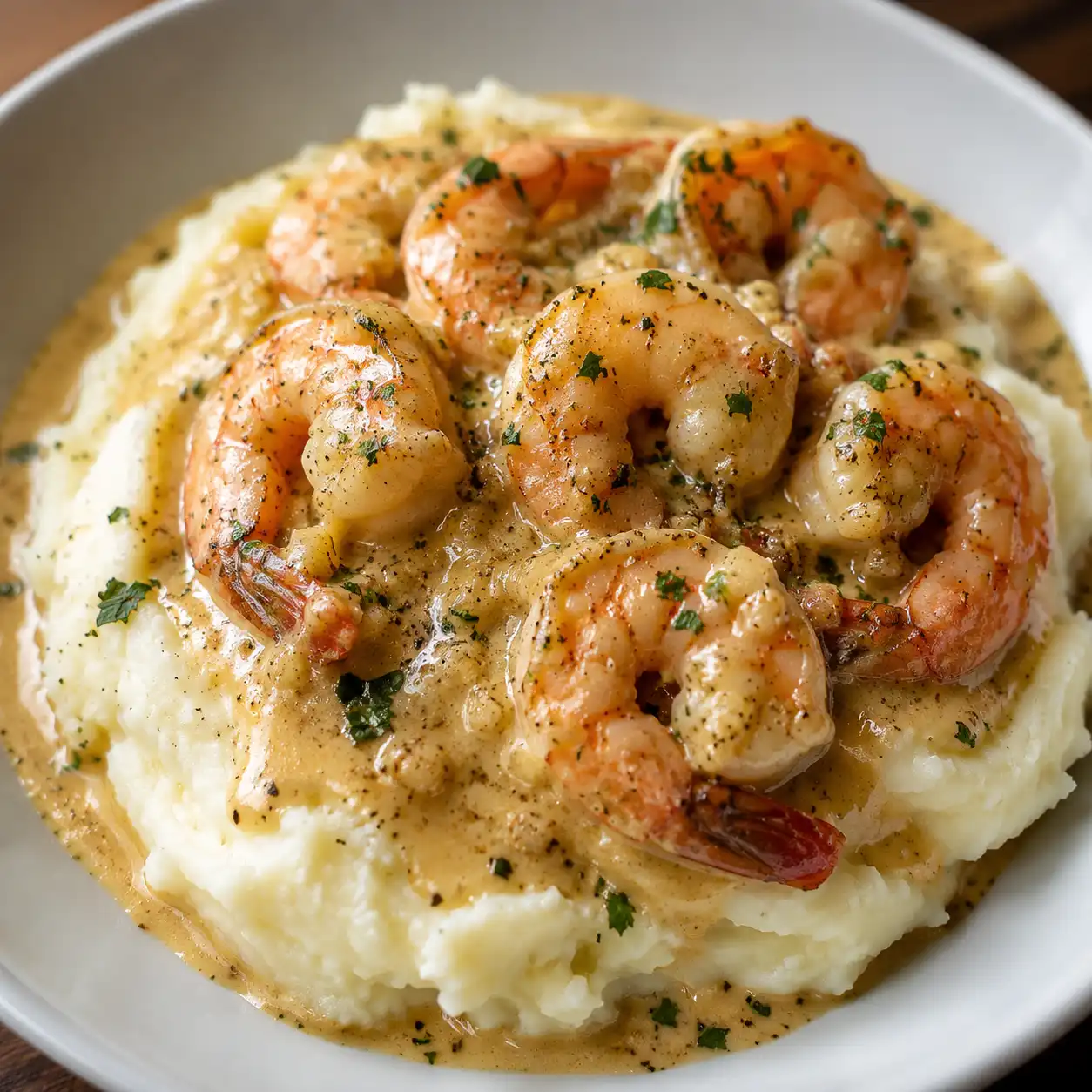
Creamy Garlic Shrimp over Mashed Potatoes is the quintessential comfort food dish that marries elegance with homey warmth—perfect for weeknight dinners, date nights, or impressing guests without spending hours in the kitchen. This luscious, restaurant-quality meal features plump, tender shrimp enveloped in a rich, velvety garlic-infused cream sauce, delicately balanced with herbs and a hint of brightness, all spooned generously over silky-smooth, buttery mashed potatoes. Its allure lies not only in its decadent flavor profile but also in its remarkable versatility, ease of preparation, and deeply satisfying mouthfeel. Whether you’re seeking a soul-soothing reprieve after a long day or a centerpiece dish that feels indulgent yet approachable, this recipe delivers on every front—with minimal fuss and maximum reward.
The History
While shrimp and potatoes have been staples across global cuisines for centuries, the modern iteration of Creamy Garlic Shrimp over Mashed Potatoes is a relatively recent culinary fusion rooted in mid-20th-century American and European home cooking traditions. Shrimp, once considered a luxury ingredient reserved for coastal communities and fine dining, became widely accessible post-World War II thanks to advances in refrigeration, transportation, and aquaculture. Simultaneously, creamy pan sauces—inspired by French techniques like *sauce au vin* and *beurre blanc*, but adapted for quicker stovetop execution—gained popularity in American cookbooks and TV cooking shows of the 1950s and ’60s. Garlic emerged as a defining flavor during the “garlic renaissance” of the 1970s and ’80s, when chefs like Julia Child and later Emeril Lagasse championed its bold, aromatic depth. Mashed potatoes, meanwhile, trace their refined Western form to Antoine-Augustin Parmentier’s 18th-century advocacy in France—but it was the American adoption of instant and dairy-enriched versions (think Yukon Golds whipped with sour cream and roasted garlic) that cemented their role as the ideal neutral canvas for saucy proteins. Today, this dish represents a harmonious convergence of technique, accessibility, and nostalgia—a true heirloom recipe passed down through food blogs, family WhatsApp groups, and generations of home cooks who’ve learned that great flavor doesn’t require complexity—just care, quality ingredients, and thoughtful layering of textures and aromas.
Ingredients Breakdown
Every exceptional dish begins with intention behind each component—and this recipe is no exception. Below is a meticulous breakdown of why each ingredient matters, how it functions, and what to look for when selecting:
- Shrimp: Large (26/30 or 31/40 count per pound), peeled and deveined, preferably wild-caught Gulf or Pacific shrimp for superior sweetness and firm texture. Avoid pre-cooked or “enhanced” shrimp (treated with sodium tripolyphosphate), which can become rubbery and impart a soapy aftertaste. Frozen is perfectly acceptable—and often fresher than “fresh” counter shrimp—provided it’s thawed slowly in the refrigerator overnight or under cold running water.
- Garlic: Fresh, plump cloves—not pre-minced or jarred. Crushing and finely mincing releases allicin, the compound responsible for garlic’s pungent aroma and health benefits. For layered flavor, use half minced for immediate impact and half gently smashed and simmered in the sauce base, then removed before serving—this infuses deep, mellow savoriness without sharp bite.
- Heavy Cream: Minimum 36% milk fat. Its high fat content stabilizes the sauce, prevents curdling, and delivers luxurious mouth-coating richness. Half-and-half or whole milk will thin the sauce and risk separation; light cream lacks body. For a lighter twist without sacrificing silkiness, substitute up to ½ cup with full-fat coconut milk—but retain at least ¾ cup heavy cream for structure.
- Butter: Unsalted, European-style (82–85% fat) preferred for its nutty depth and superior emulsifying power. Used in three stages: sautéing aromatics, finishing the sauce for gloss and sheen, and enriching the mashed potatoes. Salted butter can be used—but adjust added salt carefully.
- Onion & Shallots: Yellow onion provides foundational sweetness and body; shallots add refined, wine-like complexity and dissolve seamlessly into the sauce. Finely diced ensures even cooking and integration—no crunchy bits.
- Dry White Wine: A crisp, high-acid varietal like Sauvignon Blanc, Pinot Grigio, or unoaked Chardonnay. The alcohol cooks off, leaving bright acidity to cut through richness and lift the entire dish. Substitute with dry vermouth or a splash of apple cider vinegar + low-sodium vegetable broth if avoiding alcohol.
- Chicken or Seafood Stock: Low-sodium, homemade preferred—or a high-quality carton brand (like Kitchen Basics or Better Than Bouillon Seafood Base). Adds umami depth and savory backbone without overpowering. Never use regular bouillon cubes—they’re excessively salty and contain artificial flavors.
- Herbs: Fresh parsley is non-negotiable for garnish—its grassy, peppery notes provide vital freshness. Dried thyme or oregano may be added early for earthy nuance, but fresh dill or chives can stand in for parsley if unavailable. Avoid dried parsley—it contributes negligible flavor.
- Potatoes: Yukon Golds are ideal—their naturally buttery flavor, creamy flesh, and moderate starch content yield velvety, lump-free mash without excessive glueyness. Russets work in a pinch (higher starch = fluffier, drier texture), but require extra fat and liquid to compensate. Avoid waxy varieties like red bliss or fingerlings—they hold shape and won’t break down smoothly.
- Dairy for Mashed Potatoes: Warm whole milk or half-and-half (never cold—causes lumps), unsalted butter, and a touch of sour cream or crème fraîche for tang and stability. Cream cheese adds incredible richness but must be softened and incorporated gradually to avoid gumminess.
- Seasonings: Fine sea salt (for even dissolution), freshly ground white or black pepper (white for aesthetic purity, black for bolder heat), and a whisper of freshly grated nutmeg (a classic pairing with potatoes that enhances sweetness and rounds out dairy notes).
Step-by-Step Recipe
- Prep the Potatoes: Peel and cube 2 lbs Yukon Gold potatoes into uniform 1½-inch pieces. Place in a large pot, cover with cold, salted water (2 tsp kosher salt per quart), and bring to a gentle boil. Reduce heat to medium-low and simmer uncovered for 15–18 minutes—until fork-tender but not falling apart. Drain thoroughly in a colander, then return to the warm (off-heat) pot for 1–2 minutes to evaporate excess moisture. This step is critical—wet potatoes = gluey mash.
- Make the Mash: While potatoes steam-dry, heat ½ cup whole milk, ¼ cup sour cream, and 6 tbsp unsalted butter in a small saucepan until butter melts and mixture is steaming (do not boil). Using a potato ricer or food mill (never a blender or food processor—overworking releases starch and creates gummy texture), press hot potatoes into a large bowl. Gradually whisk in warm dairy mixture, ¼ cup at a time, until desired consistency is reached (smooth, airy, and glossy—not stiff or soupy). Season with 1 tsp fine sea salt, ½ tsp white pepper, and a pinch of freshly grated nutmeg. Cover with a clean kitchen towel and keep warm.
- Prep the Shrimp: Pat 1 lb large shrimp *extremely* dry with paper towels—moisture is the enemy of searing. Toss with 1 tsp olive oil, ½ tsp smoked paprika (for subtle depth), and a pinch of cayenne (optional). Set aside at room temperature for 10 minutes.
- Sauté Aromatics: In a wide, heavy-bottomed skillet (12-inch stainless or enameled cast iron), melt 2 tbsp butter over medium heat. Add 1 finely diced yellow onion and 3 thinly sliced shallots. Sauté 5–6 minutes until soft and translucent—do not brown. Add 4 smashed garlic cloves (peeled) and 1 tsp fresh thyme leaves; cook 1 minute more until fragrant.
- Build the Sauce Base: Pour in ½ cup dry white wine, scraping up any browned bits. Simmer 2–3 minutes until reduced by half. Stir in 1 cup low-sodium seafood or chicken stock and 1 bay leaf. Bring to a gentle simmer and cook 4–5 minutes to concentrate flavor. Remove and discard bay leaf and smashed garlic cloves.
- Finish the Sauce: Reduce heat to low. Whisk in 1 cup heavy cream and simmer gently (do not boil vigorously) for 3–4 minutes until slightly thickened and nappe consistency (coats the back of a spoon). Stir in 1 tbsp lemon juice and 2 tsp Dijon mustard for brightness and emulsion stability. Taste and adjust salt—start with ½ tsp, then add more as needed.
- Seared Shrimp Integration: Increase heat to medium-high. Add remaining 1 tbsp butter to the sauce. Once foaming, add shrimp in a single layer. Cook 1–1.5 minutes per side—just until opaque and pink with lightly golden edges. Do *not* overcook—shrimp continue to cook off-heat. Remove from heat immediately.
- Final Enrichment: Stir in 2 tbsp cold, cubed butter (monte au beurre) off-heat, swirling constantly until sauce turns glossy and luxuriously thick. Fold in ¼ cup finely chopped fresh parsley and 1 tsp lemon zest. Let rest 2 minutes—this allows flavors to marry and sauce to settle.
- Plate with Intention: Spoon a generous ¾ cup of warm mashed potatoes into each shallow bowl or plate, using the back of a spoon to create a slight well in the center. Ladle 5–6 shrimp with abundant sauce over the potatoes, ensuring every portion gets both creamy liquid and herb-flecked garnish. Finish with an extra sprinkle of parsley, a dusting of white pepper, and a delicate drizzle of high-quality extra-virgin olive oil or truffle oil (optional).
Tips
- Temperature Control is Everything: Keep your mashed potatoes warm (but not hot) while preparing the shrimp—place the bowl over a pot of barely simmering water (bain-marie) covered with foil. If potatoes cool too much, they’ll harden and resist re-warming smoothly.
- Shrimp Sear Secret: For perfect caramelization without overcooking, ensure your skillet is fully preheated *before* adding butter—and wait until the butter stops foaming and begins to turn golden (not brown) before adding shrimp. Crowding the pan lowers temperature and steams instead of sears.
- Sauce Consistency Rescue: If sauce thickens too much, whisk in warm broth or cream, 1 tbsp at a time. If it breaks (looks greasy or curdled), remove from heat, let cool 30 seconds, then vigorously whisk in 1 tsp cold heavy cream or a teaspoon of Dijon mustard to re-emulsify.
- Garlic Burn Prevention: Always cook minced garlic *after* onions/shallots are soft—raw garlic burns in under 30 seconds on medium-high heat, turning bitter. For deeper flavor without risk, use the smashed-clove infusion method described above.
- Mash Texture Mastery: For ultra-silky results, pass warm potatoes through a ricer *twice*. If lumps persist, gently fold with a silicone spatula—not a whisk—to avoid activating starch. Never add cold dairy—it shocks the potatoes and causes lumping.
- Make-Ahead Strategy: Prep components separately up to 1 day ahead: peel/clean shrimp (store in brine: 1 tsp salt + 1 cup water, refrigerated); make mashed potatoes (cool completely, then refrigerate in airtight container—reheat gently with splash of milk); and chop aromatics. Assemble and cook day-of for best texture and flavor.
- Wine Pairing Wisdom: Serve alongside the same dry white wine used in cooking—or try a chilled Albariño, Vermentino, or Oregon Pinot Gris. Their citrus zest and mineral notes cut through the cream while complementing the shrimp’s sweetness.
Variations and Customizations
This recipe is a vibrant canvas—adaptable to dietary needs, seasonal produce, pantry constraints, and personal taste. Explore these thoughtfully tested variations:
- Dairy-Free/Vegan Version: Replace butter with refined coconut oil or vegan butter; swap heavy cream for full-fat canned coconut milk (chilled, solid cream scooped off top); use vegetable broth and nutritional yeast (1 tbsp) for umami. For “shrimp,” try king oyster mushrooms sliced lengthwise and marinated in Old Bay, lemon, and tamari—then pan-seared until tender and golden.
- Low-Carb/Keto Adaptation: Swap mashed potatoes for cauliflower mash (steamed riced cauliflower blended with cream cheese, butter, garlic powder, and Parmesan) or rutabaga-potato blend (½ rutabaga, ½ Yukon Gold). Increase healthy fats: finish sauce with 1 tbsp ghee and top with crispy pancetta or crumbled bacon.
- Spicy Cajun Twist: Rub shrimp with 1 tbsp Cajun seasoning (paprika, garlic powder, onion powder, cayenne, oregano, thyme) before searing. Deglaze with ¼ cup beer instead of wine, and stir in 1 tsp smoked hot paprika + 1 minced chipotle in adobo at sauce-finishing stage.
- Mediterranean Style: Add ½ cup halved cherry tomatoes (roasted or raw) and ¼ cup pitted kalamata olives to the finished sauce. Garnish with crumbled feta, fresh oregano, and a drizzle of lemon-infused olive oil.
- Herbaceous Spring Version: Fold 2 tbsp finely chopped fresh tarragon and 1 tbsp chives into the sauce with parsley. Add ½ cup blanched English peas and ¼ cup asparagus tips (sautéed separately) just before plating.
- Umami Bomb Upgrade: Sauté 2 oz finely diced shiitake mushrooms with onions for earthy depth. Add 1 tsp white miso paste (dissolved in 1 tbsp warm broth) to the sauce base along with cream. Top with toasted sesame seeds and scallions.
- Brunch or Light Lunch Option: Reduce shrimp to ½ lb and double the sauce volume. Serve over toasted brioche slices or savory waffles—top with poached egg and microgreens for a decadent twist.
- Meal-Prep Friendly Batch: Double the sauce and shrimp, but keep mashed potatoes separate. Portion sauce + shrimp into airtight containers (sauce keeps 4 days refrigerated, 3 months frozen). Reheat sauce gently on stove, then spoon over freshly made or reheated potatoes.
Health Considerations and Nutritional Value
When prepared mindfully, Creamy Garlic Shrimp over Mashed Potatoes offers a nutrient-dense, balanced meal rich in high-quality protein, heart-healthy fats, and functional phytonutrients—far surpassing its “indulgent” reputation. A standard serving (1 cup mashed potatoes + 5 oz shrimp + ½ cup sauce) contains approximately:
- Calories: ~580–650 kcal (moderate for a main course, highly satiating due to protein/fat synergy)
- Protein: 32–36g (shrimp provides all 9 essential amino acids; supports muscle maintenance, immune function, and satiety)
- Healthy Fats: 30–34g total, with ~18g monounsaturated (from olive oil, butter) and ~9g saturated (largely from dairy—recent research shows dietary sat fat has neutral or beneficial effects when part of whole-food patterns)
- Carbohydrates: 32–38g (primarily complex, fiber-rich from Yukon Golds—1 medium potato offers 3g fiber, B6, potassium, and resistant starch when cooled slightly)
- Vitamins & Minerals: Exceptionally high in selenium (120% DV—powerful antioxidant), vitamin B12 (200% DV—nerve and blood health), iodine (supports thyroid), and choline (brain and liver function). Garlic contributes allicin (anti-inflammatory, antimicrobial), while parsley delivers vitamins K, C, and folate.
Smart Swaps for Specific Goals:
- Lower Sodium: Use no-salt-added broth, omit added salt in potatoes, rely on herbs, citrus, and garlic for flavor. Rinse canned broth if using.
- Heart Health Focus: Replace half the butter with avocado oil; use grass-fed butter (higher in CLA and omega-3s); add 1 tbsp ground flaxseed to mashed potatoes for soluble fiber.
- Diabetes-Friendly: Prioritize Yukon Golds (lower glycemic index than russets), pair with ample protein/fat to blunt glucose spikes, and serve with a side of non-starchy vegetables (roasted broccoli, sautéed spinach).
- Allergy-Conscious: Nut-free, soy-free, gluten-free (verify broth/wine labels), and shellfish allergy alternative: seared scallops or baked cod fillets (adjust cook time to 2–3 minutes per side).
Important Note: While rich, this dish aligns beautifully with Mediterranean, DASH, and anti-inflammatory eating patterns—emphasizing whole foods, healthy fats, lean protein, and minimal processing. Moderation and mindful pairing (e.g., a green salad with lemon vinaigrette) enhance its nutritional harmony.
Ingredients
For the Creamy Garlic Shrimp:
- 1 tablespoon extra-virgin olive oil
- 2 tablespoons unsalted butter, divided
- 1 medium yellow onion, finely diced
- 3 large shallots, thinly sliced
- 6 garlic cloves: 4 smashed (peeled), 2 finely minced
- ½ cup dry white wine (Sauvignon Blanc or Pinot Grigio)
- 1 cup low-sodium seafood or chicken stock
- 1 bay leaf
- 1 cup heavy cream (minimum 36% fat)
- 1 tablespoon fresh lemon juice
- 2 teaspoons Dijon mustard
- 1 pound large shrimp (26/30 or 31/40 count), peeled, deveined, tails optional
- 1 teaspoon smoked paprika
- ¼ teaspoon cayenne pepper (optional)
- ¼ cup finely chopped fresh flat-leaf parsley, plus extra for garnish
- 1 teaspoon lemon zest
- Fine sea salt and freshly ground white or black pepper, to taste
For the Mashed Potatoes:
- 2 pounds Yukon Gold potatoes (about 6–7 medium), peeled and cubed
- 2 teaspoons fine sea salt (for boiling water)
- ½ cup whole milk or half-and-half, warmed
- ¼ cup full-fat sour cream
- 6 tablespoons unsalted butter, cubed and softened
- 1 teaspoon fine sea salt (or to taste)
- ½ teaspoon freshly ground white pepper
- Pinch of freshly grated nutmeg
Directions
- Place peeled and cubed potatoes in a large pot. Cover with cold water by 2 inches. Add 2 tsp fine sea salt. Bring to a rolling boil over high heat, then reduce to a gentle simmer. Cook uncovered for 15–18 minutes, until potatoes pierce easily with a fork but hold their shape. Drain thoroughly in a colander. Return empty pot to stove over low heat for 1 minute to evaporate residual moisture—shake gently to dry.
- While potatoes cook, warm milk, sour cream, and 6 tbsp butter in a small saucepan over low heat until butter melts and mixture is steaming (~160°F). Keep warm.
- Using a potato ricer or food mill, press hot potatoes into a large heatproof bowl. Discard any stubborn skins. Gradually whisk in warm dairy mixture, ¼ cup at a time, using a balloon whisk or silicone spatula—stop when smooth, creamy, and glossy (typically after ¾ cup added). Overmixing leads to gluey texture—fold gently, not vigorously. Season with 1 tsp salt, ½ tsp white pepper, and nutmeg. Cover with damp towel and set aside.
- In a 12-inch heavy skillet, heat olive oil and 1 tbsp butter over medium heat. Add onion and shallots; sauté 5–6 minutes until soft and translucent. Add smashed garlic cloves and thyme; cook 1 minute until fragrant. Remove smashed garlic with tongs and discard.
- Pour in wine, scraping bottom to release fond. Simmer 2–3 minutes until reduced by half. Add stock and bay leaf. Simmer gently 4–5 minutes until slightly reduced. Remove and discard bay leaf.
- Reduce heat to low. Whisk in heavy cream. Simmer gently (do not boil rapidly) 3–4 minutes until sauce coats back of spoon. Whisk in lemon juice and Dijon. Taste and season with ½ tsp salt and several grinds of pepper.
- Increase heat to medium-high. Add remaining 1 tbsp butter. Once melted and foaming subsides, add shrimp in single layer. Sprinkle with paprika and cayenne (if using). Cook 1–1.5 minutes per side—shrimp should be opaque, pink, and lightly golden at edges. Do not overcook.
- Remove skillet from heat. Whisk in cold butter cubes one at a time until fully incorporated and sauce is glossy. Fold in parsley and lemon zest. Let rest 2 minutes.
- Spoon ¾ cup warm mashed potatoes into each bowl, shaping gently. Ladle shrimp and abundant sauce over top. Garnish with extra parsley, white pepper, and optional olive oil drizzle. Serve immediately.
FAQ
- Can I use frozen shrimp?
- Absolutely—and often recommended! Choose IQF (individually quick frozen), wild-caught shrimp with no additives. Thaw overnight in the fridge in a colander over a bowl, or submerge sealed bag in cold water for 15–20 minutes. Pat *extremely* dry before cooking.
- Why do my mashed potatoes turn gluey?
- Overworking (blending/food processing), using waxy potatoes, adding cold dairy, or insufficient draining/drying cause glueiness. Stick to Yukon Golds, rice/mill them, warm dairy, and fold—not whip.
- Can I make this ahead of time?
- Yes—with smart staging: Make potatoes (cool, refrigerate, reheat with milk); prep shrimp (brine or season); chop aromatics. Sauce can be made 1 day ahead—reheat gently, then add shrimp fresh. Never reheat cooked shrimp—it becomes rubbery.
- What’s the best substitute for heavy cream?
- Full-fat coconut milk (canned, stirred well) works best for dairy-free. For lower fat, use half-and-half—but expect thinner sauce and higher curdling risk. Never use skim or low-fat milk.
- How do I prevent the sauce from breaking or curdling?
- Keep heat low when adding cream; never boil vigorously. If it breaks, remove from heat, cool 30 sec, then whisk in 1 tsp cold cream or Dijon. Cold butter at the end also stabilizes.
- Can I use garlic powder instead of fresh?
- Fresh is strongly recommended for authentic depth and aroma. If substituting, use 1 tsp garlic powder *in addition to* 1 clove minced for balance—but don’t skip fresh entirely.
- Is this dish gluten-free?
- Yes—as written—provided you verify broth and wine are certified gluten-free (most dry wines are, but some broths contain wheat derivatives).
- How do I store leftovers?
- Store shrimp/sauce and potatoes separately in airtight containers. Refrigerate up to 3 days. Reheat potatoes with splash of milk over low heat; reheat sauce gently on stove—do not microwave shrimp directly (they toughen).
- Can I freeze this dish?
- Freeze sauce + shrimp only (without potatoes) for up to 2 months. Thaw overnight in fridge, reheat gently. Potatoes freeze poorly—texture degrades. Make fresh potatoes when serving.
- What wine pairs best with this dish?
- A crisp, mineral-driven white: Albariño (Spain), Vermentino (Sardinia), or Oregon Pinot Gris. Avoid oaky Chardonnays—they clash with garlic and cream.
Summary
Creamy Garlic Shrimp over Mashed Potatoes is a masterclass in balanced indulgence—where sweet, succulent shrimp meet a luxuriously aromatic, velvety sauce infused with slow-cooked garlic, white wine, and herbs, all resting atop impossibly smooth, buttery Yukon Gold mash enriched with sour cream and nutmeg.
It’s a deeply comforting yet elegant dish that honors technique without demanding perfection—flexible enough for weekn