Introduction
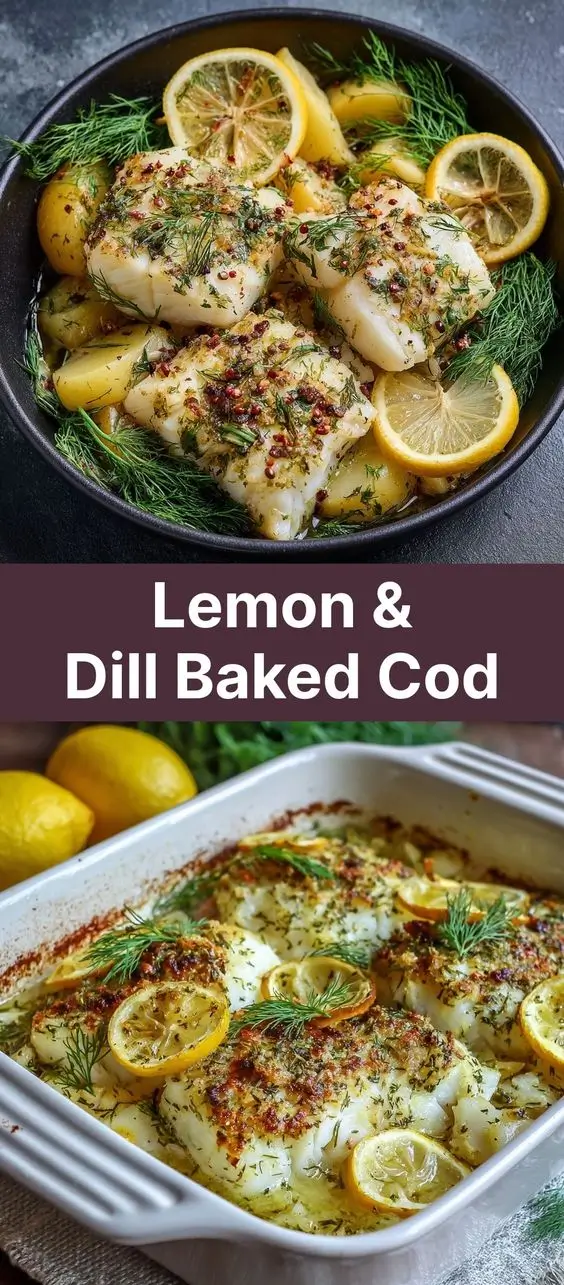
Lemon & Dill Baked Cod is a dish that effortlessly marries elegance with simplicity. With its flaky, tender texture and bright, aromatic flavors, this recipe has become a staple in modern kitchens around the world—especially among those seeking healthy, flavorful meals without the hassle of complicated techniques. Whether you’re preparing a weeknight dinner or hosting a dinner party, this baked cod recipe delivers restaurant-quality results with minimal effort. The combination of fresh lemon, fragrant dill, and delicate cod creates a harmonious balance of tangy, herbal, and savory notes that awaken the palate and nourish the body.
The History
Cod as a culinary ingredient has deep historical roots, especially in Northern European and Scandinavian cuisines, where it has been a dietary staple for centuries. Salted and dried cod, known as klippfisk in Norway or bacalhau in Portugal, was historically preserved for long sea voyages and harsh winters. However, the fresh preparation of cod—particularly baking it with herbs and citrus—gained popularity during the 20th century as refrigeration improved access to fresh seafood.
The use of lemon and dill together reflects a fusion of Mediterranean brightness and Nordic herbaceousness. Dill, commonly used in Scandinavian and Eastern European cooking, pairs naturally with fish due to its slightly sweet, anise-like flavor. Lemon, a cornerstone of Southern European cuisine, adds acidity that enhances the natural sweetness of cod. This particular recipe likely emerged from the mid-century trend toward lighter, healthier cooking, championed by chefs who emphasized fresh ingredients and simple preparations. Today, Lemon & Dill Baked Cod stands as a symbol of clean eating, global flavor inspiration, and sustainable seafood choices.
Ingredients Breakdown
- Cod Fillets: Fresh, skinless cod fillets are ideal for their mild flavor and firm yet tender texture when cooked. Look for sustainably sourced Atlantic or Pacific cod to support environmentally responsible fishing practices.
- Fresh Lemon: Both the juice and zest of lemon are used to infuse the fish with bright acidity. The zest contains essential oils that intensify the citrus aroma.
- Fresh Dill: Offers a delicate, slightly sweet herbal note. Dill should be added both during baking and after, to preserve its volatile oils and freshness.
- Olive Oil: Extra virgin olive oil adds richness, helps carry flavor, and keeps the fish moist during baking.
- Garlic: Minced garlic provides a subtle pungency that complements rather than overpowers the fish.
- Shallot or Onion: Finely chopped shallots add mild sweetness and depth without overwhelming the dish.
- Salt and Black Pepper: Essential seasonings that enhance all other flavors. Use flaky sea salt for a more nuanced finish.
- White Wine (optional): A splash can be added to the baking dish for additional moisture and complexity, creating a light pan sauce.
- Panko Breadcrumbs (optional): For a lightly crispy topping, mix with olive oil, lemon zest, and dill, then sprinkle before baking.
Each ingredient plays a crucial role—not only in flavor but also in texture and overall sensory experience. Together, they create a symphony of taste that highlights the natural quality of the fish.
Step-by-Step Recipe
- Preheat the Oven: Set your oven to 375°F (190°C). This moderate temperature ensures even cooking without drying out the delicate cod.
- Prepare the Baking Dish: Lightly grease a glass or ceramic baking dish with olive oil. You can also line it with parchment paper or aluminum foil for easier cleanup.
- Season the Cod: Pat the cod fillets dry with paper towels—this helps the seasoning adhere and prevents excess moisture. Place them in the dish, leaving space between each fillet.
- Make the Lemon-Dill Mixture: In a small bowl, combine 3 tablespoons of olive oil, juice of half a lemon, 1 teaspoon of lemon zest, 2 minced garlic cloves, 1 finely chopped shallot, 1 tablespoon of chopped fresh dill, salt, and freshly ground black pepper. Mix well.
- Coat the Fish: Spoon the mixture evenly over each cod fillet, ensuring full coverage. For deeper flavor infusion, gently rub some of the mixture underneath the fillets as well.
- Add Moisture (Optional): Pour ¼ cup of dry white wine or fish stock into the bottom of the dish to create steam and keep the fish succulent.
- Top with Lemon Slices: Arrange thin lemon slices on top of each fillet. These will caramelize slightly and infuse additional citrus essence as they bake.
- Bake: Place the dish in the preheated oven and bake for 15–18 minutes, depending on thickness. The cod is done when it flakes easily with a fork and reaches an internal temperature of 145°F (63°C).
- Finish with Fresh Dill: Remove from the oven and immediately sprinkle with an additional tablespoon of freshly chopped dill for a burst of aromatic freshness.
- Rest and Serve: Let the cod rest for 2–3 minutes before serving. This allows the juices to redistribute, resulting in a moister bite.
Tips
- Choose Thick-Cut Fillets: Thicker pieces (about 1 to 1.5 inches) are less likely to overcook and will hold up better during baking.
- Don’t Overbake: Cod cooks quickly and becomes dry if left in the oven too long. Keep a close eye starting at the 12-minute mark.
- Use Fresh Herbs: Dried dill lacks the vibrancy of fresh. If absolutely necessary, use one-third the amount of dried dill, but always opt for fresh when possible.
- Enhance Browning: For a golden crust, switch the oven to broil for the final 1–2 minutes—but watch carefully to avoid burning.
- Check Sustainability: Look for MSC (Marine Stewardship Council) certification or consult local seafood guides to ensure your cod is responsibly harvested.
- Room Temperature Start: Let the cod sit at room temperature for 10–15 minutes before baking for more even cooking.
- Double the Sauce: Make extra lemon-dill sauce to drizzle over the finished dish or serve on the side as a flavorful accompaniment.
Variations and Customizations
- Mediterranean Twist: Add capers, kalamata olives, and cherry tomatoes to the baking dish for a Greek-inspired version.
- Spicy Kick: Incorporate red pepper flakes or a dash of harissa paste into the marinade for heat lovers.
- Creamy Version: Stir a spoonful of Greek yogurt or crème fraîche into the sauce before baking for a richer profile.
- Herb Swap: Replace dill with parsley, tarragon, or chives based on availability and preference.
- Citrus Alternatives: Try lime or orange instead of lemon for a different citrus dimension.
- Crust Option: Top with a mixture of Panko breadcrumbs, Parmesan cheese, lemon zest, and melted butter before baking for a crunchy contrast.
- Sheet Pan Meal: Arrange vegetables like asparagus, zucchini, bell peppers, and baby potatoes around the cod to create a complete one-pan dinner.
- Gluten-Free: Ensure any added breadcrumbs or coatings are certified gluten-free.
- Dairy-Free: This recipe is naturally dairy-free—just confirm all added ingredients (like store-bought broth) meet your dietary needs.
Health Considerations and Nutritional Value
Cod is a lean white fish renowned for its high-quality protein and low fat content. A 4-ounce (113g) serving of baked cod contains approximately:
- Calories: 90–100
- Protein: 20g (supports muscle repair and satiety)
- Fat: Less than 1g (mostly heart-healthy unsaturated fats)
- Omega-3 Fatty Acids: Moderate amounts, beneficial for brain and cardiovascular health
- Vitamin B12: High levels, essential for nerve function and red blood cell formation
- Vitamin D: Present in small amounts, supports immune health and calcium absorption
- Selenium: An important antioxidant mineral abundant in cod
- Sodium: Naturally low, making it suitable for low-sodium diets (especially when salt is controlled)
The addition of olive oil contributes monounsaturated fats, which are linked to reduced inflammation and improved cholesterol levels. Fresh lemon provides vitamin C and flavonoids, boosting immunity and aiding iron absorption. Dill contains antioxidants and has traditionally been used for digestive support.
This dish is ideal for individuals managing weight, heart conditions, or diabetes due to its low glycemic impact and nutrient density. Pregnant women can safely enjoy cod as part of a balanced diet, though they should ensure it’s fully cooked and sourced from low-mercury waters.
To maximize health benefits, pair this cod with whole grains like quinoa or brown rice and plenty of non-starchy vegetables. Avoid heavy sauces or excessive salt to maintain its status as a heart-healthy meal.
Ingredients
- 4 skinless cod fillets (about 6 oz each, 1 inch thick)
- 3 tablespoons extra virgin olive oil
- Juice of 1 large lemon (about 3 tbsp)
- 1 teaspoon lemon zest
- 2 cloves garlic, minced
- 1 small shallot, finely chopped (or 2 tbsp onion)
- 2 tablespoons fresh dill, divided (1 tbsp in sauce, 1 tbsp garnish)
- ½ teaspoon sea salt (adjust to taste)
- Freshly ground black pepper to taste
- ¼ cup dry white wine or fish stock (optional)
- 1 lemon, thinly sliced for topping
Directions
- Preheat oven to 375°F (190°C). Lightly grease a 9×13-inch baking dish with olive oil or line with parchment paper.
- Pat cod fillets dry with paper towels and place them in the prepared dish in a single layer.
- In a small bowl, whisk together olive oil, lemon juice, lemon zest, minced garlic, chopped shallot, 1 tablespoon of dill, salt, and pepper.
- Spoon the mixture evenly over the cod fillets, coating the top and sides. Gently slide some of the mixture beneath the fillets if possible.
- Pour white wine or fish stock into the bottom of the dish, avoiding direct rinsing of the seasoning off the fish.
- Arrange lemon slices on top of each fillet.
- Bake for 15–18 minutes, or until the cod is opaque and flakes easily with a fork. Internal temperature should reach 145°F (63°C).
- Remove from oven and let rest for 3 minutes. Sprinkle with remaining fresh dill.
- Serve immediately with your choice of sides such as roasted vegetables, wild rice, or a crisp green salad.
FAQ
Can I use frozen cod?
Yes, but thaw it completely in the refrigerator overnight before using. Never bake frozen cod directly, as it will release too much water and cook unevenly.
What can I substitute for cod?
Haddock, halibut, pollock, or tilapia are excellent substitutes with similar textures and mild flavors.
Can I prepare this ahead of time?
You can assemble the dish up to 4 hours in advance and refrigerate it. However, do not bake it until ready to serve to prevent the fish from becoming mushy.
Is this recipe safe for pregnant women?
Yes, cod is low in mercury and safe for consumption during pregnancy when fully cooked. Always source from reputable suppliers.
How do I store leftovers?
Store cooled leftovers in an airtight container in the refrigerator for up to 2 days. Reheat gently in the oven or microwave—avoid over-reheating to prevent dryness.
Why did my cod turn out rubbery?
Overcooking is the most common cause. Cod should be tender and flaky, not tough. Use a timer and check early, especially with thinner fillets.
Can I grill instead of bake?
Absolutely! Grill over medium heat for 4–5 minutes per side, using a fish basket or foil to prevent sticking.
Summary
Lemon & Dill Baked Cod is a nutritious, flavorful dish that combines the delicate sweetness of cod with the zesty brightness of lemon and the aromatic freshness of dill. Simple to prepare yet impressive enough for guests, it’s a perfect centerpiece for a wholesome, satisfying meal.