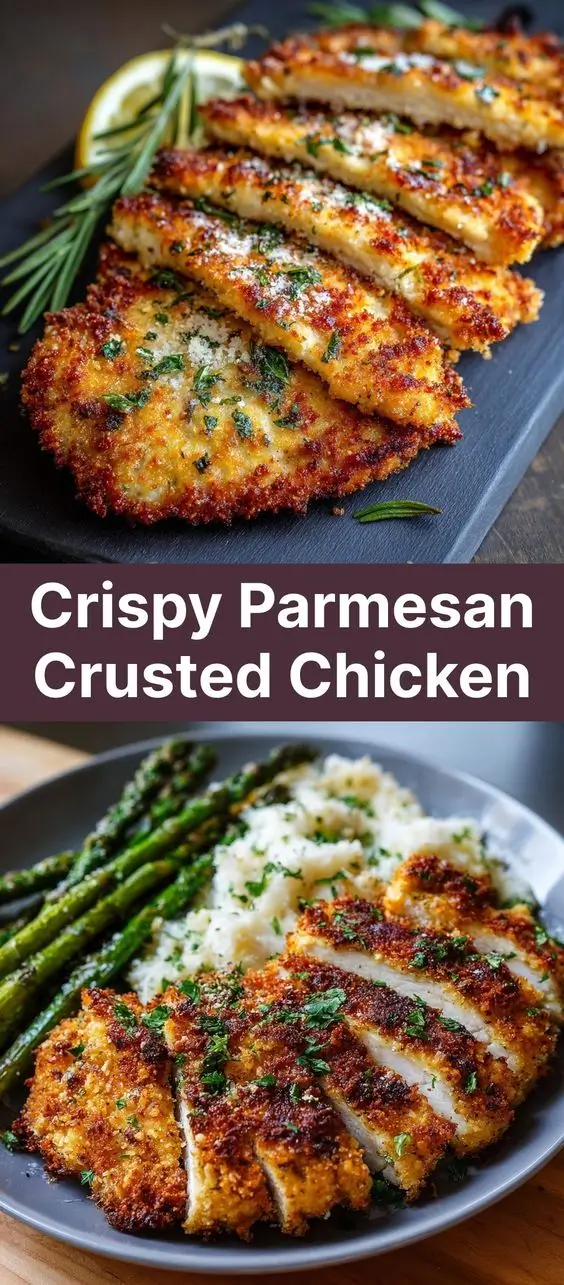
Crispy Parmesan Crusted Chicken
Introduction
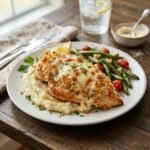
Crispy Parmesan Crusted Chicken is a mouthwatering dish that brings together the rich, savory flavor of Parmesan cheese with the satisfying crunch of a perfectly golden-brown crust. This beloved chicken recipe has earned its place in home kitchens and gourmet restaurants alike due to its simplicity, bold taste, and versatility. Whether served as a main course over pasta, tucked into a sandwich, or paired with fresh vegetables, this dish delivers restaurant-quality results with minimal effort. With its irresistible texture and cheesy aroma, it’s no wonder that crispy Parmesan crusted chicken has become a go-to favorite for weeknight dinners, weekend family meals, and even elegant dinner parties.
The History
The roots of breaded and fried chicken dishes stretch back centuries, but the modern version of Parmesan crusted chicken can be traced to the mid-20th century when Italian-American cuisine began gaining popularity across the United States. Inspired by traditional Italian cooking techniques—particularly the use of breadcrumbs and hard cheeses like Parmigiano-Reggiano—home cooks started experimenting with ways to elevate simple fried chicken cutlets. The introduction of pre-grated Parmesan cheese in American supermarkets during the 1950s made it easier than ever to incorporate this umami-rich ingredient into everyday recipes. Over time, Parmesan crusted chicken evolved from a regional specialty into a national comfort food staple. Today, countless variations exist, reflecting influences from Southern fried traditions, Mediterranean flavors, and health-conscious adaptations—all while maintaining the signature crispiness and cheesy depth that define the original.
Ingredients Breakdown
The magic of crispy Parmesan crusted chicken lies in the careful balance of ingredients that create both flavor and texture. Let’s break down each component:
- Chicken breasts: Boneless, skinless chicken breasts are preferred for their lean meat and even thickness. They provide a neutral base that absorbs seasonings well and holds up during breading and frying.
- Eggs: Used as a binding agent, eggs help the coating adhere to the chicken. Beaten thoroughly, they form a sticky surface for the crumbs and cheese to cling to.
- Panko breadcrumbs: These Japanese-style breadcrumbs are lighter and flakier than regular breadcrumbs, resulting in an extra-crispy exterior without becoming dense or soggy.
- Grated Parmesan cheese: Authentic Parmigiano-Reggiano offers a nutty, salty depth, while pre-grated versions offer convenience. Freshly grated cheese melts slightly during cooking, forming a flavorful crust.
- Garlic powder: Adds a subtle aromatic kick without burning or overpowering other ingredients.
- Onion powder: Complements garlic with mild sweetness and savory notes.
- Dried herbs (such as oregano, thyme, or parsley): Contribute earthy, herbal undertones that enhance the overall complexity.
- Salt and black pepper: Essential seasonings that amplify all other flavors.
- Olive oil or butter (for cooking): Olive oil provides a light, crisp sear, while butter adds richness and a golden color. Some recipes use a combination of both.
- Optional additions: Paprika for color and warmth, lemon zest for brightness, or crushed red pepper flakes for heat.
Step-by-Step Recipe
- Prepare the chicken: Start with 4 boneless, skinless chicken breasts. Place them between two sheets of plastic wrap and gently pound to an even thickness (about ½ inch). This ensures uniform cooking and prevents dry spots. Trim any excess fat or connective tissue.
- Set up the breading station: Prepare three shallow bowls. In the first, beat 2 large eggs with 1 tablespoon of water until smooth. In the second, combine 1 cup of panko breadcrumbs, ¾ cup of finely grated Parmesan cheese, 1 teaspoon garlic powder, 1 teaspoon onion powder, 1 teaspoon dried oregano, ½ teaspoon salt, and ¼ teaspoon black pepper. Mix thoroughly. Leave the third bowl empty for later use.
- Bread the chicken: Dredge each chicken breast first in the beaten eggs, allowing excess to drip off. Then transfer to the breadcrumb mixture, pressing firmly so the coating sticks evenly on both sides. For extra crispiness, dip again in egg and then back into the crumbs (double breading).
- Rest the coated chicken: Place the breaded chicken on a wire rack and let sit for 5–10 minutes. This helps the coating set and reduces shedding during cooking.
- Preheat the pan: Heat 2–3 tablespoons of olive oil (or a mix of oil and butter) in a large skillet over medium-high heat. The oil should shimmer but not smoke.
- Fry the chicken: Carefully place the chicken in the hot pan, taking care not to overcrowd. Cook for 5–6 minutes per side, or until deeply golden brown and the internal temperature reaches 165°F (74°C). Adjust heat if browning too quickly.
- Drain and rest: Transfer cooked chicken to a paper towel-lined plate or wire rack to drain excess oil. Let rest for 3–5 minutes before serving to retain juices.
- Serve hot: Plate immediately with your choice of sides such as mashed potatoes, roasted vegetables, or a crisp salad. Optionally, top with marinara sauce, melted mozzarella, or a squeeze of fresh lemon juice.
Tips
- Use cold eggs: Cold eggs from the fridge help keep the breading colder longer, reducing the chance of the crumbs falling off during frying.
- Don’t skip the resting step: Allowing breaded chicken to rest before frying helps the coating adhere better and improves texture.
- Keep oil at the right temperature: If the oil is too cool, the chicken will absorb grease and turn soggy. Too hot, and the outside burns before the inside cooks through. Aim for around 350°F (175°C).
- Use a meat thermometer: Ensures perfect doneness every time without guesswork. Insert into the thickest part of the breast.
- Double breading for extra crunch: Dip in egg → crumbs → egg → crumbs again for a thicker, crunchier crust.
- For oven baking: To make a healthier version, spray breaded chicken with cooking spray and bake at 400°F (200°C) for 20–25 minutes, flipping halfway through.
- Season each layer: Add a pinch of salt to the egg wash and another to the breadcrumb mix to build flavor throughout.
- Toast the breadcrumbs: Lightly toasting panko in a dry pan before mixing with cheese enhances nuttiness and crispness.
Variations and Customizations
Crispy Parmesan crusted chicken is incredibly adaptable. Here are some creative twists to suit different tastes and dietary needs:
- Mediterranean style: Add chopped sun-dried tomatoes, Kalamata olives, and fresh basil to the breadcrumb mix. Serve with tzatziki or hummus.
- Lemon-herb version: Mix in lemon zest, dill, and chives for a bright, refreshing twist. Pair with a lemon-butter sauce.
- Spicy kick: Add cayenne pepper, crushed red pepper flakes, or smoked paprika to the breading for heat lovers.
- Gluten-free option: Replace panko with gluten-free breadcrumbs or crushed cornflakes for those with sensitivities.
- Keto-friendly version: Use almond flour or crushed pork rinds instead of breadcrumbs, combined with Parmesan and spices.
- Herb-crusted with fresh greens: Blend fresh parsley, rosemary, and thyme into the egg wash or mix finely chopped herbs directly into the crumbs.
- Cheese blend: Combine Parmesan with Romano, Asiago, or Pecorino for deeper flavor layers.
- Stuffed chicken: Butterfly the breasts and fill with spinach and feta, sun-dried tomato pesto, or sautéed mushrooms before breading.
- Parmesan chicken tenders: Cut chicken into strips for kid-friendly finger food. Great for dipping in ranch or marinara.
- Air fryer method: Spray breaded chicken with oil and cook in the air fryer at 380°F (190°C) for 12–15 minutes, flipping once.
Health Considerations and Nutritional Value
While traditionally prepared with frying, crispy Parmesan crusted chicken can be adapted to fit various health goals. A typical serving (one 6 oz chicken breast) made with pan-frying contains approximately:
- Calories: 400–500 kcal
- Protein: 40–45g (excellent source)
- Fat: 20–25g (varies based on oil and cheese amount)
- Saturated fat: 6–8g
- Carbohydrates: 15–20g (mainly from breadcrumbs)
- Fiber: 1–2g
- Sodium: 800–1200mg (high due to cheese and seasoning; can be reduced)
- Calcium: ~20% of daily value (from Parmesan)
- Vitamin B6, Niacin, Selenium: High in essential nutrients supporting metabolism and immune function
To make a healthier version:
- Bake or air fry instead of pan-frying to reduce fat content.
- Use low-fat Parmesan or reduce the quantity by blending with nutritional yeast.
- Opt for whole wheat or high-fiber breadcrumbs to increase fiber intake.
- Limit added salt and rely more on herbs and spices for flavor.
- Serve with steamed vegetables, quinoa, or a leafy green salad to boost nutrition.
Note: Individuals with lactose intolerance should be cautious—Parmesan is naturally low in lactose, but sensitivity varies. Those managing sodium intake (e.g., hypertension) may want to monitor portion size or choose lower-sodium alternatives.
Ingredients
- 4 boneless, skinless chicken breasts (6 oz each)
- 2 large eggs
- 1 tablespoon water
- 1 cup panko breadcrumbs
- ¾ cup finely grated Parmesan cheese (preferably freshly grated)
- 1 teaspoon garlic powder
- 1 teaspoon onion powder
- 1 teaspoon dried oregano
- ½ teaspoon salt (adjust to taste)
- ¼ teaspoon black pepper
- 2–3 tablespoons olive oil or unsalted butter (or a blend)
- Optional: lemon wedges, chopped parsley, or additional grated cheese for garnish
Directions
- Place chicken breasts between two sheets of plastic wrap or parchment paper. Using a meat mallet or rolling pin, gently pound to an even ½-inch thickness. Set aside.
- In a shallow bowl, whisk together eggs and water until fully blended. In a second bowl, combine panko, Parmesan, garlic powder, onion powder, oregano, salt, and pepper. Stir until evenly mixed. Keep a third bowl or plate ready for assembly.
- Dredge each chicken breast in the egg mixture, letting excess drip off. Then press firmly into the breadcrumb mixture, ensuring full coverage on both sides. Shake off loose crumbs and place on a clean plate.
- Let the breaded chicken rest for 5–10 minutes to allow the coating to set.
- Heat olive oil or butter in a large non-stick or cast-iron skillet over medium-high heat. Once shimmering (but not smoking), add chicken in a single layer, leaving space between pieces.
- Cook for 5–6 minutes per side, or until golden brown and internal temperature reaches 165°F (74°C). Reduce heat if browning too fast.
- Transfer to a wire rack or paper towel-lined plate to drain. Rest for 3–5 minutes before serving.
- Garnish with fresh herbs, a sprinkle of extra Parmesan, or a squeeze of lemon juice. Serve immediately with your favorite sides.
FAQ
- Can I prepare the chicken ahead of time?
- Yes! You can bread the chicken up to 24 hours in advance and store it uncovered on a tray in the refrigerator. This also helps the coating adhere better.
- Can I freeze Parmesan crusted chicken?
- Yes. Freeze uncooked breaded chicken on a baking sheet, then transfer to freezer bags. Cook from frozen—add 2–3 minutes per side. Fully cooked chicken can also be frozen and reheated in the oven.
- Why did my coating fall off?
- Common causes include skipping the resting step, oil not being hot enough, or overcrowding the pan. Make sure the chicken is dry before breading and avoid flipping too early.
- Can I make it dairy-free?
- Yes—use dairy-free Parmesan alternative or omit cheese and boost flavor with nutritional yeast, mustard powder, or miso paste in the egg wash.
- What’s the best way to reheat leftovers?
- Reheat in a 350°F (175°C) oven or toaster oven for 10–15 minutes to preserve crispiness. Avoid microwaving, which makes the crust soggy.
- Is panko necessary?
- Panko gives superior crunch, but regular breadcrumbs work in a pinch. For extra crispness, toast them lightly in a dry pan before using.
- Can I use chicken thighs?
- Absolutely. Boneless, skinless thighs work well but have a shorter cook time due to higher fat content. Adjust accordingly.
- How do I know when the chicken is done?
- Use a meat thermometer. The thickest part should read 165°F (74°C). Juices should run clear, not pink.
Summary
Crispy Parmesan Crusted Chicken combines tender, juicy chicken with a golden, cheesy crust for a satisfying meal that’s easy to customize and loved by all ages. From stovetop to oven-baked, this versatile dish delivers bold flavor and impressive texture with minimal effort.