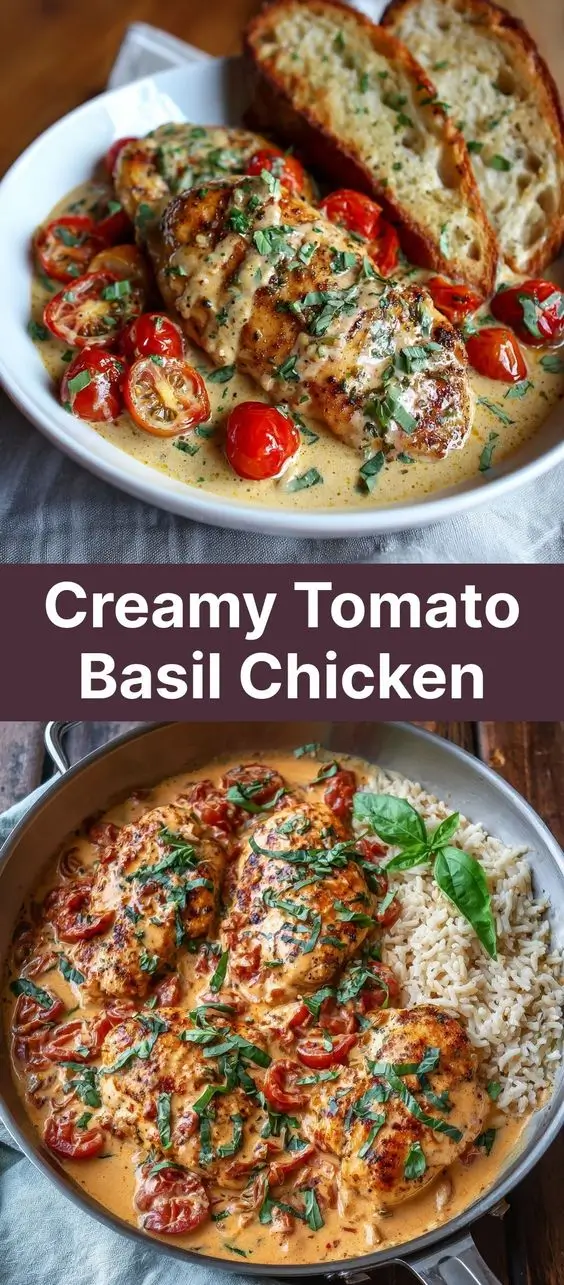
Creamy Tomato Basil Chicken is a rich, savory, and aromatic dish that combines tender chicken breasts with a luscious tomato-basil sauce, finished with a velvety cream base. This recipe brings together the bright acidity of tomatoes, the herbal freshness of basil, the mild sweetness of garlic, and the richness of heavy cream to create a comforting meal perfect for weeknight dinners or elegant weekend gatherings. With its Italian-inspired flavor profile, this dish pairs beautifully with pasta, rice, mashed potatoes, or even crusty bread for soaking up every last drop of sauce.
The History
The roots of Creamy Tomato Basil Chicken can be traced back to traditional Italian cuisine, where tomatoes, olive oil, garlic, and fresh herbs form the foundation of countless classic dishes. The incorporation of chicken into tomato-based sauces gained popularity during the 20th century as poultry became more accessible and widely consumed across Europe and North America. Dishes like Chicken Parmesan and Chicken Vesuvio paved the way for creamy variations that combined rustic Italian flavors with French culinary techniques—particularly the use of cream to enrich sauces.
In American-Italian cooking, the fusion of robust tomato sauces with dairy elements such as cream or cheese became increasingly common, leading to the development of dishes like Creamy Tomato Basil Chicken. This recipe exemplifies the harmonious blend of Mediterranean simplicity and modern comfort food appeal. Over time, home cooks and chefs alike have adapted the dish to suit various dietary preferences and kitchen tools, making it a staple in many households across the United States and beyond.
Ingredients Breakdown
Understanding each ingredient’s role enhances both the preparation process and the final taste of the dish:
- Chicken Breasts: Boneless, skinless chicken breasts are preferred for their lean texture and ability to absorb flavors. They cook evenly and remain tender when not overcooked.
- Olive Oil: Used for searing the chicken, high-quality extra virgin olive oil adds fruitiness and helps develop a golden crust.
- Garlic: Freshly minced garlic provides a pungent, aromatic base that elevates the entire sauce.
- Onion: Yellow or white onion adds natural sweetness and depth when sautéed until translucent.
- Canned Crushed Tomatoes: These offer consistent texture and concentrated tomato flavor compared to fresh tomatoes, especially out of season.
- Fresh Basil: A hallmark of Italian cooking, fresh basil imparts a sweet, slightly peppery note. It’s best added toward the end to preserve its fragrance.
- Heavy Cream: Adds luxurious body and smoothness to the sauce, balancing the acidity of the tomatoes.
- Chicken Broth: Enhances moisture and layers umami-rich savoriness into the sauce.
- Dried Oregano & Thyme: Earthy dried herbs complement the brightness of fresh basil and deepen the overall aroma.
- Salt & Black Pepper: Essential for seasoning at every stage to build well-rounded flavor.
- Flour (optional): Sometimes used to lightly dust chicken before searing to aid browning and thicken the sauce slightly.
- Grated Parmesan Cheese (optional): Adds salty, nutty complexity and further enriches the creaminess.
Step-by-Step Recipe
- Prepare the Chicken: Pat 4 boneless, skinless chicken breasts dry with paper towels. Season both sides generously with salt, black pepper, and optionally a light dusting of flour for improved browning.
- Sear the Chicken: Heat 2 tablespoons of olive oil in a large skillet or Dutch oven over medium-high heat. Once shimmering, add the chicken and cook for 5–6 minutes per side, or until golden brown and cooked through (internal temperature should reach 165°F). Transfer the chicken to a plate and cover loosely with foil.
- Sauté Aromatics: In the same pan, reduce heat to medium. Add 1 finely chopped onion and cook for 4–5 minutes until soft and translucent. Stir in 4 cloves of minced garlic, 1 teaspoon dried oregano, and ½ teaspoon dried thyme. Cook for 1 minute until fragrant, being careful not to burn the garlic.
- Build the Sauce: Pour in one 28-ounce can of crushed tomatoes (preferably San Marzano), stirring to combine. Add ½ cup chicken broth to deglaze the pan, scraping up any browned bits from the bottom—which adds immense flavor. Simmer uncovered for 10 minutes to allow the sauce to reduce and intensify.
- Add Cream & Herbs: Stir in ¾ cup heavy cream and return the chicken to the skillet, nestling it into the sauce. Tear ½ cup fresh basil leaves and stir them in. If using, add ¼ cup grated Parmesan cheese. Allow the dish to simmer gently for another 8–10 minutes so the chicken reheats and absorbs the sauce.
- Taste & Adjust: Season with additional salt and pepper as needed. For a thicker sauce, simmer longer; for a thinner consistency, add a splash more broth or cream.
- Serve: Garnish with extra fresh basil and a sprinkle of Parmesan. Serve immediately over fettuccine, penne, risotto, or mashed potatoes.
Tips
- Don’t Overcook the Chicken: Use a meat thermometer to ensure accuracy. Remove chicken just before it hits 165°F, as residual heat will continue cooking it.
- Use Fresh Garlic and Basil: Avoid pre-minced garlic or dried basil if possible—they lack the vibrant flavor essential to this dish.
- Resist Stirring Too Much: When simmering the sauce, let it bubble gently without constant stirring to encourage proper reduction.
- Brown = Flavor: Take time to properly sear the chicken—it creates fond (browned bits) that become part of the sauce’s backbone.
- Acidity Balance: If the tomatoes taste too sharp, a pinch of sugar or a grated carrot during sautéing can mellow the acidity naturally.
- Cream Safety: Never boil the sauce after adding cream, as it may curdle. Keep the heat low and gentle.
- Make Ahead Friendly: The sauce can be made 1–2 days in advance; add chicken and warm through when ready to serve.
Variations and Customizations
- Chicken Thighs: Substitute thighs for breasts for a juicier, more flavorful option with higher fat content.
- Dairy-Free Version: Replace heavy cream with full-fat coconut milk or cashew cream for a plant-based alternative.
- Gluten-Free: Ensure no flour is used on the chicken or substitute with cornstarch or gluten-free flour blend.
- Spicy Kick: Add red pepper flakes (½ tsp) while sautéing garlic for a subtle heat.
- Wine-Infused Sauce: Deglaze with ½ cup dry white wine (like Pinot Grigio) before adding tomatoes for added complexity.
- Mushroom Addition: Sauté sliced cremini or button mushrooms with the onions for an earthy dimension.
- Pantry-Friendly: Use tomato sauce or passata instead of crushed tomatoes. Adjust seasoning accordingly.
- Air Fryer Option: Cook seasoned chicken breasts in the air fryer at 375°F for 18–20 minutes, then slice and add to prepared sauce.
- Crockpot Method: After searing, transfer everything to a slow cooker and cook on low for 4–6 hours.
- Instant Pot Version: Use the sauté function for browning, then pressure cook for 8 minutes with natural release.
Health Considerations and Nutritional Value
Creamy Tomato Basil Chicken offers a balanced nutritional profile depending on preparation methods. Here’s an approximate breakdown per serving (assuming 4 servings, including chicken and sauce without sides):
- Calories: ~400–480 kcal
- Protein: ~35–40g (excellent source from lean chicken)
- Fat: ~20–28g (mostly from cream and olive oil; includes saturated fat)
- Carbohydrates: ~10–15g (primarily from tomatoes and onions)
- Fiber: ~3g (from vegetables)
- Sodium: ~600–900mg (varies based on broth and canned tomatoes—low-sodium options help control levels)
Nutrient Highlights:
- Lycopene: Found in tomatoes, this powerful antioxidant supports heart health and may reduce cancer risk.
- Vitamin C & K: Present in tomatoes and fresh basil, contributing to immune function and blood clotting.
- Calcium & Vitamin A: From dairy components like cream and Parmesan, supporting bone and eye health.
Dietary Notes:
- Keto-Friendly? Yes, if served without grains or starchy sides. Net carbs are relatively low.
- Low-Carb Option: Serve over zucchini noodles, cauliflower mash, or steamed broccoli.
- Heart-Healthy Modifications: Use half-and-half or evaporated milk instead of heavy cream. Limit cheese and opt for olive oil-based sautéing.
- High-Protein Diet Support: Ideal for muscle maintenance and satiety due to high-quality animal protein.
Ingredients
- 4 boneless, skinless chicken breasts (about 6 oz each)
- Salt and freshly ground black pepper (to taste)
- 2 tbsp olive oil (divided)
- 1 medium yellow onion, finely chopped
- 4 garlic cloves, minced
- 1 tsp dried oregano
- ½ tsp dried thyme
- 1 (28 oz) can crushed tomatoes (preferably San Marzano)
- ½ cup low-sodium chicken broth
- ¾ cup heavy cream (cold)
- ½ cup fresh basil leaves, torn (plus extra for garnish)
- ¼ cup grated Parmesan cheese (optional)
- Optional: 1 tbsp all-purpose flour (for dredging)
Directions
- Season chicken breasts with salt, pepper, and optional flour. Heat 1 tablespoon olive oil in a large skillet over medium-high heat.
- Add chicken and cook 5–6 minutes per side until golden and internal temperature reaches 165°F. Transfer to a plate and cover.
- In the same skillet, add remaining oil. Sauté onions for 4–5 minutes until soft. Add garlic, oregano, and thyme; cook 1 minute more.
- Pour in crushed tomatoes and chicken broth. Stir well, scraping up browned bits. Simmer 10 minutes.
- Reduce heat to low. Stir in heavy cream, fresh basil, and Parmesan (if using).
- Return chicken to the skillet, spooning sauce over the top. Simmer gently 8–10 minutes.
- Taste and adjust seasoning. Garnish with fresh basil and extra Parmesan.
- Serve hot over your choice of side.
FAQ
Q: Can I use frozen chicken breasts?
A: It’s best to thaw them completely before cooking for even searing and safe internal temperatures. Cooking from frozen may result in uneven doneness.
Q: How do I prevent the sauce from curdling?
A: Always add cream off direct high heat. Use room-temperature or cold cream and avoid boiling once added. Gentle simmering is key.
Q: Can I make this ahead of time?
A: Yes! Prepare the sauce and store separately. Reheat gently and add pre-cooked chicken slices just before serving to prevent drying.
Q: What sides go well with Creamy Tomato Basil Chicken?
A: Fettuccine, garlic bread, risotto, quinoa, roasted vegetables, or a crisp green salad all pair wonderfully.
Q: Is this recipe freezer-friendly?
A: While possible, dairy-based sauces can separate when frozen and reheated. For best quality, freeze before adding cream, then finish upon reheating.
Q: Can I substitute half-and-half for heavy cream?
A: Yes, though the sauce will be less rich and may require a thickener like a cornstarch slurry to maintain body.
Q: Why is my sauce too acidic?
A: Some tomatoes are naturally tart. Balance with a pinch of sugar, grated carrot, or a splash of cream. Fresh basil also helps round out flavors.
Q: Can I use dried basil instead of fresh?
A: You can, but use only 1–2 teaspoons (dried herbs are more concentrated), and add earlier during cooking. Fresh basil added at the end delivers superior aroma.
Summary
Creamy Tomato Basil Chicken is a sumptuous, restaurant-quality dish that unites tender chicken with a velvety tomato-basil cream sauce bursting with herby, savory goodness. Easy to customize and perfect for feeding families or impressing guests, it’s comfort food elevated to gourmet status.