Introduction
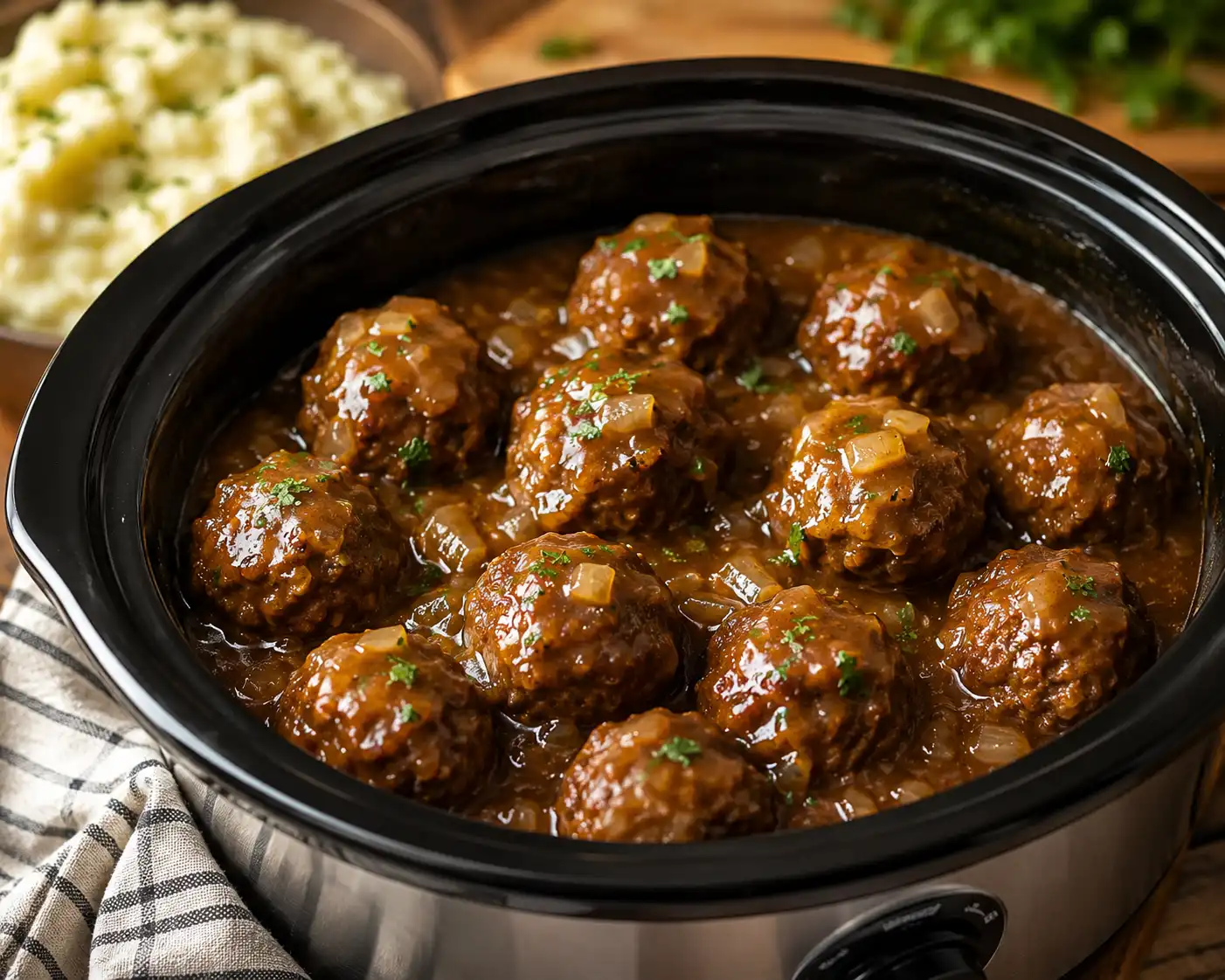
Slow Cooker Salisbury Steak Meatballs are the ultimate weeknight comfort food reinvented—tender, savory, and deeply flavorful without the fuss of stovetop searing or constant monitoring. This modern twist on the classic American diner favorite swaps traditional pan-fried patties for plump, herb-infused meatballs gently simmered in a rich, umami-packed gravy—all in your trusty crockpot. Designed for busy families, meal preppers, and cooking beginners alike, this recipe delivers restaurant-quality depth with pantry-friendly ingredients, minimal hands-on time (under 20 minutes!), and maximum tenderness thanks to low-and-slow braising. Whether you’re feeding picky eaters, reheating leftovers for lunch, or preparing freezer-friendly meals ahead of time, these meatballs deliver hearty satisfaction with zero compromise on taste or texture.
The History
The origins of Salisbury steak trace back to the late 19th century, when Dr. James Henry Salisbury—a physician, chemist, and nutrition reformer—advocated a high-protein, low-carbohydrate diet to combat “civilization diseases” like dyspepsia and fatigue. In his 1888 treatise *The Relation of Alimentary to Disease*, he prescribed minced beef patties (often mixed with onions and breadcrumbs) as a digestible, restorative food—hence the name “Salisbury steak.” Though initially intended as medicinal fare, the dish gained mainstream popularity during World War I and II, when ground beef was more accessible than whole cuts, and wartime rationing encouraged creative, economical preparations. By the 1950s, it had become a staple of American home cooking and school cafeterias, typically served with mushroom gravy and mashed potatoes. The slow cooker adaptation emerged in the 1970s alongside the Crock-Pot’s rise—but it wasn’t until the 2010s that home cooks began reimagining the format: transforming dense patties into tender, uniform meatballs optimized for even cooking, consistent moisture retention, and gravy infusion. Today’s Slow Cooker Salisbury Steak Meatballs honor that legacy while embracing contemporary priorities—meal efficiency, flexible ingredient swaps, and adaptable nutrition—making history deliciously relevant for today’s kitchens.
Ingredients Breakdown
Every component in this recipe serves a distinct functional and flavor purpose—no filler, no guesswork. Let’s explore why each ingredient matters:
- Ground Beef (85/15 or 90/10): The foundation. An 85/15 blend offers ideal fat content for juiciness and gravy richness; 90/10 works for leaner results but benefits from added moisture (e.g., extra Worcestershire or a splash of broth). Avoid ultra-lean (93/7 or higher) unless supplementing with grated onion or egg yolk.
- Panko Breadcrumbs: Lighter and crispier than regular breadcrumbs, panko absorbs liquid without turning gummy—ensuring tender, springy meatballs instead of dense bricks. Gluten-free panko is an excellent 1:1 substitute.
- Yellow Onion (grated, not chopped): Grating releases enzymes and moisture that bind the mixture and add subtle sweetness. Raw grated onion also tenderizes proteins naturally—no need to sauté first!
- Garlic (fresh, minced): Adds aromatic depth and antimicrobial benefits. Pre-minced jarred garlic lacks nuance and can turn bitter during long cooking—always use fresh.
- Fresh Parsley (flat-leaf): Not just garnish! Its bright, grassy notes cut through richness and balance the gravy’s savoriness. Dried parsley lacks volatile oils and won’t deliver the same lift.
- Worcestershire Sauce: A flavor powerhouse containing anchovies, tamarind, molasses, and vinegar—this fermented condiment contributes complex umami, tang, and subtle sweetness essential to authentic Salisbury character.
- Dijon Mustard: Adds gentle heat, acidity, and emulsifying power—helping fat and liquid integrate smoothly into the gravy later.
- Smoked Paprika: Imparts warm, earthy depth and a whisper of campfire aroma—elevating the gravy beyond basic brown sauce. Sweet or hot varieties both work; avoid generic “paprika” which lacks intensity.
- Beef Broth (low-sodium preferred): Forms the gravy base. Low-sodium lets you control salt levels precisely—critical since soy sauce and Worcestershire contribute significant sodium. For richer depth, substitute ½ cup of broth with unsalted beef demi-glace paste.
- Mushrooms (cremini or white button, sliced): Provide meaty texture and natural glutamates that amplify umami. Sautéing them first is optional but highly recommended—they release water, caramelize, and concentrate flavor before slow cooking.
- Tomato Paste: Cooked briefly (or added directly to the slow cooker), it adds body, subtle sweetness, and acidity to stabilize the gravy’s consistency and prevent separation.
- Apple Cider Vinegar: A secret weapon! Just ½ tsp brightens the entire gravy, cutting through fat and rounding out flavors without tasting vinegary—especially important after hours of slow simmering.
- Arrowroot Powder (or cornstarch): A clean-thin thickener that creates glossy, velvety gravy without cloudiness or starchy aftertaste. Unlike flour, it’s freeze-stable and doesn’t require a roux.
Optional but transformative upgrades: a splash of dry sherry with the broth, a teaspoon of fish sauce for stealth umami, or a pinch of freshly cracked black pepper added just before serving for aromatic brightness.
Step-by-Step Recipe
- Prep the Meatball Mixture (10 minutes): In a large mixing bowl, combine 1.5 lbs ground beef, ⅔ cup panko breadcrumbs, 1 medium yellow onion (finely grated using the small holes of a box grater—reserve juice), 3 cloves garlic (minced), ¼ cup finely chopped fresh parsley, 2 tbsp Worcestershire sauce, 1 tbsp Dijon mustard, 1 tsp smoked paprika, 1 tsp kosher salt, and ½ tsp freshly ground black pepper. Using clean hands or a silicone spatula, gently fold ingredients together—do not overmix, or meatballs will become tough. Cover and refrigerate for 20–30 minutes (chilling firms the mixture for easier shaping and prevents crumbling).
- Shape the Meatballs (3 minutes): Scoop 2-tbsp portions (a #40 cookie scoop works perfectly) and roll gently into 1.5-inch balls—don’t pack tightly. Place on a parchment-lined baking sheet. Optional but recommended: lightly dust each ball with additional panko for extra surface texture and gravy adhesion.
- Optional Sauté Step (5 minutes, highly recommended): Heat 1 tbsp olive oil in a large nonstick skillet over medium-high heat. Working in batches, brown meatballs on all sides until deeply golden (about 6–8 minutes total per batch). Transfer to a plate lined with paper towels. This step builds Maillard reaction flavor, seals in juices, and adds fond to the gravy base.
- Build the Gravy Base (5 minutes): In the same skillet (if using sauté step) or a fresh saucepan, heat 1 tbsp butter or oil. Add 8 oz sliced cremini mushrooms and cook until golden and moisture evaporates (~5 minutes). Stir in 2 tbsp tomato paste and cook 1 minute until brick-red and fragrant. Deglaze with ¼ cup dry sherry or beef broth, scraping up browned bits. Simmer 2 minutes to mellow acidity.
- Layer in the Slow Cooker (2 minutes): Transfer mushroom-tomato mixture to a 6-quart slow cooker. Nestle browned (or raw) meatballs evenly among mushrooms. Pour in 2.5 cups low-sodium beef broth, 1 tbsp soy sauce (for extra umami depth), and the reserved onion juice. Do not stir—layering preserves shape and ensures even braising.
- Slow Cook (Low & Slow = Best Results): Cover and cook on LOW for 5–6 hours, OR on HIGH for 3–3.5 hours. Avoid lifting the lid—each peek adds ~15–20 minutes to total cook time. Meatballs are done when internal temperature reaches 160°F (use an instant-read thermometer inserted sideways into center of a meatball) and gravy is bubbling gently around edges.
- Thicken the Gravy (5 minutes): In a small bowl, whisk 2 tbsp arrowroot powder with 3 tbsp cold water until smooth (no lumps!). Turn slow cooker to WARM setting. Stir gravy gently, then slowly drizzle in slurry while whisking constantly. Cover and let thicken 10–15 minutes on WARM—gravy will deepen in color and coat the back of a spoon. For ultra-smooth gravy, use an immersion blender for 10 seconds (optional but luxurious).
- Final Seasoning & Rest (2 minutes): Stir in ½ tsp apple cider vinegar and taste. Adjust with salt, black pepper, or a splash of Worcestershire if needed. Let rest covered for 5 minutes—this allows flavors to harmonize and meatballs to reabsorb some gravy.
Tips
- Chill Before Shaping: Cold meat binds better and yields smoother, rounder meatballs that hold shape during cooking—never skip the 20-minute fridge rest.
- Grate, Don’t Chop, the Onion: Grating extracts moisture and natural binding enzymes—chopping leaves chunks that create weak spots and uneven texture.
- Use a Cookie Scoop: Ensures uniform size for even cooking. A #40 scoop (1.5 tbsp) makes 24 perfect meatballs—ideal for family dinners or portion-controlled freezing.
- Sear for Flavor, Skip for Simplicity: Browning isn’t mandatory, but it adds profound depth. If short on time, add 1 tsp smoked paprika + ½ tsp garlic powder to compensate for lost Maillard notes.
- Don’t Stir During Cooking: Disturbing meatballs mid-cook causes breakage. Trust the slow, gentle heat—it does all the work.
- Thicken at the End—Never at the Start: Adding thickeners too early leads to thin, broken gravy. Arrowroot breaks down under prolonged heat; always slurry at the end.
- Rest Before Serving: Letting meatballs sit 5 minutes off heat allows juices to redistribute—preventing dryness with every bite.
- Skim Fat Smartly: If gravy looks overly glossy, chill for 10 minutes, then skim solidified fat from surface with a spoon—no straining needed.
- Double the Batch, Freeze Half: Uncooked meatballs freeze beautifully for up to 3 months. Place on a parchment-lined tray, freeze solid, then transfer to a labeled freezer bag. Drop frozen into slow cooker—add 30 minutes to cook time.
- Revive Leftovers: Reheat gently in saucepan with 1–2 tbsp broth to restore moisture. Microwave reheating dries them out—avoid unless adding gravy.
Variations and Customizations
This recipe is endlessly adaptable—whether accommodating dietary needs, seasonal produce, global flavors, or pantry constraints. Here’s how to make it uniquely yours:
Dietary Adaptations
- Gluten-Free: Use certified GF panko (like Ian’s or Kinnikinnick), tamari instead of soy sauce, and ensure Worcestershire is GF (Lea & Perrins U.S. version contains barley; try The Wizard’s or coconut aminos).
- Low-Carb/Keto: Replace panko with ¼ cup crushed pork rinds + 1 tbsp almond flour; use sugar-free Worcestershire and omit tomato paste (sub 1 tsp red wine vinegar + ½ tsp beef base).
- Dairy-Free: Skip butter in gravy step—use ghee or avocado oil. All other ingredients are naturally dairy-free.
- Vegetarian/Vegan Option: Swap meatballs for lentil-walnut “meatballs” (1 cup cooked green lentils, ½ cup walnuts, ¼ cup GF oats, flax egg, herbs, spices) and use mushroom-based veggie broth. Thicken with cornstarch slurry.
Protein Swaps
- Ground Turkey or Chicken: Use 93% lean and add 1 tbsp olive oil + 1 yolk to retain moisture. Reduce cook time by 30 minutes on LOW.
- Plant-Based Crumbles: Textured vegetable protein (TVP) rehydrated in broth works well—mix with flax egg and spices before shaping.
- Beef + Pork Blend: Replace ¼ lb beef with ground pork for richer, fattier mouthfeel and enhanced caramelization.
Global Flavor Twists
- Asian-Inspired: Swap Worcestershire for 1 tbsp hoisin + 1 tsp rice vinegar; add 1 tsp grated ginger and 1 scallion (green part only) to meatballs; top with sesame seeds and cilantro.
- Italian Herb: Add 1 tsp dried oregano + ½ tsp red pepper flakes to meat mixture; finish gravy with 1 tbsp balsamic glaze and fresh basil.
- Smoky Southwest: Add 1 tsp chipotle powder + ½ tsp cumin to meatballs; stir ¼ cup roasted corn and black beans into gravy before thickening.
- French Mushroom-Dijon: Use shallots instead of onion, increase Dijon to 2 tbsp, add ¼ cup dry white wine to deglaze, and finish with 1 tbsp crème fraîche.
Seasonal & Pantry Variations
- Fall Harvest: Fold ¼ cup finely diced roasted sweet potato into meatballs; stir 1 tbsp maple syrup into gravy pre-thickening.
- Spring Fresh: Add 2 tbsp chopped chives + 1 tbsp lemon zest to meatballs; swap mushrooms for asparagus tips added in last 30 minutes.
- Spice Cabinet Rescue: No smoked paprika? Use ½ tsp cumin + ¼ tsp liquid smoke. No Worcestershire? Combine 1 tsp soy sauce + ½ tsp tamarind paste + pinch of sugar.
- Creamy Upgrade: Stir in 2 tbsp full-fat coconut milk or heavy cream at the very end—adds silkiness without curdling.
Health Considerations and Nutritional Value
When thoughtfully prepared, Slow Cooker Salisbury Steak Meatballs can be a nutrient-dense, balanced meal—not just comfort food, but conscious nourishment. Here’s what makes it health-supportive—and how to optimize it further:
Nutritional Highlights (per serving, based on 6 servings)
- High-Quality Protein: ~28g per serving—supports muscle maintenance, satiety, and metabolic function. Grass-fed beef adds conjugated linoleic acid (CLA) and higher omega-3s.
- Iron & Zinc: Beef is a premier source of heme iron (highly absorbable) and zinc—crucial for immunity, wound healing, and cognitive health.
- Low Added Sugar: Naturally sugar-free (unlike many jarred gravies); only trace sugars from tomato paste and onions.
- Fiber-Rich Add-Ins: Mushrooms provide prebiotic beta-glucans; adding spinach or kale boosts folate and antioxidants.
- Healthy Fats: Moderate saturated fat from beef is balanced by monounsaturated fats from olive oil and mushrooms’ natural sterols.
Dietitian-Approved Modifications
- Lower Sodium: Use no-salt-added broth, omit soy sauce, reduce added salt to ½ tsp, and rely on herbs, citrus zest, and umami-rich mushrooms for flavor.
- Heart-Healthy Swaps: Choose leaner beef (93/7) + add 1 tbsp ground flaxseed to meatballs for omega-3s and fiber; top with avocado slices instead of buttery mashed potatoes.
- Gut-Friendly Boost: Stir in 2 tbsp unpasteurized sauerkraut juice or kimchi brine at the end—provides live probiotics and tangy brightness.
- Blood-Sugar Balanced: Serve over cauliflower mash or roasted root vegetables instead of white potatoes—lower glycemic impact with higher fiber.
- Anti-Inflammatory Focus: Add 1 tsp turmeric + ¼ tsp black pepper to meat mixture; include extra garlic and parsley—both contain potent polyphenols.
What to Watch For
- Portion Awareness: While nutritious, beef is calorie-dense—mindful portions (3–4 meatballs + ½ cup gravy) keep calories in check.
- Gravy Fat Content: Skimming cooled fat reduces saturated fat by up to 40% without sacrificing flavor.
- Sodium Sources: Worcestershire, soy sauce, and broth are primary sodium contributors—opt for low-sodium versions and adjust seasoning at the table.
- Processed Ingredient Caution: Avoid pre-seasoned breadcrumbs or flavored Worcestershire—they often contain hidden MSG, sugar, or preservatives.
Note: Always consult a registered dietitian or healthcare provider for personalized guidance—especially with conditions like hypertension, kidney disease, or histamine intolerance (where aged beef or fermented ingredients may require moderation).
Ingredients
- 1.5 lbs (680g) ground beef (85% lean / 15% fat preferred)
- ⅔ cup plain panko breadcrumbs (gluten-free if needed)
- 1 medium yellow onion, finely grated (juice reserved)
- 3 cloves garlic, minced
- ¼ cup fresh flat-leaf parsley, finely chopped
- 2 tablespoons Worcestershire sauce (gluten-free if required)
- 1 tablespoon Dijon mustard
- 1 teaspoon smoked paprika
- 1 teaspoon kosher salt (or ¾ tsp table salt)
- ½ teaspoon freshly ground black pepper
- 1 tablespoon olive oil (for optional browning)
- 1 tablespoon unsalted butter or oil (for gravy base)
- 8 oz (225g) cremini or white button mushrooms, sliced
- 2 tablespoons tomato paste
- ¼ cup dry sherry or dry red wine (optional, but recommended)
- 2.5 cups low-sodium beef broth (4% sodium or less per serving)
- 1 tablespoon low-sodium soy sauce or tamari
- 2 tablespoons arrowroot powder (or cornstarch)
- 3 tablespoons cold water (for slurry)
- ½ teaspoon apple cider vinegar
Directions
- In a large bowl, combine ground beef, panko, grated onion (including juice), minced garlic, parsley, Worcestershire sauce, Dijon mustard, smoked paprika, salt, and black pepper. Gently mix with hands or a silicone spatula until just combined—do not overwork. Cover and refrigerate for 20–30 minutes.
- Line a baking sheet with parchment paper. Scoop 2-tablespoon portions of meat mixture and roll into 1.5-inch balls. Place on prepared sheet. Optional: lightly dust each ball with extra panko.
- Heat olive oil in a large nonstick skillet over medium-high heat. Working in batches, brown meatballs on all sides until deeply golden (about 6–8 minutes total). Transfer to a paper towel–lined plate to drain excess oil. Set aside.
- In the same skillet (or a fresh one), melt butter over medium heat. Add sliced mushrooms and cook, stirring occasionally, until golden and moisture has evaporated (~5 minutes). Stir in tomato paste and cook 1 minute until darkened and fragrant. Add sherry (if using) and scrape up any browned bits. Simmer 2 minutes. Remove from heat.
- Transfer mushroom–tomato mixture to a 6-quart slow cooker. Nestle browned meatballs evenly among mushrooms. Pour in beef broth, soy sauce, and reserved onion juice. Do not stir.
- Cover and cook on LOW for 5–6 hours or on HIGH for 3–3.5 hours, until meatballs reach 160°F internally and gravy bubbles gently at edges.
- Turn slow cooker to WARM setting. In a small bowl, whisk arrowroot powder and cold water until completely smooth. Stir gravy gently, then slowly drizzle in slurry while whisking constantly. Cover and let thicken 10–15 minutes on WARM, until gravy coats the back of a spoon.
- Stir in apple cider vinegar. Taste and adjust seasoning with additional salt, pepper, or a splash of Worcestershire if desired. Let rest covered for 5 minutes before serving.
- Serve hot over mashed potatoes, egg noodles, steamed rice, or cauliflower mash. Garnish with extra parsley, black pepper, or a dollop of sour cream.
FAQ
- Can I make these meatballs without a slow cooker?
- Absolutely! Bake in a covered Dutch oven at 325°F for 1 hour 15 minutes, or simmer gently on the stovetop in a covered pot over low heat for 45–55 minutes—stirring only once halfway through.
- Why do my meatballs fall apart in the slow cooker?
- Most commonly due to overmixing, skipping the chill step, or using too lean beef without moisture compensation. Ensure you grate—not chop—the onion, chill the mixture, and use 85/15 beef or add 1 tsp olive oil + 1 egg yolk if using leaner meat.
- Can I prepare the meatballs the night before?
- Yes—and highly recommended! Shape and refrigerate overnight (up to 18 hours) on parchment-lined tray. They’ll hold shape better and develop deeper flavor. Assemble in slow cooker cold straight from fridge.
- Is it safe to put raw meatballs directly into the slow cooker?
- Yes, but only if cooking on LOW for at least 5 hours or HIGH for 3+ hours. The extended time ensures internal temperature safely reaches 160°F throughout. Browning first adds safety margin and flavor—but isn’t required for food safety.
- Can I freeze leftovers?
- Yes! Cool completely, then store meatballs + gravy in airtight containers for up to 4 months. Thaw overnight in fridge and reheat gently on stove with 1–2 tbsp broth to refresh moisture.
- What’s the best side dish for Salisbury steak meatballs?
- Classic pairings include creamy mashed potatoes (for gravy absorption), buttered wide egg noodles, or garlic parmesan smashed potatoes. For lighter options: roasted Brussels sprouts, honey-glazed carrots, or a crisp kale-apple salad with lemon vinaigrette.
- My gravy is too thin—how do I fix it?
- Make a fresh slurry with 1 tbsp arrowroot + 1.5 tbsp cold water. Whisk into warm (not boiling) gravy and let thicken on WARM for 10 minutes. Avoid doubling the slurry—it can become gummy.
- Can I use ground turkey or chicken instead of beef?
- Yes—with adjustments. Use 93% lean turkey/chicken and add 1 tbsp olive oil + 1 egg yolk to the mixture to prevent dryness. Reduce cook time by 30 minutes on LOW. Flavor boosters: extra garlic, sage, or thyme.
- How do I prevent the gravy from separating or becoming greasy?
- Do not boil vigorously after thickening—low, gentle heat preserves emulsion. Skim excess fat before thickening, and always use cold slurry (warm slurry causes clumping). Stir constantly while adding slurry.
- Are there any shortcuts for busy weeknights?
- Yes! Use pre-grated onion (refrigerated tubs), pre-minced garlic, and pre-sliced mushrooms. Skip browning and add ½ tsp liquid smoke + extra smoked paprika. Or assemble everything the night before and start the slow cooker on timer mode in the morning.
Summary
Slow Cooker Salisbury Steak Meatballs transform nostalgic comfort into effortless, deeply flavorful weeknight magic—plump, herb-kissed beef orbs braised in a glossy, umami-rich mushroom gravy, all with under 20 minutes of prep and zero stovetop babysitting. It’s a forgiving, customizable, nutritionally balanced meal that freezes beautifully, reheats like a dream, and satisfies everyone from toddlers to grandparents—proving that convenience and culinary soul need never be mutually exclusive.
Whether you’re batch-cooking for the week, adapting to dietary needs, or simply craving rich, homestyle warmth without the hassle, this recipe delivers restaurant-worthy depth, tender perfection, and the quiet joy of coming home to dinner that’s already done.