Introduction
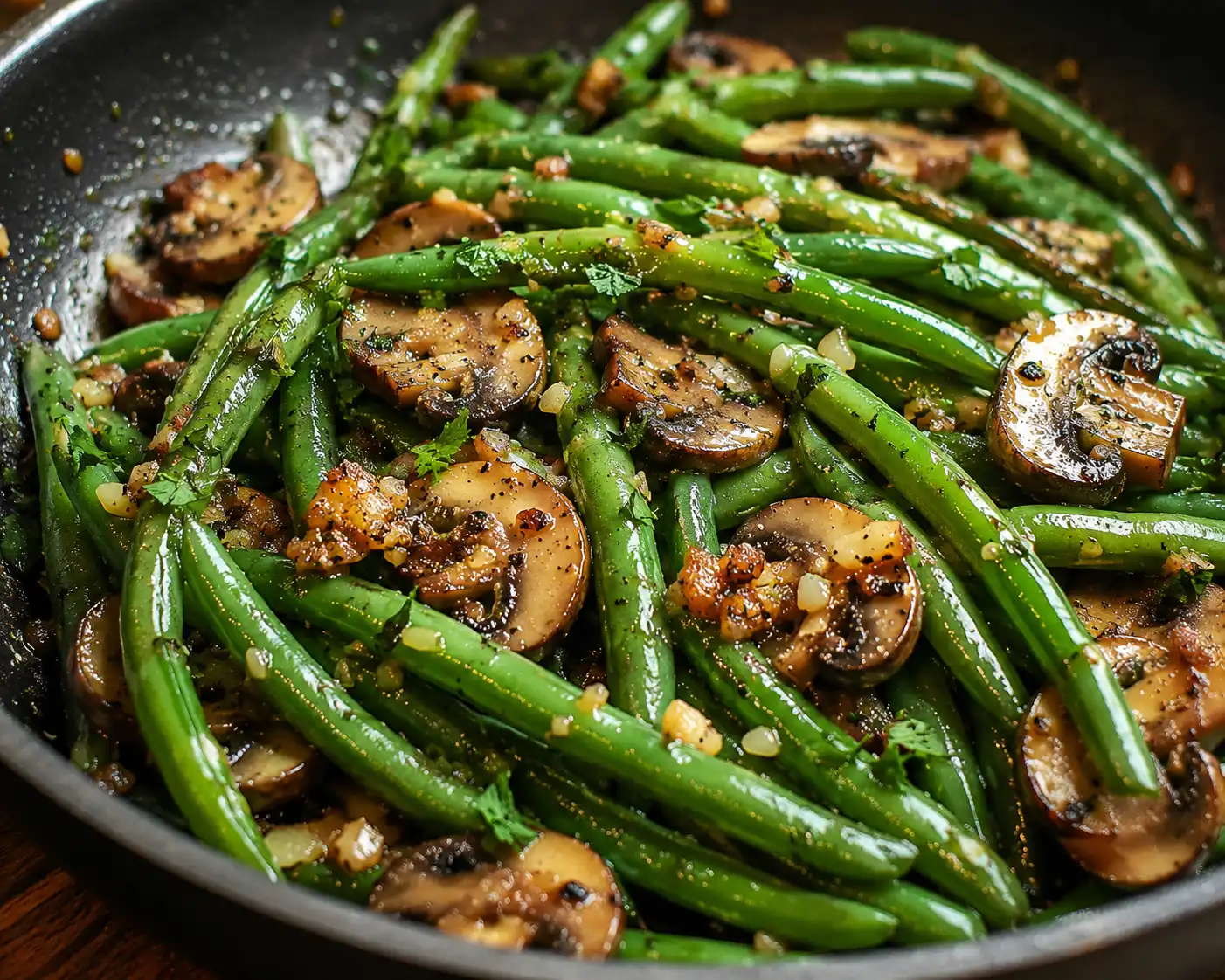
Savory Garlic Butter Green Beans & Mushrooms is a timeless, restaurant-quality side dish that effortlessly bridges rustic simplicity and refined elegance. With its vibrant green beans, earthy sautéed mushrooms, and rich, aromatic garlic butter sauce, this dish delivers deep umami, bright freshness, and luxurious mouthfeel—all in under 20 minutes. Whether served alongside grilled steaks, roasted chicken, baked salmon, or as part of an elevated vegetarian spread, it consistently steals the spotlight with minimal effort and maximum flavor. Its versatility, visual appeal, and crowd-pleasing balance make it a staple in home kitchens, holiday tables, weeknight rotations, and even gourmet dinner parties.
The History
While no single origin story defines this exact dish, Savory Garlic Butter Green Beans & Mushrooms is deeply rooted in centuries-old culinary traditions across Europe and North America. Green beans—domesticated in Central and South America over 7,000 years ago—were introduced to Europe in the 16th century and quickly embraced for their tender texture and adaptability. Mushrooms, particularly cremini and button varieties, have long been celebrated in French mise en place and Italian soffritto techniques for their ability to absorb and amplify surrounding flavors. The union of garlic, butter, and seasonal vegetables echoes classic French à la française preparations, where fresh produce is finished with a rich, herb-infused beurre blanc or beurre noisette. In mid-20th-century American home cooking, the rise of convenience (frozen green beans, canned mushrooms) gave way to upgraded versions—especially as chefs like Julia Child popularized proper butter clarification and garlic tempering. Today’s iteration reflects a modern renaissance: whole-food integrity meets global technique—think shallots inspired by Provençal cuisine, tamari for gluten-free depth, or lemon zest borrowed from Mediterranean tradition—all converging into one harmonious, deeply satisfying plate.
Ingredients Breakdown
Every element in this recipe serves a distinct sensory and functional role—no ingredient is arbitrary. Below is a detailed exploration of each component’s purpose, sourcing notes, and why substitutions (when needed) must honor its core contribution:
- Fresh Green Beans: Preferably slender, crisp, and vibrant green “French-style” or haricots verts—they cook faster, retain superior texture, and offer sweeter, more nuanced flavor than standard string beans. Look for taut, non-wrinkled pods with snap when bent. Avoid limp, yellowed, or puffy beans, which indicate age or poor storage.
- Crimini Mushrooms: Also known as “baby bellas,” these are mature Agaricus bisporus mushrooms with deeper color, firmer flesh, and richer, woodsy umami than white buttons. Their caramelization potential is exceptional. Substitute with shiitakes (for intense smokiness), oyster mushrooms (for delicate brininess), or even wild foraged chanterelles (for floral complexity)—but avoid portobellos unless sliced very thin, as their high water content can dilute the sauce.
- Unsalted Butter: High-fat (82%+), European-style cultured butter yields the most complex nuttiness and velvety mouthfeel when browned. Salted butter works—but adjust added salt carefully. Ghee is an excellent dairy-free alternative with higher smoke point and concentrated richness.
- Fresh Garlic: Always use freshly minced or microplaned cloves—not jarred or powdered. Allicin, the compound responsible for garlic’s pungent aroma and health benefits, degrades rapidly when prepped and exposed to air; fresh ensures peak potency and layered heat.
- Shallots: Finely minced shallots add a subtle sweetness and allium depth without overpowering. They caramelize beautifully alongside mushrooms and create a foundational aromatic base far more refined than yellow onions.
- Dry White Wine (Optional but Highly Recommended): A splash of Sauvignon Blanc or Pinot Grigio deglazes the pan, lifts fond, adds bright acidity, and balances butter’s richness. Alcohol cooks off, leaving only nuanced fruit and mineral notes. Substitute with dry vermouth or a mix of vegetable broth + ½ tsp apple cider vinegar if avoiding alcohol.
- Fresh Herbs: Flat-leaf parsley provides essential green freshness and slight peppery lift; thyme contributes earthy, floral backbone. Chives or tarragon may be used as accents—never dried herbs unless absolutely necessary (use ⅓ the amount and add late).
- Lemon Zest & Juice: Zest delivers volatile citrus oils for aromatic brightness; juice offers clean acidity to cut through fat. Bottled lemon juice lacks nuance and can taste metallic—always use fresh.
- High-Heat Oil: Avocado, grapeseed, or light olive oil ensures safe searing temperatures for mushrooms without smoking or bitterness. Extra virgin olive oil is too low-smoke for initial browning.
- Sea Salt & Freshly Cracked Black Pepper: Kosher or flaky sea salt adheres evenly and seasons without harshness. Whole peppercorns ground just before use release volatile oils for maximum aroma and warmth.
Step-by-Step Recipe
This method prioritizes texture control, flavor layering, and timing precision—ensuring beans stay crisp-tender, mushrooms achieve deep golden-brown edges, and the garlic butter remains fragrant—not burnt.
- Prep All Ingredients Mise en Place: Trim green beans (snap ends or use a knife); halve on diagonal for elegant presentation and even cooking. Wipe mushrooms clean with damp paper towel—never rinse, as they absorb water and steam instead of sear. Slice ¼-inch thick. Mince shallots and garlic separately. Zest and juice lemon. Measure wine, herbs, and seasonings. Having everything ready prevents rushed steps and overcooking.
- Blanch Green Beans (Optional but Recommended for Perfect Texture): Bring 4 quarts well-salted water (2 Tbsp kosher salt) to rolling boil. Add beans and cook 90–120 seconds until bright green and slightly softened but still crunchy. Immediately transfer to ice water bath for 60 seconds to halt cooking and lock in color. Drain thoroughly and pat *completely* dry—moisture is the enemy of sear.
- Sear Mushrooms in Two Batches: Heat 1 Tbsp high-heat oil in a wide stainless steel or cast-iron skillet over medium-high until shimmering. Add half mushrooms in single layer—do not crowd. Cook undisturbed 2–3 minutes until deeply browned on bottom, then stir and continue 2–3 more minutes until edges curl and moisture fully evaporates. Transfer to bowl. Repeat with second batch, adding more oil if needed. This step builds foundational umami via Maillard reaction—critical for depth.
- Sauté Aromatics: Reduce heat to medium. Add remaining ½ Tbsp oil, then shallots. Sauté 1 minute until translucent. Add garlic—cook only 30–45 seconds until fragrant but *not* browned (garlic burns fast and turns bitter). Stir constantly.
- Combine & Deglaze: Return mushrooms to pan. Add blanched beans. Pour in wine (or substitute). Scrape bottom vigorously with wooden spoon to lift all browned bits (fond)—this is flavor gold. Simmer 1–2 minutes until liquid reduces by half.
- Infuse Butter: Reduce heat to low. Add cold butter, 1 Tbsp at a time, whisking continuously until each portion melts and emulsifies into glossy, cohesive sauce. Do not let butter bubble violently—gentle heat preserves garlic’s aroma and prevents separation.
- Finish with Brightness & Texture: Remove from heat. Stir in lemon zest, juice, and most of parsley and thyme. Taste and adjust: more salt for balance, lemon for lift, black pepper for warmth. Let rest 1 minute—allows sauce to cling and flavors to marry.
- Plate with Intention: Spoon into warmed shallow bowls. Garnish with reserved herbs, extra lemon zest, flaky sea salt, and optional toasted slivered almonds or pine nuts for crunch.
Tips
- Dry Beans Thoroughly: Even a film of moisture causes steaming instead of sizzling—pat them three times with clean towels after blanching or washing.
- Don’t Skimp on Mushroom Space: Overcrowding drops pan temperature, forcing mushrooms to sweat rather than caramelize. Use two skillets if needed—or cook in true batches.
- Garlic Timing Is Non-Negotiable: Add it *after* shallots soften, and remove from heat if sauce feels hot before butter is fully incorporated. Burnt garlic ruins the entire dish.
- Butter Temperature Matters: Cut butter into small cubes and keep chilled. Cold butter melts gradually, allowing proper emulsification. Warm or melted butter will break the sauce.
- Use Stainless Steel or Cast Iron: Nonstick pans inhibit fond development—essential for deglazing depth. If using nonstick, compensate with ½ tsp soy sauce or tamari for umami boost.
- Reserve Lemon Juice Until Final Moment: Adding acid too early can dull green bean color and make mushrooms tough. Brightness belongs at the end.
- Taste Twice—Before & After Butter: Salt perception changes dramatically once fat is added. Underseason before butter; fine-tune after.
- Make Ahead Smartly: Blanch beans and slice mushrooms up to 1 day ahead; store separately in airtight containers in fridge. Sauté aromatics and finish day-of for best results.
- Reheat Gently: Never microwave—sauce will separate and beans turn mushy. Reheat in skillet over low heat with 1 tsp water or broth, stirring constantly.
- Scale with Confidence: This recipe multiplies flawlessly—just maintain pan space ratios and adjust cooking times incrementally (e.g., +30 sec per additional cup of beans).
Variations and Customizations
Adapt this dish for dietary needs, seasonal availability, global inspiration, or pantry improvisation—without sacrificing soul or satisfaction:
- Vegetarian/Vegan: Replace butter with high-quality vegan butter (Miyoko’s or Forager) + 1 tsp nutritional yeast for cheesy depth. Add 1 tsp white miso paste while deglazing for fermented umami.
- Gluten-Free: Naturally compliant—just verify wine or broth labels (some wines use gluten-containing fining agents; certified GF brands include Frey Vineyards or Bonterra).
- Keto/Low-Carb: Keep portions moderate (½ cup beans = ~4g net carbs); boost satiety with extra mushrooms, 2 Tbsp crumbled bacon, or ¼ avocado sliced on top.
- Asian-Inspired: Swap butter for toasted sesame oil + neutral oil blend. Replace wine with dry sherry. Add 1 tsp grated ginger with garlic, 1 Tbsp tamari, 1 tsp rice vinegar, and garnish with scallions + sesame seeds.
- Mediterranean Twist: Add ¼ cup halved cherry tomatoes (roasted separately), 2 Tbsp crumbled feta, 1 tsp dried oregano, and finish with kalamata olives and chopped mint.
- Herb-Forward Garden Version: Double parsley, add 1 Tbsp chopped chives, 1 tsp lemon thyme, and 1 Tbsp edible flowers (nasturtiums or pansies) for color and peppery nuance.
- Protein-Powered: Fold in 1 cup cooked lentils, ½ cup shredded rotisserie chicken, or ⅔ cup pan-seared tofu cubes during final butter infusion.
- Winter Root Variation: Replace ½ the green beans with 1 cup julienned parsnips or carrots—blanch separately, then combine in final sauté.
- Smoky Depth: Add ¼ tsp smoked paprika with garlic or finish with a whisper of chipotle powder for gentle heat and complexity.
- Breakfast Integration: Serve warm over soft-scrambled eggs or folded into an herbed frittata—topped with goat cheese and microgreens.
Health Considerations and Nutritional Value
This dish exemplifies nutrient-dense, mindful eating—where indulgence and wellness coexist. A standard 1-cup serving (approx. 150g) delivers approximately:
- Calories: 145–165 kcal (varies by butter quantity and mushroom type)
- Fat: 10–12g (primarily heart-healthy monounsaturated fats from butter/olive oil; zero trans fat)
- Carbohydrates: 8–10g (mostly complex fiber—green beans provide 3.5g fiber per cup; mushrooms add 1g)
- Protein: 3–4g (mushrooms contain all nine essential amino acids in trace amounts; synergistic with beans’ plant protein)
- Vitamins & Minerals: Exceptionally rich in Vitamin K (110% DV from green beans—critical for bone & blood health), Vitamin C (40% DV—immune support & collagen synthesis), B vitamins (especially B2, B3, B5 from mushrooms), selenium (antioxidant powerhouse), and copper (supports iron metabolism).
- Phytonutrients: Green beans contain flavonoids (quercetin, catechin) and carotenoids (lutein, beta-carotene); mushrooms supply ergothioneine—a unique, highly bioavailable antioxidant linked to reduced cellular aging and neuroprotection.
- Digestive Benefits: Prebiotic fiber from both beans and mushrooms feeds beneficial gut bacteria. Gentle cooking preserves enzymes better than prolonged boiling.
- Low Sodium Option: Using unsalted butter and limiting added salt keeps sodium under 120mg/serving—ideal for hypertension management.
- Glycemic Impact: Low glycemic index (~15), making it diabetes-friendly and blood-sugar stabilizing.
- Considerations: Those with FODMAP sensitivities may limit shallots/garlic (substitute with infused oil) or choose green beans only (mushrooms are high-FODMAP). Butter-sensitive individuals can use ghee (lactose-free) or avocado oil.
Ingredients
- 1 lb fresh green beans, trimmed and halved diagonally
- 10 oz cremini mushrooms, wiped clean and sliced ¼-inch thick
- 3 Tbsp unsalted butter, chilled and cubed
- 2 Tbsp high-heat oil (avocado, grapeseed, or light olive oil)
- 2 large shallots, finely minced (about ⅓ cup)
- 4 garlic cloves, finely minced or microplaned
- ¼ cup dry white wine (Sauvignon Blanc or Pinot Grigio)
- Zest and juice of 1 large lemon (about 1 tsp zest, 1½ Tbsp juice)
- ¼ cup fresh flat-leaf parsley, finely chopped (plus extra for garnish)
- 1 tsp fresh thyme leaves (or ½ tsp dried)
- 1½ tsp kosher salt (plus more to taste)
- 1 tsp freshly cracked black pepper (plus more to taste)
- Flaky sea salt (Maldon or similar) for finishing
- Optional garnishes: toasted slivered almonds, lemon wedges, microgreens
Directions
- Bring a large pot of water to a rolling boil. Add 2 Tbsp kosher salt. Prepare an ice water bath in a large bowl.
- Add green beans to boiling water and cook for 90–120 seconds, until bright green and crisp-tender. Immediately drain and plunge into ice water. Let chill 60 seconds, then drain thoroughly and pat *completely* dry with clean kitchen towels.
- Heat 1 Tbsp oil in a 12-inch stainless steel or cast-iron skillet over medium-high heat until shimmering. Add half the mushrooms in a single layer. Cook undisturbed 2–3 minutes until deeply browned on bottom, then stir and cook another 2–3 minutes until edges curl and liquid has fully evaporated. Transfer to a bowl. Repeat with remaining oil and mushrooms.
- Reduce heat to medium. Add shallots to skillet and sauté 1 minute until translucent. Add garlic and cook 30–45 seconds, stirring constantly, until fragrant but not browned.
- Return mushrooms to pan. Add blanched green beans and white wine. Increase heat to medium-high and simmer 1–2 minutes, scraping up all browned bits, until wine reduces by half.
- Reduce heat to low. Add butter one tablespoon at a time, whisking constantly until each portion is fully melted and emulsified into a glossy, cohesive sauce (about 30 seconds per addition). Do not let mixture bubble vigorously.
- Remove from heat. Stir in lemon zest, lemon juice, parsley, thyme, 1½ tsp kosher salt, and 1 tsp black pepper. Taste and adjust seasoning—add more salt for balance, lemon for brightness, or pepper for warmth.
- Let rest 1 minute. Transfer to warmed serving dish. Garnish with flaky sea salt, extra parsley, lemon zest, and optional almonds. Serve immediately.
FAQ
- Can I use frozen green beans?
- Yes—but texture suffers. Thaw completely, pat *extremely* dry, and skip blanching. Sauté 1–2 minutes longer in the final step. Haricots verts frozen varieties (like Bird’s Eye) perform best.
- Why do you recommend blanching?
- Blanching sets color, removes raw “grassy” notes, ensures uniform tenderness, and gives you total control over final texture—preventing mushiness during the quick sauté.
- My garlic butter sauce broke—what went wrong?
- Most often: butter was too warm, heat was too high, or you added it too quickly. Fix it by removing from heat, adding 1 tsp cold water, and whisking vigorously until re-emulsified. Next time, use colder butter and lower heat.
- Can I make this ahead for a party?
- Absolutely. Blanch beans and slice mushrooms up to 24 hours ahead. Store separately in airtight containers in the fridge. Sauté mushrooms and aromatics up to 6 hours ahead—cool, cover, refrigerate. Reheat gently in skillet, then proceed with butter, lemon, and herbs just before serving.
- What’s the best mushroom substitute if creminis are unavailable?
- White button mushrooms work—but slice thinner and extend sear time by 1 minute to develop flavor. Portobellos require trimming gills and slicing paper-thin. Oyster mushrooms need only 60–90 seconds per side—they cook very fast.
- Is there a dairy-free version that still feels luxurious?
- Yes: Use high-fat vegan butter (Miyoko’s Cultured Vegan Butter is ideal), add 1 tsp white miso while deglazing, and finish with 1 tsp toasted sesame oil for richness. The umami depth compensates beautifully.
- How do I keep green beans from turning olive-green?
- Three keys: 1) Heavily salt the blanching water (it acts like a brine), 2) Shock immediately in ice water, 3) Never cover while cooling—steam dulls color. Also, avoid acidic ingredients (lemon) until the very end.
- Can I double this recipe for a crowd?
- Yes—use two skillets for mushrooms to avoid crowding. Double all ingredients except salt (add ½ tsp extra, then adjust). Total cook time increases by only 2–3 minutes.
- What wine should I use if I don’t drink alcohol?
- Use ¼ cup low-sodium vegetable broth + ½ tsp apple cider vinegar + ¼ tsp sugar. Or try dry vermouth—it’s fortified and holds up well in cooking, with negligible residual alcohol.
- Why use shallots instead of onions?
- Shallots have a milder, sweeter, more nuanced allium flavor that complements rather than competes with garlic and mushrooms. Their finer texture also integrates seamlessly into the sauce without chunkiness.
Summary
Savory Garlic Butter Green Beans & Mushrooms is a masterclass in simple ingredients transformed by precise technique—where crisp-tender beans, deeply caramelized mushrooms, and fragrant, velvety garlic butter unite in perfect harmony.
Nutrient-rich, endlessly adaptable, and ready in under 20 minutes, it’s a dish that nourishes the body, delights the palate, and elevates any meal from ordinary to extraordinary—without ever demanding perfection from the cook.