Introduction
Welcome to a taste of paradise on your dinner plate! Hawaiian Chicken with Coconut Rice is more than just a meal—it’s a vibrant, aromatic escape to sun-drenched beaches and swaying palm trees. This healthy tropical dinner harmoniously blends tender, naturally sweet grilled or baked chicken marinated in zesty pineapple, tangy lime, and fragrant ginger with creamy, subtly sweet coconut rice infused with turmeric, lemongrass, and toasted coconut flakes. Designed with wellness at its core, this recipe minimizes refined sugars and excess sodium while maximizing whole-food ingredients, plant-based fats, and antioxidant-rich spices—proving that indulgence and nourishment can coexist beautifully. Whether you’re meal prepping for the week, hosting a casual tropical-themed dinner, or simply craving something bright and uplifting after a long day, this dish delivers bold flavor, comforting texture, and soul-soothing warmth—all in one balanced, nutrient-dense bowl.
The History
The roots of Hawaiian Chicken trace back not to ancient Polynesian traditions—but rather to mid-20th-century American culinary fusion. As tourism to the Hawaiian Islands surged post-WWII, mainland chefs and resort kitchens began interpreting local flavors through an accessible, family-friendly lens. Pineapple—a fruit native to South America but commercially cultivated in Hawaii since the early 1900s—became the star ingredient, lending natural sweetness and bromelain (a tenderizing enzyme) to grilled chicken. The “Hawaiian” label was less about strict authenticity and more about evoking a carefree, island-inspired sensibility. Meanwhile, coconut rice has deep cultural resonance across Southeast Asia, the Caribbean, West Africa, and Oceania—where coconut milk has been used for centuries to enrich rice, add creaminess, and enhance shelf-stable nutrition in tropical climates. Our modern version respectfully bridges these heritages: honoring the spirit of aloha through generous use of fresh tropical produce, mindful preparation, and communal joy—while elevating tradition with contemporary nutritional science, clean-label ingredients, and sustainable sourcing practices.
Ingredients Breakdown
Every element in this recipe serves a purpose—flavor, function, or phytonutrient benefit. Let’s explore them in detail:
- Pineapple juice (unsweetened, 100% pure): Provides natural sweetness, acidity, and bromelain—aiding protein digestion and tenderizing chicken without harsh marinades. Rich in vitamin C, manganese, and anti-inflammatory bromelain.
- Fresh pineapple chunks: Adds juicy texture, fiber, and digestive enzymes. Opt for ripe, golden-fleshed pineapple for peak sweetness and nutrient density.
- Low-sodium tamari or coconut aminos: A gluten-free, fermented soy alternative rich in amino acids and umami depth—lower in sodium than conventional soy sauce and free from artificial preservatives.
- Fresh grated ginger: Contains potent gingerol compounds with proven anti-nausea, anti-inflammatory, and circulation-boosting properties. Far superior in bioactive potency to dried or powdered forms.
- Garlic (fresh, minced): A cardiovascular powerhouse—allicin released upon crushing supports healthy blood pressure and immune resilience.
- Lime zest and juice: Bright citrus notes uplift the entire dish while delivering flavonoids like hesperidin and abundant vitamin C—enhancing iron absorption from the chicken and boosting antioxidant capacity.
- Chicken breast or thigh (organic, pasture-raised preferred): Lean breast offers high-quality complete protein with minimal saturated fat; dark-meat thighs provide richer flavor, more B vitamins (especially B12 and niacin), and heart-healthy monounsaturated fats. Both are excellent choices—select based on preference and dietary goals.
- Light coconut milk (BPA-free canned or carton): Provides creamy richness with medium-chain triglycerides (MCTs)—easily metabolized for clean energy—and lauric acid, known for antimicrobial and immune-supportive effects. We use light (not full-fat) to reduce saturated fat while retaining flavor and texture.
- Brown jasmine or basmati rice: Whole-grain varieties retain bran and germ, offering significantly more fiber, magnesium, selenium, and polyphenols than white rice—supporting stable blood sugar and gut microbiome diversity.
- Fresh lemongrass (bruised stalks): Imparts a delicate citrus-floral aroma and contains citral and geraniol—natural compounds studied for antioxidant, antimicrobial, and mild sedative effects.
- Ground turmeric + black pepper: The classic synergy—curcumin in turmeric is fat-soluble and poorly absorbed alone; piperine in black pepper increases bioavailability by up to 2,000%. Turmeric supports joint comfort, cognitive health, and systemic inflammation balance.
- Toasted unsweetened coconut flakes: Adds crunch, natural sweetness, and lauric acid—plus fiber and zinc. Toasting enhances flavor and releases beneficial volatile oils.
- Red bell pepper & scallions (garnish): Vibrant sources of lycopene, beta-carotene, quercetin, and prebiotic fibers—supporting eye health, skin radiance, and microbial diversity.
- Microgreens or fresh cilantro: Concentrated sources of vitamins K, E, and C, plus sulforaphane precursors (especially in broccoli microgreens) shown to activate cellular detox pathways.
Step-by-Step Recipe
- Marinate the Chicken (30 min–24 hrs): In a non-reactive bowl, whisk together ½ cup unsweetened pineapple juice, 3 tbsp tamari or coconut aminos, 2 tbsp fresh lime juice, 1 tbsp lime zest, 1 tbsp finely grated fresh ginger, 3 minced garlic cloves, ½ tsp ground turmeric, ¼ tsp freshly ground black pepper, and 1 tsp arrowroot starch (for gentle thickening and glaze adhesion). Add 1.5 lbs boneless, skinless chicken breasts or thighs, cut into 1.5-inch pieces. Toss to coat evenly. Cover and refrigerate for minimum 30 minutes—or ideally 4–8 hours for deeper flavor penetration and enzymatic tenderization.
- Prepare Coconut Rice Base: Rinse 1 cup brown jasmine rice under cold water until runoff is clear (removes excess starch and potential arsenic residue). In a heavy-bottomed pot or rice cooker, combine rinsed rice, 1¾ cups low-sodium vegetable broth (or water), ½ cup light coconut milk, 1 bruised 3-inch lemongrass stalk, ½ tsp turmeric, ¼ tsp sea salt, and 1 tsp coconut oil. Bring to a gentle boil, then reduce heat to lowest setting, cover tightly, and simmer for 45 minutes (stovetop) or select “brown rice” setting (rice cooker). Turn off heat and let steam, covered, for 15 minutes. Discard lemongrass before fluffing with a fork.
- Cook the Chicken: Heat 1 tsp coconut oil in a large nonstick or cast-iron skillet over medium-high heat. Remove chicken from marinade (reserve marinade), pat dry with paper towels for optimal sear. Cook in a single layer without crowding, 4–5 minutes per side, until golden-brown and internal temperature reaches 165°F (74°C). Transfer to a clean plate and tent loosely with foil.
- Make the Tropical Glaze: Pour reserved marinade into the same skillet. Add ½ cup fresh pineapple juice and ¼ cup diced fresh pineapple. Simmer over medium heat, stirring frequently, until reduced by half and slightly syrupy (~4–5 minutes). Stir in 1 tsp arrowroot slurry (1 tsp arrowroot + 1 tsp cold water) and cook 1 more minute until glossy and thickened. Optional: swirl in 1 tsp coconut butter for extra richness.
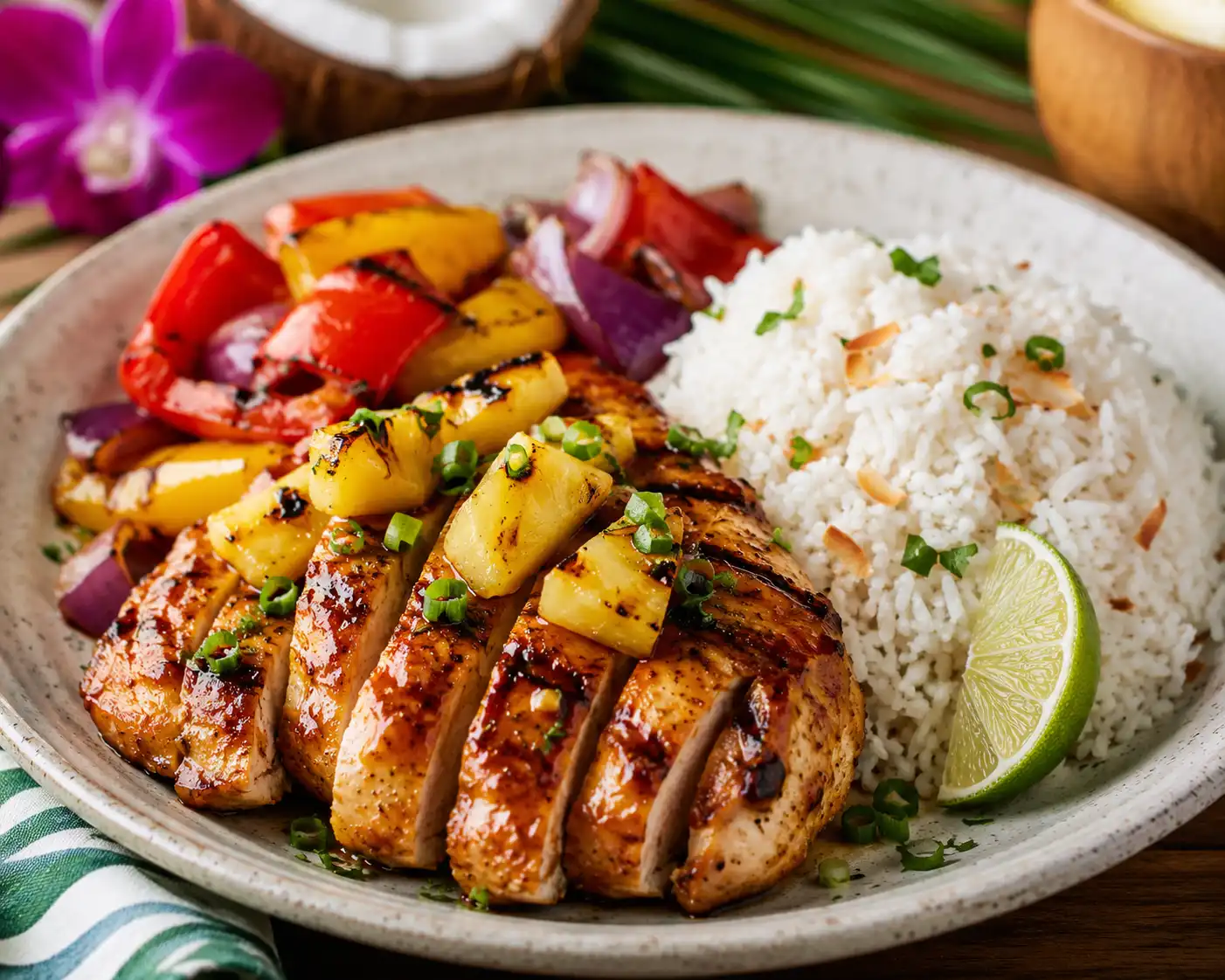
- Finish & Assemble: Return chicken to skillet, gently turning to coat in glaze. Simmer 1–2 minutes until heated through. Meanwhile, gently fold 2 tbsp toasted unsweetened coconut flakes into warm coconut rice. Spoon rice into bowls, top with glazed chicken, extra pineapple chunks, thin rings of red bell pepper, sliced scallions, lime wedges, and a sprinkle of fresh cilantro or microgreens. Serve immediately.
Tips
- Maximize Bromelain Benefits: Marinate chicken no longer than 24 hours—extended exposure to pineapple enzymes may cause mushiness. For ultra-tender results, marinate 8–12 hours.
- Rice Texture Perfection: Always rinse brown rice thoroughly. For fluffier grains, soak rinsed rice in warm water for 20 minutes before cooking—reduces cooking time and improves digestibility.
- Coconut Milk Consistency: Shake canned coconut milk vigorously before measuring—light versions often separate. If using carton “coconut beverage,” opt for unsweetened, fortified varieties with ≥1g fat per serving for creaminess.
- Grill Option: For smoky depth, thread marinated chicken onto skewers (soak wooden skewers 30 mins first) and grill over medium heat 8–10 minutes, turning occasionally. Baste with glaze during last 2 minutes.
- Meal Prep Friendly: Cook rice and marinate chicken up to 2 days ahead. Store separately in airtight containers. Reheat rice with 1 tbsp water or coconut milk to restore moisture; glaze chicken fresh for best texture.
- Salt-Smart Swaps: Boost umami without sodium using 1 tsp nutritional yeast in the marinade or a splash of coconut aminos instead of tamari.
- Nonstick Pan Hack: To prevent sticking when searing, ensure skillet is fully heated before adding oil—and wait until oil shimmers before adding chicken.
- Texture Contrast: Toast coconut flakes in a dry skillet over medium-low heat 3–4 minutes, stirring constantly, until golden and fragrant. Cool completely before folding into rice.
- Acid Balance: If glaze tastes overly sweet, stir in ½ tsp apple cider vinegar or extra lime juice at the end for brightness.
- Kid-Friendly Tweaks: Reduce ginger to ½ tbsp and omit black pepper in marinade; serve with extra pineapple on the side for natural sweetness appeal.
Variations and Customizations
This recipe is gloriously adaptable—whether accommodating allergies, preferences, or pantry limitations. Here’s how to make it uniquely yours:
- Vegan Version: Swap chicken for extra-firm tofu (pressed & cubed) or tempeh (steamed 10 mins first). Marinate same way. For richer texture, pan-fry tofu in sesame oil until golden before glazing. Use tamari (not fish sauce) and ensure all labels are vegan-certified.
- Sheet-Pan Roast: Toss marinated chicken and pineapple chunks with 1 tbsp coconut oil, 1 sliced red onion, and 1 diced bell pepper. Spread on parchment-lined sheet pan. Roast at 400°F (200°C) for 25–30 minutes, stirring once halfway. Drizzle with warm glaze before serving.
- Spicy Island Kick: Add 1 finely minced Thai chili (seeds removed) to marinade, or stir ½ tsp gochujang or sriracha into glaze. Garnish with pickled jalapeños.
- Low-Carb/Keto Adaptation: Replace rice with riced cauliflower sautéed in coconut oil with turmeric and lemongrass-infused broth. Increase healthy fats: drizzle finished dish with 1 tsp MCT oil or avocado oil.
- Gluten-Free Assurance: Use certified GF tamari or coconut aminos; verify rice and coconut milk are processed in GF facilities (many brands now offer dedicated lines).
- Slow Cooker Option: Place marinated chicken and reserved marinade in slow cooker. Cook on LOW 4–5 hours. Thicken glaze separately on stove and pour over before serving. Serve over pre-cooked coconut rice.
- Grain-Free Rice Alternatives: Try cooked millet (nutty, fluffy), quinoa (complete protein), or shirataki rice (zero-carb, konjac-based) for different textures and macros.
- Herb Infusions: Steep lemongrass in warm coconut milk for 15 minutes before adding to rice—or swap in kaffir lime leaves (torn) for authentic Southeast Asian nuance.
- Breakfast Reinvention: Dice leftover chicken and rice, scramble with eggs and spinach, and top with mango salsa for a protein-rich tropical frittata.
- Dietitian-Approved Swaps: For lower glycemic impact, replace ¼ cup rice with cooked lentils or black beans. For higher omega-3s, top with 1 tbsp crushed macadamia nuts or chia seeds.
Health Considerations and Nutritional Value
This Hawaiian Chicken with Coconut Rice isn’t just delicious—it’s thoughtfully engineered for holistic wellness. Each serving (approx. 1.5 cups chicken + ¾ cup rice) delivers roughly:
- Calories: 420–480 kcal (adjustable based on portion size and coconut milk choice)
- Protein: 32–38g — supporting muscle maintenance, satiety, and metabolic health
- Fiber: 6–8g — primarily from brown rice and pineapple, promoting digestive regularity, microbiome diversity, and steady glucose response
- Healthy Fats: 12–16g — predominantly MCTs from coconut and monounsaturated fats from chicken thigh or added avocado oil, supporting brain function and hormone synthesis
- Vitamin C: >100% DV — from pineapple, lime, and bell pepper, enhancing immunity and collagen formation
- Magnesium & Potassium: Abundant in brown rice, coconut milk, and pineapple — crucial for nerve conduction, muscle relaxation, and blood pressure regulation
- Phytonutrients: Curcumin (turmeric), gingerol (ginger), limonene (citrus), and bromelain (pineapple) work synergistically to modulate inflammation, support detoxification enzymes, and protect cellular integrity.
Dietary Notes: Naturally dairy-free, egg-free, and nut-free (unless garnished with macadamias). Easily adapted for paleo (swap rice for cauliflower rice), Whole30 (use coconut aminos only, omit sugar-containing ingredients), or Mediterranean patterns (add olives and artichokes). Low in added sugars (<2g/serving) and sodium (<450mg/serving with low-sodium tamari). Ideal for those managing prediabetes, hypertension, or seeking anti-inflammatory, gut-supportive meals. Not recommended for individuals with severe coconut allergy or histamine intolerance (due to fermented tamari and aged pineapple)—consult a healthcare provider if uncertain.
Ingredients
- 1.5 lbs boneless, skinless chicken breast or thighs, cut into 1.5-inch pieces
- ½ cup unsweetened 100% pineapple juice (plus ½ cup extra for glaze)
- 3 tbsp low-sodium tamari or coconut aminos
- 2 tbsp fresh lime juice
- 1 tbsp lime zest (from 2 limes)
- 1 tbsp fresh ginger, finely grated
- 3 garlic cloves, minced
- ½ tsp ground turmeric
- ¼ tsp freshly ground black pepper
- 1 tsp arrowroot starch
- 1 cup brown jasmine or basmati rice, rinsed well
- 1¾ cups low-sodium vegetable broth or water
- ½ cup light coconut milk (canned or carton)
- 1 stalk lemongrass, bruised (or 1 tsp dried lemongrass)
- ¼ tsp sea salt
- 1 tsp coconut oil (for cooking)
- ¼ cup fresh pineapple, diced (for glaze)
- 2 tbsp unsweetened coconut flakes, toasted
- 1 red bell pepper, thinly sliced (for garnish)
- 3 scallions, thinly sliced (for garnish)
- Lime wedges and fresh cilantro or microgreens (for serving)
Directions
- In a large non-reactive bowl, whisk together ½ cup pineapple juice, tamari (or coconut aminos), lime juice, lime zest, grated ginger, minced garlic, ½ tsp turmeric, black pepper, and arrowroot starch until smooth. Add chicken pieces and toss to coat evenly. Cover and refrigerate for at least 30 minutes or up to 12 hours.
- Rinse brown rice thoroughly under cold water until water runs clear. In a heavy-bottomed pot or rice cooker, combine rinsed rice, vegetable broth (or water), ½ cup light coconut milk, bruised lemongrass stalk, ¼ tsp turmeric, sea salt, and 1 tsp coconut oil. Stir once. Bring to a gentle boil over medium-high heat. Once boiling, reduce heat to low, cover tightly, and simmer for 45 minutes (stovetop) or use “brown rice” setting (rice cooker). After cooking, turn off heat and let steam, covered, for 15 minutes. Remove and discard lemongrass. Fluff rice with a fork and gently fold in toasted coconut flakes. Cover and keep warm.
- Heat 1 tsp coconut oil in a large nonstick skillet over medium-high heat. Remove chicken from marinade (reserve marinade) and pat dry with paper towels. Working in batches if needed, sear chicken in single layer for 4–5 minutes per side, until deeply golden and cooked through (165°F internal temp). Transfer to a clean plate; tent with foil.
- Pour reserved marinade into same skillet. Add remaining ½ cup pineapple juice and diced fresh pineapple. Bring to a simmer over medium heat, stirring often, and cook for 4–5 minutes until reduced by half and slightly thickened. In a small bowl, mix 1 tsp arrowroot starch with 1 tsp cold water to make a slurry. Stir slurry into simmering glaze and cook 1 more minute until glossy and cohesive.
- Return chicken to skillet and gently turn to coat in glaze. Simmer 1–2 minutes until heated through and glaze clings beautifully. Taste and adjust with extra lime juice or pinch of salt if desired.
- Divide warm coconut rice among 4 bowls. Top generously with glazed chicken and pineapple. Garnish with red bell pepper strips, scallions, lime wedges, and extra fresh herbs or microgreens. Serve immediately while fragrant and vibrant.
FAQ
- Can I use canned pineapple instead of fresh?
- Yes—but choose pineapple packed in 100% juice (not syrup) and drain thoroughly. Fresh pineapple provides superior bromelain activity and brighter flavor. If using canned, add 1 tsp extra lime juice to glaze for acidity balance.
- Why brown rice instead of white?
- Brown rice retains the nutrient-dense bran and germ layers lost in refining. It provides 3x more fiber, double the magnesium, and significant B vitamins and antioxidants—slowing glucose absorption and feeding beneficial gut bacteria. The subtle nuttiness also complements tropical flavors beautifully.
- Is light coconut milk nutritionally inferior to full-fat?
- No—light coconut milk retains all the same MCTs, lauric acid, and flavor compounds, just with less total fat and calories. For most health goals (heart health, weight management), light is an excellent, versatile choice. Reserve full-fat for desserts or very rich sauces.
- Can I freeze this dish?
- Absolutely! Freeze cooked, unglazed chicken and cooled coconut rice separately in airtight containers for up to 3 months. Thaw overnight in fridge. Reheat rice with 1 tbsp liquid; prepare fresh glaze and toss with warmed chicken for best texture and flavor integrity.
- What if I don’t have lemongrass?
- No problem. Substitute 1 tsp finely grated lemon zest + ¼ tsp lemongrass paste (if available) OR omit entirely—the turmeric, ginger, and lime provide ample aromatic complexity. For deeper floral notes, add 2 kaffir lime leaves (removed before serving).
- How do I prevent soggy coconut rice?
- Key steps: rinse rice well, use correct liquid ratio (1:1.75 rice-to-broth), avoid lifting the lid during cooking/steaming, and let it rest covered after cooking. If rice seems wet, spread on a baking sheet and bake at 300°F for 5–8 minutes to evaporate excess moisture.
- Can I make this in an Instant Pot?
- Yes! For rice: Use “Rice” setting with rinsed rice, 1¾ cups broth, ½ cup coconut milk, turmeric, salt, coconut oil, and lemongrass. Cook 22 minutes, natural release 10 minutes. For chicken: Sear using “Sauté” mode, then pressure cook marinated chicken 8 minutes (with quick release). Thicken glaze separately.
- Is this suitable for weight loss?
- Yes—when portioned mindfully. High protein + high fiber promotes satiety; low added sugar and moderate healthy fats support metabolic flexibility. One serving fits comfortably within most balanced calorie targets (e.g., 1,200–1,800 kcal/day plans).
- What wine or beverage pairs well?
- A crisp, unoaked Sauvignon Blanc or dry Riesling balances sweetness and acidity. Non-alcoholic options: sparkling lime-coconut water, hibiscus-ginger iced tea, or chilled lemongrass mint infusion.
- How can I boost protein further?
- Add ¼ cup shelled edamame to rice before serving, top with 2 tbsp hemp hearts, or serve alongside a side of miso-glazed tofu or black bean-corn salsa.
Summary
Hawaiian Chicken with Coconut Rice is a vibrant, nutrient-dense tropical dinner that celebrates whole-food flavors—featuring enzyme-rich pineapple-marinated chicken, anti-inflammatory turmeric-coconut rice, and fresh, colorful garnishes—all crafted to nourish body and spirit.
It’s effortlessly adaptable for vegan, gluten-free, low-carb, and meal-prep lifestyles, delivering robust protein, gut-friendly fiber, and science-backed phytonutrients in every bright, aromatic bite.