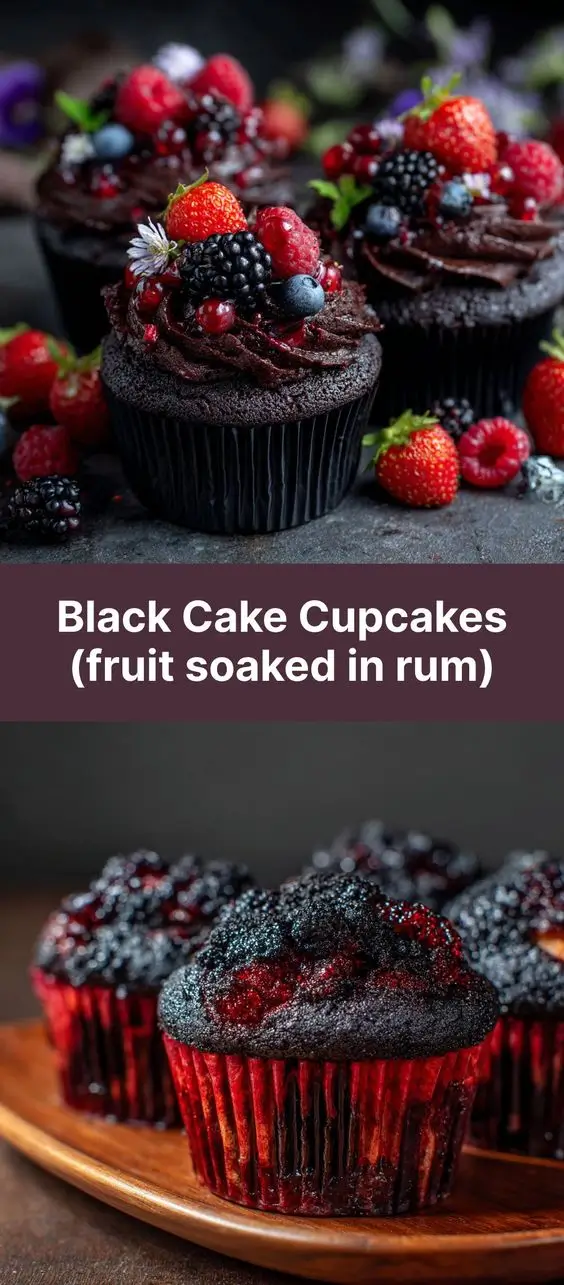
Black Cake Cupcakes (Fruit Soaked in Rum)
Introduction
Indulge in the rich, decadent flavors of Caribbean tradition with these exquisite Black Cake Cupcakes. A beloved staple during festive seasons across the West Indies, black cake is a luxurious dessert that marries the deep complexity of aged rum-soaked fruits with a velvety, spiced cake batter. Now reimagined in cupcake form, this modern twist offers all the opulence of the classic version in a convenient, individual-sized treat perfect for holidays, weddings, birthdays, or any occasion that calls for celebration.
These cupcakes are more than just a dessert—they’re an experience. With their moist crumb, intoxicating aroma, and bold depth of flavor, each bite transports you to sun-drenched islands where culinary heritage runs deep. Whether you’re familiar with traditional black cake or discovering it for the first time, these cupcakes offer a delightful fusion of old-world charm and contemporary convenience.
The History
Black cake traces its roots back to colonial times in the Caribbean, particularly in nations such as Jamaica, Trinidad and Tobago, Barbados, and Guyana. It evolved from British plum pudding and Christmas cake traditions brought over during the era of European colonization. Enslaved Africans and later Afro-Caribbean communities adapted these recipes using local ingredients—especially dark rums and tropical dried fruits—to create something uniquely their own.
The process of soaking dried fruits in wine or rum for months before baking was not only a method of preservation but also a symbol of prosperity and festivity. Wealthier households would begin preparing the fruit mixture well in advance of Christmas, sometimes even years ahead, passing down bottles of aging fruit between generations. Over time, the alcohol breaks down the fibers in the fruit, intensifying both texture and taste while imparting a deep mahogany hue to the final cake—hence the name “black cake.”
In recent decades, bakers have innovated by downsizing this grand dessert into portable, elegant cupcakes. This evolution maintains authenticity while making the dessert more accessible for modern lifestyles and diverse gatherings. Today’s Black Cake Cupcakes honor ancestral techniques while embracing new formats, ensuring this cultural treasure continues to thrive globally.
Ingredients Breakdown
The magic of Black Cake Cupcakes lies in the meticulous preparation of its components, especially the slow infusion of fruits in premium spirits. Below is a detailed look at each key ingredient and its role in creating this masterpiece:
- Dried Fruits: A medley of raisins, currants, sultanas, prunes, cherries, and candied citrus peels forms the heart of the soaked fruit mix. Each type contributes different textures and sweetness levels—raisins add chewiness, currants bring tartness, prunes lend moisture, and cherries infuse bursts of color and flavor.
- Dark Rum: The choice of rum is crucial. Aged, full-bodied dark rum like Myers’s, Appleton Estate, or El Dorado adds layers of molasses, oak, and spice notes. The alcohol acts as a solvent, extracting flavors from the fruit and spices while preserving them over time. Some traditionalists use both white and dark rum—one for brightness, one for depth.
- Red Wine: Often added alongside rum, red wine (such as port, Madeira, or Bordeaux) enhances the fruit’s natural tannins and acidity, balancing the overall richness. It also helps soften tougher fruits like prunes and peel.
- Baking Spices: Warm spices like ground nutmeg, cinnamon, allspice (pimento), and cloves evoke the aromatic essence of the Caribbean pantry. Freshly grated nutmeg and whole-ground spices make a noticeable difference compared to pre-packaged blends.
- Vanilla Extract & Almond Essence: Pure vanilla extract deepens the warmth, while a touch of almond extract introduces a subtle marzipan-like nuance that elevates the fragrance.
- Butter: Unsalted butter provides a lush, tender crumb and carries fat-soluble flavor compounds from the rum-soaked fruit. European-style butter with higher fat content yields an even silkier texture.
- Flour: All-purpose flour gives structure, though some bakers blend in a small amount of cake flour for softness. Sifted thoroughly to avoid lumps and ensure even rising.
- Sugar: Brown sugar (dark or light) complements the molasses notes in rum, while granulated sugar ensures proper aeration when creamed with butter.
- Eggs: Large eggs bind the batter and contribute to leavening and emulsification. Room temperature eggs integrate better and reduce curdling risk.
- Baking Powder & Baking Soda: These chemical leaveners help lift the dense fruit-laden batter, giving cupcakes a slightly airy rise without compromising density.
- Chocolate or Cocoa Paste (Optional):strong>: A small amount of melted dark chocolate or cocoa paste may be used in some variations to deepen the color and enhance bitterness, mimicking the effect of burnt sugar sometimes used in traditional cakes.
Step-by-Step Recipe
Part 1: Preparing the Soaked Fruit Mixture (Weeks or Months Ahead)
- In a large glass jar with a tight-sealing lid, combine 2 cups mixed dried fruits (raisins, currants, chopped prunes, glacé cherries, candied orange/lemon peel).
- Add ½ teaspoon ground cinnamon, ¼ teaspoon ground nutmeg, ⅛ teaspoon ground cloves, and a pinch of allspice.
- Pour in 1 cup dark rum and ½ cup red wine (preferably port or Madeira). Stir gently to coat all fruit.
- Seal the jar and store in a cool, dark place. Shake every few days. Allow to macerate for at least 4 weeks; ideal aging time is 1–6 months for maximum flavor development.
Part 2: Making the Cupcakes
- Preheat Oven: Set oven to 325°F (160°C). Line a 12-cup muffin tin with high-quality parchment or foil liners (due to stickiness).
- Cream Butter & Sugar: In a large bowl, beat ¾ cup (170g) softened unsalted butter with ½ cup (100g) brown sugar and ¼ cup (50g) granulated sugar until pale and fluffy (about 5 minutes).
- Add Eggs: Gradually add 3 large room-temperature eggs, one at a time, beating well after each addition. Add 1 teaspoon vanilla extract and ¼ teaspoon almond extract.
- Sift Dry Ingredients: In a separate bowl, sift together 1 ½ cups (190g) all-purpose flour, ½ teaspoon baking powder, ¼ teaspoon baking soda, and a pinch of salt.
- Incorporate Flour: Alternately fold dry ingredients and ¼ cup (60ml) reserved fruit-soaking liquid (rum-wine mix) into the batter in three parts, starting and ending with flour. Mix until just combined.
- Fold in Fruits: Drain excess liquid from soaked fruits (reserve remaining liquid for brushing or future batches). Gently fold fruits into the batter until evenly distributed.
- Fill Liners: Divide batter evenly among cupcake liners, filling each about ⅔ full. Tap tray lightly on counter to release air bubbles.
- Bake: Bake for 28–35 minutes, or until a toothpick inserted comes out clean. Rotate pan halfway through for even baking.
- Cool: Let cupcakes cool in pan for 10 minutes, then transfer to wire rack to cool completely.
Part 3: Optional Glaze or Soak
- While warm, brush tops with additional warmed rum for extra moisture and kick (optional).
- For a glossy finish, prepare a simple rum glaze: mix ½ cup powdered sugar with 1–2 tablespoons dark rum and drizzle over cooled cupcakes.
Tips
- Aging is Key: Don’t rush the fruit soak. The longer it ages, the richer and smoother the flavor becomes. Label your jar with the start date!
- Use Quality Rum: Since rum defines much of the character, splurge on a good bottle—you’ll taste the difference.
- Don’t Overmix: Once flour is added, mix only until incorporated to prevent tough cupcakes.
- Room Temperature Ingredients: Cold eggs or butter can cause the batter to split. Take everything out 1–2 hours before baking.
- Line Properly: Use thick foil liners or double-line with parchment to prevent sticking due to high fruit and fat content.
- Test Early: Ovens vary—start checking at 25 minutes. Underbaking leads to gummy centers; overbaking dries them out.
- Storage: Store in an airtight container at room temperature for up to 5 days, refrigerated for 2 weeks, or freeze for up to 3 months. The flavor improves over time!
- Bring Back Moisture: If refrigerated, rehydrate slightly by microwaving for 10–15 seconds or brushing with warm rum before serving.
Variations and Customizations
- Rum-Free Version: Replace rum and wine with strong black tea, pomegranate juice, or grape juice mixed with non-alcoholic vanilla extract. Add a splash of vinegar for tang.
- Gluten-Free: Substitute flour with a 1:1 gluten-free blend containing xanthan gum. Ensure baking powder is GF-certified.
- Vegan Option: Use plant-based butter (e.g., Earth Balance), flax eggs (1 tbsp ground flax + 3 tbsp water per egg), and dairy-free chocolate if using.
- Spice Level: Adjust spices to taste. Add a star anise pod to the soaking fruit for exotic flair, or grate fresh ginger for zing.
- Fruit Variations: Include dried mango, papaya, or figs for tropical notes. Avoid overly moist fruits like dates unless finely chopped.
- Cherry-Brandy Twist: Swap rum for brandy and increase cherries for a European-inspired profile.
- Liquor Layering: Try layering multiple spirits—soak half the fruit in rum, half in wine, then combine before baking.
- Cupcake Fillings: Inject a surprise center with a rum custard, ganache, or jam using a piping tip.
- Mini Jars: Bake in small mason jars for edible gifts—perfect for weddings or holiday favors.
- Adult Dessert Shots: Serve mini black cake cupcakes alongside espresso and a shot of rum for a dessert trio.
Health Considerations and Nutritional Value
While undeniably delicious, Black Cake Cupcakes are rich in sugars, fats, and alcohol, so moderation is advised, especially for those managing diabetes, heart conditions, or alcohol sensitivities.
Nutritional Profile (Per Cupcake, Approximate):
- Calories: ~320–380 kcal
- Total Fat: 15–20g (mostly from butter)
- Saturated Fat: 9–12g
- Carbohydrates: 45–55g
- Sugars: 30–40g (natural from fruit and added sugars)
- Protein: 3–4g
- Alcohol Content: Varies based on soaking time and evaporation—approximately 0.5–1.5% ABV remains post-baking.
Health Notes:
- Alcohol Warning: Not suitable for children, pregnant individuals, or those avoiding alcohol. Even after baking, residual alcohol remains.
- Sugar Awareness: High glycemic load; consider reducing sugar by 25% or using coconut sugar for a lower GI option.
- Allergens: Contains eggs, dairy, wheat, tree nuts (if almond extract used), and sulfites (in dried fruit). Always label accordingly.
- Portion Control: Due to density and richness, one cupcake is often satisfying. Cut into petits fours for tastings.
- Antioxidants: Dried fruits provide fiber, iron, potassium, and polyphenols—especially when soaked in red wine.
Ingredients
For the Soaked Fruits (Prepare Weeks/Months in Advance):
- 1 cup raisins
- ½ cup currants
- ¼ cup sultanas
- ¼ cup chopped prunes
- ¼ cup glacé cherries, halved
- 2 tablespoons candied orange peel
- 1 tablespoon candied lemon peel
- ½ teaspoon ground cinnamon
- ¼ teaspoon freshly grated nutmeg
- ⅛ teaspoon ground cloves
- Pinch of allspice
- 1 cup dark rum (e.g., Myers’s, Appleton Estate)
- ½ cup red wine (port, Madeira, or Bordeaux preferred)
For the Cupcakes:
- ¾ cup (170g) unsalted butter, softened
- ½ cup (100g) packed dark brown sugar
- ¼ cup (50g) granulated sugar
- 3 large eggs, room temperature
- 1 teaspoon pure vanilla extract
- ¼ teaspoon almond extract
- 1 ½ cups (190g) all-purpose flour, sifted
- ½ teaspoon baking powder
- ¼ teaspoon baking soda
- Pinch of salt
- ¼ cup (60ml) reserved fruit-soaking liquid (rum-wine mix)
- 1 ½ cups (approx.) drained rum-soaked fruit mixture
For Optional Glaze:
- ½ cup powdered sugar
- 1–2 tablespoons dark rum or milk alternative
Directions
- Soak the Fruit: At least 4 weeks prior (ideally 1–6 months), combine all dried fruits, spices, rum, and red wine in a sterilized glass jar. Seal tightly and shake once daily. Store in a cool, dark cupboard.
- Preheat Oven: When ready to bake, preheat oven to 325°F (160°C). Line a 12-cup muffin tin with parchment or foil liners.
- Cream Butter & Sugars: In a stand mixer fitted with paddle attachment, beat butter, brown sugar, and granulated sugar on medium speed for 4–5 minutes until light and creamy.
- Incorporate Eggs: Add eggs one at a time, mixing well after each. Scrape down bowl. Mix in vanilla and almond extracts.
- Combine Dry Ingredients: In a separate bowl, whisk together flour, baking powder, baking soda, and salt.
- Alternate Mixing: Add one-third of flour mixture to butter mix, followed by half the reserved soaking liquid. Repeat, ending with final third of flour. Mix until just combined.
- Fold in Fruit: Using a spatula, gently fold in the drained soaked fruits until uniformly dispersed.
- Fill & Bake: Spoon batter into prepared liners, filling each ⅔ full. Bake for 28–35 minutes, rotating pan halfway, until a skewer comes out clean.
- Cool: Cool in pan for 10 minutes, then transfer to wire rack. Optionally brush warm cupcakes with extra rum for sheen and flavor boost.
- Glaze (Optional): Whisk powdered sugar with rum to desired consistency. Drizzle over cooled cupcakes.
- Aging (Optional): Wrap individually in plastic wrap and store in airtight container. Flavor deepens over 3–5 days.
FAQ
- How long should I soak the fruit?
- Minimum 4 weeks for decent flavor; ideal is 1–6 months. Longer soaking = deeper, smoother taste.
- Can I make this without alcohol?
- Yes! Use strong brewed black tea, fruit juice (grape, pomegranate), or apple cider with a splash of vinegar and extra vanilla.
- Why did my cupcakes sink in the middle?
- Possible causes: underbaking, opening oven too early, overmixing, or too much fruit. Ensure accurate oven temp and proper leavening.
- Can I freeze Black Cake Cupcakes?
- Absolutely. Wrap tightly in plastic and freeze for up to 3 months. Thaw overnight at room temperature.
- Do these cupcakes get better over time?
- Yes! Like traditional fruitcakes, they mature beautifully. Store in an airtight container—flavor melds and moistens over 3–7 days.
- Can I use white rum instead of dark?
- You can, but dark rum adds essential caramel and molasses notes. For best results, use a blend of both or add a teaspoon of molasses.
- Are these cupcakes kid-friendly?
- Not unless made alcohol-free. Trace alcohol remains even after baking. Offer a separate batch for children.
- What’s the best rum for black cake?
- Look for aged, full-bodied rums: Appleton Estate Reserve, El Dorado 5-Year, Goslings, or Diplomático Reserva Exclusiva.
- Can I add nuts?
- Yes! Chopped walnuts, pecans, or brazils add crunch. Toast first for enhanced flavor. Fold in with fruits.
- My batter looks curdled—did I ruin it?
- If eggs were cold, slight curdling may occur. Continue adding flour—it will come together. Avoid overbeating afterward.
Summary
Black Cake Cupcakes blend centuries-old Caribbean tradition with modern convenience, featuring rum-soaked fruits, warm spices, and a luxuriously moist crumb that matures beautifully over time.
Perfect for celebrations, gifting, or savoring slowly, these indulgent treats deliver bold flavor in every bite—just remember to start soaking your fruits well in advance!