Introduction
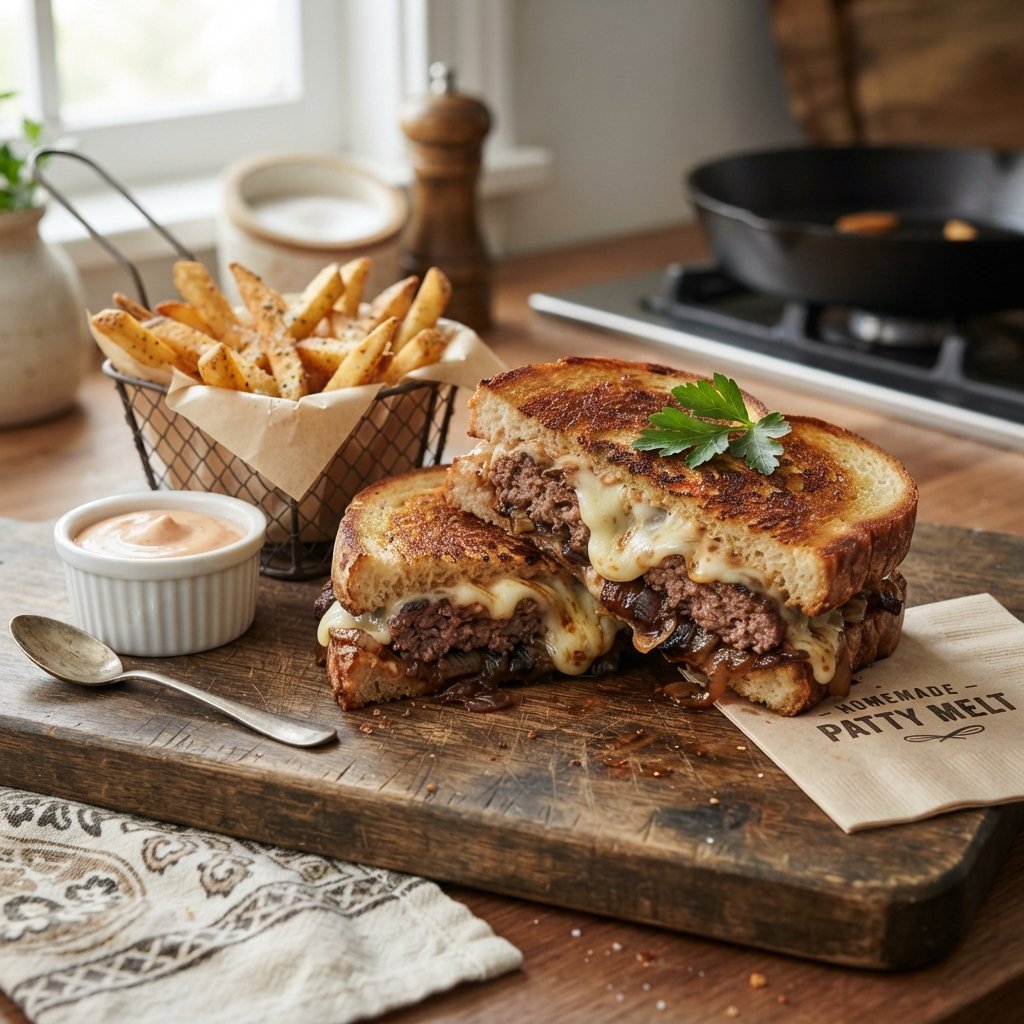
There are few culinary experiences quite as satisfying as the perfect union of savory ground beef, melted cheese, and caramelized onions sandwiched between two slices of crispy, buttered bread. The Grilled Patty Melt is not merely a sandwich; it is a testament to the art of diner culture, representing a harmonious blend of textures and flavors that have stood the test of time. Unlike a traditional hamburger served on a bun, the patty melt elevates the concept by utilizing sliced bread, typically rye or sourdough, which provides a sturdy vessel for the generous fillings while offering a distinct crunch when grilled to golden perfection.
This dish is the ultimate comfort food, often sought after during late-night cravings or cozy weekend lunches. The magic lies in the preparation: the beef patty must be seasoned simply to let the meat shine, the onions must be cooked low and slow until they reach a jam-like sweetness, and the cheese must be melted to a gooey consistency that binds the entire structure together. Whether you are a seasoned home cook or a beginner looking to master a classic American staple, understanding the nuances of the grilled patty melt will transform your kitchen into a gourmet diner. In this comprehensive guide, we will explore every facet of this iconic dish, from its historical roots to the nutritional breakdown, ensuring you have all the knowledge needed to craft the ultimate patty melt.
The History
The origins of the patty melt are shrouded in the nostalgic fog of mid-20th-century American diner culture, though most food historians trace its lineage back to Southern California in the late 1940s. The most widely accepted creation story credits Tiny Naylor, a restaurateur who operated several popular drive-in restaurants in Los Angeles. Legend has it that around 1949, Naylor was experimenting with ways to utilize leftover hamburger meat and bread from the kitchen. He decided to place a beef patty between slices of rye bread, added Swiss cheese and grilled onions, and cooked the entire assembly on a griddle like a grilled cheese sandwich.
Another contender for the invention title is the Skyline Restaurant in Portland, Oregon, which claims to have served a similar dish during the same era. Regardless of the specific geographic birthplace, the patty melt quickly proliferated across the United States alongside the expansion of the diner and coffee shop industry in the 1950s and 1960s. It became a menu staple because it offered a heartier, more sophisticated alternative to the standard hamburger. While the burger was seen as casual fare often eaten with hands outdoors, the patty melt was served on a plate with a fork and knife, positioning it as a slightly more upscale “lunch counter” item.
Over the decades, the recipe has remained remarkably consistent, a testament to its perfect flavor profile. While regional variations exist—some areas prefer Texas toast, while others insist on marble rye—the core identity of the patty melt has remained unchanged. It stands as a culinary bridge between the hamburger and the melt sandwich, preserving the legacy of the American diner in every bite.
Ingredients Breakdown
To truly master the grilled patty melt, one must understand the function and quality of each component. This is not a dish where shortcuts yield excellent results; every ingredient plays a critical structural and flavor role.
The Bread
The foundation of any patty melt is the bread. Traditionalists insist on rye bread, specifically marble rye or seeded rye, because the caraway seeds and the tangy flavor profile complement the savory beef and sweet onions. However, sourdough is an excellent modern alternative, offering a robust crust and a chewy interior that holds up well against the moisture of the onions and butter. The bread must be sliced thickly enough to prevent sogginess but thin enough to allow heat to penetrate and melt the cheese efficiently. Stale bread, paradoxically, often works better than fresh bread as it absorbs less butter and grills crispier.
The Beef
The heart of the sandwich is the beef patty. Unlike a burger patty which might be thick and juicy inside, a patty melt patty should be thinner and wider to match the dimensions of the bread slices. Ground chuck with an 80/20 meat-to-fat ratio is ideal. The 20% fat content is crucial for flavor and moisture; leaner meats like ground sirloin can become dry and crumbly when pressed thin. The beef should be seasoned generously with kosher salt and freshly cracked black pepper just before cooking to ensure a flavorful crust forms without drawing out too much moisture prematurely.
The Cheese
Swiss cheese is the classic choice for a patty melt, providing a nutty, mild flavor that melts smoothly without becoming oily. Emmental or Gruyère can be used for a more complex, premium flavor profile. However, American cheese is a popular variation because of its superior melting capabilities, creating a creamy sauce-like consistency. Many chefs recommend a blend of Swiss for flavor and American for texture to get the best of both worlds. The cheese must be sliced thinly to ensure it melts completely before the bread burns.
The Onions
Perhaps the most labor-intensive component is the onions. They cannot be simply sautéed; they must be caramelized. This process involves cooking sliced yellow or sweet onions over low heat for 30 to 45 minutes until they break down into a soft, sweet, golden-brown jam. This sweetness cuts through the richness of the beef and cheese, providing a necessary balance to the sandwich. Rushing this step will result in crunchy, sharp onions that detract from the overall harmony of the dish.
The Fat
To achieve the signature golden-brown crust on the bread, you need a cooking fat. Unsalted butter is the standard, providing a rich, creamy flavor. However, butter burns easily at high heat. A common professional trick is to mix softened butter with a little mayonnaise or to use clarified butter (ghee), which has a higher smoke point. This ensures the bread gets crispy and dark golden without tasting burnt.
Step-by-Step Recipe
Creating the perfect grilled patty melt is a process that requires timing and coordination. You are essentially managing three different cooking elements—the onions, the beef, and the bread—that must all come together at the exact same moment. Follow this narrative walkthrough to understand the flow of the cooking process.
Phase One: The Onion Preparation
Begin your journey by slicing your onions. You want uniform rings or half-moons about a quarter-inch thick. Place them in a heavy-bottomed skillet over medium-low heat with a knob of butter and a pinch of salt. The salt helps draw out moisture, aiding the caramelization process. Stir them occasionally, but not constantly. You want them to sit long enough to brown. If the pan gets too dry, add a splash of water to deglaze the brown bits from the bottom. This process cannot be rushed; if you turn up the heat, they will fry rather than caramelize. Once they are deep golden brown and soft, remove them from the heat and set them aside in a bowl.
Phase Two: Forming the Patties
While the onions are cooling, take your ground chuck and gently form it into balls. Do not overwork the meat, as this will make the patties tough. Place the balls on a piece of parchment paper. Using another piece of parchment or a flat spatula, press them down into thin discs. They should be slightly wider than your slices of bread, as the meat will shrink slightly during cooking. Make a small indentation in the center of each patty with your thumb to prevent it from puffing up into a ball while grilling. Season both sides liberally with salt and pepper.
Phase Three: Cooking the Beef
Heat a griddle or large cast-iron skillet over medium-high heat. You want a good sear. Place the patties on the hot surface. Cook for about 2 to 3 minutes per side until a dark brown crust forms. Since the patties are thin, they will cook through relatively quickly. In the last minute of cooking, place a slice of cheese on each patty. To ensure maximum melt, add a teaspoon of water to the pan and cover it with a metal dome or a large bowl. The steam will instantly melt the cheese over the beef.
Phase Four: Assembling and Grilling
Now, prepare the bread. Spread your butter or butter-mayo mixture on one side of each slice of bread. Place one slice butter-side down on the griddle. Immediately layer the caramelized onions over the bread, followed by the cheesy beef patty. Top with more onions if desired, and cap it with the second slice of bread, butter-side up. Press down firmly with a spatula. Cook for 2 to 3 minutes until the bottom bread is deep golden brown. Flip the entire sandwich carefully. Press down again and cook for another 2 to 3 minutes. The goal is a crispy exterior and a hot, molten interior.
Tips
- Control the Heat: The most common mistake is burning the bread before the cheese melts. Keep your griddle at a moderate temperature. If the bread is browning too fast, lower the heat and cover the sandwich briefly to trap heat inside.
- The Mayo Trick: Mixing equal parts softened butter and mayonnaise creates a spread that browns beautifully and has a higher smoke point than butter alone, reducing the risk of burning.
- Rest the Meat: Let your formed patties rest in the refrigerator for 15 minutes before cooking. This helps them hold their shape better when they hit the hot griddle.
- Double Cheese: For an indulgent version, place a slice of cheese on the bottom bread, then the meat, then another slice on top. This creates a cheese-to-bread seal that prevents sogginess.
- Knife Skills: Use a serrated bread knife to cut the finished sandwich diagonally. This preserves the crust better than a straight-edge knife and makes the sandwich easier to handle.
- Onion Volume: Onions shrink significantly during caramelization. Start with at least one large onion per two sandwiches to ensure you have enough filling.
Variations and Customizations
While the classic beef and Swiss combination is timeless, the patty melt is a versatile canvas for culinary creativity. Here are several ways to customize the dish to suit different palates and dietary needs.
The Turkey Melt
For a lighter option, substitute the ground beef with ground turkey or even slices of roasted turkey breast. Turkey pairs exceptionally well with Swiss cheese and cranberry relish. Add a layer of spinach or arugula for freshness.
The Reuben Melt
Combine the patty melt with the flavors of a Reuben sandwich. Use corned beef instead of ground beef, sauerkraut instead of caramelized onions, and Russian dressing spread on the inside of the bread. Keep the Swiss cheese and rye bread for authenticity.
The Veggie Melt
Create a vegetarian version using a portobello mushroom cap as the “patty” or a high-quality plant-based ground meat substitute. Sautéed mushrooms and onions provide a deep umami flavor that mimics beef surprisingly well. Use provolone cheese for a mild melt.
Bread Variations
While rye is traditional, Texas Toast (thick-cut white bread) creates a softer, doughier interior. Sourdough adds a tangy crunch. For a gluten-free option, use certified gluten-free bread, but be careful as it can dry out quickly; toast it lightly before assembling.
Spicy Kick
Add sliced jalapeños to the onion mixture during the caramelization process. Alternatively, mix a little sriracha or chipotle powder into the butter spread for a smoky heat that complements the beef.
Health Considerations and Nutritional Value
The grilled patty melt is undeniably a rich, indulgent meal. Understanding its nutritional profile allows you to enjoy it mindfully or adjust the recipe to fit specific health goals.
Caloric Density
A standard restaurant-style patty melt can range from 700 to 1,000 calories, largely due to the butter used for grilling, the fat content in the beef, and the cheese. Homemade versions allow you to control these variables significantly.
Macronutrients
- Protein: The beef provides a high amount of complete protein, essential for muscle repair and satiety. A single patty can offer 20-25 grams of protein.
- Fats: The dish is high in saturated fats from the beef, cheese, and butter. While delicious, those monitoring heart health should consider leaner meats or reducing the butter spread.
- Carbohydrates: The bread is the primary source of carbohydrates. Choosing whole grain or seeded rye can increase fiber content, aiding in digestion and blood sugar regulation.
Modifications for Health
To make a healthier patty melt, consider using 90/10 lean ground beef or ground bison. Swap regular cheese for reduced-fat Swiss or a strong-flavored cheese like sharp cheddar, where you can use less volume for the same taste impact. Use cooking spray or a minimal amount of olive oil instead of butter for grilling the bread. Finally, increase the volume of onions and add tomatoes or lettuce to increase the micronutrient density without adding significant calories.
Ingredients
Below is the precise shopping list required to make four classic grilled patty melts. Ensure all ingredients are at hand before you begin cooking to maintain the workflow.
- Bread: 8 slices of rye bread (marble or seeded preferred)
- Ground Beef: 1 pound of ground chuck (80/20 fat ratio)
- Cheese: 8 slices of Swiss cheese (or Emmental)
- Onions: 2 large yellow onions, thinly sliced
- Butter: 4 tablespoons of unsalted butter, softened
- Oil: 1 tablespoon of vegetable or canola oil (for caramelizing onions)
- Seasoning: Kosher salt and freshly cracked black pepper to taste
- Optional: 1 tablespoon of mayonnaise (to mix with butter for spreading)
Directions
- Caramelize the Onions: Heat oil in a large skillet over medium-low heat. Add sliced onions and a pinch of salt. Cook for 30-40 minutes, stirring occasionally, until deep golden brown and soft. Set aside.
- Form the Patties: Divide the ground beef into 4 equal portions. Form into balls, then press into thin oval shapes slightly wider than your bread slices. Season both sides generously with salt and pepper.
- Cook the Beef: Heat a griddle or cast-iron skillet over medium-high heat. Cook patties for 2-3 minutes per side until browned and cooked through. Place a slice of cheese on each patty during the last minute. Cover briefly to melt.
- Prepare the Bread: Mix softened butter with mayonnaise (if using). Spread this mixture evenly on one side of each slice of bread.
- Assemble: Place 4 slices of bread butter-side down on the griddle. Top with caramelized onions, then the cheesy beef patties, then more onions. Top with the remaining bread slices, butter-side up.
- Grill the Sandwich: Cook over medium heat for 3 minutes per side, pressing down occasionally with a spatula, until the bread is crispy and golden brown.
- Serve: Remove from heat, let rest for 1 minute, slice diagonally, and serve immediately while hot.
FAQ
Q: Why is my bread burning before the cheese melts?
A: This indicates your heat is too high. Lower the temperature to medium. You can also cover the skillet with a lid for a minute to trap steam and heat, which helps melt the cheese without further browning the bread.
Q: Can I make the onions ahead of time?
A: Absolutely. Caramelized onions store well in the refrigerator for up to a week. In fact, making them ahead saves significant time when you are ready to assemble the sandwiches.
Q: What is the best substitute for rye bread?
A: Sourdough is the best alternative for texture and flavor. If you prefer a softer sandwich, Texas Toast or thick-cut white bread works well, though it lacks the traditional tang.
Q: How do I prevent the sandwich from getting soggy?
A: Ensure your onions are not too wet. If they release liquid during cooking, cook them down until the moisture evaporates. Also, ensure the butter layer on the bread is continuous to create a moisture barrier.
Q: Can I freeze patty melts?
A: It is not recommended to freeze assembled patty melts as the bread will become soggy upon reheating. However, you can freeze the cooked beef patties and the caramelized onions separately for quick assembly later.
Summary
The grilled patty melt is a classic diner masterpiece featuring thin beef patties, caramelized onions, and melted Swiss cheese on grilled rye bread.
Mastering the balance of crispy bread, savory meat, and sweet onions creates the ultimate comfort food experience for any meal.