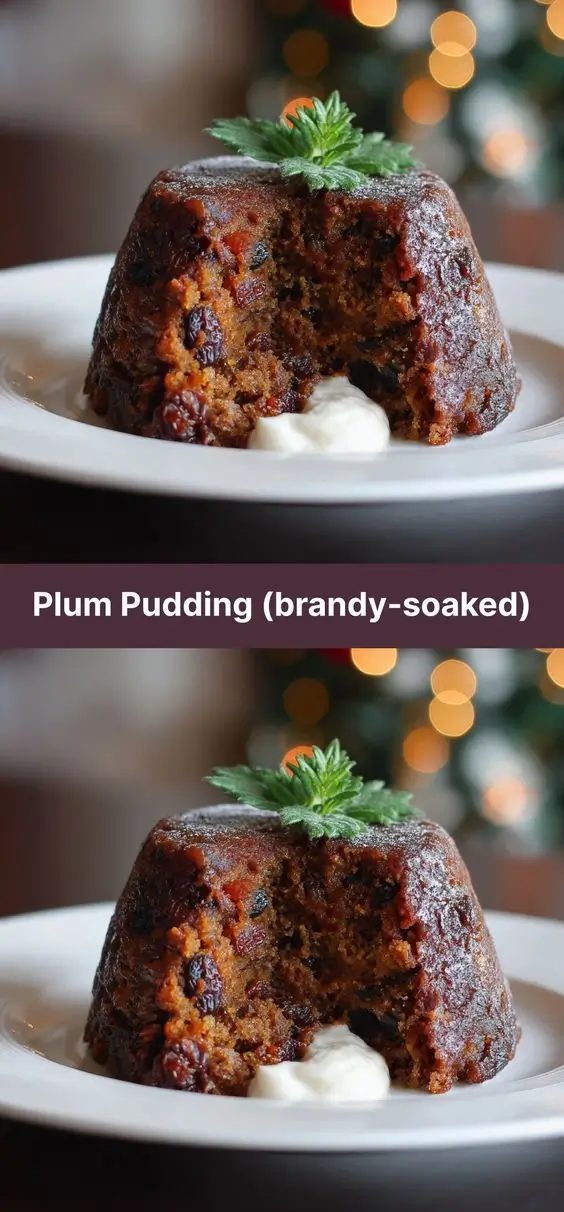
Plum Pudding (Brandy-Soaked): A Rich, Traditional Holiday Delight
Introduction
Plum pudding, also known as Christmas pudding, is a quintessential British dessert steeped in centuries of tradition and festive celebration. Despite its name, modern plum pudding contains no actual plums; the term “plum” historically referred to any dried fruit, particularly raisins and currants. This dense, moist, and deeply flavorful steamed pudding is a centerpiece of holiday feasts across the UK and Commonwealth countries. Infused with brandy, spices, and an abundance of dried fruits, it’s often aged for weeks—or even months—before serving, allowing the flavors to deepen and mature. The addition of brandy-soaking not only enhances the taste but also imparts a luxurious warmth that makes it perfect for winter festivities. Whether flambéed at the table or served with a silky sauce, brandy-soaked plum pudding is more than just a dessert—it’s a cherished culinary heirloom passed down through generations.
The History
The origins of plum pudding can be traced back to the early 14th century, evolving from a savory porridge called “frumenty,” made from boiled wheat, milk, eggs, and meat such as beef or mutton, flavored with spices and dried fruits. By the 16th century, this dish began transforming into a sweeter preparation, especially during the Elizabethan era, when sugar became more accessible and dried fruits like raisins, currants, and prunes were incorporated liberally. The term “plum pottage” emerged, referring to a thick soup served before meals during Christmas.
It wasn’t until the 17th century that the dish evolved into a steamed or boiled pudding, thanks to advances in cooking methods and molds. The inclusion of suet (beef or mutton fat) gave it a rich texture and extended shelf life, making it ideal for preservation. During the Victorian era, plum pudding solidified its place in Christmas traditions, popularized by writers like Charles Dickens, who famously featured it in A Christmas Carol. Queen Victoria and Prince Albert further cemented its status by including it in their royal Christmas celebrations.
The ritual of stirring the pudding also gained cultural significance: each family member would take a turn stirring the mixture from east to west, symbolizing the journey of the Three Wise Men, while making a wish. Often, small tokens such as a silver coin, thimble, or ring were hidden inside the pudding—each carrying symbolic meaning, like wealth, thrift, or marriage.
Over time, recipes were refined, and alcohol—particularly brandy, rum, or stout—was added not only for flavor but also as a preservative. The practice of “feeding” the pudding with additional brandy during aging became widespread, enhancing both moisture and depth of flavor. Today, brandy-soaked plum pudding remains a beloved symbol of heritage, nostalgia, and holiday cheer, connecting modern families to centuries of culinary tradition.
Ingredients Breakdown
Creating an authentic brandy-soaked plum pudding requires a careful balance of ingredients, each contributing to its signature texture, richness, and complex flavor profile. Below is a detailed breakdown of the components:
- Dried Fruits: A combination of raisins, sultanas, currants, candied citrus peel (orange and lemon), and sometimes chopped dates or figs forms the backbone of the pudding. These provide natural sweetness, chewiness, and bursts of fruity intensity.
- Suet: Traditionally, shredded beef suet is used for its high melting point and ability to create a light yet moist crumb when steamed. Vegetable suet is a common substitute for vegetarians.
- Breadcrumbs: Fresh or dried white breadcrumbs help bind the mixture and contribute to the pudding’s tender structure.
- Flour: All-purpose flour adds stability and helps absorb moisture without making the pudding heavy.
- Eggs: Beaten eggs act as a binder, enriching the mixture and helping it hold together after prolonged steaming.
- Milk and Cream: These liquids add moisture and softness, ensuring the pudding doesn’t dry out during the long cooking process.
- Grated Apple and Carrot: Often included for natural sweetness, moisture, and subtle earthiness, they also extend the yield without diluting flavor.
- Citrus Zest: Freshly grated lemon and orange zest brighten the overall flavor, cutting through the richness with aromatic oils.
- Spices: Ground cinnamon, nutmeg, allspice, cloves, and ginger are essential for that warm, spicy complexity associated with holiday baking.
- Salt: A pinch enhances all other flavors and balances sweetness.
- Black Treacle or Molasses: Adds deep color, slight bitterness, and a molasses-like richness that complements the brandy.
- Golden Syrup or Honey: Provides a smooth sweetness and helps retain moisture.
- Alcohol – Brandy: Used both in the batter and for soaking the finished pudding over time. It infuses the dessert with a warm, boozy depth and acts as a natural preservative.
- Optional Add-ins: Chopped nuts (walnuts or almonds), chocolate chips, or even a splash of dark beer or stout can be included for variation.
The synergy between these ingredients creates a harmonious blend where no single element dominates, resulting in a pudding that is simultaneously rich, spiced, fruity, and luxuriously textured.
Step-by-Step Recipe
Follow this traditional method to create a deeply flavorful brandy-soaked plum pudding that can be made weeks in advance and improved with age.
- Prepare the Dried Fruit Mixture: In a large bowl, combine 200g raisins, 200g sultanas, 100g currants, 50g chopped candied orange peel, 50g chopped candied lemon peel, and 1 tablespoon of brandy. Let the mixture macerate overnight to begin the flavor infusion.
- Prepare the Pudding Basin: Generously butter a 1.5-liter pudding basin or mold. Line the bottom with a circle of parchment paper to prevent sticking.
- Mix Dry Ingredients: In a separate large mixing bowl, whisk together 100g self-raising flour, 100g fresh breadcrumbs, 50g shredded suet (or vegetarian alternative), 1 teaspoon ground cinnamon, ½ teaspoon each of ground nutmeg, allspice, and ginger, a pinch of ground cloves, and ¼ teaspoon salt.
- Add Wet Ingredients: To the dry mix, stir in 1 finely grated apple, 1 small grated carrot, the zest of one orange and one lemon, 2 tablespoons black treacle, 2 tablespoons golden syrup, and 100ml whole milk.
- Incorporate Eggs: Beat 3 large eggs in a jug and gradually pour them into the mixture, stirring until everything is well combined and sticky.
- Combine with Soaked Fruit: Fold in the brandy-soaked dried fruits along with any remaining liquid. Mix thoroughly until evenly distributed.
- Fill the Basin: Spoon the mixture into the prepared pudding basin, pressing down gently to eliminate air pockets. Smooth the top with a spatula.
- Seal the Pudding: Cut a double layer of parchment paper and a sheet of aluminum foil slightly larger than the basin’s diameter. Place the parchment over the top (shiny side up), followed by the foil. Secure tightly with kitchen string tied under the rim, then create a handle by looping the string across the top for easy removal after cooking.
- Steam the Pudding: Place the basin in a large pot with a trivet or upturned saucer at the bottom to keep it off direct heat. Pour boiling water into the pot until it reaches halfway up the sides of the basin. Cover with a tight-fitting lid.
- Cook Slowly: Steam for 6 hours, checking every hour to ensure the water level remains high—top up with more boiling water as needed. Do not let the pot boil dry.
- Cool and Store: Once cooked, remove the pudding from the pot and let it cool completely. Remove the foil and parchment, replace with a fresh piece of greased parchment, and store in a cool, dark place for maturation.
- Feed with Brandy: Every week for 4–6 weeks, unwrap the pudding, sprinkle 1–2 tablespoons of brandy over the surface, rewrap, and return to storage. This process intensifies flavor and keeps the pudding moist.
- Reheat Before Serving: On the day of serving, steam the pudding again for 2–3 hours to warm through evenly. Serve immediately with accompaniments.
Tips
- Start Early: For best results, make your plum pudding at least four weeks before serving—even as early as Stir-Up Sunday (the Sunday before Advent) to allow full flavor development.
- Use Fresh Spices: Old spices lose potency. Grind whole spices if possible for maximum aroma and warmth.
- Don’t Skip the Maceration: Soaking the dried fruit in brandy overnight plumps them up and begins flavor integration.
- Consistent Steaming: Maintain a steady simmer throughout cooking. Too vigorous a boil may crack the basin; too little heat won’t cook it properly.
- Check Water Levels: Refill the steamer with boiling water (not cold) to avoid temperature shock that could cause cracking.
- Double Wrap Tightly: Ensure no steam penetrates the wrapping, which could make the top soggy.
- Label and Date: If storing long-term, label your pudding with the date so you know when it was made and last fed.
- Freeze for Longevity: Unfed puddings can be frozen for up to a year. Thaw, then begin feeding weekly before use.
- Test Doneness: Insert a skewer near the end of steaming—if it comes out clean, the pudding is ready.
- Flambé for Drama: Warm 2–3 tablespoons of brandy and ignite just before serving for a spectacular flaming presentation.
Variations and Customizations
While traditional plum pudding is timeless, there are many ways to personalize it based on dietary needs, preferences, or regional influences:
- Vegetarian/Vegan Version: Replace beef suet with vegetable suet and use flax eggs (1 tbsp ground flaxseed + 3 tbsp water per egg) or aquafaba. Substitute honey with agave and use plant-based milk.
- Gluten-Free Option: Use a gluten-free flour blend and certified gluten-free oats for breadcrumbs. Ensure all other ingredients (like baking powder) are GF-safe.
- Alcohol-Free Alternative: Replace brandy with strong brewed tea, apple juice, or a mix of grape juice and vanilla extract. Note: Without alcohol, the pudding won’t keep as long and should be refrigerated.
- Modern Flavor Twists: Add chopped crystallized ginger, dried cranberries, or dark chocolate chunks. A splash of espresso or Irish cream liqueur can offer contemporary flair.
- Nutty Crunch: Fold in 50g toasted walnuts, pecans, or almonds for added texture.
- Boozy Variants: Instead of brandy, soak the pudding in dark rum, whisky, port wine, or even stout for different flavor profiles.
- Mini Individual Puddings: Make smaller versions using ramekins or dariole molds for personalized servings and easier portion control.
- Fruit Variations: Include dried cherries, apricots, or mango for tropical notes, or stick to classic British trifecta: raisins, currants, sultanas.
- Low-Sugar Adaptation: Reduce added syrups and rely on naturally sweet fruits. Use monk fruit syrup or erythritol blends if desired.
- Cultural Fusion: Incorporate Middle Eastern spices like cardamom and rosewater, or Asian elements like star anise and lychee for global inspiration.
Health Considerations and Nutritional Value
While undeniably delicious, brandy-soaked plum pudding is a high-calorie, nutrient-dense dessert best enjoyed in moderation. Here’s a nutritional overview per average slice (approx. 150g):
| Nutrient | Amount (Approximate) |
|---|---|
| Calories | 450–550 kcal |
| Total Fat | 18–25g |
| Saturated Fat | 8–12g (from suet/dairy) |
| Carbohydrates | 70–80g |
| Sugars | 50–60g (naturally occurring and added) |
| Protein | 6–8g |
| Fiber | 4–6g (from fruits, flour, vegetables) |
| Sodium | 100–150mg |
| Alcohol Content | Varies (up to 5–8% ABV depending on feeding frequency) |
Positive Aspects:
Despite its richness, plum pudding contains beneficial elements:
- Dietary Fiber: From dried fruits, whole grains (if using wholemeal breadcrumbs), apples, and carrots, supporting digestive health.
- Antioxidants: Raisins, currants, and citrus peels are rich in polyphenols and vitamin C.
- Iron and Potassium: Dried fruits contribute non-heme iron and potassium, important for blood and muscle function.
- Energy-Dense: Ideal for colder months when higher caloric intake supports body warmth.
Considerations:
- High Sugar and Fat: Not suitable for those managing diabetes, heart disease, or weight concerns without modification.
- Alcohol Content: Unsuitable for children, pregnant women, or individuals avoiding alcohol. Can affect medication interactions.
- Suet Concerns: Animal suet is high in saturated fat. Opt for vegetable alternatives if reducing cholesterol intake.
- Portion Control: Serve small slices with low-fat custard or Greek yogurt to balance indulgence.
Ingredients
- 200g raisins
- 200g sultanas
- 100g currants
- 50g chopped candied orange peel
- 50g chopped candied lemon peel
- 1 tbsp brandy (for initial soaking)
- 100g self-raising flour
- 100g fresh white breadcrumbs
- 50g shredded beef suet (or vegetarian suet)
- 1 tsp ground cinnamon
- ½ tsp ground nutmeg
- ½ tsp ground allspice
- ½ tsp ground ginger
- Pinch of ground cloves
- ¼ tsp salt
- 1 medium apple, finely grated
- 1 small carrot, grated
- Zest of 1 orange
- Zest of 1 lemon
- 2 tbsp black treacle (molasses)
- 2 tbsp golden syrup (or honey)
- 100ml whole milk
- 3 large eggs, beaten
- Butter, for greasing
- Parchment paper and aluminum foil
- Kitchen string
- Additional brandy (for feeding, approx. 6–8 tbsp total over several weeks)
Directions
- In a large bowl, combine raisins, sultanas, currants, candied peels, and 1 tablespoon brandy. Cover and leave to macerate overnight at room temperature.
- Butter a 1.5-liter pudding basin thoroughly. Line the bottom with a round of parchment paper.
- In another large bowl, mix flour, breadcrumbs, suet, cinnamon, nutmeg, allspice, ginger, cloves, and salt.
- Add grated apple, grated carrot, citrus zests, treacle, golden syrup, and milk. Stir to combine.
- Pour in beaten eggs and mix until a thick, sticky batter forms.
- Fold in the soaked fruit and any residual brandy.
- Spoon mixture into the prepared basin, pressing down gently. Smooth the top.
- Cut a double layer of parchment and a sheet of foil larger than the basin. Place parchment over the top (shiny side up), then foil. Secure tightly with string under the rim. Create a loop handle with extra string.
- Place basin on a trivet in a large pot. Pour in boiling water to halfway up the sides.
- Cover with a tight-fitting lid. Steam gently for 6 hours, topping up with boiling water as needed.
- Remove from pot, cool completely. Unwrap, discard old parchment, place a fresh greased parchment on top, and rewrap with new foil.
- Store in a cool, dark place. Every week for 4–6 weeks, unwrap, sprinkle 1–2 tbsp brandy over the surface, rewrap, and return to storage.
- On serving day, re-steam for 2–3 hours. Serve warm with custard, cream, or brandy butter.
FAQ
Can I make plum pudding without suet?
Yes, use vegetarian suet or a mix of cold butter and flour (though texture may vary slightly).
How long does plum pudding last?
When properly wrapped and stored in a cool, dark place, it can last up to a year. Refrigerate or freeze for longer storage.
Can I bake instead of steam?
Steaming is traditional and ensures even, moist cooking. Baking may result in a drier texture.
Why is my pudding rubbery?
Likely due to insufficient steaming time or inadequate moisture. Always steam for the full duration and maintain water levels.
Can I use a slow cooker?
Yes! Place the basin in the slow cooker with water reaching halfway up. Cook on low for 8–10 hours.
Is it safe to eat raw eggs in the mix?
The extended steaming (6+ hours) fully cooks the eggs, making the pudding safe to consume.
What can I use instead of brandy?
Rum, whisky, sherry, or non-alcoholic substitutes like apple juice, tea, or grape juice work well.
Can I freeze plum pudding?
Absolutely. Wrap tightly in plastic and foil. Freeze for up to 12 months. Thaw, then re-steam before serving.
How do I reheat a frozen pudding?
Thaw in the refrigerator overnight, then steam for 3–4 hours until heated through.
Can I make individual portions?
Yes! Use ramekins or small molds. Adjust steaming time to 3–4 hours.
Summary
Brandy-soaked plum pudding is a rich, spiced, fruit-laden dessert with deep historical roots, traditionally made weeks in advance and enhanced by regular brandy feedings for unparalleled flavor. Steamed to perfection and served warm with custard or cream, it embodies the essence of holiday tradition and culinary craftsmanship.