Introduction
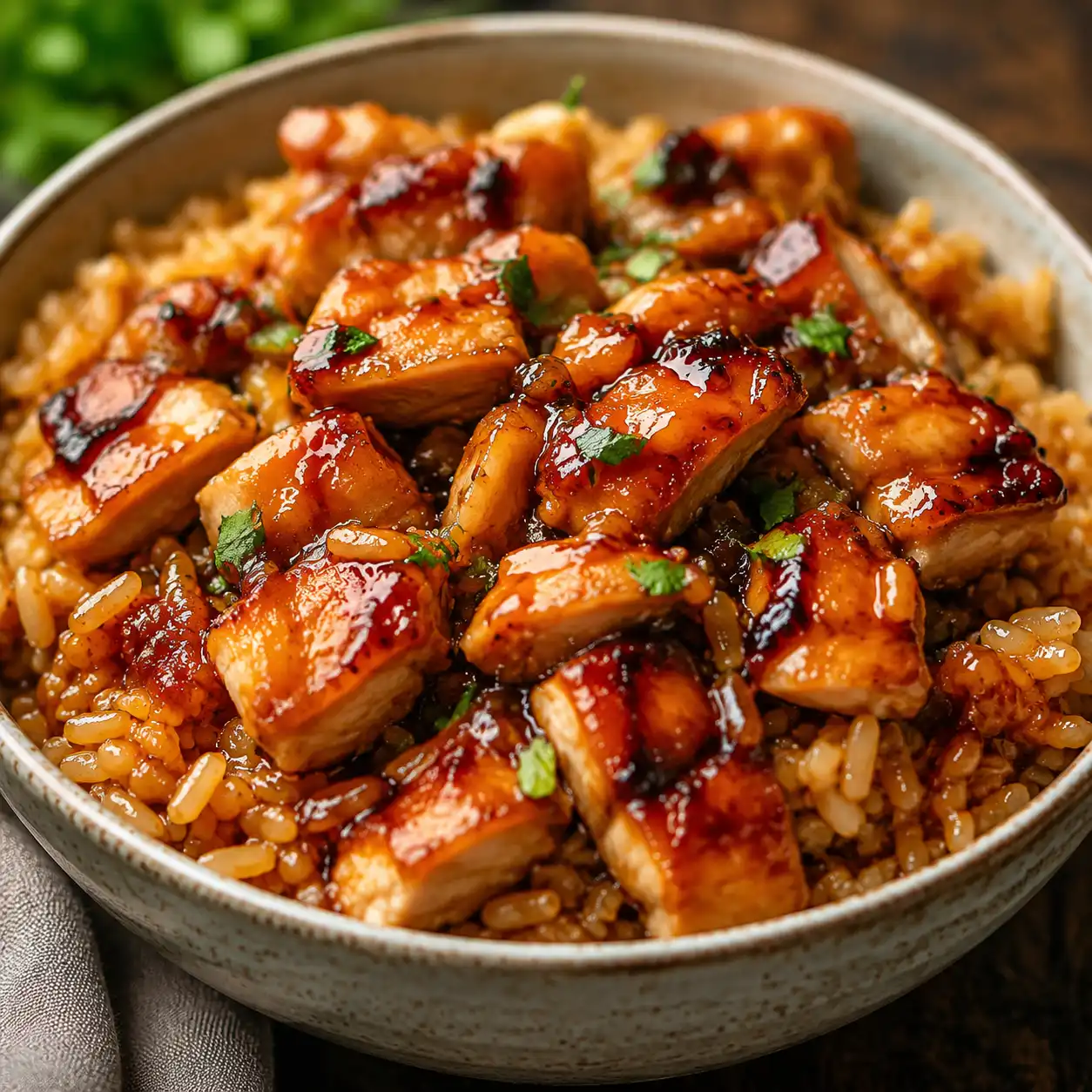
Imagine coming home after a long, weary day—your shoes kicked off, your shoulders finally dropping—and being enveloped by the warm, caramelized aroma of tender chicken glazed in glossy, golden honey BBQ sauce, resting atop fluffy, fragrant jasmine rice. That’s not just dinner—it’s a full-sensory embrace. Honey BBQ Chicken Rice is more than a meal; it’s an irresistible comfort food experience that marries sweet, smoky, tangy, and savory notes into one harmonious, soul-soothing bowl. Whether you’re feeding a hungry family, prepping for effortless weeknight dinners, or craving something deeply satisfying yet surprisingly simple to make, this dish delivers every time—juicy chicken, sticky-sweet glaze, aromatic rice, and subtle layers of umami depth that linger long after the last bite.
The History
While barbecue has deep roots in Indigenous American smoking traditions and later evolved through African-American pitmaster ingenuity in the Southern U.S., the honey BBQ variation reflects a delicious mid-20th-century American innovation—born from post-war pantry abundance and a growing love for accessible sweetness. Honey, once a luxury, became widely available, and home cooks began blending it with ketchup-based sauces to tame acidity and add luster and body. Meanwhile, rice—especially in Asian and Latin American households—had long served as the perfect neutral canvas for bold, saucy proteins. The fusion of these culinary threads didn’t happen overnight, but rather organically: immigrant families adapting Southern flavors to their kitchens, college students seeking affordable, flavorful meals, and food bloggers sharing “bowl meals” that balanced convenience with crave-worthy depth. Today, Honey BBQ Chicken Rice stands at the crossroads of global comfort—honoring barbecue heritage while embracing the universal language of rice bowls, now elevated with chef-level layering and mindful technique.
Ingredients Breakdown
Every extraordinary dish begins with intention behind each ingredient—not just measurements, but purpose:
- Chicken thighs (boneless, skin-on or skinless): Preferred over breast for their higher fat content, which ensures juiciness even when simmered or pan-seared. Skin-on adds crackling texture and richness; skinless offers leaner, quicker-cooking versatility.
- Raw, unfiltered honey: Not just sweetener—it’s enzymatically active, lending floral complexity, viscosity, and natural caramelization power. Avoid pasteurized or blended “honey substitutes”; real honey deepens color and creates that signature lacquered sheen.
- Smoked paprika: The quiet hero—adds earthy warmth and subtle smoke without heat, bridging BBQ authenticity with kitchen-friendly accessibility (no grill required).
- Apple cider vinegar: Brightens the sauce, balances honey’s richness, and tenderizes chicken subtly during marination. Its fruity acidity lifts the entire profile.
- Low-sodium tamari or coconut aminos: A gluten-free, umami-rich alternative to soy sauce—adds fermented depth and salt balance without overpowering. Traditional soy works too, but tamari offers smoother integration.
- Freshly grated ginger & minced garlic: Not powdered—they deliver volatile oils and pungent freshness that build aromatic foundations and cut through sweetness.
- Jasmine rice: Fragrant, slightly sticky, and delicately floral—its natural perfume complements, never competes with, the bold sauce. Rinsed thoroughly for ideal fluffiness.
- Toasted sesame oil (finish-only): Drizzled at the end—not cooked—to preserve its nutty, toasty top note, adding a luxurious finish that ties everything together.
- Green onions, toasted sesame seeds, and quick-pickled red onions: For contrast—crunch, brightness, acidity, and visual pop—that transform the bowl from comforting to *chef-crafted*.
Step-by-Step Recipe
- Marinate with intention (30 min–4 hrs): In a non-reactive bowl, whisk together ⅓ cup honey, 3 tbsp tamari, 2 tbsp apple cider vinegar, 1½ tbsp smoked paprika, 1 tbsp Dijon mustard, 2 tsp freshly grated ginger, 4 pressed garlic cloves, 1 tsp black pepper, and ½ tsp red pepper flakes (optional). Add 1.5 lbs chicken thighs, turning to coat fully. Refrigerate—do not skip this step; marination tenderizes, seasons deeply, and jumpstarts flavor infusion.
- Prep the rice mindfully: Rinse 1.5 cups jasmine rice under cold water until runoff is clear. Cook using a 1:1.25 rice-to-water ratio (or use rice cooker’s “jasmine” setting). Let steam, covered, for 15 minutes post-cook—this builds tenderness and prevents mush.
- Sear for fond & texture: Heat 1 tbsp neutral oil in a heavy-bottomed skillet or cast-iron pan over medium-high. Pat chicken *very dry*, then place skin-side down. Press gently with spatula for 60 seconds—then leave undisturbed for 5–6 minutes until deeply golden and crisp. Flip and cook 3–4 more minutes until internal temp reaches 165°F. Remove and rest 5 minutes—this locks in juices.
- Reduce the sauce to perfection: Pour reserved marinade into same pan (scrape up browned bits!). Simmer 4–5 minutes over medium-low, stirring often, until thickened to syrupy consistency—coats the back of a spoon and leaves a clear trail when dragged. Optional: stir in 1 tsp butter at the end for velvety richness.
- Glaze with care: Return rested chicken to pan. Spoon sauce generously over each piece, turning gently to coat. Cook 1–2 minutes more to set glaze—watch closely; honey burns easily. For extra shine, baste twice more off-heat.
- Assemble with artistry: Fluff rice. Spoon into wide, shallow bowls. Top with 2–3 chicken pieces, spooning extra sauce over and around. Garnish with sliced green onions, toasted sesame seeds, quick-pickled red onions (thinly sliced red onion + 2 tbsp rice vinegar + 1 tsp sugar, rested 10 min), and a final drizzle of toasted sesame oil.
Tips
- Patience with searing = crispy skin: Never rush the first side. Dry chicken + hot pan + firm press = golden, shatteringly crisp skin—the textural anchor of the dish.
- Sauce reduction is non-negotiable: Simmering removes raw vinegar sharpness and concentrates flavor. If it bubbles too hard, lower heat—it should bubble gently, not boil violently.
- Rinse rice until water runs clear: Excess starch causes gummy rice. This step alone elevates texture from “meh” to “restaurant-quality.”
- Rest chicken before glazing: Skipping rest leads to dry meat—even if perfectly cooked. Juices redistribute, ensuring every bite stays succulent beneath the glossy coat.
- Add acid at the end: A tiny splash of fresh lime juice or apple cider vinegar *just before serving* brightens the whole bowl—cutting richness and lifting flavors.
- Double the sauce (and freeze half): Make a batch of sauce without chicken—it keeps refrigerated for 10 days or frozen for 3 months. Use on roasted veggies, tofu, salmon, or even as a sandwich spread.
- Use a digital thermometer: Especially for thighs—color isn’t reliable. 165°F at the thickest part (not touching bone) guarantees safety *and* tenderness.
Variations and Customizations
This recipe is gloriously adaptable—designed for your pantry, preferences, and cravings:
- Vegetarian/Vegan Version: Swap chicken for extra-firm tofu (pressed & pan-fried) or king oyster mushrooms (sliced thick, seared until golden). Replace honey with maple syrup or date syrup, and use coconut aminos. Add roasted sweet potatoes or crispy chickpeas for heartiness.
- Spice-Lover’s Upgrade: Stir 1 tsp gochujang or sambal oelek into the sauce. Garnish with sliced jalapeños and crushed Sichuan peppercorns for mala heat.
- Grill or Air Fryer Option: Marinate as directed. Grill over indirect heat (375°F) for 20–25 min, basting last 5 min. Or air fry at 375°F for 14–16 min, flipping halfway—glaze in final 2 minutes.
- Meal-Prep Friendly Format: Cook rice and sauce separately. Store chicken cooked but unglazed. Reheat components individually, then glaze fresh—prevents soggy texture and preserves sauce integrity.
- Low-Carb/Keto Adaptation: Serve over riced cauliflower (roasted with garlic oil) or shirataki noodles. Increase healthy fats: top with avocado slices, macadamia nuts, and extra sesame oil.
- Global Twists:
- Korean-Inspired: Add 1 tbsp gochugaru + 1 tsp toasted sesame oil to sauce; garnish with kimchi and nori strips.
- Thai Fusion: Swap smoked paprika for Thai red curry paste (1 tbsp); add 1 tbsp fish sauce + lime zest to sauce; top with crushed peanuts and cilantro.
- Mexican BBQ: Use ancho chili powder + chipotle in adobo (minced); stir in 1 tsp cumin; garnish with pickled red onions + crumbled cotija.
- Kid-Friendly Mild Version: Omit red pepper flakes, reduce smoked paprika to 1 tsp, and add 1 tbsp pineapple juice for tropical sweetness. Serve with steamed broccoli “trees” and carrot “logs” for playful plating.
Health Considerations and Nutritional Value
A single serving (1 cup cooked jasmine rice + 2 chicken thighs + ¼ cup sauce + garnishes) delivers approximately 520–580 calories, with thoughtful nutritional balance:
- Protein Powerhouse: ~38g high-quality protein from chicken thighs—rich in B vitamins (especially B6 and niacin), selenium, and zinc, supporting immune function and energy metabolism.
- Smart Carbs: Jasmine rice provides complex carbohydrates with moderate glycemic index (~50–58), especially when paired with protein and fat—slowing glucose absorption. For added fiber, mix in 25% cooked black rice or barley.
- Functional Sweetness: Raw honey contains polyphenols and enzymes with mild antioxidant and antimicrobial properties. While still sugar, its lower fructose ratio vs. agave or corn syrup makes it a more metabolically gentle choice—especially when used intentionally (not excessively).
- Umami Without MSG: Tamari and fermented garlic/ginger contribute natural glutamates—enhancing satiety signals and reducing need for excess salt.
- Anti-Inflammatory Boosters: Ginger and garlic offer bioactive compounds (gingerol, allicin) linked to reduced oxidative stress and improved circulation.
- Considerations: Those monitoring sodium can opt for low-sodium tamari and omit added salt. For lower sugar: reduce honey to ¼ cup and boost depth with 1 tsp mushroom powder or ½ tsp liquid smoke. Always pair with leafy greens or fermented sides (like sauerkraut) to support gut health and micronutrient diversity.
This isn’t “health food” disguised as indulgence—it’s nourishing food that happens to taste extraordinary. Every element serves dual purpose: pleasure *and* physiology.
Ingredients
- 1.5 lbs boneless, skin-on or skinless chicken thighs, trimmed
- ⅓ cup raw, unfiltered honey
- 3 tbsp low-sodium tamari or coconut aminos
- 2 tbsp apple cider vinegar
- 1½ tbsp smoked paprika
- 1 tbsp Dijon mustard (whole grain preferred)
- 2 tsp freshly grated ginger (about 1-inch knob)
- 4 garlic cloves, finely minced or pressed
- 1 tsp freshly ground black pepper
- ½ tsp red pepper flakes (optional)
- 1 tbsp neutral oil (avocado, grapeseed, or refined coconut)
- 1.5 cups jasmine rice, rinsed well
- 1¾ cups water (or use rice cooker ratio)
- 1 tsp toasted sesame oil (for finishing)
- Garnishes: thinly sliced green onions, toasted white sesame seeds, quick-pickled red onions, lime wedges
Directions
- In a medium bowl, whisk together honey, tamari, apple cider vinegar, smoked paprika, Dijon mustard, ginger, garlic, black pepper, and red pepper flakes (if using) until smooth. Add chicken thighs and turn to coat thoroughly. Cover and refrigerate for at least 30 minutes—or ideally 2–4 hours—for maximum flavor penetration.
- Rinse jasmine rice in a fine-mesh strainer under cold water until water runs clear (about 1 minute). Transfer to a saucepan with 1¾ cups water. Bring to a boil over high heat, then immediately reduce to the lowest possible simmer. Cover tightly with a lid and cook undisturbed for 15 minutes. Turn off heat and let steam, covered, for another 15 minutes. Fluff gently with a fork.
- Heat neutral oil in a large, heavy-bottomed skillet or cast-iron pan over medium-high heat. Remove chicken from marinade (reserve marinade!), pat *extremely dry* with paper towels. Place chicken skin-side down in hot pan. Press gently with a spatula for 60 seconds, then leave undisturbed for 5–6 minutes until skin is deeply golden and releases easily. Flip and cook 3–4 more minutes until internal temperature reads 165°F. Transfer to a clean plate, cover loosely with foil, and rest for 5 minutes.
- Pour reserved marinade into the same hot skillet. Scrape up all browned bits with a wooden spoon. Reduce heat to medium-low and simmer, stirring frequently, for 4–5 minutes until thickened to a glossy, syrupy consistency that coats the back of a spoon.
- Return rested chicken to the skillet. Spoon sauce generously over each piece, turning gently to coat. Cook for 1–2 minutes, spooning sauce over repeatedly, until glaze clings luxuriously. Remove from heat.
- Divide fluffy jasmine rice among four wide, shallow bowls. Arrange 2–3 chicken pieces per bowl. Spoon extra sauce over and around rice. Garnish lavishly with green onions, sesame seeds, quick-pickled red onions, and a delicate drizzle of toasted sesame oil. Serve immediately with lime wedges on the side.
FAQ
- Can I use chicken breast instead of thighs?
- Yes—but adjust cooking time and technique. Breast dries out faster. Pound to even ½-inch thickness, reduce sear time to 3–4 min per side, and pull at 160°F (it will rise to 165°F while resting). Brining (30 min in 2% saltwater) is highly recommended for moisture retention.
- Why does my sauce separate or become greasy?
- Most often due to overheating or incompatible emulsifiers. Ensure sauce simmers gently—not boiling hard. If separation occurs, remove from heat, whisk vigorously, and stir in 1 tsp cold butter or ½ tsp Dijon mustard to re-emulsify. Also, avoid adding cold chicken directly to hot sauce—let chicken rest first.
- Can I make this ahead for meal prep?
- Absolutely. Cook rice and chicken separately. Store sauce chilled (up to 10 days) and chicken (up to 4 days). To reheat: warm rice with 1 tsp water (covered, microwave 90 sec). Warm chicken in skillet over low heat, then glaze fresh—never reheat already-glazed chicken, or the honey will burn and turn bitter.
- Is there a gluten-free version?
- Yes—use certified gluten-free tamari or coconut aminos, and verify your Dijon mustard and smoked paprika are GF-labeled (most are, but cross-contamination varies). Skip soy-based garnishes like traditional soy-marinated nori.
- My sauce isn’t thickening—what do I do?
- First, ensure you’re simmering—not boiling. High heat evaporates water too quickly, leaving thin, sharp-tasting sauce. If still thin after 6 minutes, mix 1 tsp cornstarch with 1 tsp cold water, whisk into sauce, and simmer 1 more minute. Better yet: next time, start with less vinegar or add ½ tsp tomato paste for natural thickening and umami.
- Can I freeze Honey BBQ Chicken?
- Yes—but freeze *before* glazing. Place cooked, cooled chicken in sauce-free portions with 1 tbsp sauce per bag. Thaw overnight, then glaze fresh. Freezing glazed chicken leads to texture breakdown and sauce crystallization.
- What rice alternatives work best?
- For flavor: brown jasmine (toasted first for nuttiness), black rice (antioxidant-rich, chewy), or Forbidden rice. For low-carb: cauliflower rice (sautéed in sesame oil + garlic), shirataki, or konjac rice. Avoid sticky sushi rice—it overwhelms the sauce’s texture.
- How do I prevent the honey from burning?
- Burn point for honey is ~350°F. Always reduce sauce over medium-low heat. Never walk away. Stir constantly in the final minute. If you see dark flecks or smell acrid bitterness, it’s scorched—discard and start fresh with half the sauce, adding reserved uncooked marinade to stretch it.
Summary
Honey BBQ Chicken Rice is the ultimate convergence of nostalgic comfort and modern culinary intelligence—where caramelized sweetness, slow-built umami, and aromatic rice unite in a bowl that satisfies hunger, soothes stress, and sparks joy with every bite.
It’s not just easy to make—it’s designed to be *enjoyed deeply*: layered with intention, customizable without compromise, nourishing without sacrifice, and unforgettable in its balance of rich, bright, smoky, and tender—truly an irresistible comfort meal, flavorful down to the very last grain.