Introduction
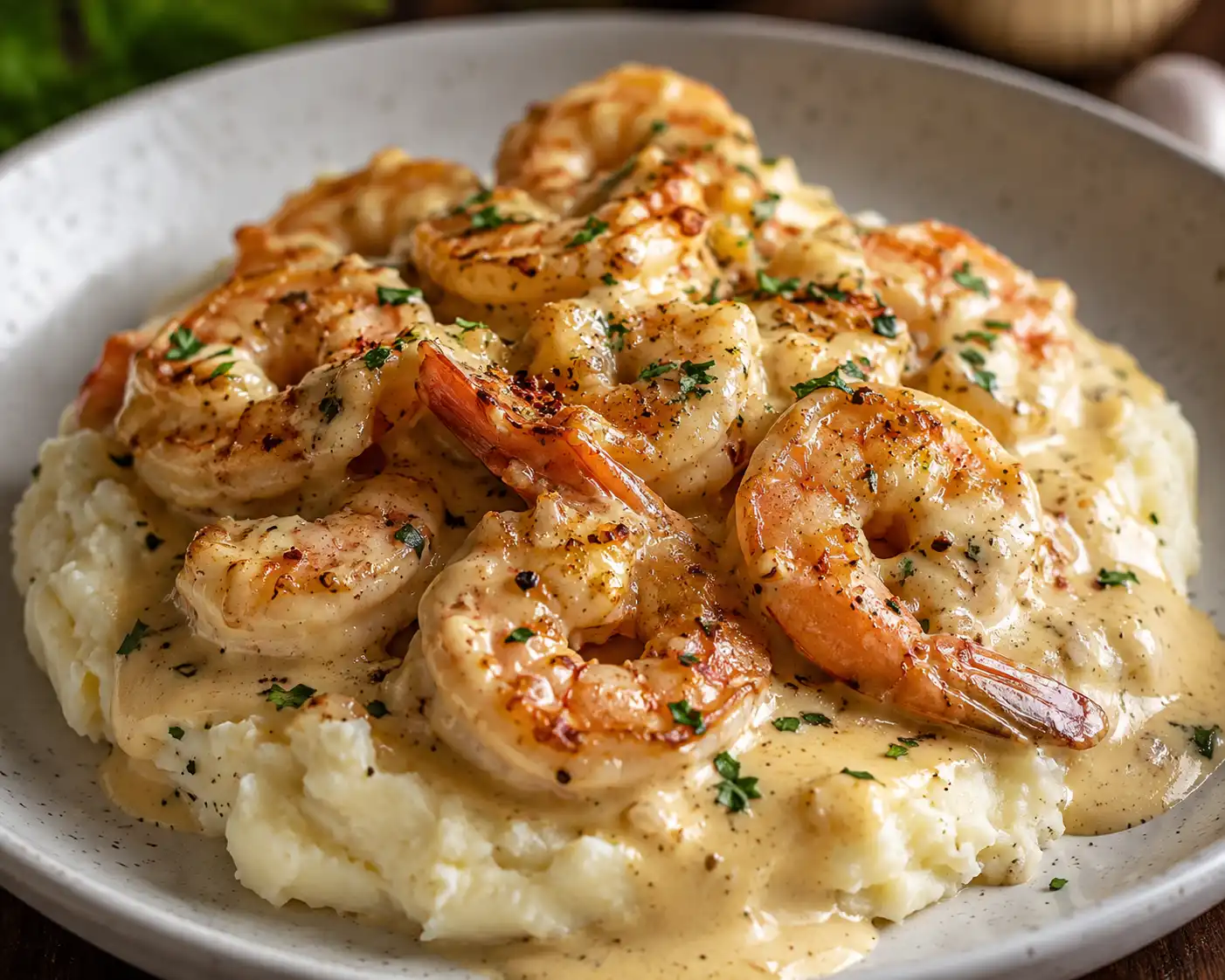
Creamy Garlic Shrimp Over Mashed Potatoes is not just a meal—it’s an experience. A harmonious marriage of ocean-fresh delicacy and earthy, velvety comfort, this dish delivers luxurious texture, aromatic depth, and soul-warming satisfaction in every bite. Whether served as a romantic weeknight dinner, a celebratory centerpiece for Sunday supper, or an elegant yet approachable entrée for holiday entertaining, its balance of simplicity and sophistication makes it endlessly captivating. The shrimp—tender, plump, and kissed with golden sear—swim in a luxuriously rich, garlicky cream sauce infused with subtle notes of white wine, fresh herbs, and a whisper of citrus. Meanwhile, the mashed potatoes serve as more than a backdrop: they’re silken, buttery, and subtly seasoned—a cloud-like foundation that soaks up every drop of that sumptuous sauce. This isn’t fast food—it’s slow-savored indulgence, crafted with intention and layered with flavor at every stage.
The History
While no single chef or country can claim sole authorship of Creamy Garlic Shrimp Over Mashed Potatoes, its roots span centuries and continents, evolving through culinary cross-pollination. Shrimp preparation dates back to ancient Mediterranean civilizations—Greek and Roman texts reference boiled, grilled, and preserved shrimp, often paired with garlic and olive oil. In medieval Europe, garlic was revered both for its medicinal properties and bold flavor, frequently appearing in sauces for fish and shellfish. The French beurre blanc and à la crème techniques—creamy, emulsified sauces enriched with butter or cream—gained prominence in the 19th century, later influencing American “continental” cooking in the mid-20th century. Simultaneously, mashed potatoes rose from humble peasant fare in Ireland and Eastern Europe to a refined staple in haute cuisine, especially after Antoine-Augustin Parmentier championed the potato in 18th-century France. By the 1970s and ’80s, American home cooks embraced creamy, restaurant-style seafood dishes—think Shrimp Scampi meets Béarnaise-infused comfort—and combined them with beloved sides like garlic mashed potatoes. Today, this dish reflects a global vernacular: Italian technique (garlic-sautéed shrimp), French finesse (cream reduction), American accessibility (one-pan adaptation), and Southern warmth (butter-laden spuds). It’s a living recipe—honoring tradition while inviting reinvention.
Ingredients Breakdown
Every element in this dish plays a purposeful role—not merely as flavor carriers, but as structural and textural collaborators:
- Shrimp: Large (26/30 or 31/40 count per pound), wild-caught Gulf or Pacific shrimp are ideal—sweet, firm, and minimally processed. Peeled and deveined, with tails optionally left on for presentation. Never use frozen shrimp treated with sodium tripolyphosphate (STPP), which leaves a soapy residue and dilutes flavor.
- Garlic: Fresh, minced—not powdered or jarred. Its pungent sulfur compounds transform under heat into sweet, nutty, umami-rich aromas. Use a microplane for ultra-fine mince that integrates seamlessly into the sauce.
- Heavy Cream: Minimum 36% milkfat—essential for stability, richness, and mouth-coating luxury. Lower-fat alternatives (half-and-half, whole milk) will thin the sauce, curdle more easily, and lack body.
- Dry White Wine: A crisp, high-acid varietal like Sauvignon Blanc, Pinot Grigio, or unoaked Chardonnay. Its acidity cuts through fat and lifts the entire dish; avoid “cooking wine” (loaded with salt and preservatives).
- Unsalted Butter: Used in three stages—sautéing, finishing, and enriching the mashed potatoes. Unsalted allows precise control over sodium and highlights natural sweetness.
- Potatoes: Yukon Golds are the gold standard—waxy enough to hold shape, starchy enough to yield creaminess without glueyness. Russets work but require extra care to avoid over-mashing and gumminess.
- Aromatics & Herbs: Shallots (milder, sweeter than onions), fresh thyme (earthy, floral), flat-leaf parsley (bright, clean finish), and a squeeze of lemon juice (not zest—added at the end for vibrancy, not bitterness).
- Seasonings: Fine sea salt (for even dissolution), freshly cracked white pepper (milder, more nuanced than black), and a pinch of grated nutmeg (a classic pairing with potatoes and cream—adds warmth without detectability).
Step-by-Step Recipe
- Prep the Potatoes: Peel and cube 1.5 lbs Yukon Gold potatoes into uniform 1.5-inch pieces. Place in a large pot, cover with cold, salted water (2 tsp kosher salt per quart), and bring to a gentle simmer—not a rolling boil—to prevent uneven cooking. Simmer uncovered 15–18 minutes until fork-tender but not falling apart. Drain thoroughly in a colander, then return to the warm (but off) pot for 1–2 minutes to evaporate excess moisture.
- Make the Mash: While potatoes steam-dry, heat ½ cup unsalted butter, ¼ cup warm whole milk, and 2 tbsp heavy cream in a small saucepan until butter melts and mixture is steaming (do not boil). Using a potato ricer or food mill (never a blender or food processor—gluten development causes gummy texture), press potatoes into a large bowl. Gradually whisk in the warm dairy-butter mixture. Fold in 2 tbsp finely grated Parmesan, ½ tsp freshly grated nutmeg, 1 tsp fine sea salt, and ½ tsp white pepper. Cover and keep warm.
- Prep the Shrimp: Pat 1 lb large shrimp *completely dry* with paper towels—this ensures proper searing, not steaming. Toss with ½ tsp salt and ¼ tsp white pepper.
- Sauté Aromatics: In a large, heavy-bottomed skillet (stainless steel or cast iron preferred for fond development), melt 2 tbsp unsalted butter over medium heat. Add 2 finely minced shallots and 6 cloves garlic (microplaned), stirring constantly for 60–90 seconds until fragrant but *not browned*. Add 1 tsp fresh thyme leaves and stir 15 seconds more.
- Deglaze & Reduce: Pour in ½ cup dry white wine, scraping vigorously with a wooden spoon to lift all browned bits (fond) from the pan bottom. Simmer 2–3 minutes until reduced by half and alcohol smell dissipates.
- Cook the Shrimp: Increase heat to medium-high. Add shrimp in a single layer. Sear 1.5–2 minutes per side until opaque and lightly pink-golden—do not overcrowd; cook in batches if needed. Remove shrimp to a clean plate and tent loosely with foil.
- Build the Sauce: Reduce heat to low. Stir in 1 cup heavy cream and ¼ cup grated Parmesan. Simmer gently—do not boil—for 3–4 minutes, stirring occasionally, until sauce thickens slightly and coats the back of a spoon. Taste and adjust seasoning: add salt only if needed (shrimp and cheese contribute sodium), then stir in juice of ½ lemon and 2 tbsp chopped fresh parsley.
- Final Assembly: Gently fold the cooked shrimp back into the warm sauce—just long enough to reheat (30–45 seconds). Do not simmer further, or shrimp will toughen. Spoon a generous portion of warm mashed potatoes into each shallow bowl or wide-rimmed plate. Top with shrimp and sauce, tilting the bowl slightly to pool the cream around the base. Garnish with extra parsley, a lemon wedge, and a delicate sprinkle of flaky sea salt (like Maldon) for textural contrast.
Tips
- Dry Shrimp is Non-Negotiable: Moisture is the enemy of sear. Even 30 seconds under a paper towel makes the difference between caramelized crust and rubbery steam.
- Control Garlic Heat: Garlic burns at 300°F (149°C). Keep it moving and never walk away during sautéing. If it darkens, discard and start over—the bitterness ruins everything.
- Low-and-Slow Cream Reduction: Boiling cream causes separation and graininess. Gentle simmering preserves emulsion and develops deep, nutty flavor.
- Reserve Pasta Water? No—Use Potato Cooking Water Instead: If your mash needs loosening, stir in 1–2 tbsp of the *warm, starchy potato water*—it adds silkiness without diluting flavor, unlike plain water or milk.
- Timing is Everything: Start potatoes first (they take longest), then prep shrimp and aromatics while they cook. Have wine measured and cream chilled. This dish shines when components meet hot—but not scalding—so coordinate so shrimp finishes just as potatoes are plated.
- Acid Last, Always: Lemon juice added before cooking will “cook” the sauce proteins prematurely, risking curdling. Add it *after* cream has thickened and heat is reduced.
- Rest the Shrimp Off Heat: Let them rest 2 minutes after searing before adding to sauce—this allows carryover cooking to finish gently and prevents overcooking during final assembly.
- Skillet Choice Matters: Avoid nonstick for searing—it won’t develop fond. Stainless or well-seasoned cast iron gives you the flavorful browned bits essential for sauce depth.
Variations and Customizations
This recipe is a canvas—not a cage. Here’s how to adapt it thoughtfully:
- Protein Swaps: Substitute scallops (dry-sear first, add to sauce last-minute), lobster tail meat (poach gently in butter first), or even flaky white fish like halibut or cod (cut into 1-inch cubes, pan-sear skinless side first). For vegetarians: king oyster mushrooms, sliced thick and seared until golden, mimic shrimp’s texture beautifully.
- Dairy-Free & Vegan Adaptation: Use full-fat coconut milk (canned, not “light”) + 1 tbsp cashew butter for creaminess; replace butter with refined coconut oil or vegan butter; swap Parmesan for nutritional yeast + white miso paste (½ tsp) for umami depth; use cauliflower mash (steamed florets + roasted garlic + almond milk + lemon) instead of potatoes.
- Gluten-Free Assurance: Naturally GF—but verify wine labels (some fining agents contain gluten; most dry wines are safe). Serve with GF toast points or roasted root vegetables instead of bread if serving alongside.
- Herb & Flavor Twists: Add 1 tsp smoked paprika with garlic for Spanish flair; stir in 1 tbsp capers and 2 tbsp chopped green olives for Sicilian brininess; infuse cream with 2 sprigs fresh tarragon (remove before serving) for French elegance; swirl in 1 tsp harissa paste for North African heat.
- Texture Upgrades: Top with toasted panko breadcrumbs sautéed in garlic butter; sprinkle with crispy prosciutto bits; add roasted cherry tomatoes halved and blistered in olive oil; garnish with microgreens or edible flowers for visual drama.
- Meal Prep Friendly: Cook mashed potatoes up to 2 days ahead (store covered in fridge); reheat gently with splash of milk + butter. Sauce base (aromatics + wine + cream reduction) can be made 1 day ahead—reheat slowly, then add shrimp and lemon at service. Freeze shrimp separately (uncooked) for up to 3 months.
- Kid-Friendly Version: Omit wine (sub ¼ cup low-sodium chicken broth + 1 tsp white vinegar), reduce garlic to 3 cloves, add 1 tbsp honey to sauce for subtle sweetness, and serve with fun-shaped potato cutters or potato “nuggets” on the side.
Health Considerations and Nutritional Value
When prepared mindfully, Creamy Garlic Shrimp Over Mashed Potatoes offers surprising nutritional merit beyond decadence:
- Shrimp Power: Low-calorie (84 kcal per 3 oz), high-quality complete protein (18g), rich in selenium (56 mcg—over 100% DV), vitamin B12 (1.4 mcg—58% DV), iodine (35 mcg—23% DV), and astaxanthin—an antioxidant carotenoid linked to reduced inflammation and improved cardiovascular health.
- Potato Potential: Often maligned, potatoes are nutrient-dense: 1 cup mashed provides 37g complex carbs, 3g fiber (with skin), 2g protein, 620mg potassium (18% DV), vitamin C (27 mg), and B6 (0.4 mg). Using Yukon Golds retains more nutrients than peeling deeply—and leaving skins on boosts fiber and antioxidants.
- Smart Fat Strategy: Heavy cream and butter contain saturated fats—but recent research suggests naturally occurring dairy fats, consumed in moderation within balanced diets, support satiety, hormone synthesis, and fat-soluble vitamin absorption (A, D, E, K). Substituting half the butter with extra-virgin olive oil adds monounsaturated fats and polyphenols.
- Garlic Benefits: Contains allicin—a compound with antimicrobial, antiplatelet, and blood-pressure-modulating effects. Crushing or chopping garlic and letting it sit 10 minutes before cooking maximizes allicin formation.
- Portion Guidance: A balanced serving includes ~4 oz shrimp, ¾ cup mashed potatoes, and ~⅓ cup sauce. Pair with a large side salad (mixed greens, lemon vinaigrette, cherry tomatoes, red onion) for fiber, phytonutrients, and volume without excess calories.
- Dietary Notes: Naturally low-carb relative to pasta-based dishes (net carbs ~30g/serving), suitable for Mediterranean and DASH diets. Not keto-friendly due to potato carbs—but cauliflower mash reduces net carbs to ~8g/serving. Contains cholesterol (~165 mg/serving), but dietary cholesterol has minimal impact on serum cholesterol for most people per 2020–2025 Dietary Guidelines.
Ingredients
- 1.5 lbs Yukon Gold potatoes (about 4 medium), peeled and cubed
- 2 tsp kosher salt (divided)
- ½ cup unsalted butter (divided—¼ cup for potatoes, 2 tbsp for sauce, 2 tbsp for finishing)
- ¼ cup warm whole milk
- 2 tbsp heavy cream (for potatoes)
- 2 tbsp finely grated Parmesan cheese (for potatoes)
- ½ tsp freshly grated nutmeg
- ½ tsp freshly cracked white pepper (for potatoes)
- 1 lb large shrimp (26/30 or 31/40 count), peeled, deveined, tails optional
- ½ tsp fine sea salt (for shrimp)
- ¼ tsp white pepper (for shrimp)
- 2 tbsp unsalted butter (for sautéing)
- 2 large shallots, finely minced (about ½ cup)
- 6 large garlic cloves, microplaned or very finely minced
- 1 tsp fresh thyme leaves (plus extra for garnish)
- ½ cup dry white wine (Sauvignon Blanc or Pinot Grigio)
- 1 cup heavy cream (36% fat)
- ¼ cup grated Parmesan cheese (for sauce)
- Juice of ½ lemon (about 1 tbsp)
- 2 tbsp chopped fresh flat-leaf parsley (plus extra for garnish)
- Flaky sea salt (Maldon or similar), for finishing
- Lemon wedges, for serving
Directions
- Place peeled, cubed potatoes in a large pot. Cover with cold water by 2 inches. Add 1.5 tsp kosher salt. Bring to a gentle simmer over medium-high heat. Reduce heat to maintain a steady simmer (small bubbles breaking surface) and cook uncovered for 15–18 minutes, until a fork slides in with slight resistance—not mushy.
- Drain potatoes thoroughly in a colander. Return empty pot to stove (off heat) and place colander inside for 1–2 minutes to let steam escape and dry potatoes.
- In a small saucepan, combine ¼ cup butter, warm milk, and 2 tbsp heavy cream. Heat over low until butter melts and mixture is steaming (110–120°F). Keep warm.
- Rice or mill warm potatoes into a large bowl. Gradually whisk in warm dairy mixture until smooth. Fold in 2 tbsp Parmesan, nutmeg, ½ tsp salt, and ½ tsp white pepper. Cover and set aside.
- Pat shrimp *extremely dry*. Toss with ½ tsp salt and ¼ tsp white pepper.
- In a 12-inch stainless or cast iron skillet, melt 2 tbsp butter over medium heat. Add shallots; cook 1 minute until translucent. Add garlic and thyme; stir constantly 60–90 seconds until fragrant—do not brown.
- Pour in wine. Scrape fond vigorously. Simmer 2–3 minutes until reduced by half and alcohol evaporates.
- Increase heat to medium-high. Add shrimp in single layer. Cook 1.5–2 minutes per side until opaque and rosy. Transfer to plate; tent with foil.
- Reduce heat to low. Stir in 1 cup heavy cream and ¼ cup Parmesan. Simmer gently 3–4 minutes until thickened to coating consistency.
- Remove from heat. Stir in lemon juice, 2 tbsp parsley, and remaining 2 tbsp butter. Gently fold in shrimp just to coat and warm (30–45 sec).
- Spoon warm mashed potatoes into bowls. Top generously with shrimp and sauce. Garnish with extra parsley, lemon wedge, flaky salt, and optional thyme sprig.
FAQ
- Can I use frozen shrimp?
- Yes—but thaw overnight in the fridge in a sealed container. Never microwave or run under hot water. After thawing, pat *excessively dry*, then brine in 1 tsp salt + 1 cup cold water for 5 minutes to restore texture and season from within. Rinse and pat dry again.
- Why does my sauce break or look curdled?
- Most commonly: overheating cream (boiling), acid added too early (lemon before thickening), or sudden temperature shock (cold shrimp added to hot sauce). Fix: Whisk in 1 tsp cold butter off-heat and let rest 1 minute. Prevent: Keep cream at low simmer, add lemon only at the end, and ensure shrimp is warm—not icy—when folded in.
- Can I make this ahead for a dinner party?
- Absolutely. Prepare mashed potatoes and sauce base (through wine reduction + cream addition) up to 1 day ahead. Store separately in airtight containers in the fridge. Reheat potatoes with splash of milk + butter; reheat sauce base gently in saucepan, then finish with lemon, parsley, butter, and shrimp at service time.
- What wine pairs best with this dish?
- Choose a crisp, mineral-driven white with bright acidity to mirror the lemon and cut the cream: Chablis (unoaked Chardonnay), Albariño, Vermentino, or a dry Rosé from Provence. For red lovers, try a light, low-tannin Pinot Noir with red fruit and earth notes.
- My mashed potatoes turned gluey—what went wrong?
- Overworking starches (using blender/food processor), using cold dairy (causes lumps), or adding liquid too quickly. Always use ricer/mill, warm dairy, and fold—not whisk—gently. If gluey, stir in 2 tbsp warm sour cream and 1 tbsp chive oil to refresh texture and flavor.
- Is there a lower-calorie version without sacrificing flavor?
- Yes: Replace half the heavy cream with evaporated skim milk (adds body without fat), use ⅓ less butter in potatoes (add roasted garlic purée for richness), and increase shrimp to 1.25 lbs for more protein per calorie. Finish with lemon zest + extra parsley for brightness instead of extra butter.
- Can I freeze leftovers?
- Mashed potatoes freeze well (up to 3 months)—cool completely, portion, and freeze in airtight containers with parchment pressed on surface. Sauce with shrimp does *not* freeze well (cream separates, shrimp becomes rubbery). Freeze sauce base only (without shrimp or lemon), then add fresh shrimp and lemon when reheating.
- How do I know when shrimp are perfectly cooked?
- They curl into a loose “C” shape (not tight “O”), turn uniformly opaque pink-white with no gray translucence, and feel springy—not stiff or mushy—when gently pressed. Internal temperature should read 120°F (49°C) for perfect tenderness (carryover will bring it to 125–130°F).
Summary
Creamy Garlic Shrimp Over Mashed Potatoes is a masterclass in balancing opulence and approachability—where succulent, garlicky-scented shrimp luxuriate in a velvety, wine-kissed cream sauce, all resting upon a cloud of herb-flecked, butter-softened Yukon Golds.
It honors centuries of culinary wisdom while remaining gloriously adaptable—elegant enough for milestones, comforting enough for Tuesday, and nourishing enough to savor without compromise.