Introduction
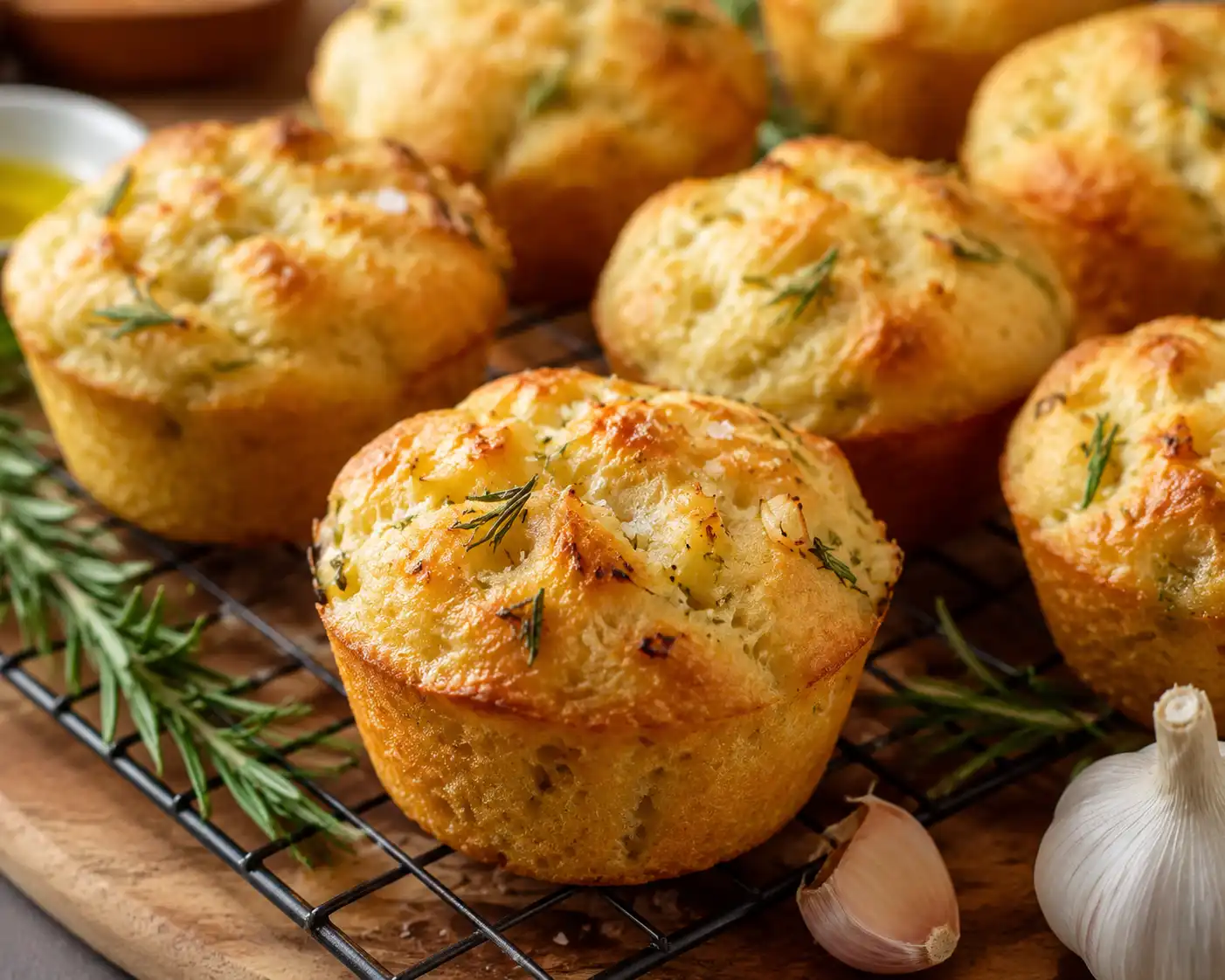
Welcome to the aromatic, golden-brown world of Golden Crust Garlic Rosemary Focaccia Muffins — a brilliant fusion of rustic Italian tradition and modern American convenience. These individual-sized focaccia delights deliver all the hallmarks of classic focaccia — dimpled, olive oil–glazed, herb-flecked, and luxuriously airy — but reimagined in portable, portion-controlled muffin form. Perfect for brunch gatherings, school lunches, picnic baskets, or even as an elevated dinner roll alternative, these muffins boast a shatteringly crisp, deeply golden crust that gives way to a tender, pillowy, open-crumbed interior infused with roasted garlic’s mellow sweetness and the piney, citrus-tinged fragrance of fresh rosemary. Whether you’re a seasoned baker or a curious beginner, this recipe is designed to be approachable, forgiving, and deeply rewarding — with visual cues, practical timelines, and science-backed techniques to ensure consistent success every time.
The History
Focaccia traces its roots back over 2,000 years to ancient Rome and Etruria, where flatbreads enriched with olive oil, herbs, and sometimes honey were baked on hot stones or hearths. The word “focaccia” itself derives from the Latin *focus*, meaning “hearth” — a nod to its origins as bread cooked directly in the fireplace’s embers. Over centuries, regional variations flourished across Italy: Liguria’s *focaccia genovese* (thin, olive oil–drenched, and salt-flecked), Puglia’s *focaccia barese* (topped with tomatoes and oregano), and Tuscany’s *schiacciata* (often sweetened with grapes or anise). The concept of transforming focaccia into muffin format, however, is a relatively recent innovation — emerging in the early 2010s among artisanal bakeries and food bloggers seeking to reconcile focaccia’s rich texture and bold flavor with contemporary demands for grab-and-go versatility, portion control, and oven efficiency. By baking in standard muffin tins, bakers achieve superior heat transfer, ensuring that coveted caramelized crust forms evenly on all sides — not just the top — while maintaining structural integrity during cooling and storage. This evolution honors tradition without sacrificing practicality, making the soul-warming essence of focaccia accessible in kitchens of all sizes and skill levels.
Ingredients Breakdown
Every ingredient in this recipe plays a precise, functional role — far beyond mere flavor. Understanding their purpose empowers you to troubleshoot, adapt, and elevate your results:
- Bread Flour (High-Protein, 12.7–13.5% protein): Provides the strong gluten network essential for the muffins’ signature chewy-yet-tender crumb and ability to hold dramatic air pockets. All-purpose flour can be substituted, but expect slightly less height and a softer crust.
- Warm Whole Milk (105–110°F / 40–43°C): Adds richness, tenderness, and subtle sweetness while activating the yeast. The warmth is critical — too cool, and fermentation stalls; too hot, and yeast dies. Non-dairy milks (oat or soy, unsweetened) work well for vegan versions, though slight texture adjustments may occur.
- Active Dry Yeast or Instant Yeast: The leavening engine. Instant yeast can be mixed directly with dry ingredients; active dry requires proofing in warm milk with a pinch of sugar for 5–10 minutes until frothy. Both yield identical results when used correctly.
- Honey or Light Brown Sugar: Feeds the yeast during bulk fermentation and contributes to crust browning via Maillard reaction and caramelization. Honey also adds subtle floral notes and moisture retention.
- Fine Sea Salt: Strengthens gluten, controls fermentation speed, enhances overall flavor perception, and prevents the bread from tasting bland or “yeasty.” Never omit or significantly reduce.
- Extra-Virgin Olive Oil (Premium, Fruity, Robust): Used in two stages — first in the dough for tenderness and extensibility, then generously brushed on top pre- and post-baking for gloss, flavor, and that irresistible crisp crust. Avoid light or refined oils; their neutral profile sacrifices depth.
- Roasted Garlic Paste (Homemade or High-Quality Store-Bought): Roasting transforms raw garlic’s sharp pungency into deep, nutty, buttery sweetness. Homemade paste (garlic cloves roasted until soft and golden-brown, then mashed with olive oil) offers unmatched complexity and moisture. Jarred versions work, but check labels for added preservatives or vinegar, which can inhibit rise.
- Fresh Rosemary Leaves (Finely Chopped, Not Dried): Fresh rosemary delivers volatile aromatic compounds (camphor, cineole) that survive baking and infuse the crumb with bright, resinous, lemon-pine notes. Dried rosemary is harsh and woody here — avoid unless finely ground and increased by ⅓ (not recommended).
- Flaky Sea Salt (Maldon or Fleur de Sel): Applied *after* baking for bursts of clean, briny salinity that contrast beautifully with the sweet-garlicky crumb and rich olive oil. Its delicate crystals dissolve instantly on the tongue.
- Optional Garnish: Lemon Zest or Toasted Pine Nuts: A whisper of lemon zest adds high-note brightness that lifts the earthiness; toasted pine nuts contribute buttery crunch and visual elegance.
Step-by-Step Recipe
This meticulously tested method prioritizes clarity, timing flexibility, and fail-safes — including visual and tactile cues at every stage. Total hands-on time: ~35 minutes. Total timeline (including rises): 3–4 hours (with options for overnight refrigeration).
Step 1: Prepare the Roasted Garlic Paste (15–20 minutes, can be done ahead)
Preheat oven to 400°F (200°C). Slice the top ¼ inch off a whole head of garlic to expose cloves. Drizzle generously with olive oil, wrap tightly in foil, and roast for 40–50 minutes until cloves are deeply golden, soft, and spreadable. Cool slightly, then squeeze pulp into a small bowl. Mash with 1 tsp olive oil until smooth. Set aside to cool completely (warm paste will kill yeast).
Step 2: Mix the Dough (8–10 minutes)
In the bowl of a stand mixer fitted with a dough hook (or large mixing bowl for hand mixing), combine 3¾ cups (475g) bread flour, 2¼ tsp (7g) instant yeast, 2 tbsp (25g) honey, and 1½ tsp (9g) fine sea salt. Whisk thoroughly. In a separate measuring cup, combine 1 cup (240ml) warm whole milk (105–110°F) and ¼ cup (60ml) extra-virgin olive oil. With mixer on low, gradually pour wet ingredients into dry. Mix for 2 minutes until shaggy. Scrape down bowl. Add ½ cup (120g) cooled roasted garlic paste. Mix on medium-low for 5–7 minutes until dough is smooth, elastic, and clears the sides of the bowl (it will be slightly sticky but cohesive — do not add excess flour). For hand mixing: Stir with a wooden spoon until combined, then turn onto a lightly oiled surface and knead vigorously for 10–12 minutes until windowpane stage is achieved (stretch a small piece thin enough to see light through without tearing).
Step 3: First Rise (Bulk Fermentation) – 1.5 to 2 Hours at Room Temp (72–75°F)
Lightly oil a large bowl. Place dough inside, turning to coat. Cover tightly with plastic wrap or a damp kitchen towel. Let rise in a warm, draft-free spot until doubled in volume and jiggly to the touch — about 1.5–2 hours. Visual Cue: Poke gently with a floured finger — if indentation fills in slowly (5–10 seconds), it’s ready. If it springs back immediately, needs more time. If it collapses, it’s over-proofed (still usable, but bake immediately).
Step 4: Shape & Second Rise (Proofing) – 45–60 Minutes
Generously grease a standard 12-cup muffin tin with olive oil (¼ tsp per cup, rubbed up sides). Gently deflate dough with fingertips. Turn onto a lightly floured surface. Divide into 12 equal pieces (≈95–100g each) using a bench scraper. Cup each piece gently in oiled palms, rolling into tight balls. Place one ball into each muffin cup. Cover loosely with oiled plastic wrap or a damp towel. Let rise until puffy and nearly touching at the tops — about 45–60 minutes. Visual Cue: They should look full, soft, and slightly domed — not rigid or overly inflated.
Step 5: Preheat & Dimple
While rising, preheat oven to 425°F (220°C) with rack positioned in the center. Once risen, gently press fingertips deep into each muffin top to create generous, rustic dimples (don’t worry about uniformity!). Brush liberally with 2 tbsp (30ml) olive oil, letting it pool in the dimples. Sprinkle evenly with 1 tbsp finely chopped fresh rosemary and a generous pinch of flaky sea salt per muffin.
Step 6: Bake – 20–24 Minutes
Place tin in hot oven. Bake for 20–24 minutes, rotating halfway through, until muffins are deeply golden brown all over — tops, sides, and bottoms — and sound hollow when tapped. Internal temperature should read 205–210°F (96–99°C) on an instant-read thermometer. Critical Tip: Do not open the oven door before the 18-minute mark — steam loss causes collapse.
Step 7: Finish & Serve
Immediately remove muffins from tin using a silicone spatula or butter knife. Place on a wire rack. While still piping hot, brush tops and exposed sides with remaining 1 tbsp olive oil. Sprinkle again with flaky sea salt. Let cool for at least 15 minutes before serving — this allows starches to set and prevents gummy texture. Best served warm or at room temperature the same day.
Tips
- Yeast Health Check: Always verify yeast activity before mixing — especially if using older packets. Proof in warm milk + 1 tsp honey for 5–10 minutes. No foam? Replace yeast.
- Temperature is King: Use a digital thermometer for milk and dough. Cold dough ferments sluggishly; overheated dough kills yeast. Keep your kitchen between 72–75°F for optimal rise.
- Oil the Tin, Not the Dough: Greasing the muffin cups (not the dough balls) ensures easy release and maximizes crust formation on all surfaces — including the bottom, which becomes delightfully crunchy.
- Dimple Deeply: Don’t be timid! Deep dimples hold more olive oil and herbs, creating concentrated flavor pockets and preventing excessive dome formation.
- Resist the Squeeze: Never press down on risen muffins before baking — this deflates precious gas and yields dense results. Gentle dimpling only.
- Steam-Free Baking: Unlike baguettes, focaccia muffins need dry heat for maximum crust development. No water tray needed — in fact, avoid it.
- Rest Before Slicing: Cutting too soon releases steam, making the crumb gummy. Wait minimum 15 minutes — the aroma alone is worth the patience.
- Freeze for Freshness: Cool completely, wrap individually in parchment + foil, freeze up to 3 months. Reheat frozen in a 375°F oven for 12–15 minutes — crust regains its magic.
Variations and Customizations
This versatile base invites endless creativity — all while preserving its signature golden crust and airy crumb:
- Sun-Dried Tomato & Basil: Fold in ½ cup finely chopped oil-packed sun-dried tomatoes (well-drained and patted dry) and ¼ cup chiffonaded fresh basil with the garlic paste. Omit rosemary.
- Everything Bagel: Top pre-baked muffins with a blend of poppy seeds, sesame seeds, dried minced garlic, dried onion flakes, and coarse salt. Brush with egg wash (1 egg + 1 tsp water) before sprinkling for extra adhesion.
- Cheesy Herb: Stir 1 cup grated aged provolone or fontina into the dough during final mix. Top with additional cheese and thyme before baking.
- Lemon-Rosemary (Bright & Zesty): Add 1 tbsp finely grated lemon zest to the dough with the garlic paste. Increase rosemary to 1½ tbsp and finish with lemon zest + flaky salt.
- Spicy Calabrian: Mix in 2 tbsp finely chopped Calabrian chiles (in oil) and 1 tsp chili flakes. Top with additional chiles and a drizzle of chili oil post-bake.
- Whole Grain Boost: Substitute 1 cup (120g) of bread flour with stone-ground whole wheat or spelt flour. Add 2 tbsp vital wheat gluten to maintain rise and chew.
- Vegan Version: Use unsweetened oat milk, maple syrup instead of honey, and ensure yeast is vegan-certified. Brush with olive oil only — skip dairy-based glazes.
- Mini Muffins (For Parties): Use a 24-cup mini muffin tin. Reduce second rise to 30–40 minutes and bake at 425°F for 14–16 minutes.
Health Considerations and Nutritional Value
A single Golden Crust Garlic Rosemary Focaccia Muffin (based on 12 per batch) provides approximately:
- Calories: 245 kcal
- Total Fat: 9g (1.5g saturated)
- Carbohydrates: 36g (2g fiber, 5g naturally occurring sugars from honey/milk)
- Protein: 6g
- Sodium: 290mg (primarily from sea salt — easily reduced by 25% if needed)
Nutritional Highlights & Considerations:
- Olive Oil Benefits: Rich in heart-healthy monounsaturated fats and polyphenols with anti-inflammatory properties. Using EVOO instead of butter or refined oils significantly boosts nutritional profile.
- Garlic Power: Roasted garlic retains allicin precursors and antioxidants like selenium and vitamin C, supporting immune function and cardiovascular health.
- Rosemary’s Role: Contains carnosic acid and rosmarinic acid — potent antioxidants linked to neuroprotective and anti-aging effects.
- Whole Grain Option: Swapping in whole grain flours increases fiber, B vitamins, magnesium, and satiety — ideal for blood sugar management.
- Gluten Sensitivity Note: This recipe contains gluten. For gluten-free versions, a certified GF 1:1 blend *with added xanthan gum* is required, but texture and rise will differ significantly (not recommended without extensive testing).
- Lower-Sodium Adaptation: Reduce fine salt in dough to 1 tsp and rely on finishing flaky salt for taste impact. Sodium drops to ~210mg per muffin.
- Mindful Indulgence: While not “low-calorie,” these muffins offer complex carbs, quality fat, and functional ingredients — making them a nutrient-dense choice compared to many refined-grain baked goods.
Ingredients
- 3¾ cups (475g) bread flour (12.7–13.5% protein), plus extra for dusting
- 2¼ tsp (7g) instant yeast (or active dry yeast, proofed)
- 2 tbsp (25g) honey or light brown sugar
- 1½ tsp (9g) fine sea salt
- 1 cup (240ml) whole milk, warmed to 105–110°F (40–43°C)
- ¼ cup (60ml) extra-virgin olive oil, plus 3 tbsp (45ml) for brushing
- ½ cup (120g) roasted garlic paste (cooled completely)
- 1 tbsp (4g) fresh rosemary leaves, finely chopped
- 2 tsp flaky sea salt (e.g., Maldon), for finishing
Directions
- Prepare Roasted Garlic: Preheat oven to 400°F (200°C). Slice top off garlic head, drizzle with olive oil, wrap in foil, and roast 40–50 minutes until soft and golden. Cool, squeeze out cloves, mash with 1 tsp oil. Set aside to cool fully.
- Mix Dough: In stand mixer bowl, whisk flour, yeast, honey, and salt. In separate cup, combine warm milk and ¼ cup olive oil. With mixer on low, gradually add wet to dry. Mix 2 min. Add cooled garlic paste. Mix on medium-low 5–7 min until smooth, elastic, and bowl-cleaning. (Hand-knead 10–12 min to windowpane stage.)
- First Rise: Oil large bowl. Place dough in, turn to coat. Cover. Rise at 72–75°F for 1.5–2 hrs until doubled and jiggly.
- Shape: Generously oil 12-cup muffin tin (¼ tsp oil per cup, rubbed up sides). Gently deflate dough. Divide into 12 equal pieces (≈95g each). Roll into tight balls. Place one per cup.
- Second Rise: Cover loosely with oiled plastic or damp towel. Rise 45–60 min until puffy and nearly touching.
- Preheat & Prep: Preheat oven to 425°F (220°C). Gently dimple each muffin top. Brush generously with 2 tbsp olive oil. Sprinkle with chopped rosemary and a pinch of flaky salt per muffin.
- Bake: Bake 20–24 min, rotating at 12 min, until deep golden brown all over and hollow-sounding. Internal temp: 205–210°F (96–99°C).
- Finish: Immediately remove from tin. Brush tops/sides with remaining 1 tbsp olive oil. Sprinkle again with flaky salt. Cool 15+ min on wire rack before serving.
FAQ
- Can I make these ahead?
- Absolutely! For best results: Bake, cool completely, then freeze individually wrapped for up to 3 months. Reheat from frozen at 375°F for 12–15 minutes. Alternatively, shape and refrigerate unbaked muffins overnight (covered tightly) — let sit at room temp 30 min before baking.
- Why did my muffins stick to the pan?
- Insufficient greasing is the #1 cause. Use a high-quality, robust olive oil (not light or spray) and rub it *up the sides* of each cup with your fingers or a pastry brush. Non-stick tins still require oiling for proper crust formation.
- My crust wasn’t golden enough — what went wrong?
- Three likely culprits: (1) Oven not hot enough — always preheat fully for 20+ minutes; (2) Under-baking — trust the color and hollow sound over strict timing; (3) Not enough oil brushed on pre-bake — the oil is essential for browning and crispness.
- Can I use dried rosemary?
- Not recommended. Dried rosemary is intensely bitter and fibrous when baked into focaccia. It lacks the bright, volatile oils of fresh and can create unpleasant textural spikes. If absolutely necessary, use 1 tsp *finely ground* dried rosemary and increase to 1¼ tsp — but fresh is irreplaceable.
- How do I store leftovers?
- Store cooled muffins in a paper bag (not plastic!) at room temperature for up to 2 days — this preserves crust crispness. For longer storage, freeze as directed. Never refrigerate — it accelerates staling.
- My dough was too sticky to handle — did I add too much liquid?
- Not necessarily. High-hydration focaccia doughs are meant to be tacky but cohesive. Resist adding flour during mixing or shaping — it compromises tenderness. Use lightly oiled hands and tools instead. If truly unmanageable, your flour may have lower protein or higher absorption — note for next batch.
- Can I bake these in a loaf pan instead?
- Yes! Grease a 9×5-inch loaf pan. Press dough evenly into pan after first rise. Let rise 45 min. Dimply, oil, herb, salt. Bake at 425°F for 28–32 minutes until deep golden and hollow-sounding. Cool 20 min before slicing.
- Is there a no-yeast version?
- Traditional focaccia relies on yeast for its open crumb and airy structure. Baking powder/soda versions exist but yield a denser, cake-like texture — closer to cornbread than focaccia. We strongly recommend using yeast for authentic results.
Summary
Golden Crust Garlic Rosemary Focaccia Muffins masterfully distill the soul of Italian focaccia into an irresistibly portable, portion-perfect format — featuring a shatteringly crisp, olive oil–glossed exterior, a tender, hole-riddled crumb infused with sweet roasted garlic and fragrant fresh rosemary, and a finish of flaky sea salt that elevates every bite.
Backed by centuries of baking tradition yet optimized for modern kitchens with flexible timelines, clear visual cues, and customizable variations, this recipe delivers restaurant-quality results at home — whether you’re hosting a Sunday brunch or packing a nourishing lunch for the week ahead.